
Anonymous Customer Counting Systems: A Privacy-First Buying Guide
A camera-free system isn’t the only privacy-conscious way to count visitors. It’s reasonable to ask whether cameras can identify people and what a camera-free counter can actually tell you. Privacy depends on how data is designed and handled, not simply on whether cameras are present. The right anonymous customer counting systems answer operational questions without collecting personal information you don’t need.
This guide compares camera-free counting with privacy-first video analytics so you can weigh privacy, useful detail and management requirements against your organisation’s needs. You’ll see what each approach can measure, where video analytics can add context, and how masking data at the source can support privacy while using existing CCTV. You’ll also learn how a fully managed service provides interpreted insights, rather than leaving your team to manage raw data. The aim is to help you choose an approach that fits the decisions you need to make.
Key Takeaways
- Assess privacy by how visitor data is handled, not just by whether a system uses cameras.
- Match anonymous customer counting systems to the decisions you need to make, from entry volumes to occupancy and visitor movement.
- Compare infrared, thermal, manual and camera-based methods by the activity and context they can help measure.
- A fully managed approach can turn activity captured through existing CCTV, with data masked at the source, into interpreted operational insights.
Anonymous Customer Counting Systems: What Privacy Actually Depends On
Anonymous customer counting measures visitor activity without identifying individual people. Depending on the system, it can report entry counts, occupancy or movement through a space. The purpose is to understand how an environment is used, not who each visitor is. When comparing anonymous customer counting systems, keep that distinction in view: operational insight doesn’t require personal identity.
Privacy depends on more than the hardware. “Camera-free” describes a technology choice, but doesn’t explain what data a system generates, how it is handled or what is retained. A sensor may avoid capturing images, but you should still consider whether the information it produces is appropriate for the operational question. This is part of the wider discussion of Understanding Consumer Privacy.
Does camera-free automatically mean more private?
Not automatically. Sensors can count people without capturing images, which may suit a straightforward entrance-counting need. A privacy-conscious assessment also considers how data is handled from the point it is generated through to reporting. Define the information you need, then assess whether the method can provide it without unnecessary detail.
Privacy-by-design is about controlling data at its source, not simply removing cameras from the system. Source masking addresses privacy in the data flow, rather than relying only on the choice of sensor.
Footfall Australia’s Fully Managed Visitor & Space Intelligence Service uses existing CCTV infrastructure, with Privacy-First AI masking all data at the source. No personally identifiable information (PII) is collected or stored. The service provides visitor and space insights while keeping personal identity out of the data. The practical question is which approach gives you the insight needed to make a decision, at an appropriate level of detail.
Compare Camera-Free Counting Options Against the Insights You Need
Counting methods provide different views of visitor activity. Infrared systems can register movement across a defined entrance, making them relevant when you need to count entries or exits. Thermal systems use heat patterns to detect presence, while manual counting relies on people recording observed activity. These methods can support focused counts, but they don’t necessarily show how visitors move through a wider space.
Camera-based analytics can add behavioural context, depending on the system and how it handles data. For example, a retailer may need more than a doorway count to understand movement between areas. Footfall Australia’s privacy-first service uses existing CCTV, with data masked at the source, and no PII is collected or stored. The people counting technology guide provides a deeper overview of counting methods.
Choose a counting approach by starting with the business question
Start with the decision you need to make. If you’re planning staffing around entry volumes, a focused count may be enough. If you need to understand occupancy or visitor journeys, consider whether the approach can represent activity across the relevant areas and time periods. The space matters too: measuring one entrance, a shopping centre or a transport environment involves different questions about where and when activity occurs.
Select a counting system for the insight your operation needs, not simply for the presence or absence of cameras. To compare options, map each method against the measures that matter to you, such as entries, occupancy, movement and the areas covered. The NIST Privacy Framework offers a voluntary structure for considering privacy risks in technology decisions. For organisations that need richer visitor context, Footfall Australia’s managed visitor and space intelligence service uses existing CCTV, with data masked at the source.

Get Privacy-First Visitor Insights Through a Fully Managed Service
For organisations that need more than an entrance count, Footfall Australia’s Fully Managed Visitor & Space Intelligence Service uses existing CCTV infrastructure to provide interpreted visitor and space insights. Privacy-First AI masks all data at the source, and no personally identifiable information (PII) is collected or stored.
The service covers design, installation, monitoring, maintenance, data validation, reporting and support. Customisable dashboards present interpreted insights, so teams can use the results without managing raw data themselves. The people counting systems guide explains how different measurement approaches can support operational needs.
How managed analytics turns visitor activity into operational insight
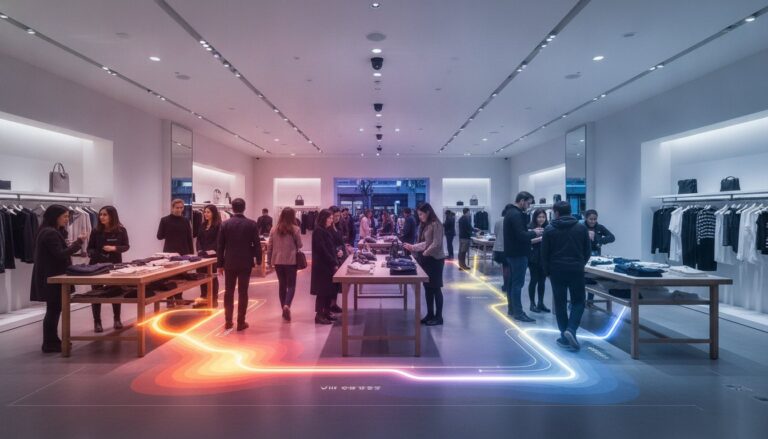
AI for Analytics can combine visitor activity with operational inputs such as staffing, sales, location, weather and marketing data to help inform planning. AI for Vision can show patterns such as entry-to-exit journeys, traffic paths, engagement, demographics and staff interactions. These insights describe patterns in visitor activity, not the identities of individual people.
For example, a retailer could review interpreted movement patterns alongside staffing information to explore how activity across a space relates to operational planning. Start with a specific question, then choose the insights that can help answer it. Dashboards bring those interpreted findings together in a form teams can use.
Validated data and interpreted reporting turn visitor activity into evidence teams can use for operational decisions. Footfall Australia’s visitor intelligence service brings measurement and reporting together around your organisation’s priorities.
Make Your Next Measurement Decision With Confidence
Before choosing a system, define the decisions better visitor data should support. Which areas need attention? Would entry volumes, occupancy or movement patterns help your team allocate resources or refine the visitor experience? Clear questions make it easier to assess whether anonymous customer counting systems will provide information your organisation can act on, rather than metrics that simply add to a dashboard.
Privacy and practical value can be assessed together. Footfall Australia’s service masks data at the source, collects or stores no PII, and includes managed reporting, data validation and support. Teams can focus on interpreted insights and operational priorities without taking on raw-data management.
Use your measurement questions and existing CCTV environment to guide the approach. The FAQs below address common considerations when comparing anonymous counting and visitor analytics.
Frequently Asked Questions
Can anonymous customer counting systems measure visitor numbers without tracking individuals?
Yes. Anonymous customer counting systems can report visitor totals without identifying or following individual people. For example, a retailer could compare entry volumes across trading periods to see when a store is busiest. That supports planning around overall demand without needing a visitor’s name or personal profile.
Is a camera-free people counter the only way to protect visitor privacy?
No. Camera-free sensors avoid image capture, but privacy also depends on how a system handles data. Footfall Australia uses existing CCTV with data masked at the source, and no PII is collected or stored. Consider whether the information in the reports is appropriate for the operational decision you need to make.
Can anonymous customer counting help improve staffing decisions?
It can provide evidence for staffing reviews. A store manager could compare visitor volumes across trading periods with roster coverage, then consider whether busy periods align with available staff. Reviewing patterns over time can help teams identify when schedules may warrant attention. Counts inform the decision, alongside service needs and other operational factors.
What is the difference between visitor counting and visitor journey analytics?
Visitor counting measures volume, such as how many people enter a store during a period. Journey analytics adds movement context, showing patterns such as whether visitors move from an entrance towards particular sections. Counting helps quantify traffic; journey insights help describe how a space is used. The right measure depends on the decision you need to make. Explore Footfall Australia’s privacy-first visitor intelligence service to see how interpreted visitor insights can support your organisation’s decisions.