AI People Counting: Transforming Foot Traffic into Actionable Intelligence
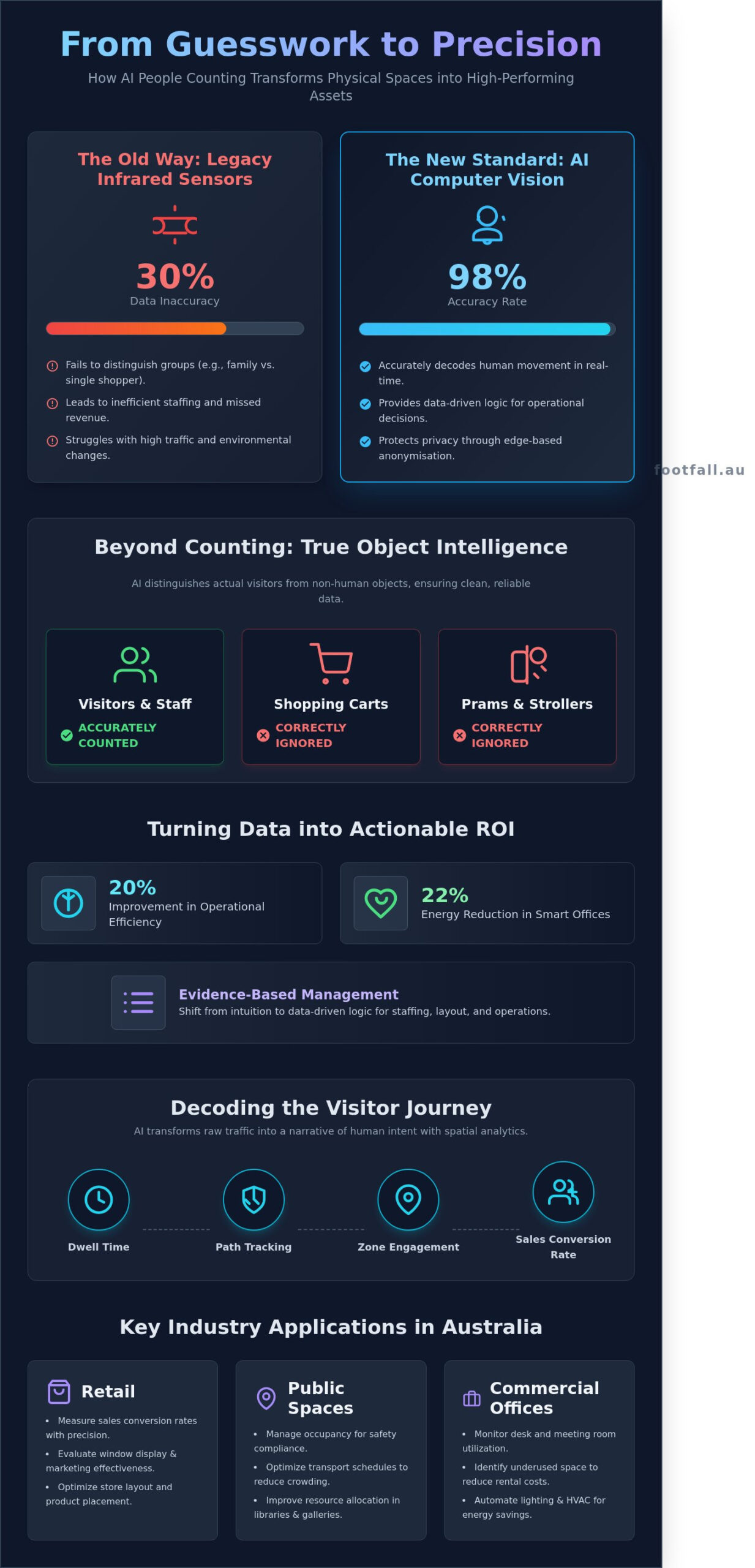
A 2023 analysis of Australian retail environments revealed that 30% of foot traffic data collected by legacy infrared sensors is inaccurate, often failing to distinguish between a family group and a single shopper. You’ve likely felt the frustration of overstaffing a quiet Tuesday morning while a sudden Saturday rush leaves your team overwhelmed. Deploying ai people counting technology eliminates these precision gaps, replacing guesswork with data-driven logic that strengthens your bottom line. Relying on outdated hardware doesn’t just skew your reports; it leads to inefficient labor allocation and missed revenue opportunities.
Modern computer vision replaces these approximations with 98% accuracy by decoding human movement in real time. It’s time to move beyond simple counts and start understanding the visitor journey through spatial analytics that prioritize customer privacy. This article explores how integrating automated intelligence allows you to optimize staff schedules and improve operational efficiency by 20%. You’ll discover the strategic advantage of using high-tech innovation to transform physical spaces into high-performing assets.
Key Takeaways
- Understand how AI-driven computer vision provides “object intelligence,” allowing you to accurately distinguish actual visitors from non-human objects like prams or shopping carts.
- Learn how modern ai people counting solutions protect customer privacy through edge-based anonymisation without sacrificing data precision or reliability.
- Discover the strategic link between footfall data and POS transactions to accurately measure and improve your store’s sales conversion rate.
- Explore how integrating FootfallCam Pro2 hardware with V9 software transforms raw traffic data into actionable spatial analytics for your Australian business.
- Shift from guesswork to evidence-based management by decoding the visitor journey to optimise staffing levels and physical store performance.
What is AI People Counting and Why Does It Matter in 2026?
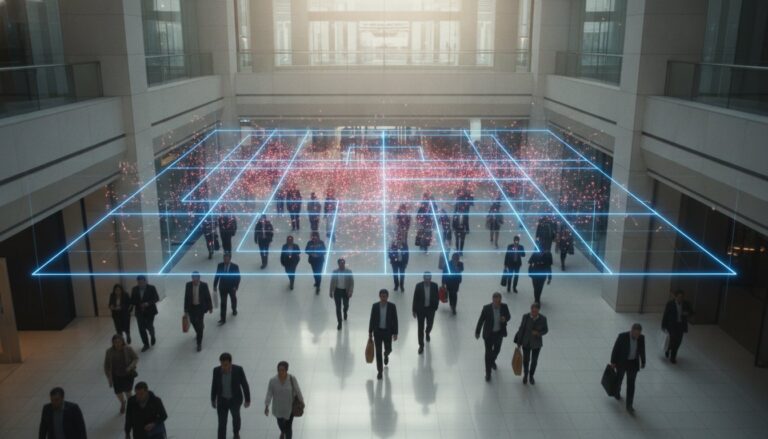
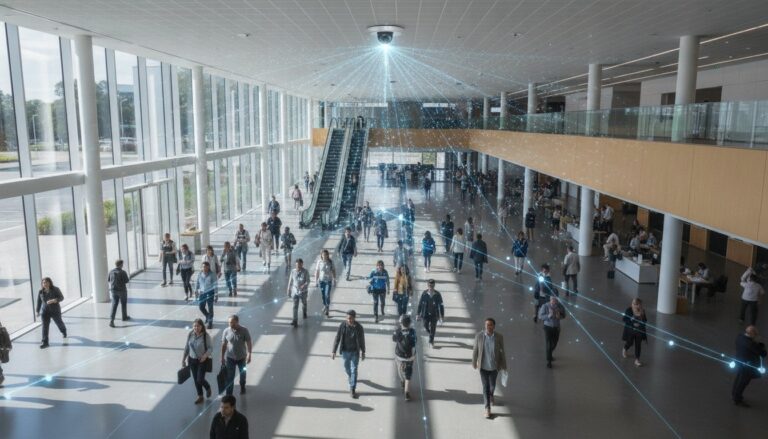
AI people counting represents a fundamental shift from simple tallying to intelligent spatial awareness. It utilizes computer vision and deep learning algorithms to identify and track human movement patterns with precision exceeding 98%. Unlike basic hardware, these systems distinguish between humans, shopping trolleys, and cleaning robots. This technology processes visual data in real-time, converting raw video into anonymized, actionable insights without compromising individual privacy.
By 2026, the Australian retail and public sectors have reached a critical tipping point for adoption. With labor costs in Australia rising by 4.1% over the last fiscal year, businesses can no longer afford to staff based on intuition. Understanding What is a people counter? provides the historical context for this evolution. We’ve moved beyond the era of simple entry logs. Modern ai people counting serves as the central nervous system for physical spaces, providing the evidence-based logic required to optimize high-stakes commercial environments.
The current year marks a transition where “counting” has been replaced by “behavioural analytics.” Decision-makers now demand more than just a total visitor number. They require data on dwell time, path tracking, and zone engagement. This allows a store manager in a Melbourne CBD flagship to see exactly where a customer journey stalls. It’s about turning foot traffic into a decoded narrative of human intent.
The Evolution from Sensors to Intelligence
The journey began with manual clickers and progressed to infrared (IR) beams that broke when someone passed through. These legacy systems failed in high-traffic environments like Westfield centres because they couldn’t distinguish between a family of four and a single shopper. Thermal sensors followed, yet they often struggled with environmental heat fluctuations common in Australian summers. Modern ai people counting eliminates these inaccuracies by using object intelligence. It recognizes human shapes and movement vectors, ensuring data remains clean even during peak holiday sales. This evolution delivers actionable data, allowing managers to adjust HVAC systems or security deployments based on real-time density rather than static schedules.
Key Industry Applications Across Australia
- Retail: Australian retailers use AI to measure conversion rates with surgical precision. If a Sydney boutique sees 500 entries but only 20 transactions, the data highlights a failure in service or stock rather than a lack of interest. It also measures window display effectiveness by tracking how many passersby actually stop and look.
- Public Spaces: Local councils in Brisbane and Adelaide manage occupancy in libraries and galleries to ensure safety compliance. Transport hubs use these metrics to optimize train schedules and reduce platform overcrowding during peak hours.
- Commercial Offices: Smart buildings in Perth use spatial analytics to monitor desk usage. Data shows that 30% of office space often remains underutilized; AI identifies these zones, allowing firms to reduce energy consumption by up to 22% through automated lighting and climate control.
Precision is the new standard. Australian businesses are increasingly moving away from guesswork, utilizing high-tech consultation to bridge the gap between physical movement and digital strategy. This logical progression ensures that every square metre of a facility contributes to the bottom line.
Under the Hood: How Deep Learning Powers Modern Counters
Modern ai people counting systems function through advanced Neural Networks that mimic human visual perception. These digital architectures process visual data in layers, identifying patterns that distinguish a human being from a shopping cart, a pram, or even a flickering shadow on the floor. Legacy systems often struggled with environmental noise; however, deep learning algorithms filter these out with 98% precision. By focusing on skeletal structures and movement patterns, the technology ensures that a child or a pet doesn’t skew the data meant for adult visitor metrics.
The intelligence behind these sensors comes from a rigorous training process. AI models ingest millions of annotated images captured from various heights and angles to learn the nuances of human shapes. Whether a customer wears a wide-brimmed hat or carries a bulky surfboard in a Gold Coast surf shop, the system recognises the person. High-definition optics play a critical role here, providing the crisp visual input necessary for the AI to make these split-second distinctions. This level of foot traffic analysis allows retailers to move beyond simple tallies and into the realm of sophisticated spatial intelligence.
Privacy remains a cornerstone of this technological evolution. We strictly utilise person detection rather than facial recognition. The system identifies a “human object” based on shape and motion without ever capturing or storing biological identifiers. This approach ensures full compliance with the Australian Privacy Principles (APP), giving business owners peace of mind that their data collection is ethical and secure. It’s about counting silhouettes, not identifying individuals.
Edge AI vs. Cloud Processing
Edge AI refers to processing data directly on the hardware itself, such as the FootfallCam Pro2, rather than sending raw video to a remote server. This decentralised approach significantly reduces bandwidth costs, which is a vital consideration for Australian businesses operating on metered 4G or 5G connections where data overhead can reach A$50 per month per site. Because the video never leaves the local network, security is inherently higher. Processing happens in near real-time, delivering actionable insights to your dashboard without the lag associated with cloud-reliant systems. You can explore our range of edge-ready sensors to see how this efficiency scales across multiple locations.
Stereoscopic Vision and 3D Depth Sensing
Stereoscopic vision uses dual lenses to perceive depth, much like the human eye. This 3D mapping allows the sensor to calculate the exact height of objects, making it easy to separate adults from children or groups walking side-by-side. In a busy Melbourne CBD entrance, “tailgating” occurs when people walk closely behind one another. Standard 2D cameras often count them as a single person, but 3D depth sensing sees the gap and the distinct volume of each individual. 3D depth sensing is the gold standard for 99.5% accuracy in 2026. This precision is essential for calculating true conversion rates in high-traffic environments where every missed count impacts the bottom line.
Solving the Privacy vs. Precision Dilemma
Business owners often hesitate when adopting new sensor technology because they fear a backlash regarding surveillance. This tension between gathering actionable data and respecting individual rights is a primary hurdle in modern retail. Recent studies show that consumer data privacy concerns remain high, with 81% of individuals feeling they have little control over the data collected by companies. Modern ai people counting resolves this conflict by shifting the focus from who a person is to how a person moves.
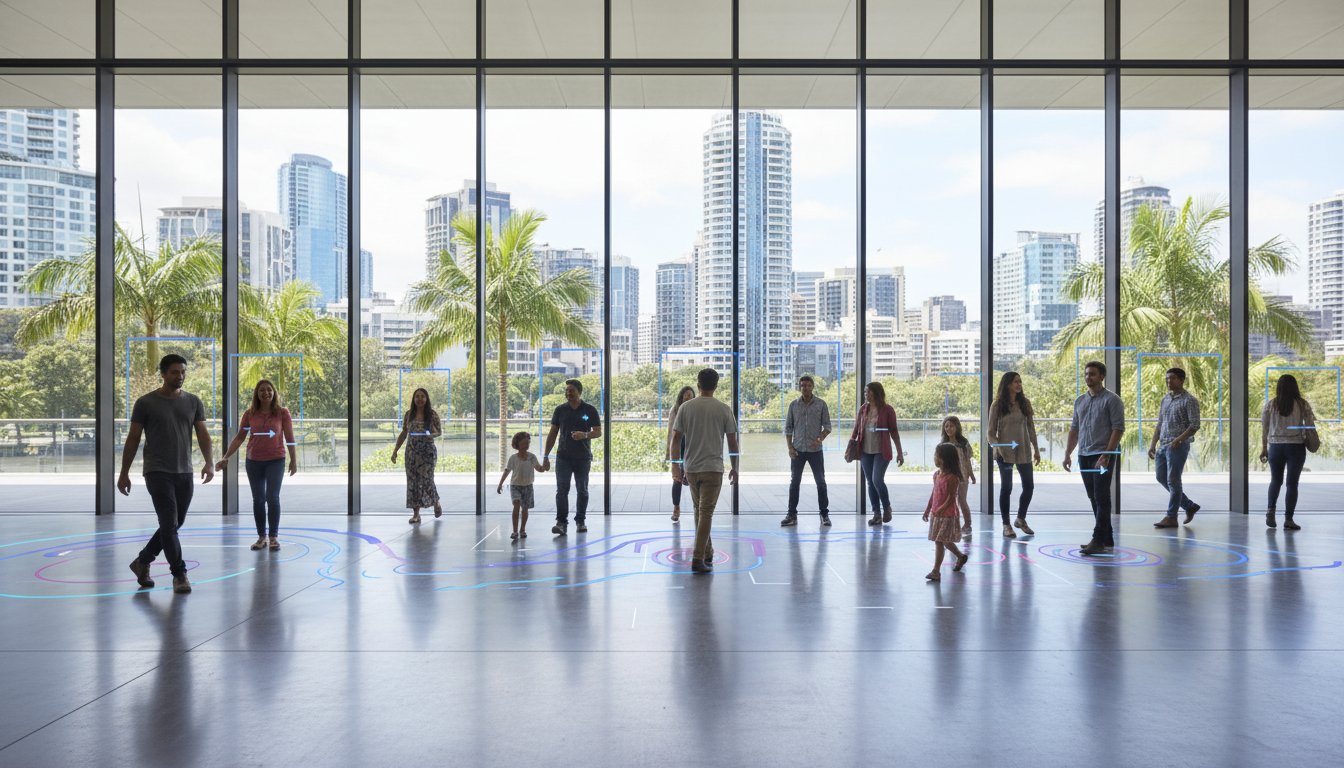
The process relies on anonymisation at the point of capture. High-end sensors don’t record video or store photographs of faces. Instead, the onboard processor converts visual input into mathematical vectors in real-time. By the time the data reaches your analytics dashboard, it’s already stripped of any personally identifiable information (PII). You’re tracking a digital shape, a direction, and a timestamp; the system never knows the name, gender, or age of the visitor unless specifically programmed for demographic analysis without PII storage.
Compliance with Australian Privacy Principles (APP)
Australian businesses must adhere to the 13 Australian Privacy Principles (APP) under the Privacy Act 1988. Ethical ai people counting systems utilise a “Privacy by Design” framework, meaning privacy protection is built into the physical hardware architecture. This ensures that no biometric templates are created or stored. To maintain legal and ethical standards, businesses should follow this checklist:
- Verify that the sensor processes data “on the edge” without cloud-based image storage.
- Ensure clear signage is displayed at entrances according to local ACCC guidelines.
- Audit your data retention policy to ensure only aggregate statistics are kept long-term.
- Confirm the vendor doesn’t share raw data with third-party advertising networks.
Eliminating False Positives in Crowded Spaces
Legacy infrared beams and thermal sensors often fail because they can’t distinguish between a human and a shopping trolley. AI-driven systems use deep learning models to ignore non-human movement. They successfully filter out shadows, swinging signs, and automatic sliding doors that would otherwise inflate traffic numbers by 12% to 15%. This creates a baseline of data you can actually trust for staffing decisions.
Precision also improves through sophisticated staff exclusion. By using small Bluetooth tags or IR-based wearables, the system identifies employees and removes their movements from the final count. This ensures your conversion rates aren’t skewed by staff members walking in and out for breaks. Furthermore, AI handles group logic with ease. If a family of four enters together, the system identifies the cluster as a single buying unit. This provides a more realistic view of sales opportunities in high-value environments, such as a showroom where floor space might cost upwards of A$2,500 per square metre. You get 98% accuracy without ever compromising the anonymity of the individual shopper.
Turning AI Data into Actionable Business ROI
Data loses its value if it doesn’t translate into profit. While the technology behind ai people counting is impressive, its true power lies in its ability to reveal the logic behind your revenue. Moving beyond simple attendance figures allows you to focus on the Sales Conversion Rate. This metric is the bridge between mere counting and genuine growth. When you compare entry data against your POS transactions, you identify the ‘leaky bucket’ in your sales funnel. For instance, if a flagship store in Sydney shows high footfall but a conversion rate below 12%, the data suggests an issue with stock levels or staff engagement rather than a lack of consumer interest.
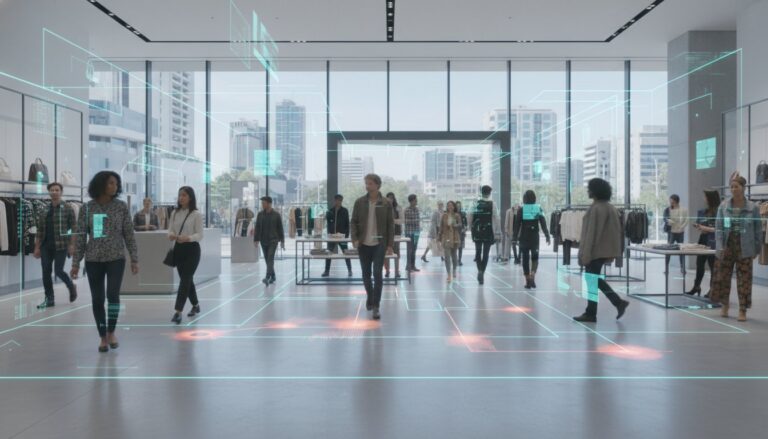
Spatial analytics provide the blueprint for store layout optimization. Heatmaps reveal that customers often bypass specific quadrants of a floor plan, leaving up to 25% of inventory effectively invisible. By relocating high-margin items to ‘hot zones’ identified by AI sensors, retailers see immediate uplifts in basket value. This isn’t guesswork; it’s a strategic reconfiguration based on observed human movement. Predictive analytics then take this a step further by forecasting future traffic trends with up to 90% accuracy. Managers can move from reactive fire-fighting to proactive planning, ensuring the business is always prepared for the next surge in demand.
Optimising Staffing and Labour Costs
Labour costs represent one of the largest overheads for Australian businesses. Aligning rosters with precise traffic peaks in Brisbane or Perth ensures you aren’t overstaffed during the 2:00 PM slump or understaffed during the 5:30 PM rush. Detailed traffic logs help managers eliminate ‘labour leak’ during quiet periods while protecting the customer experience during busy windows. A 5% improvement in staff alignment typically leads to a double-digit ROI by capturing missed sales and reducing unnecessary wage expenses.
Measuring Marketing and Campaign Success
Modern ai people counting systems allow you to see the direct correlation between a digital ad spend and physical store entries. You can track the ‘draw rate’ of a specific window display or a weekend marketing event with precision. Comparing performance across multiple Australian locations, such as a Melbourne CBD site versus a Gold Coast outlet, helps identify which regional strategies deliver the best return. If an A$10,000 marketing campaign results in an 18% increase in traffic, you have the hard evidence needed to justify future budgets.
Ready to transform your data into growth? Discover how Footfall provides the strategic advantage your business needs.
Implementing AI People Counting with Footfall Australia
Choosing the right technology partner is as critical as the technology itself. Footfall Australia provides the FootfallCam Pro2, a device that represents the current gold standard in hardware for ai people counting. This sensor uses 3D stereoscopic vision and edge computing to process data locally, ensuring high-speed accuracy while maintaining strict privacy compliance. It distinguishes between adults, children, and even staff members, removing the “noise” that often plagues lesser systems. This hardware doesn’t work in a vacuum; it feeds directly into the V9 Software, a sophisticated analytics platform. V9 turns raw coordinates into actionable reports, offering over 60 different types of charts and 15 automated reports that help managers visualize customer flow and peak occupancy periods instantly.
Reliability in the Australian market requires more than just a box in the mail. We maintain a national partner network that provides local installation and technical support across every state and territory. This ensures that a technician who understands local building codes and retail environments handles your setup. For businesses currently tethered to obsolete infrared or thermal counters, our Legacy Swap Out Plan offers a strategic path forward. We’ve helped dozens of firms replace failing 1st-generation tech with modern AI sensors, often resulting in a 30% increase in data reliability and a significant reduction in long-term maintenance costs. It’s a calculated move from guesswork to evidence-based management.
Seamless Integration with Your Existing Tech Stack
Your data is most powerful when it talks to your other systems. Footfall Australia’s solutions integrate directly with your Point of Sale (POS), ERP, and CRM software. By aligning transaction data with foot traffic, you can calculate real-time conversion rates and identify exactly when sales opportunities are being missed. If you’ve already invested heavily in security, the FootfallCam Centroid provides a cost-effective bridge. This AI gateway connects to your existing CCTV cameras, using its onboard processor to add ai people counting capabilities to standard video feeds. This repurposes your current hardware while upgrading your intelligence. For those with unique requirements, our full API access allows your internal IT teams to pull specific data points into custom business intelligence dashboards or mobile apps.
National Support for Australian Businesses
Local technical assistance is the backbone of our service delivery. We don’t rely on offshore call centers; instead, we provide direct support and comprehensive maintenance plans tailored to the Australian retail calendar. Our commitment to precision is best illustrated by a project we completed in March 2024 for a national fashion retailer. We deployed AI sensors across 50 stores nationwide, from flagship CBD locations to regional centers. By calibrating each sensor to the specific lighting and ceiling heights of the individual sites, we achieved a verified accuracy rate of 98.2%. This precision allowed the retailer to reallocate staff hours more effectively, saving an estimated A$12,000 in labor costs per store annually. You can Contact Footfall Australia for a tailored AI traffic analysis strategy to begin optimizing your own physical spaces with the same level of data-driven confidence.
Master Your Physical Environment with Actionable Intelligence
Transitioning from basic tallying to sophisticated ai people counting allows your business to decode the human narrative within your walls. You gain a 99.5% accuracy guarantee that transforms raw foot traffic into precise spatial analytics. This level of detail ensures your operations align with actual visitor behavior while maintaining full APP and GDPR privacy compliance. Footfall Australia has supported local retailers with these data-driven solutions since 2004; we turn complex sensor data into measurable business growth. You’ll optimize staff rosters, analyze dwell time, and improve conversion rates based on hard evidence rather than intuition. It’s time to eliminate the blind spots in your physical space and lead with quiet confidence. Our reporting systems bridge the gap between high-tech innovation and practical retail application, providing the clarity you need to stay ahead of shifting consumer trends in the Australian market.
Request a Free Quote for Your AI People Counting System
Take the first step toward a more efficient, evidence-based future for your business today.
Frequently Asked Questions
How is AI people counting different from standard CCTV?
AI people counting differs from standard CCTV by using edge computing to transform video into anonymous data points instantly. While CCTV records footage for later review, AI sensors analyze movement patterns in real-time to generate metrics like dwell time. This shift from passive recording to active intelligence allows businesses to act on 100% of their visitor data without manual observation.
Is AI people counting compliant with Australian privacy laws?
AI systems are fully compliant with the Australian Privacy Act 1988 and the Australian Privacy Principles. These sensors don’t record or store personally identifiable information. Instead, they convert human shapes into digital metadata at the edge. Because no facial images leave the device, your business avoids the legal risks associated with biometric data storage.
What is the accuracy rate of an AI people counter?
Leading ai people counting solutions deliver a 98% accuracy rate in most retail environments. This performance remains consistent even during peak periods when multiple people enter simultaneously. Older infrared technologies often suffer from a 15% margin of error due to grouping issues. Modern AI models distinguish between individuals with precision, ensuring your conversion rates are based on factual evidence.
Can AI people counters distinguish between staff and customers?
Yes, advanced sensors use staff exclusion technology to separate employee movements from customer traffic. You can implement this through wearable MAC-address tags or by defining specific staff-only paths in the software. Removing these internal movements ensures your conversion data reflects genuine sales opportunities. This precision helps managers optimize rosters based on actual customer needs rather than skewed statistics.
Do I need to replace my existing cameras to use AI counting?
You don’t always need to replace your hardware, though dedicated sensors offer superior results. Many AI platforms can process streams from existing IP cameras via RTSP protocols. However, purpose-built ai people counting sensors typically provide a 20% increase in depth perception compared to standard security lenses. This investment pays for itself through more reliable spatial analytics and fewer false positives in complex lighting.
How much does an AI people counting system cost in Australia?
A professional AI people counting setup in Australia typically starts at A$850 for a single-entrance sensor. Beyond the initial hardware, cloud-based analytics platforms generally cost between A$45 and A$120 per month. These figures vary based on the complexity of your floor plan and the depth of reporting required. Investing in these systems replaces the high cost of manual audits with automated, 24/7 accuracy.
What kind of internet connection is required for AI counters?
Most AI counters require a stable internet connection with a minimum upload speed of 2Mbps. The system doesn’t stream constant video to the cloud; it only transmits small metadata packets containing count numbers and timestamps. This efficient data usage means a single NBN connection can support multiple sensors across a large facility without impacting your primary business network.
Can AI counters work in low-light or outdoor environments?
AI sensors are designed to perform in challenging conditions, including low-light environments down to 0.5 lux. Outdoor models feature IP67-rated housings to withstand Australian weather conditions like heavy rain or dust. Built-in Wide Dynamic Range technology ensures the AI continues to track visitors accurately even when facing direct sunlight or deep shadows at building entrances.