Retail Staff Optimisation: Data-Driven Workforce Management for Australian Retailers
With only 77% of Australian retail executives expecting sales growth this coming holiday season, the margin for operational error has never been thinner. Most managers understand the frustration of high labour costs during quiet periods or watching sales slip away because a skeleton crew is overwhelmed by a sudden rush. Relying on intuition for rostering often feels like guesswork because it is. If you’re looking for effective retail staff optimisation Sydney retailers can use, the solution lies in moving beyond intuition to a strategy built on empirical evidence.
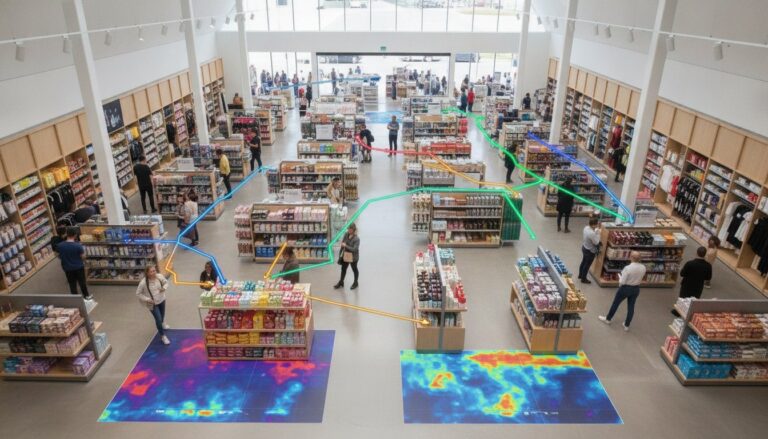
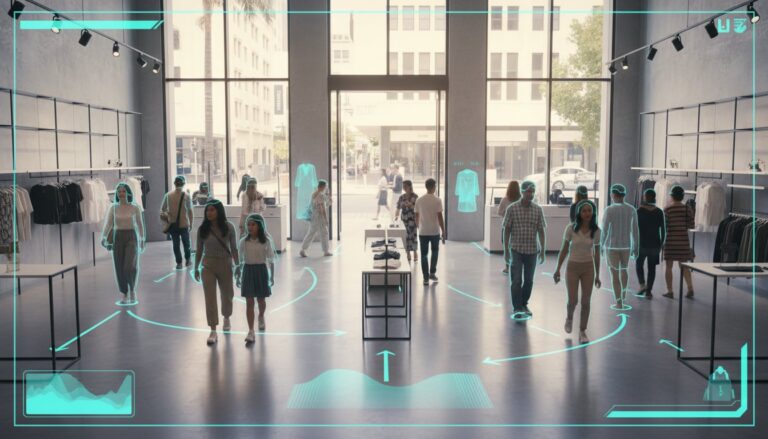
We’ll show you how to transform labour efficiency by aligning staffing with real-time customer traffic data from the FootfallCam Pro2. This article explores the transition to data-led workforce management, providing a clear path to optimised staff-to-customer ratios and lower overheads. By treating physical presence as a narrative of movement, you’ll ensure your floor is always prepared for shifting behavioural trends.
Key Takeaways
- Transition from reactive, transaction-based staffing to proactive, footfall-aligned rostering to capture missed opportunities during high-traffic periods.
- Identify store-specific “Power Hours” through 15-minute data analysis to ensure your most skilled staff are on the floor when they’re needed most.
- Leverage FootfallCam V9 Software to track real-time labour efficiency and pivot toward conversion-based KPIs for more accurate performance measurement.
- Adopt a scientific approach to retail staff optimisation Sydney businesses can utilize to lower operational overheads and improve service consistency.
The Fundamentals of Retail Staff Optimisation through Footfall Data
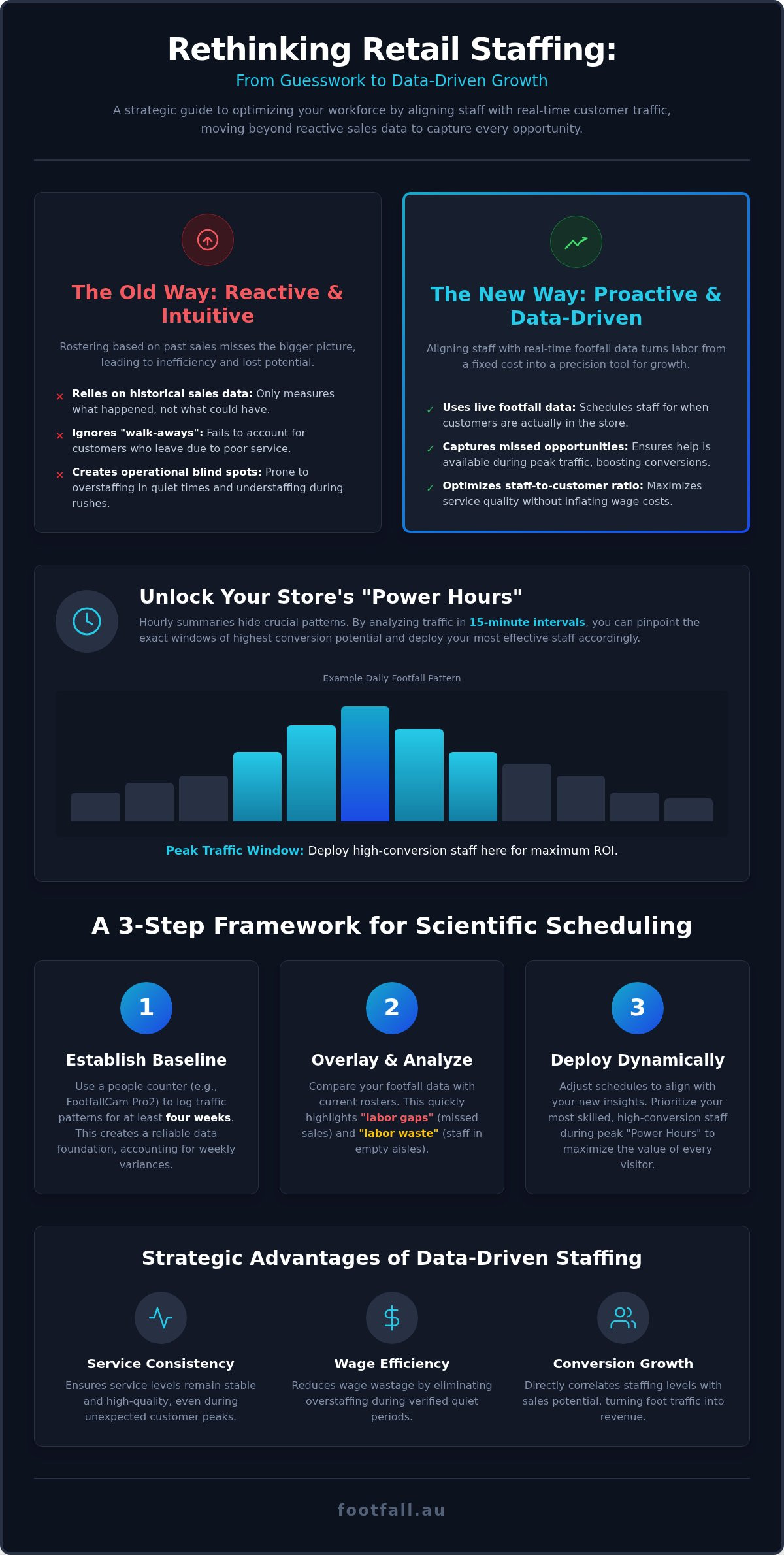
Retail staff optimisation is the strategic alignment of employee work hours with actual customer traffic volumes to maximize sales conversion. While many businesses rely on historical sales data, this method is fundamentally reactive. It measures what happened, not what could have happened. Effective Fundamentals of Retail Staff Optimisation require a shift toward proactive planning based on live movement patterns. It’s about preparation before arrival.
Transaction-based staffing creates a significant blind spot. It only accounts for completed sales, effectively ignoring the “walk-aways” who left because they couldn’t find assistance during a rush. Footfall-based staffing captures these missed opportunities. It ensures personnel are available when traffic peaks, regardless of whether a transaction has occurred yet. This approach turns labour from a fixed cost into a precision tool for growth.
The primary metric for this efficiency is the Staff-to-Customer Ratio. By maintaining an optimal balance, stores ensure high service quality without inflating operational costs. This metric is the cornerstone of retail staff optimisation Sydney retailers use to stay competitive. Maintaining this ratio provides several strategic advantages:
- Consistency: Ensures service levels remain stable during unexpected peaks.
- Efficiency: Reduces wage wastage during verified quiet periods.
- Growth: Directly correlates staffing levels with conversion potential.
Moving Beyond Intuition: The Role of People Counting Technology
Modern people counting systems Australia provide the empirical foundation needed for objective scheduling. Don’t rely on POS data alone; it’s insufficient. It fails to record the volume of potential buyers who entered the space but exited empty-handed due to long queues or lack of floor support. Accurate hardware, such as the FootfallCam Pro2, removes the guesswork. It translates physical presence into actionable datasets, allowing managers to see exactly when their staff-to-customer ratio is out of sync. This transparency ensures retail staff optimisation Sydney strategies are based on reality rather than manager intuition.
Strategic Rostering: Aligning Labour with Peak Traffic Patterns
Effective Strategic Rostering begins by identifying “Power Hours”. These are the specific windows where traffic density is highest and conversion potential peaks. By analysing historical data in 15-minute intervals, you can see movement patterns that hourly summaries often miss. This granular view allows for the precise retail staff optimisation Sydney retailers and national businesses require to maintain high service quality without overspending.
Calculating the optimal headcount involves more than just counting entries. You must factor in target service levels and average dwell times. If a customer spends 20 minutes in-store, they require a different engagement strategy than someone in a quick-service environment. Predictive analytics help you adjust these rosters for national promotional events or public holidays, ensuring you aren’t caught understaffed during a predictable surge.
A Step-by-Step Framework for Data-Driven Scheduling
Implementing a scientific approach to rostering involves three distinct phases designed to eliminate guesswork:
- Step 1: Baseline your traffic patterns using the FootfallCam Pro2 for at least four weeks. This accounts for weekly variances and provides a reliable data foundation.
- Step 2: Overlay your footfall peaks with current rosters. This comparison quickly highlights “labour gaps” where sales are lost and “labour waste” where wages are spent on empty aisles.
- Step 3: Deploy dynamic scheduling. Prioritise your high-conversion staff during peak traffic windows to maximise the ROI of every visitor.
This structured method ensures your workforce remains an active driver of revenue rather than a stagnant overhead. To see how these metrics look in a live environment, you can explore our reporting software capabilities.
Maximising Conversion Rates with FootfallCam Analytics
FootfallCam V9 Software serves as the definitive central dashboard for monitoring real-time labour efficiency across multiple national locations. It moves the focus from raw sales figures to conversion rates, providing a clearer picture of store performance. By leveraging retail footfall analysis Australia, managers can set KPIs that reflect how effectively staff engage with the total volume of visitors. This is a critical component of the retail staff optimisation Sydney businesses use to ensure every customer interaction is accounted for.
For businesses with established infrastructure, the FootfallCam Centroid offers a high ROI by transforming existing CCTV into an advanced AI-driven tracking system. This technology directly addresses the operational strains highlighted in the SDA report on retail workforce pressures, where systemic understaffing can lead to missed revenue and employee burnout. Using empirical evidence to justify staffing increases protects both the bottom line and the workforce.
Leveraging AI for Advanced Workforce Management
Accuracy remains the priority when interpreting movement. The “Staff Exclusion” feature of the FootfallCam Pro2 ensures that employee movements don’t skew customer traffic data, maintaining the integrity of your conversion metrics. Automated reports further empower regional managers by flagging understaffing issues across the network before they impact quarterly results. This level of transparency ensures that retail staff optimisation Sydney strategies are consistently applied across all physical environments, turning complex technical data into simple, intuitive reporting that empowers the user. To ensure your recruitment process is just as data-driven and secure, you can learn more about Elevated Background Checks for comprehensive screening services.
Transitioning from intuition to evidence-based management is no longer optional in a tightening economic landscape. By aligning employee hours with verified visitor traffic, you eliminate the high costs of overstaffing and the missed revenue of under-resourced peak windows. Implementing a strategy for retail staff optimisation Sydney businesses can rely on ensures that every operational decision is backed by the 99.5% accuracy of FootfallCam Pro2 AI technology. This shift toward conversion-based KPIs, supported by seamless integration with FootfallCam V9 analytics, empowers managers to lead with quiet confidence. With national support and maintenance plans available, your infrastructure remains as reliable as the data it produces. It’s time to turn your labour expense into a precision-engineered driver of growth. Optimise your retail workforce with Footfall Australia’s data-driven solutions. We’re here to help you stay ahead of shifting behavioural trends with clarity and precision.
Frequently Asked Questions
How does footfall data help in reducing retail labour costs?
Footfall data reduces costs by identifying periods where staff volume exceeds customer presence. By aligning work hours with actual traffic patterns, you eliminate wage wastage during quiet hours. It replaces intuition with empirical logic, ensuring labour is deployed only when conversion potential is highest. This data-driven approach transforms staffing from a fixed overhead into a scalable, precision-engineered resource. For those also managing property safety, professional providers like 209 Security offer the guard services necessary to protect businesses and events during these high-traffic windows.
What is the ideal staff-to-customer ratio for a retail store?
The ideal ratio varies based on your service model and customer dwell times. A high-touch luxury environment requires more personnel per visitor than a self-service outlet. FootfallCam V9 Software allows you to test different ratios and observe how they impact conversion. This empirical testing is central to the retail staff optimisation Sydney retailers use to find their store’s unique performance equilibrium.
Can people counting systems distinguish between staff and customers?
Modern systems like the FootfallCam Pro2 include a Staff Exclusion feature. This AI technology identifies and removes employee movements from the final count, preventing internal activities from skewing your visitor data. Accurate exclusion ensures your conversion metrics remain untainted. It provides a reliable foundation for performance reporting, treating physical presence as a clear narrative of genuine customer actions.
How long does it take to see an ROI from staff optimisation technology?
ROI is often visible within the first quarter as stores begin to eliminate labour waste and capture missed sales. By identifying specific “Power Hours”, retailers can reallocate staff to high-traffic windows immediately. This proactive strategy for retail staff optimisation Sydney businesses implement typically covers the initial hardware investment through measurable gains in sales conversion and more efficient management of operational overheads.