
People Counting Systems for Lease Agreements: A Data-Driven Guide for 2026
By 2026, the global market for people counting systems is projected to reach a valuation of $2.45 billion, with the retail sector capturing a dominant 33.9% share. This growth signals a fundamental shift in commercial property management, as the integration of a people counting system for lease agreements becomes the new standard for verifying asset value. You’ve likely sat through negotiations where footfall claims felt more like marketing fluff than measurable reality, creating a persistent gap in trust between landlords and tenants.
We believe that every lease should be anchored in transparency rather than intuition. This guide explains how to leverage accurate footfall data to justify rental rates, negotiate turnover leases, and build data-backed relationships. We’ll preview how advanced hardware like the FootfallCam Pro2 and FootfallCam V9 Software turn human movement into actionable insights. You’ll learn to move beyond the limitations of fixed-rent models and embrace a performance-based approach that increases total asset valuation through verified occupancy data. This is your roadmap to a more objective, efficient, and profitable leasing strategy for the modern era.
Key Takeaways
- Shift from static square-metre pricing to performance-based models that reflect the actual commercial utility of your retail space.
- Justify premium rental rates in high-traffic zones by using a people counting system for lease agreements to provide objective proof of footfall.
- Establish a foundation of transparency through shared reporting dashboards that eliminate subjectivity and foster stronger landlord-tenant partnerships.
- Implement traffic thresholds and turnover rent clauses that use verified data to protect revenue and ensure fair occupancy costs.
- Secure long-term data integrity for legal and commercial scrutiny by deploying industry-standard hardware like the FootfallCam Pro2.
The Evolution of Commercial Leasing: Beyond Square Metres to Performance
Commercial real estate is moving away from the static “price per square metre” model. In the past, rent was determined by physical footprint, regardless of how many people actually walked through the door. Today, asset managers and retailers prioritise performance. They need to know that the space they pay for actually delivers an audience. This shift relies heavily on people counting systems to provide an objective baseline for value. It’s no longer enough to guess at the potential of a location; you have to prove it.
Manual headcounts or “clickers” simply don’t hold up under legal or financial scrutiny. They’re prone to human error and lack the continuous, time-stamped verification needed for high-stakes contracts. In the Australian market, where transparency is becoming a competitive necessity, using a people counting system for lease agreements ensures that both parties work from a single source of truth. It transforms footfall from a vague estimate into a neutral third-party arbiter that settles disputes before they begin. This empirical approach builds confidence during negotiations, allowing for more flexible and fair commercial arrangements.
Why Traditional Leasing Models are Becoming Obsolete
Relying solely on tenant-reported sales data is risky. It only tells half the story. A store might have high sales but poor conversion, or vice versa. Without traffic data, a landlord can’t tell if a tenant’s struggle is due to a lack of mall traffic or poor internal operations. Market volatility also makes long-term, fixed-rate leases dangerous. If foot traffic drops by 20% due to external factors, a fixed lease becomes a burden that could lead to vacancy. Conversely, if traffic spikes, the landlord misses out on the increased value of the location. Modern retailers demand transparency in high-traffic environments to ensure they aren’t overpaying for declining assets.
Defining “Lease-Grade” Footfall Data
Not all data is created equal. For a metric to be “lease-grade,” it must be legally and financially defensible. This requires high-precision hardware like the FootfallCam Pro2, which offers 99.5% accuracy even in crowded environments. Accuracy is the foundation of trust in a people counting system for lease agreements. If the data is questionable, the entire contract is at risk.
Lease-grade data is a verified record of visitor traffic used to calculate asset value.
This level of precision allows for the creation of “Traffic Thresholds” and “Turnover Rent” clauses that are actually enforceable. When the stakes involve millions of dollars in rental income, “approximate” numbers aren’t enough. You need automated systems that provide granular, real-time insights through sophisticated platforms like FootfallCam V9 Software. This ensures that every decision, from rent increases to lease renewals, is backed by empirical evidence rather than intuition. By treating footfall as a currency, both landlords and tenants can optimise their operations for long-term growth.
How People Counting Systems Validate Asset Value and Rental Rates
Determining the value of a retail shopfront often feels like an exercise in subjective estimation. However, a people counting system for lease agreements provides the empirical evidence required to categorise zones with surgical precision. By benchmarking traffic across different sections of a shopping centre, landlords can distinguish between “Prime” and “Secondary” zones based on actual volume rather than proximity to an anchor tenant alone. This data-driven approach allows for the justification of premium rates for high-visibility shopfronts that consistently capture peak-hour crowds. When you can prove that 5,000 people pass a specific door between 10 AM and 2 PM, the conversation shifts from “what if” to “what is.”
Historical data plays a vital role when attracting high-tier national tenants. These organisations operate on thin margins and require high levels of certainty before committing to long-term agreements. Providing a 24-month record of verified footfall demonstrates precinct stability and growth potential. It transforms a sales pitch into a strategic business case. Correlating these traffic patterns with external events, such as local festivals or infrastructure upgrades, further proves the long-term precinct value to prospective partners.
Justifying Rent Increases with Verified Growth
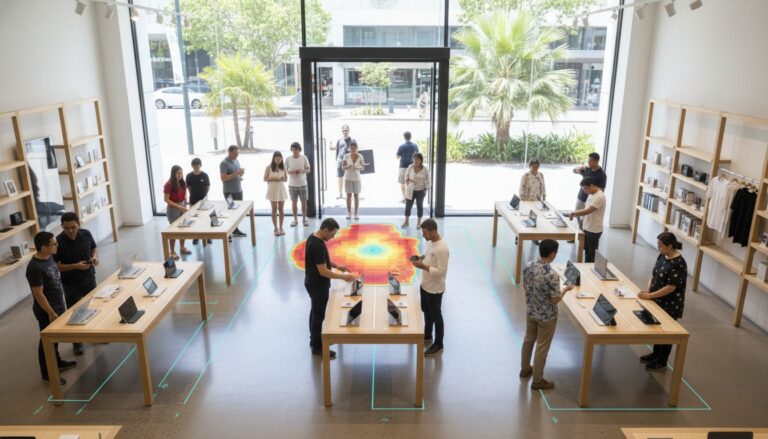
Traditional rent reviews often rely on the Consumer Price Index (CPI), which rarely reflects the actual commercial performance of a specific location. By leveraging retail footfall analysis Australia, property managers can propose rent adjustments based on tangible traffic growth. If a precinct sees a measurable increase in annual visitors due to successful marketing efforts, the landlord has a defensible reason to adjust rates. Providing tenants with visual heatmaps from FootfallCam V9 Software further reinforces this value, showing exactly how many potential customers pass their entrance daily. This level of detail makes it difficult for tenants to dispute the underlying value of the space.
Protecting Asset Value During Market Downturns
Data acts as a shield during economic shifts. If a tenant experiences a sales dip, they might immediately request a rent reduction. However, if the people counting system for lease agreements shows that precinct traffic remains steady, the landlord can demonstrate that the location’s value is intact. This suggests the issue may lie with the tenant’s internal conversion rates rather than the property’s appeal. Identifying “dead zones” early allows for proactive management, such as reconfiguring common areas to redirect flow before vacancies occur. For owners looking to refinance, verified occupancy and traffic data provide banks with high-integrity metrics for more favourable valuations.
If you want to secure your next negotiation with hard evidence, exploring precision hardware solutions is the first step toward a more transparent agreement.

Bridging the Gap: Data Transparency Between Landlords and Tenants
Trust is the most significant hurdle in any performance-based contract. Tenants often ask why they should rely on a landlord’s internal metrics to determine their rent. Implementing a people counting system for lease agreements solves this by providing a transparent, verifiable data stream that both parties can access simultaneously. When data is siloed, it becomes a weapon for negotiation; when it’s shared, it becomes a tool for mutual growth. This transparency reduces the need for expensive third-party audits and simplifies the legal friction that often accompanies rent reviews or turnover calculations. By making the data undeniable, you remove the emotional heat from the bargaining table.
Positioning the people counter as a value-add service rather than a surveillance tool changes the narrative. It’s an investment in the tenant’s success as much as the landlord’s security. When both parties look at the same dashboard, they can align their strategies toward a common goal: increasing the precinct’s overall performance. This collaborative approach turns a standard lease into a strategic partnership where every decision is backed by empirical evidence.
Shared Dashboards as a Value-Add Service
Landlords can transform the perception of monitoring into a premium service by offering tenants access to shared data dashboards. Through the FootfallCam V9 Software, retailers can see precinct-wide traffic trends in real-time. This isn’t just about rent; it’s about operational efficiency. Tenants use this information to optimise their staffing levels, ensuring they have enough floor coverage during precinct-wide peak hours. It also fosters collaborative marketing. If data shows a drop in traffic on Tuesday afternoons, both the mall management and the retailers can launch synchronised promotions to drive footfall. This shifts the landlord-tenant dynamic from adversarial to partnership-driven, creating a more stable and profitable environment for everyone involved.
Privacy and Compliance in the Leasing Context
Data privacy isn’t just a legal requirement; it’s a reputational necessity. Modern people counting system for lease agreements must adhere to strict Australian privacy principles to remain legally defensible. Unlike traditional CCTV, which records identifiable faces and creates significant privacy risks, non-intrusive AI counters focus purely on human movement patterns. FootfallCam Pro2 ensures GDPR and Australian privacy compliance by processing data on the edge. This means no personal video data is ever transmitted or stored on a server. Only anonymised, numerical counts are recorded. This technical distinction is crucial for lease agreements because it removes the liability of handling sensitive personal information while still providing the high-accuracy metrics required for financial contracts.
Implementing Footfall Metrics into Modern Lease Frameworks
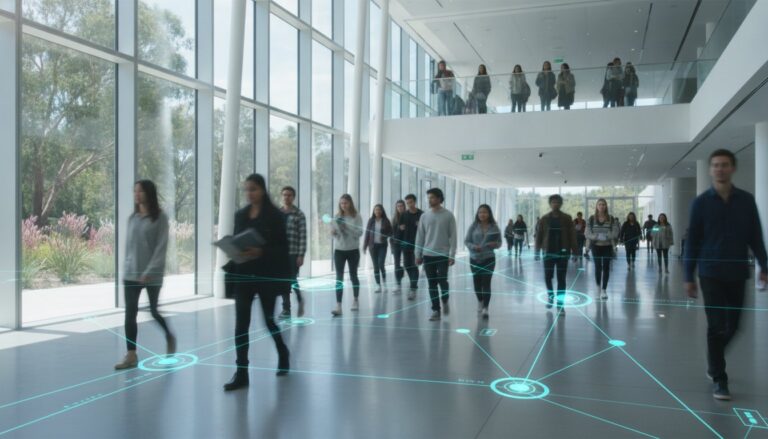
Integrating empirical data into a legal contract requires more than just a summary report. It demands a structured framework where metrics trigger specific commercial outcomes. A people counting system for lease agreements provides the objective evidence needed to support “Traffic Threshold” clauses. These provisions allow tenants to negotiate rent abatement or even early exit rights if precinct-wide traffic falls below a pre-agreed baseline for a sustained period. This protects the retailer from management failures or external shifts that diminish the location’s value. Simultaneously, landlords can use people counting technology to automate smart building functions, such as adjusting HVAC and lighting based on real-time occupancy, ensuring the asset remains efficient and cost-effective.
The Turnover Rent Verification Model
Turnover rent models usually rely entirely on sales figures reported by the tenant. However, sales data alone doesn’t tell the whole story. By using footfall as a secondary check, landlords can calculate the “Conversion Rate” of a store. If a tenant reports low sales while the people counting system for lease agreements shows record-high traffic, it often points to internal operational issues rather than a lack of precinct value. This insight is invaluable during financial audits. It helps landlords identify whether a store’s poor performance is due to their own product mix or staffing, rather than the property’s location. Establishing a “fair use” policy for this shared data ensures that audits are based on movement patterns, providing a more holistic view of commercial health.
Data-Driven Common Area Maintenance (CAM)
Traditional Common Area Maintenance (CAM) fees are often distributed based on square footage, which rarely reflects actual usage. A more equitable approach involves allocating cleaning and security costs based on verified zone usage. If the FootfallCam Centroid identifies that the food court receives 70% of the precinct’s traffic, it’s logical to allocate a proportional share of the maintenance budget to that area. This data-driven logic justifies utility charges and service frequencies to all tenants. To make this work, modern contracts must include specific “Data Access” clauses. These clauses define how occupancy data is collected, who has access to the reporting, and how it will be used to calculate annual reconciliations. This level of granular detail removes the guesswork from property management and ensures every dollar spent on maintenance is backed by a demonstrated need.
To begin building a more equitable leasing framework for your property, you can view our hardware range to find the right precision tools for your precinct.
Leveraging FootfallCam Technology for High-Stakes Lease Negotiations
High-stakes negotiations require high-integrity tools. When millions of dollars in rental income are tied to performance metrics, the underlying hardware must be beyond reproach. Implementing a robust people counting system for lease agreements requires hardware that can withstand the scrutiny of a financial audit. The FootfallCam Pro2 has emerged as the industry standard in Australia because it delivers the precision necessary for legally defensible contracts. By providing a consistent, time-stamped record of visitor movement, it ensures that both landlords and tenants are operating from an identical data set. This technical reliability is what transforms a simple sensor into a strategic commercial asset.
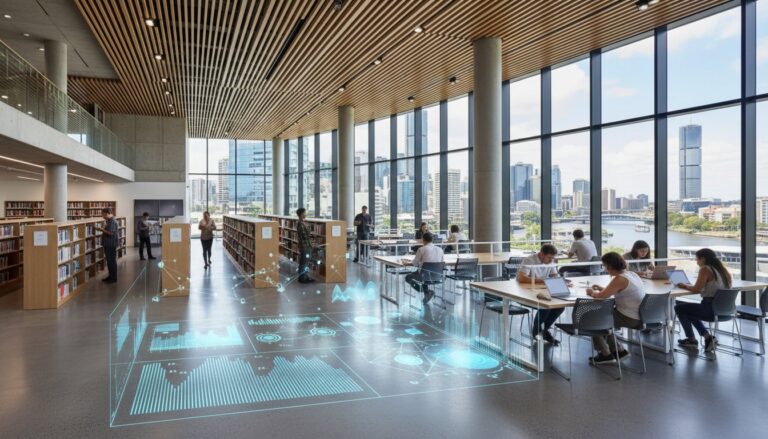
Data is only as valuable as the reports it generates. The FootfallCam V9 software plays a critical role here, as it automates the creation of lease-ready documentation. Rather than manually compiling spreadsheets, asset managers can generate automated reports that highlight peak traffic periods, zone popularity, and year-on-year growth. These insights are essential during quarterly rent reviews or when restructuring turnover-based agreements. When you present a tenant with a professional, data-backed performance summary, the conversation moves away from anecdotal claims and toward evidence-based success.
Hardware Reliability: The Foundation of the Lease
Cheap or consumer-grade sensors often fail the audit test for commercial contracts. They lack the sophisticated AI-based filtering required to distinguish between staff, security personnel, and actual customers. They also struggle to filter out children or shopping trolleys, which can artificially inflate footfall numbers and lead to disputes. The FootfallCam Pro2 maintains a 99.5% accuracy rate, ensuring that the data used in your lease is a true reflection of commercial opportunity. Because commercial leases often span 5 to 10 years, long-term data continuity is vital. Our Legacy Swap Out Plan allows property owners to keep their technology current without disrupting the historical data stream, protecting the integrity of the contract over its entire lifecycle.
Consultative Support for Asset Managers
Managing a national portfolio requires more than just hardware; it requires a strategic partner. Footfall Australia works closely with landlords and asset managers to coordinate large-scale rollouts across multiple precincts. This partnership ensures that every sensor is calibrated for its specific environment, whether it’s a high-ceiling atrium or a narrow shopfront entrance. To maintain the 24/7 data continuity required for performance-based leases, we offer both Basic and Premium Support Plans. These plans provide the technical oversight needed to ensure that no data gaps occur during critical reporting periods. If you’re ready to transition your portfolio to a more transparent, data-driven model, you can contact Footfall Australia for a strategic consultation on your specific leasing requirements.
Securing the Future of Performance-Based Commercial Real Estate
The shift toward performance-based leasing represents a necessary evolution in commercial real estate. By moving beyond static physical measurements, property managers can finally align rental income with the actual commercial utility of a space. Integrating a people counting system for lease agreements ensures that every turnover clause and rent adjustment is backed by objective, high-integrity data. This approach replaces intuition with empirical evidence, fostering a culture of transparency that benefits both landlords and tenants alike. It turns a standard contract into a strategic partnership designed for long-term stability.
Precision remains the essential foundation of this new leasing paradigm. We provide the specialized tools required to defend your asset valuation with a 99.5% Accuracy Guarantee. Our solutions are trusted by major Australian retail property groups and maintain full compliance with Australian Privacy Principles, ensuring your data is both legally defensible and ethically sound. Optimise your lease agreements with Footfall Australia today to transform your property data into a sustainable commercial advantage. The future of physical environments belongs to those who lead with accuracy and transparency.
Frequently Asked Questions
Can people counting data be used as legal evidence in a rent dispute?
Yes, footfall data is admissible as legal evidence in rent disputes if the underlying technology meets industry standards for accuracy and data integrity. To be defensible, the system must provide time-stamped, unalterable records that demonstrate consistent uptime. Courts and tribunals value this empirical evidence because it provides a neutral baseline that isn’t influenced by the subjective claims of either party.
How does a people counting system differ from tenant sales reports for turnover rent?
While sales reports track actual transactions, a people counting system measures the total commercial opportunity available to a tenant. This distinction is vital for turnover rent because it helps identify whether low sales are due to a lack of precinct traffic or internal store performance issues. By measuring the conversion rate, which is sales divided by footfall, landlords and tenants can have more nuanced discussions about the property’s true value.
Is it legal to track visitor numbers in a shopping centre under Australian privacy laws?
Tracking visitor numbers is fully legal under Australian Privacy Principles, provided the system uses anonymised data collection methods. Modern sensors like the FootfallCam Pro2 process information on the edge, meaning they count human shapes without recording or storing identifiable facial features. This ensures full compliance with local regulations while still delivering the high-precision metrics required for commercial contracts.
What level of accuracy is required for a people counter used in a lease agreement?
For a people counting system for lease agreements to be considered contractually binding, it should ideally maintain an accuracy rate of 98% or higher. High-stakes commercial contracts often specify a 99.5% accuracy guarantee to ensure the data can withstand financial audits. Using lower-tier sensors with high error margins creates legal vulnerabilities that can lead to disputes during rent reconciliation.
Can I integrate footfall data into my existing property management software?
Footfall data can be integrated into most modern property management and business intelligence platforms through secure API connections. Our FootfallCam V9 Software is designed to export granular metrics directly into existing systems, allowing asset managers to view traffic data alongside financial performance. This technical compatibility ensures that footfall becomes a seamless part of your broader operational reporting.
Who typically pays for the people counting system: the landlord or the tenant?
The landlord typically covers the initial capital expenditure for the system as it represents a long-term investment in asset valuation and management. However, ongoing maintenance and data access costs are often distributed among tenants through Common Area Maintenance (CAM) fees. Some high-traffic retailers choose to install their own units to verify landlord claims and optimise their internal staffing.
What happens if the people counter fails during a lease period?
Reliable lease agreements should include clauses that address potential data gaps due to hardware failure or power outages. Utilising a Premium Support Plan ensures that technical issues are identified and resolved quickly to minimise downtime. In cases where data is missing, historical trends and precinct-wide averages are typically used to estimate traffic for the affected period, maintaining the continuity of the agreement.
How can footfall data help in negotiating a lease renewal?
Footfall data provides a powerful tool for renewal negotiations by demonstrating the long-term growth and stability of a precinct. A people counting system for lease agreements allows landlords to justify rent increases by showing a measurable rise in visitor volume over the previous term. Conversely, tenants can use the same data to request more favourable terms if traffic has significantly declined due to external precinct changes.