The Ultimate Guide to Library Patron Counter Systems in 2026
Justifying your library’s budget to the local council can feel like an uphill battle fought with time-consuming manual headcounts and anecdotal evidence. This reliance on imprecise data not only undermines funding proposals but also obscures the true narrative of your community’s engagement. The move from guesswork to strategic certainty is no longer a future ambition; it is an operational necessity. An advanced library patron counter system provides the technology to unlock this data-driven clarity, transforming simple footfall into a powerful story of your library’s value.
In this definitive 2026 guide, we decode the technology that is reshaping modern libraries. We will demonstrate how to achieve automated, 99.5% accurate traffic reports that are fully compliant with Australian privacy principles. You will discover how to leverage these actionable insights to strategically justify staffing levels, optimize opening hours, and prove, with undeniable evidence, which zones of your library are having the greatest community impact.
Key Takeaways
- Learn why modern AI-powered sensors provide far greater accuracy and deeper insights than legacy infrared beam technology for tracking visitors.
- Transform raw footfall data into strategic staffing schedules and optimized library layouts, ensuring resources are allocated where they are needed most.
- Discover how to leverage precise visitor statistics to strengthen applications for Australian State Library grants and quantify your community impact.
- Understand how a modern library patron counter system provides the evidence-based insights needed to justify key operational and financial decisions.
What is a Library Patron Counter System?
A library patron counter system is an automated technology solution designed to measure and analyse visitor traffic with high precision. It provides real-time data on entries, exits, and live occupancy levels within your facility. This technology has evolved dramatically from the manual hand-clickers of the past. Today’s advanced systems leverage sophisticated people counter technology, including 3D AI-powered sensors, to deliver unparalleled accuracy.
As libraries cement their role as vital “Third Place” community hubs-a space between home and work-this objective data becomes the bedrock of strategic planning. Understanding precisely how, when, and where your spaces are being used is the foundation of effective library management for 2026 and beyond, enabling data-driven decisions that enhance community value.
The Shift from Foot Traffic to Patron Analytics
Simply counting heads is no longer sufficient for modern stakeholders. Library boards and local councils require deeper insights to justify funding and prove community engagement. The key is understanding the difference between total visits, which measures overall busyness, and the patterns of use that reveal patron behaviour. This granular data empowers libraries to optimise resource allocation, refine programming, and demonstrate their impact in a world of competing digital and commercial spaces.
Key Components of a Professional System
A modern library patron counter system integrates three core elements to deliver actionable intelligence:
- Hardware: At the forefront are overhead 3D stereo vision sensors with on-board AI processors. This technology ensures over 98% accuracy by anonymously tracking human shapes, differentiating between adults and children, and filtering out objects like prams or trolleys.
- Software: Data is processed and delivered to a secure, cloud-based dashboard. This platform transforms complex numbers into intuitive, automated reports on peak hours, popular zones, and visitor trends, making sophisticated analytics accessible to all staff.
- Connectivity: Systems are designed for seamless installation. Power over Ethernet (PoE) offers a reliable, single-cable solution for power and data, while Wi-Fi options provide the flexibility needed for heritage-listed buildings or areas where new cabling is impractical.
Comparing Technologies: Infrared Beams vs. AI Vision
Selecting the right technology for your library patron counter system is a critical decision that directly impacts data integrity and funding opportunities. Legacy infrared (IR) sensors, which operate on a simple “break-beam” principle, were once standard but are now fundamentally outdated. Their inability to distinguish between a person, a pushchair, or a group of patrons entering together leads to significant inaccuracies that can compromise strategic planning and grant applications.
For government-funded institutions, data precision is non-negotiable. The industry benchmark for reliable footfall data is 99.5% accuracy, a standard that IR technology simply cannot meet. This level of precision is essential for justifying budgets and demonstrating community impact, as detailed in documentation like the San Francisco Public Library’s official report on their system’s implementation. Investing in a “cheap” sensor that undercounts visitors by 10-15% is a false economy; the initial savings of a few hundred dollars can quickly be eclipsed by thousands in lost funding opportunities based on flawed attendance figures.
Why AI-Powered 3D Counting is the Gold Standard
Modern AI-powered sensors, using Time-of-Flight (ToF) or Stereo Vision, provide the granular, actionable intelligence that libraries need. This technology doesn’t just count; it understands context. Its key advantages include:
- Intelligent Filtering: The system accurately differentiates human traffic from inanimate objects, ignoring trolleys, prams, and even the movement of automatic doors.
- Demographic Insights: It can distinguish between adults and children, providing precise attendance data for specific programs like story time or youth workshops.
- Staff Exclusion: By detecting unique lanyards or tags, the system can automatically exclude staff members from patron counts, ensuring your visitor data is pure.
Privacy-First Data Collection
Advanced technology does not have to come at the cost of patron privacy. A modern library patron counter system is engineered to protect personal information from the ground up. The AI processes video data in real-time directly on the sensor, converting people into anonymous data points without ever storing or transmitting images. This methodology ensures full compliance with the Australian Privacy Principles and global standards like GDPR, building community trust through transparent and secure data practices.
Strategic Benefits: Using Data to Optimize Library Operations
A modern library patron counter system transcends simple door counting; it is a strategic intelligence tool that transforms raw footfall data into actionable insights. By moving beyond assumptions and embracing evidence-based management, libraries can unlock significant operational efficiencies, enhance the patron experience, and justify their value with concrete metrics.
Implementing a people counting solution provides a clear, objective view of how your space is actually used. This intelligence empowers library managers to make smarter decisions that directly impact budget allocation, resource deployment, and long-term planning. The primary benefits include:
- Staffing Optimization: Align staff rosters with precision to actual patron traffic peaks and lulls. This ensures assistance is available during the busiest hours and prevents overstaffing during quiet periods, optimising wage expenditure.
- Space Management: Identify and repurpose underutilised ‘dead zones’ while enhancing high-traffic areas. Data can validate decisions to expand study spaces, relocate high-demand collections, or redesign service points.
- Event Success Measurement: Move beyond registration numbers to measure the true attendance and engagement of workshops, author talks, and community programs, providing accurate ROI for marketing efforts.
- Energy Efficiency: Integrate real-time occupancy data with building management systems to automate HVAC and lighting, reducing utility costs in unoccupied zones and supporting sustainability goals.
Heatmapping and Zone Analytics
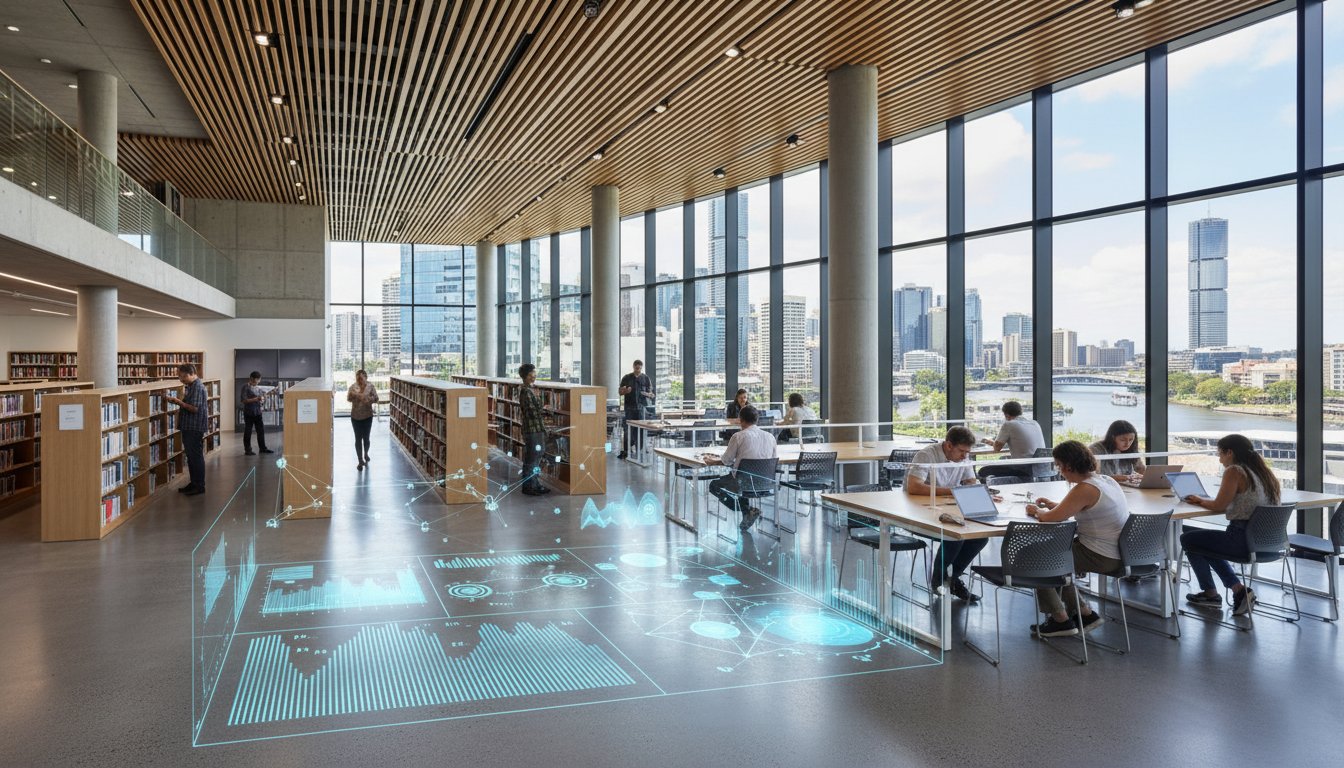
Understand the complete patron journey, not just the entry and exit. Heatmapping and zone analytics decode movement patterns throughout the library, tracking the flow between book stacks, quiet study areas, and collaborative makerspaces. Use dwell time data to objectively measure the engagement of a new book display or promotional stand. This data-driven approach, supported by findings in a recent academic review on user traffic analytics, allows you to optimise the entire library layout based on how patrons naturally interact with the space, improving discovery and accessibility.
Predictive Analytics for Future Planning
Historical data collected by a sophisticated library patron counter system provides the foundation for intelligent future planning. Analyse seasonal trends to accurately forecast visitor numbers for school holidays or predict lulls during university exam periods. This foresight is invaluable when planning for capital works or renovations, allowing you to justify funding requests with concrete evidence of current and projected capacity requirements. The intelligent algorithms within the FootfallCam V9 Software automate these complex predictions, transforming raw historical data into actionable forecasts for strategic decision-making.

Securing Funding with Footfall Data in Australia
In Australia’s competitive public funding landscape, anecdotal evidence is no longer sufficient. State Library grants and local council budgets are increasingly allocated based on demonstrable community impact. A precise library patron counter system transforms your visitor numbers from a simple tally into a powerful strategic asset, providing the hard evidence needed to justify and secure essential funding.
Move beyond basic door counts and translate footfall into compelling metrics like “Community Value per Visit.” By dividing your annual operating budget by the total number of visitors, you can present councillors with a clear, quantifiable cost per engagement-for example, a A$5 value for every person who walks through your doors. This reframes your library’s budget as a direct investment in community enrichment, making monthly briefings more impactful and budget defenses more robust. Automated reports aligned with council reporting cycles ensure this data is delivered consistently and without adding to staff workload.
Building a Data-Driven Business Case
Construct a compelling business case by systematically aligning your library’s performance with the objectives of your funding bodies. This strategic approach replaces guesswork with evidence-based arguments for continued or increased financial support.
- Identify Key KPIs: Isolate the specific metrics your local council or State Library values most, such as total visitor numbers, peak occupancy times, or program attendance. A modern library patron counter system can track these with high accuracy.
- Automate Reporting: Configure your system to automatically export custom reports that match council reporting deadlines, ensuring a seamless flow of professional, timely data.
- Overlay Data for ROI: Combine footfall statistics with circulation data or digital resource usage. Demonstrating a high number of visits per loan provides a comprehensive picture of your library’s return on investment.
Supporting Grant Applications
When applying for specific grants, precise data allows you to prove need and demonstrate the potential for success. Use your footfall intelligence to build an undeniable case for new initiatives and prove your library’s ongoing relevance in the digital age.
- Justify Facility Expansion: Use real-time and historical occupancy data to prove that current spaces are at capacity, providing concrete evidence for the need for extended hours or a new building wing.
- Demonstrate Program Reach: Showcase clear visitor spikes during community outreach events, like school holiday programs or author talks, to validate their success and justify future programming budgets.
- Prove Modern Relevance: By benchmarking your visitor trends against national averages, you can provide hard evidence that your library remains a vital community hub, effectively countering any narrative of declining importance.
With actionable insights from footfall.au, you can transform your grant applications from simple requests into data-backed strategic proposals that are impossible to ignore.
Choosing Footfall Australia for Your Patron Counting Needs
Selecting the right technology partner is a critical step in transforming your library’s operations. With over two decades of dedicated experience serving the Australian public sector, Footfall Australia understands the unique challenges and objectives of community spaces. We provide more than just hardware; we deliver a complete, data-driven solution designed to empower your decision-making and enhance patron services.
The foundation of our offering is the FootfallCam Pro2, an industry-leading sensor engineered for both precision and durability. This device delivers consistently accurate visitor counts, providing the reliable data you need to manage staffing, justify funding, and understand community engagement. Critically, our technology offers seamless integration with your existing Library Management System (LMS), ensuring our library patron counter system enriches your current workflows without causing disruption.
The Footfall Australia Advantage
Our commitment extends beyond technology to include robust, localised support. With a national network of partners in Sydney, Melbourne, Brisbane, and other major centres, expert assistance is always nearby. We simplify the transition to better data with our “Legacy Swap Out Plan” for easy upgrades and provide comprehensive training for your staff on the V9 analytics platform, turning raw numbers into actionable intelligence.
Next Steps: From Data to Action
Transforming your library begins with understanding your space. The process starts with a no-obligation site survey to identify the optimal solution for your branch. From there, we help you customise your analytics dashboard to focus on key library KPIs, such as peak visitation hours, program attendance, and zone-specific dwell times. This ensures the data you receive is directly relevant to your strategic goals.
Ready to unlock the full potential of your library with data-driven insights? Contact Footfall Australia for a tailored library solution today.
Step into the Future of Library Management
As we’ve explored, the modern library is a dynamic community hub, and understanding patron behaviour is essential for its evolution. The key takeaways are clear: advanced technologies provide deep, actionable insights beyond a simple headcount, and this data is a powerful tool for optimizing operations and securing funding. Implementing the right library patron counter system is the foundational step toward evidence-based decision-making.
Footfall Australia is your partner in this data-driven transformation. Trusted by Australian councils and institutions since 2004, we deliver precision with our 99.5% Accuracy Guarantee using FootfallCam Pro2. Our systems are built with privacy-by-design, ensuring 100% compliance with the Australian Privacy Act.
Ready to unlock the full potential of your library? Request a Free Consultation for Your Library today and discover how to turn footfall data into your greatest strategic advantage. The future of your community service is waiting to be measured.
Frequently Asked Questions About Library Patron Counters
How accurate are modern library patron counter systems?
Modern patron counters, such as those utilising 3D stereo vision technology, achieve exceptional accuracy rates, typically exceeding 98%. This level of precision is validated under real-world conditions, accounting for variables like shadows, high traffic, and group entries. Such reliable data ensures that decisions regarding staffing levels, resource allocation, and funding applications are based on hard evidence, not estimates. This empowers libraries to operate with maximum efficiency.
Can people counters distinguish between staff and patrons?
Yes, advanced systems offer sophisticated staff exclusion capabilities. By equipping staff with discreet Bluetooth Low Energy (BLE) tags, often worn on a lanyard, the system can automatically identify and filter their movements from the final patron count. This ensures the analytics reflect genuine community engagement and visitor traffic, providing a pure dataset for measuring library performance and public outreach effectiveness without internal noise.
Are library patron counters compliant with Australian privacy laws?
Absolutely. Professional counting systems are designed for full compliance with the Australian Privacy Act 1988. The technology processes video footage in real-time to generate anonymous metadata, such as counting lines and tracking paths, without recording or storing any personally identifiable information (PII). This approach guarantees patron privacy is protected while providing the library with essential, anonymised operational intelligence for service improvement.
How much does a professional library counting system cost in 2026?
In 2026, the cost for a professional library patron counter system in Australia will depend on the scale of your facility. A single-entrance solution, including hardware and setup, typically ranges from A$1,500 to A$4,000. Ongoing Software-as-a-Service (SaaS) fees for data analytics and support generally fall between A$35 and A$75 per month per device. This investment provides actionable data that delivers a strong return through optimised operations.
Do these systems require a constant internet connection to work?
No, a constant connection is not required for the counting function itself. The sensors have on-board storage and will continue to accurately count and store data even during a network outage. An internet connection is only needed to periodically upload the collected data to the central analytics dashboard. This robust design ensures complete data integrity and guarantees no visitor traffic information is ever lost due to intermittent connectivity.
Can I track which specific sections of the library are most popular?
Yes, this is a key benefit of a comprehensive system. By placing sensors over specific zones-such as the children’s section, computer labs, or special collections-you can analyse more than just entry traffic. The system can measure dwell time, track popular visitor journeys, and identify underutilised areas. These spatial analytics provide deep insights into how patrons interact with your space, enabling data-driven layout and service enhancements.
What happens if our library has multiple entrances or wide doorways?
Modern systems are engineered for scalability and flexibility. For libraries with multiple entrances, a sensor is installed at each one, and the software seamlessly aggregates the data to provide a total, accurate building count. For extra-wide doorways or open-plan entrances, multiple devices can be electronically linked. They function as a single, cohesive counter, ensuring complete coverage across the entire width without any blind spots.
How long does the installation of a FootfallCam Pro2 typically take?
The installation of a single FootfallCam Pro2 device is designed for efficiency, typically taking between 60 to 90 minutes. The process involves mounting the sensor, connecting it to a power source (usually via a single Power over Ethernet cable), and performing a quick software configuration. This streamlined setup minimises any disruption to your library’s daily operations, allowing you to begin gathering valuable visitor data almost immediately.