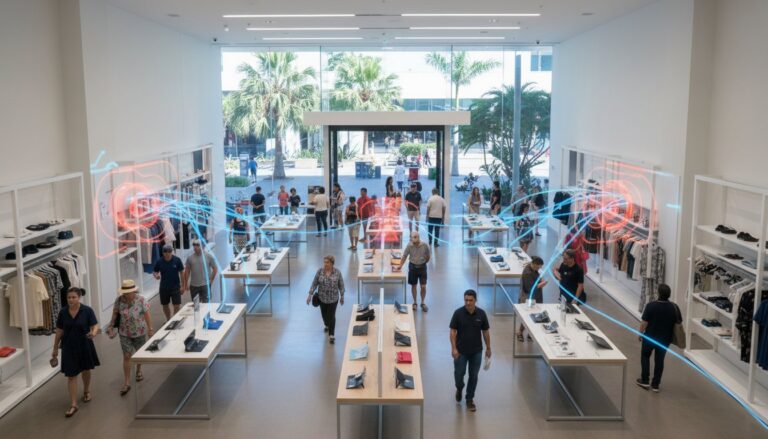

Space Utilisation Analytics for Offices: The 2026 Strategic Guide
With average in-office attendance in large Australian office markets sitting at just over 50% capacity, your business is likely paying a premium for space that stays silent. When a medium-quality fit-out in major Australian office markets now costs nearly A$3,000 per square metre, every underutilised desk represents a significant drain on your bottom line. You’ve likely felt the frustration of meeting room ghosting and the unreliability of manual floor walks that fail to capture the true rhythm of your workplace. Implementing sophisticated office occupancy monitoring Australia wide is no longer a luxury; it’s a financial necessity for the modern enterprise.
We understand that balancing cost reduction with a positive employee experience is a delicate task. This 2026 strategic guide will show you how to transform underutilised square footage into high-performance environments using precise, AI-driven data. You’ll discover how to move beyond intuition to justify office redesigns with hard evidence while addressing critical privacy concerns. We’ll explore the strategic shift toward data-led workplace planning, from reducing real estate overheads through systems like the FootfallCam Pro2 to improving the daily employee experience through evidence-based design.
Key Takeaways
- Distinguish between simple presence and true utilisation to identify which zones drive productivity and which are draining your rental budget.
- Explore how AI-driven sensors and edge computing ensure high-precision data collection without compromising employee privacy or anonymity.
- Master a structured 3-stage rollout for office occupancy monitoring Australia wide, transitioning from local pilots to full-scale national optimisation.
- Leverage key metrics like peak occupancy and dwell time to eliminate meeting room ghosting and manage hybrid work capacity effectively.
- Maximise your current infrastructure by integrating FootfallCam Centroid technology to transform existing CCTV into intelligent space-planning tools.
What is Space Utilisation Analytics for Offices?
Space utilisation analytics represents the transition from guesswork to empirical certainty. It involves deploying IoT sensors and AI to capture a continuous, 24/7 stream of data regarding how people interact with their physical environment. For years, facility managers relied on manual floor walks; periodic snapshots that often missed the peak surges or quiet lulls of a dynamic office. In 2026, the Australian corporate sector has reached a turning point. We no longer ask if the office is being used, but how it serves the workforce. Implementing robust office occupancy monitoring Australia wide allows leadership to interpret human movement as a sequence of strategic actions rather than just static figures.
Occupancy vs. Utilisation: Why the Difference Matters
Clarity begins with distinguishing between presence and performance. Occupancy is a binary metric; it simply identifies if a desk or room is currently in use. Utilisation, however, measures the intensity and efficiency of that use relative to its intended capacity. Space utilisation is the ratio of actual usage to total capacity over time. A meeting room meant for twelve people that consistently hosts only two is technically occupied, yet its utilisation remains poor. High occupancy paired with low utilisation often signals a fundamental mismatch in effective space planning, suggesting that your current layout doesn’t align with how your teams actually collaborate.
The Cost of Underutilised Space in Australia
Every square metre of an Australian office carries a heavy financial burden. With fit-out costs in major hubs like Sydney and Melbourne approaching A$3,000 per square metre, maintaining empty desks is an expensive oversight. Underutilised space creates a ripple effect across operational overheads. You’re paying to heat, cool, and clean zones that don’t contribute to your output. Beyond the raw lease costs, the “Ghost Meeting Room” phenomenon, where rooms are booked in digital calendars but remain physically empty, stifles productivity and frustrates staff.
By adopting a data-led approach to office occupancy monitoring Australia businesses can recapture this lost capital. Reliable data streams allow you to scale down HVAC services in low-traffic areas or justify the conversion of redundant workstations into high-demand collaborative zones. Decisions are no longer based on gut feel. They’re backed by the cold, hard logic of empirical evidence, ensuring every dollar spent on commercial real estate translates into tangible utility. For professionals who also manage residential investments, using a platform like PropAlly ensures the same level of rigorous oversight for cash flow and compliance.
The Technology Powering Modern Office Occupancy Monitoring
Modern office occupancy monitoring Australia has moved beyond the limitations of legacy systems. Passive Infrared (PIR) sensors, once the industry standard, often fail to detect stationary employees or struggle with thermal interference in climate-controlled zones. In contrast, AI-powered people counters use 3D stereoscopic vision to interpret depth and movement with surgical precision. This technology ensures that a person sitting still at a desk is counted just as accurately as a group entering a foyer, providing a reliable foundation for your real estate strategy.
AI Video Analytics vs. Wi-Fi Tracking
Many organisations previously experimented with Wi-Fi tracking, but the results were consistently skewed. A single employee often carries multiple devices, and signal bleed between floors makes it impossible to distinguish between a person in a boardroom and someone in the hallway. AI video analytics solves this by treating physical presence as a narrative of movement. By distinguishing between human shapes and inanimate objects, systems like the FootfallCam Pro2 achieve over 99.5% accuracy. This level of granularity is essential for desk-level tracking where every centimetre of space carries a cost.
While these advancements are revolutionising workplaces, the demand for specialized AI monitoring extends to other high-stakes industries; for example, professional breeders can visit BovEquine to explore how foaling surveillance systems use similar technology to safeguard animal health.
Privacy by Design: Compliance and Ethics
Privacy remains a primary concern for Australian workforces. Modern sensors address this through edge computing, where the device processes images into anonymous data points locally. No video is ever recorded or transmitted to the cloud. This architecture ensures strict alignment with the Australian Privacy Principles (APP) and global data standards. Benchmarking your internal data against the Australian Government Office Occupancy Report can provide helpful context for your own metrics while reassuring staff that the focus is on space utility rather than individual surveillance. Building trust involves transparently communicating that these systems are tools for better environment design, not monitoring of personal performance.
The FootfallCam Pro2 Advantage
The FootfallCam Pro2 is engineered specifically for the complexities of modern corporate architecture. It provides a robust set of features designed for long-term reliability:
- 3D Stereoscopic Vision: Uses dual lenses to perceive depth, ensuring accurate counts even in high-traffic entryways.
- Power over Ethernet (PoE): Minimises cabling requirements and simplifies installation across large-scale fit-outs.
- Environmental Resilience: Maintains high accuracy in the high-glare environments common in glass-fronted Australian CBD offices.
- Wide-Angle Coverage: A single unit can monitor large open-plan zones, reducing the total hardware investment required.
When integrated with FootfallCam V9 Software, these hardware insights are converted into intuitive, real-time reports. If you’re ready to move beyond estimates and embrace empirical evidence, you can speak with a specialist to design a tailored sensor map for your specific office floorplan.
Key Metrics for a Data-Led Workplace Strategy
Data only provides value when it’s translated into specific, positive changes in operations. While the technology captures the narrative of movement, your strategy depends on interpreting specific metrics that reflect human behaviour. In the context of office occupancy monitoring Australia wide, these metrics allow you to move beyond simple headcounts to understand the pulse of your professional environment. By measuring how and when people engage with your space, you can align your physical footprint with the actual needs of your workforce.
Peak occupancy remains a foundational metric, particularly as Australian businesses manage the complexities of hybrid work. With average attendance often clustering around the middle of the week, identifying exactly when your office hits capacity is vital for scheduling. Conversely, understanding dwell time reveals the depth of engagement in specific areas. High dwell time in collaborative zones suggests they’re fulfilling their purpose, while short dwell times in quiet zones might indicate a need for better acoustic privacy or improved ergonomic support.
Analysing mobility profiles offers a more sophisticated layer of insight. Different departments interact with the office in unique ways. A sales team might show high frequency of use in communal areas but low dwell times at dedicated desks. In contrast, an engineering team may require long periods of uninterrupted focus in specific neighbourhoods. Recognising these patterns ensures that your footfall data analysis informs a layout that supports diverse work styles rather than imposing a one-size-fits-all solution.
Meeting Room Optimisation Metrics
Meeting room ghosting is a primary source of wasted rental spend. By tracking no-show rates for booked rooms, you can reclaim valuable square footage that is technically “busy” in the calendar but physically empty. Data often reveals a mismatch in room sizing; 10-person boardrooms are frequently occupied by only two people for huddle sessions. This empirical evidence justifies the conversion of underutilised large rooms into high-demand phone booths or individual quiet zones, directly improving the daily employee experience.
Zone-Based Analytics and Heatmaps
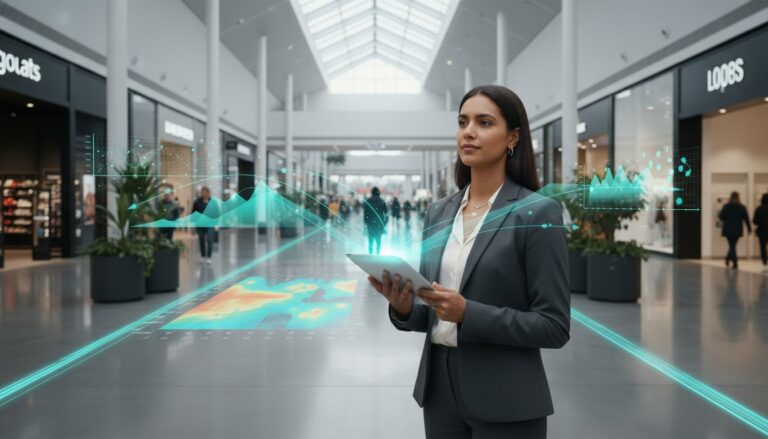
Heatmapping provides a visual representation of your most valuable real estate. By identifying which zones are most popular, you can replicate successful configurations across other floors. It also highlights bottlenecks in common areas or breakrooms that might be hindering traffic flow. Visualising these movement patterns allows you to optimise the placement of essential amenities and ensure that your highest-cost areas are delivering the greatest utility to your staff.

Maximising ROI: Implementation and Integration
Executing a successful strategy for office occupancy monitoring Australia wide requires a structured approach that moves from initial observation to portfolio-wide optimisation. We recommend a three-stage rollout to ensure data integrity and manage capital expenditure effectively. This begins with a comprehensive audit of your current space, followed by a pilot programme on a single floor or high-traffic zone. Once the data confirms your initial hypotheses, you can confidently proceed to a national scale deployment. This logical progression allows you to refine your reporting parameters and ensure the technology aligns with your specific operational goals.
You don’t always need to install new hardware in every corner of your office to gain deep insights. The FootfallCam Centroid technology allows you to convert existing CCTV infrastructure into smart sensors, extracting AI-driven occupancy data from your current security feeds. For organisations still relying on outdated infrared counters, the Legacy Swap Out Plan provides a clear path to upgrade to modern AI systems. These advanced units maintain precision in the high-glare environments typical of Australian CBD offices, where legacy sensors often fail. Integrating this data with your Building Management System (BMS) further amplifies ROI by allowing for real-time adjustments to essential services.
Operational Cost Reduction Strategies
Data-driven offices operate with a level of efficiency that intuition cannot match. By automating HVAC and lighting systems based on real-time occupancy counts, you can significantly lower your carbon footprint and energy bills. Cleaning schedules can also be shifted from fixed timers to dynamic, usage-based models; focusing janitorial efforts only on zones that have reached specific footfall thresholds. A 15% reduction in underutilised space can often pay for the entire sensor system within 12 months, turning a technological investment into a self-funding operational advantage.
Choosing the Right Support Structure
Maintaining a national office network requires a robust support framework to ensure data remains accurate and actionable. You should evaluate the difference between Basic and Premium support plans based on the complexity of your portfolio. While Basic plans cover essential hardware health, Premium options often include proactive data integrity audits and remote technical assistance. Consulting a comprehensive people counter support guide will help you determine the level of maintenance required to protect your long-term ROI. If you’re ready to begin your transition to a data-led workplace, you can request a bespoke implementation roadmap tailored to your specific Australian office locations.
Why Footfall Australia is the Strategic Choice for 2026
With over two decades of local expertise in the Australian market since 2004, Footfall Australia understands the nuances of regional CBD environments from Perth to Sydney. We don’t just provide hardware; we offer a strategic partnership rooted in a deep understanding of local commercial real estate trends. Our proprietary ecosystem pairs the high-precision FootfallCam Pro2 hardware with the sophisticated V9 Software, ensuring that every data point is captured with precision and stored securely. This integrated approach ensures that office occupancy monitoring Australia wide remains consistent, reliable, and actionable across your entire portfolio.
Our national partner network ensures that installation and local maintenance are seamless; this is a critical factor for organisations managing diverse sites across multiple states. We operate with a data-first philosophy, focusing on turning complex human movement into simple, intuitive reports that empower decision-makers. By combining local market knowledge with international technical standards, we provide a solution that addresses the specific geographic and regulatory challenges of the Australian corporate sector. Effective office occupancy monitoring Australia relies on this combination of high-tier technology and local accountability.
The Power of the FootfallCam V9 Platform
V9 Software acts as the central intelligence hub for your workplace strategy. It features customisable dashboards specifically designed for the needs of facility managers and real estate analysts, allowing for real-time visibility into space performance. Automated reporting delivers high-level insights directly to the C-suite, providing the empirical evidence required for high-stakes lease negotiations or fit-out justifications. Whether you’re managing a single boutique office or a national portfolio of hundreds of sites, the platform scales effortlessly to meet your data requirements without compromising speed or accuracy.
Future-Proofing Your Office with AI
The landscape of commercial real estate is shifting toward the era of Smart Buildings and total IoT integration. Our commitment to continuous innovation means your hardware receives regular firmware updates that improve accuracy and introduce new analytical features without requiring physical intervention. This proactive approach prepares your organisation for the next generation of workplace technology and the evolving demands of the modern workforce. We encourage you to explore the definitive guide to people counting systems in Australia to understand how these technologies will continue to shape the future of your physical environment.
Executing a Data-Led Vision for the Modern Office
The transition toward hybrid work models demands a more sophisticated approach to commercial real estate than simple headcounts or manual audits. By implementing office occupancy monitoring Australia wide, you gain the clarity needed to eliminate wasted rental spend and align your physical environment with actual human behaviour. You’ve seen how AI-driven precision and detailed metrics like dwell time can transform underutilised zones into high-performance collaborative spaces. Decisions regarding your footprint should never rest on intuition when empirical evidence is readily available.
Footfall Australia has been trusted by national brands since 2004 to provide this level of strategic oversight. Our FootfallCam Pro2 AI technology delivers over 99.5% accuracy, ensuring your layout adjustments are backed by undeniable truth. Supported by a comprehensive national installation and maintenance network, we help you maintain data integrity across every floor of your portfolio. It’s time to turn your office into a measurable asset that supports both your bottom line and your people.
Request a strategic consultation and demo for your office today and take the first step toward a more efficient, evidence-based workplace. We look forward to helping you stay prepared for the shifting trends of the 2026 corporate landscape.
Frequently Asked Questions
Is office occupancy monitoring compliant with Australian privacy laws?
Yes, office occupancy monitoring Australia is fully compliant with local privacy laws when using edge-processing technology. Systems like the FootfallCam Pro2 convert images into anonymous data points locally on the device, ensuring no personal identifiable information or video is ever stored or transmitted. This architecture aligns strictly with the Australian Privacy Principles (APP) and global data protection standards.
How many sensors do I need for a typical 1,000sqm office floor?
The number of sensors depends on your specific floorplan complexity and the granularity of data you require. While a single unit provides wide-angle coverage, a typical 1,000sqm open-plan floor usually requires sensors at all primary entry points and additional units for high-value zones like boardrooms or break areas. A tailored sensor map ensures every square metre is accounted for without over-investing in hardware.
Can I use my existing security cameras for space utilisation tracking?
You can certainly leverage your current infrastructure to gain workplace insights. FootfallCam Centroid technology allows you to integrate existing CCTV feeds into the analytics platform, effectively converting standard security cameras into smart occupancy sensors. This approach significantly reduces initial capital expenditure while providing high-accuracy data across your entire office environment.
What is the difference between occupancy and utilisation in an office context?
Occupancy identifies if a space is in use, whereas utilisation measures the efficiency and intensity of that use relative to its capacity. For example, a boardroom meant for twelve people that is consistently used by only three is technically occupied, but its utilisation is low. Tracking both metrics allows you to identify where your current layout fails to meet actual team needs.
How accurate are AI people counters compared to Wi-Fi tracking?
AI people counters provide over 99.5% accuracy, which far exceeds the reliability of Wi-Fi tracking methods. Wi-Fi systems often struggle with signal bleed between floors and the fact that most employees carry multiple devices, leading to inflated counts. AI-based 3D vision avoids these pitfalls by using stereoscopic depth perception to distinguish between human movement and inanimate objects.
How quickly can I expect to see ROI from an office analytics system?
Many businesses achieve a full return on investment within 12 months of implementing office occupancy monitoring Australia wide. By identifying and reducing underutilised space by just 15%, the resulting savings in commercial lease costs and operational overheads like HVAC and cleaning often cover the entire cost of the system. Empirical data allows for precise real estate decisions that intuition cannot match.
Does the system work with hot-desking and flexible seating arrangements?
The system is designed specifically to support hot-desking and flexible seating by focusing on zone-based activity rather than assigned desks. It tracks real-time presence and dwell time across different neighbourhoods or quiet zones, allowing you to see which areas are most popular. This data helps you manage capacity and ensures that your flexible seating strategy actually supports employee productivity.
What happens if our office layout changes frequently?
Frequent layout changes are easily managed through digital reconfiguration within the software interface. You don’t need to physically move or reinstall your hardware when you shift desks or create new collaborative zones. The FootfallCam V9 Software allows you to redefine your virtual tracking boundaries instantly, ensuring your data remains accurate as your physical environment evolves.