
Hot Desking Data Analysis: The 2026 Guide to Optimising Hybrid Workspaces
Did you know that “ghost bookings” might be inflating your office utilization metrics by as much as 25%? This discrepancy often means you’re paying for premium Australian real estate that sits entirely empty while your team still struggles to find a place to sit. It’s a common point of friction in the hybrid era; one where your booking software reports a full house, but the reality on the ground tells a different story. To solve this, you need a strategy rooted in hot desking data analysis that looks past the reservation and focuses on actual human movement.
We understand that relying on manual audits or intuition feels like a gamble when commercial costs are this high. You want a workplace that breathes with your employees’ needs, not one that remains rigid and underutilised. This guide provides a clear framework to transform raw occupancy data into actionable insights. We’ll show you how to use empirical evidence to justify real estate decisions, reduce overheads, and create a more fluid, supportive environment for your staff. By the end of this article, you’ll have the tools to turn your physical office into a strategic asset.
Key Takeaways
- Transition from subjective intuition to empirical evidence to manage high commercial real estate costs with precision.
- Implement sophisticated hot desking data analysis to bridge the gap between reported bookings and actual physical occupancy.
- Identify the critical difference between peak load and average utilization to prevent employee friction on high-demand days.
- Convert longitudinal occupancy trends into a strategic roadmap for right-sizing your real estate portfolio and enhancing office culture.
- Leverage AI-powered sensors to gain privacy-compliant, real-time insights that inform future-proof floor plan reconfigurations.
What is Hot Desking Data Analysis in 2026?
Managing a corporate office based on a “gut feeling” is no longer a viable strategy for modern leaders. Hot desking data analysis is the systematic collection and interpretation of workspace usage patterns to ensure that every square metre of office space serves a measurable purpose. This process has transformed from a niche facility management tool into a core pillar of organizational strategy. While What is Hot Desking? provides the historical context for shared workspaces, the 2026 definition focuses on the synergy between employee autonomy and operational efficiency. Organizations have moved beyond simple desk-to-staff ratios. Today’s leaders require a nuanced understanding of how teams actually move through a space to balance individual freedom with the bottom line.
The Evolution of the Hybrid Workplace
Traditional 1:1 seating models have become obsolete as hybrid work becomes the global norm. In Australian business districts, where commercial rent remains among the highest in the world, “dead space” is a significant financial liability. Research indicates that many offices are only 40% to 60% full on an average day. This fluctuation makes static office layouts a major risk. A data-driven approach allows businesses to pivot their physical environments in response to real-time attendance trends. It ensures they don’t pay for capacity they never use, especially during a fluctuating economy where agility is a competitive advantage.
Booking Data vs. Occupancy Data
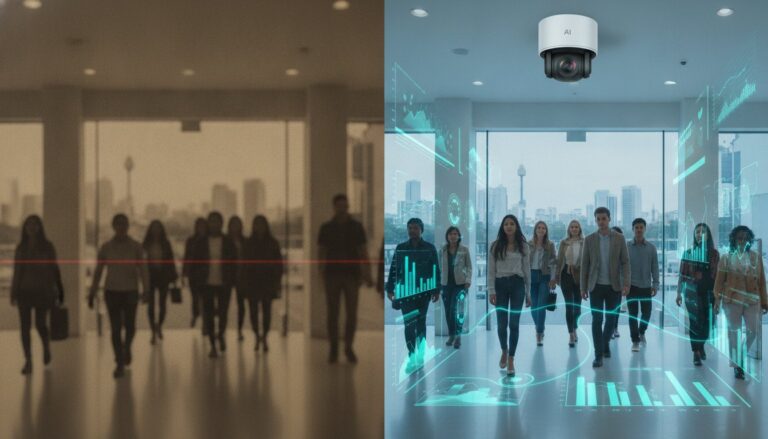
Many organizations rely solely on reservation apps, but these platforms often present a skewed version of reality. This creates the “Ghost Desk” phenomenon, where workstations are booked but remain entirely empty. These ghost bookings can inflate utilization metrics by 20% to 25% if not tracked accurately. Physical sensors provide the “ground truth” that facilities managers need. By comparing intent (bookings) with action (occupancy), modern hot desking data analysis reveals the true capacity of a workspace. This distinction is vital for those looking to downsize or reconfigure their floor plans without compromising the employee experience. It moves the conversation from what employees say they’ll do to what they actually do.
Implementing this analytical framework isn’t just about cutting costs. It’s about creating a responsive environment where staff can always find the space they need to be productive. When you understand the narrative of movement within your walls, you can stop guessing and start optimizing. This evidence-based approach builds trust with employees, as they see that workspace changes are designed around their actual behaviors rather than arbitrary mandates.
Methods for Collecting Accurate Occupancy Data
Relying on staff to manually log their desk usage creates a significant data lag. Active data collection, such as check-ins via reservation apps, often reflects intent rather than reality. Passive data collection uses AI-powered sensors to capture actual presence without requiring any human intervention. Integrating these sensors into your hot desking data analysis workflow ensures that your real estate decisions are based on objective facts. This transition from anecdotal evidence to empirical data is essential for the Strategic Implementation of Hot Desking, helping managers avoid the “hot mess” of unassigned seating that lacks a foundation of usage truth.
Data integrity is the cornerstone of any workspace optimization project. If the underlying numbers are flawed, the resulting strategy will be too. High-accuracy sensing devices eliminate the ambiguity of “ghost bookings” where desks are reserved but never occupied. By connecting occupancy hardware directly with your workplace management systems, you create a seamless loop of information that updates in real-time. This level of precision allows facilities managers to act with quiet confidence, knowing their recommendations are backed by a rigorous technical framework.
AI Sensors and People Counters
The FootfallCam Pro2 represents the technical benchmark for high-accuracy tracking in the modern office. It utilizes anonymized AI to detect movement and dwell time at individual workstations or within specific zones. Accuracy is paramount here. When you’re justifying multi-million dollar real estate moves, a 2% margin of error is acceptable; a 20% margin caused by app no-shows is not. These devices maintain 98% or higher accuracy while adhering to strict privacy standards. They track human movement as a sequence of actions, never capturing personal identities or facial features, ensuring compliance with global and local privacy regulations.
The Software Layer: FootfallCam V9
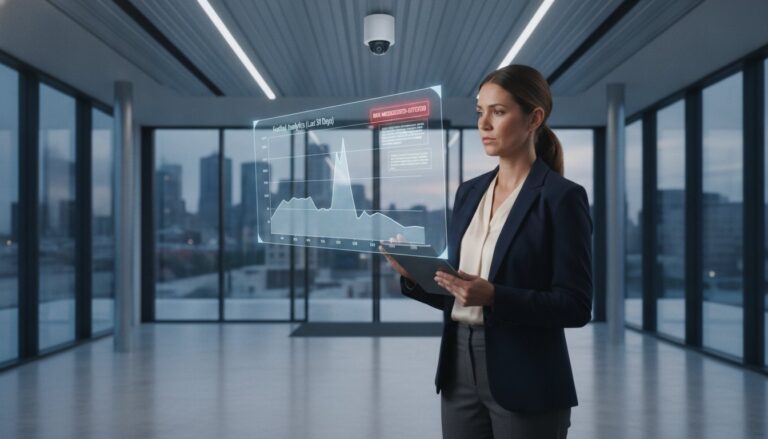
Hardware provides the pings, but the software provides the perspective. FootfallCam V9 translates raw sensor data into intuitive visual heatmaps and utilization charts. This allows you to distinguish between high-traffic collaborative zones and underutilized “dead zones” that might be better repurposed. Real-time analysis helps floor managers address immediate desk shortages, while historical hot desking data analysis identifies long-term trends across the working week. By using footfall data analysis, you can pinpoint exactly which days of the week require more capacity and which floors could be closed to save on operational costs. If you’re ready to move beyond basic booking logs, exploring advanced occupancy hardware is the first step toward a truly responsive workspace.
Key Metrics for Measuring Hot Desking Success
Effective hot desking data analysis requires a shift from simply monitoring presence to measuring performance. You can’t manage what you don’t quantify with precision. While occupancy sensors provide the raw input, your strategic success depends on how you interpret specific Key Performance Indicators (KPIs). These metrics allow you to move past surface-level observations and understand the actual rhythm of your office life. By focusing on the following four areas, you gain a comprehensive view of workspace health:
- Peak Occupancy: This represents the maximum load on your facilities. Planning for averages is a common mistake that leads to “Tuesday morning friction” when demand exceeds supply. Healthy hybrid offices typically aim for a peak utilization of 70% to 85%.
- Average Utilisation Rate: This serves as your baseline for daily office activity. It helps determine the total square footage required to support your workforce over a fiscal year.
- Desk Turn-over Rate: This tracks how many unique individuals occupy a single workstation throughout the day. A high turnover rate indicates a fluid environment where assets are working harder for the business.
- Dwell Time: This measures how long employees actually stay at their desks. It helps distinguish between a “landing pad” used for quick emails and a station used for deep, focused work.
Understanding Hot Desking in the Hybrid Workplace requires looking at how these metrics interact. For example, if your peak occupancy is high but your dwell time is low, your staff might be using desks as temporary storage rather than functional workspaces. This insight could prompt a shift toward more lockers or touchdown benches instead of traditional desks.
Identifying Underutilised Zones
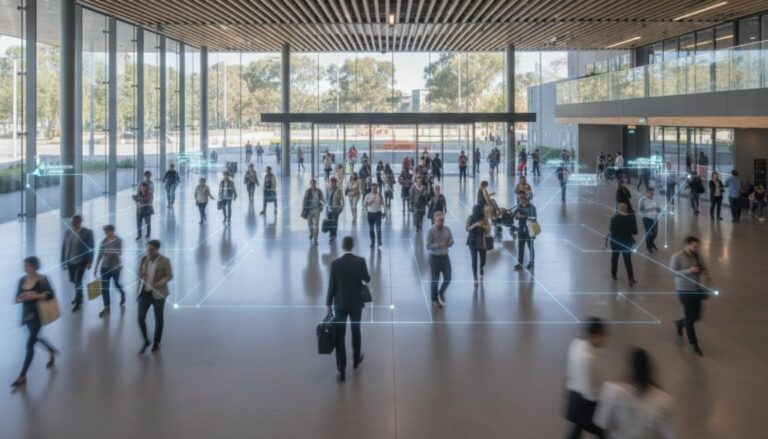
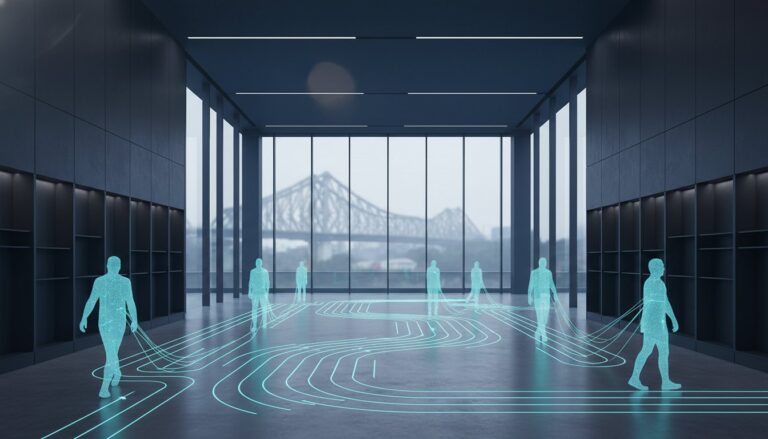
Visual heatmaps reveal the narrative of movement that raw numbers often hide. You might discover that entire floors or specific departments remain empty even when the building feels busy. This is often caused by the “Friday Effect,” where global office attendance typically drops to its lowest point, contributing to the trend of workers spending only 50% of their week in the office. Comparing desk usage against collaborative space usage helps you identify “dead zones.” If your data shows meeting rooms are consistently at 90% capacity while desks sit at 30%, it’s a clear signal to reconfigure your floor plan.
The Desk-to-Employee Ratio
Calculating your ideal desk-to-employee ratio is a delicate balance. Relying on an “industry average” is a dangerous strategy; North American data shows only 40% of companies still maintain a 1:1 ratio, but your specific operational needs might require something different. Use your actual occupancy peaks to find your “Goldilocks” zone. Refining these ratios based on people counting technology insights ensures you don’t over-correct and create a shortage. Accurate hot desking data analysis empowers you to right-size your portfolio with quiet confidence, ensuring the office remains a productive destination rather than a source of frustration.

Strategic Implementation: From Data to ROI
The true value of hot desking data analysis lies in its ability to convert observation into financial and cultural capital. Once you’ve established a baseline of usage through 12 months of occupancy trends, you can move away from defensive management toward proactive optimization. This transition allows you to right-size your real estate portfolio with precision, ensuring that your physical footprint aligns perfectly with your team’s actual requirements. Data-driven organizations are no longer guessing how much space they need; they’re using empirical evidence to dictate their next lease negotiation or floor plan reconfiguration.
Beyond simple square footage, this strategic approach focuses on the narrative of movement within the office. If the data indicates that traditional workstations are consistently underutilised while collaborative zones are over capacity, you can confidently swap rows of desks for “neighborhoods” designed for group work. This shift doesn’t just save space; it improves the employee experience by providing the specific types of environments workers are looking for when they choose to commute. Ensuring desk availability during peak times reduces the friction of the hybrid model, turning the office into a reliable destination rather than a source of logistical stress.
Real Estate Cost Avoidance
Relinquishing a lease or sub-letting underutilised space offers the most direct path to ROI. By identifying floors that consistently fall below 40% occupancy, businesses can consolidate operations and significantly reduce their overhead. This data also serves as a shield against unnecessary capital expenditure, allowing leaders to postpone expensive office expansions by proving that existing space can be better managed through smarter allocation. In the context of people counting systems Australia, ROI is defined as the measurable reduction in fixed real estate costs and the quantifiable increase in workspace utility achieved through evidence-based management.
Operational Efficiency and Maintenance
Occupancy data empowers facilities managers to move from fixed rotations to demand-based servicing. Cleaning schedules can be optimised so that staff only focus on areas that were actually used, rather than sanitising empty desks. This logic extends to building systems; managing HVAC and lighting through zone-based occupancy data can lead to substantial energy savings, especially on low-traffic days like Fridays. Furthermore, real-time hot desking data analysis reduces “search friction” for employees. When staff can see exactly where workstations are available before they even arrive, they spend less time wandering the floor and more time being productive. To begin capturing these operational savings, you can explore our range of AI-powered occupancy sensors designed for the modern Australian workplace.
Future-Proofing Your Workspace with Footfall Australia
Implementing a robust hot desking data analysis strategy requires more than just hardware; it demands a partner who understands the unique pressures of the Australian commercial landscape. Footfall Australia provides this bridge, combining local expertise with world-class technology. Whether you’re managing a single boutique floor in a CBD or a multi-site national portfolio, the ability to scale your insights is critical. Our approach ensures that the data you collect today remains a strategic asset as your organizational needs evolve. By anchoring your strategy in empirical evidence, you move from reactive adjustments to a state of permanent readiness.
Scalability is a core component of future-proofing. As businesses grow or consolidate, their analytical needs shift. The seamless integration between FootfallCam Pro2 hardware and FootfallCam V9 Software allows for a unified view of your entire estate. This centralized reporting makes it possible to compare utilization across different cities and states, identifying high-performing hubs and areas that require intervention. Maintaining this level of oversight over the long term requires
people counter support to ensure that every sensor remains calibrated and every report stays accurate. Data integrity is not a one-time setup; it’s a continuous commitment to quality.
The FootfallCam Pro2 Advantage
The FootfallCam Pro2 has become the industry standard for 2026 due to its uncompromising AI-driven accuracy. It offers a robust build and an easy installation process that minimizes disruption to your daily operations. This hardware doesn’t just count heads; it interprets the narrative of movement with a 98% accuracy rate. It complements existing smart office ecosystems through flexible API integrations, allowing your occupancy data to talk to your HVAC, lighting, and desk booking platforms. This create a cohesive environment where the building itself responds to human presence.
Expert Consultation and Support
Technology is most effective when backed by human expertise. Footfall Australia offers a national network of professionals to handle everything from initial site surveys to professional installation and configuration. We understand that data drift can erode the value of your insights over time. Our ongoing maintenance plans, including the Basic and Premium Support Plans, provide the regular health checks needed to keep your system performing at its peak. This proactive care prevents technical debt and ensures your hot desking data analysis remains a reliable foundation for board-level decisions. To begin your transition to a data-driven workplace, contact Footfall Australia for a comprehensive workspace audit and data strategy session.
Transforming Occupancy Data into Strategic Advantage
The transition to a high-performance hybrid office requires a shift from intuition to empirical evidence. By prioritizing actual physical occupancy over mere reservations, you eliminate the financial burden of underutilised space and the operational friction of desk shortages. Implementing a rigorous framework for hot desking data analysis allows you to reclaim control over your real estate portfolio, ensuring every square metre serves a measurable purpose. It’s about creating a responsive environment that adapts to the narrative of human movement within your walls.
Just as you optimize your physical footprint, it is equally important to ensure your business remains compliant with Australian regulatory standards; to discover how to manage your AML/CTF programs, visit Trancher.
With 20 years of local expertise, Footfall Australia provides the 98% accuracy AI hardware and national support plans needed to maintain data integrity across your entire estate. These insights give you the quiet confidence to make significant real estate decisions based on ground truth rather than intent. Whether you’re right-sizing your footprint or reconfiguring for better collaboration, having a reliable technical partner ensures your workspace remains a strategic asset for years to come.
Optimise your office with Footfall Australia’s data solutions today and start building a workspace that truly works for your team. You have the power to turn raw data into a thriving office culture.
Frequently Asked Questions
How accurate is hot desking data from AI sensors?
AI sensors like the FootfallCam Pro2 deliver 98% or higher accuracy by utilizing sophisticated algorithms that distinguish human movement from inanimate objects. This precision is essential for facilities managers who need to justify significant real estate adjustments based on actual presence rather than estimated attendance. High-quality sensors ensure that your strategic decisions are built on a foundation of ground truth.
Is hot desking data analysis compliant with Australian privacy laws?
Yes, modern hot desking data analysis is fully compliant with Australian privacy regulations when using anonymised tracking. Sensors capture movement as a sequence of human actions without storing personally identifiable information or facial features. This “privacy by design” approach ensures that organizational optimization doesn’t come at the cost of individual employee anonymity or data security.
What is the difference between hot desking and desk hoteling data?
Hot desking data typically tracks “first-come, first-served” usage, while desk hoteling data focuses on pre-booked reservations. Analyzing both allows you to see the gap between intent and action. Sensors reveal if a “hotel” desk was reserved but never occupied, which is a critical distinction for managing the “ghost desk” problem that often inflates reported occupancy by up to 25%.
Can I integrate occupancy sensors with my existing desk booking app?
Most advanced occupancy sensors offer flexible API integrations to sync with third-party desk booking platforms and smart office ecosystems. This connection allows your app to show real-time availability based on physical presence rather than just reservation logs. It helps employees find workspaces faster and can automatically release desks if a booked user fails to show up within a set timeframe.
How long does it take to see a return on investment from occupancy sensors?
Many organizations observe a measurable return on investment within 6 to 12 months of implementation. Savings usually stem from reduced commercial rent through portfolio right-sizing and lowered operational costs like demand-based cleaning. By identifying just one underutilised floor that can be relinquished or sub-let, the system often pays for itself through avoided lease costs and energy savings.
What are the most important KPIs for hot desking success?
Peak occupancy and average utilization rates are the primary metrics for measuring workspace health. You should also monitor desk turnover rates and dwell times to understand the depth of engagement with your physical environment. These KPIs provide the empirical evidence needed to decide whether to expand collaborative zones or consolidate traditional workstations based on actual behavioral trends.
How many sensors do I need for a typical office floor?
The sensor count depends on your floor plan and whether you require desk-level precision or broader zone-level tracking. A single FootfallCam Pro2 can often cover multiple desks or a large collaborative area depending on the ceiling height and layout. A professional site survey is the most accurate way to determine the optimal hardware density to ensure 100% coverage of your environment.
Does hot desking data help with energy efficiency?
Occupancy data directly informs energy-saving strategies by identifying low-traffic zones that don’t require full HVAC or lighting services. By syncing sensor data with building management systems, you can automate utilities to power down in empty areas. This reduces your carbon footprint and operational overhead simultaneously, particularly on low-attendance days where entire floors may remain largely vacant.