
Real-Time Occupancy Monitoring System: The 2026 Guide to Operational Efficiency
IoT sensors in facility management can trigger a 30% reduction in energy costs, yet many Australian commercial spaces still lose thousands every month to lighting and cooling empty zones. You’ve likely felt the frustration of paying premium rent for underutilised square footage or watching staff struggle with manual headcounts that never quite match reality. Implementing a real-time occupancy monitoring system isn’t just about counting people; it’s about converting human movement into actionable intelligence. By capturing 99.5% accurate data, you replace intuition with a precise map of how your facility actually breathes.
We understand that managing peak-hour congestion while balancing high overheads feels like a constant trade-off. This guide shows you how to master live occupancy data to optimise staffing levels, reduce energy waste, and stay ahead of the Work Health and Safety Amendment (Digital Work Systems) Act 2026. We’ll explore how integrating FootfallCam Pro2 hardware with V9 software creates a predictive engine for your building’s future, ensuring every square metre contributes to your bottom line.
Key Takeaways
- Shift from historical reporting to instantaneous data streams for immediate, evidence-based operational adjustments.
- Leverage 3D Stereo Vision and AI filtering to achieve 99.5% accuracy while distinguishing between staff and visitors.
- Implement a real-time occupancy monitoring system to align labour hours with actual demand and reduce energy overheads.
- Identify underutilised commercial zones through live dashboards to repurpose space and maximise rental ROI.
- Integrate FootfallCam V9 software with existing building management systems to automate compliance and enhance site safety.
What is a Real-Time Occupancy Monitoring System?
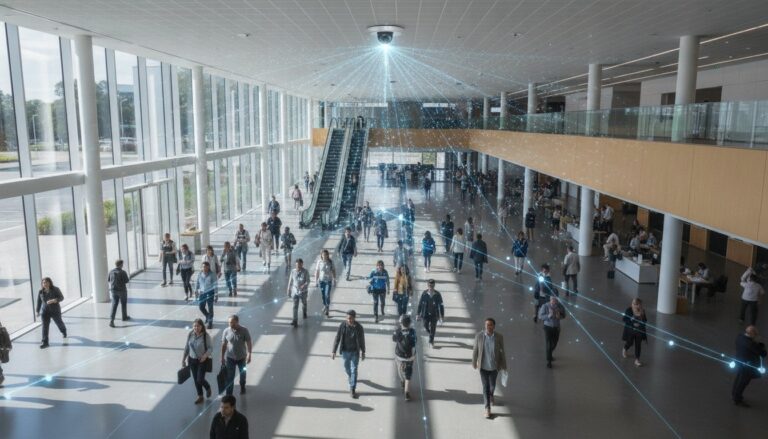
A real-time occupancy monitoring system represents a sophisticated ecosystem of hardware and software designed to capture, process, and display visitor movement as it happens. Unlike traditional reporting that relies on end-of-day batch processing, these systems use high-speed data streams to provide a live reflection of facility usage. The core architecture typically involves AI-powered sensors, such as the FootfallCam Pro2, which process data at the “edge” before syncing with cloud-based platforms like FootfallCam V9 software. For enterprises in 2026, sub-second latency isn’t a luxury; it’s a requirement for managing dynamic environments where occupancy levels fluctuate rapidly due to hybrid work patterns and shifting consumer habits. When data arrives even five minutes late, the opportunity to redeploy staff or manage a queue has often already passed. High-performance systems solve this by providing a continuous, automated feedback loop between the physical floor and the management dashboard.
The Evolution of Occupancy Tracking Technology
Tracking technology has transitioned from basic infrared beams that simply broke a light path to advanced 3D stereo vision. Early occupancy sensor technologies often struggled with accuracy in high-traffic zones or varied lighting. Modern systems solve this by mimicking human depth perception to distinguish between individuals and inanimate objects. Edge computing now plays a pivotal role. By processing visual data on the device itself, systems like the FootfallCam Pro2 reduce the load on local networks and ensure that live dashboards remain instantaneous. This IoT connectivity allows managers to scale monitoring across national portfolios, viewing data from a single site or an entire region from one central interface. It’s a shift from reactive counting to proactive spatial management.
Safety vs. Efficiency: A Dual-Purpose Strategy
Modern facility management balances the strict requirements of safety with the drive for operational efficiency. During an emergency, a real-time headcount provides first responders with an exact number of individuals remaining in a zone, which is critical for compliance with the Work Health and Safety Amendment (Digital Work Systems) Act 2026. Beyond safety, these systems identify operational friction. If a bottleneck forms at a specific entry point, managers receive immediate alerts to redeploy staff or open additional service lanes. This proactive stance ensures that service standards remain consistent, even during unexpected surges in traffic that would otherwise overwhelm a facility. It’s about understanding the narrative of movement; by treating physical presence as a sequence of human actions, managers can predict when a zone is reaching capacity before it becomes a hazard. This empirical evidence allows for confident decision-making that prioritises both the visitor experience and the safety of everyone on-site.
The Technology Powering Modern Occupancy Sensors
Modern systems rely on 3D stereo vision to replicate human depth perception. This technology allows a real-time occupancy monitoring system to achieve 99.5% accuracy by creating a three-dimensional map of the entrance area. Unlike PIR sensors that trigger on heat or basic infrared beams that count any break in the light, 3D vision identifies the specific height and shape of objects. This capability is significantly enhanced by deep learning for occupancy detection, which enables the system to differentiate between a customer and a shopping trolley. AI filtering further refines this data by excluding staff members and ignoring children or inanimate objects that don’t represent a unique adult visitor, ensuring that the metrics used for staffing decisions are based on actual demand.
Privacy remains a critical pillar of 2026 operations. Systems are built with “Privacy by Design” principles, meaning they process silhouettes and coordinate data without ever capturing Personally Identifiable Information (PII). This ensures compliance with the new Australian Privacy Principles taking effect in December 2026. For national rollouts, Power over Ethernet (PoE) is the preferred standard over Wi-Fi. PoE provides the necessary stability for constant data streaming and simplifies installation by combining power and data into a single cable. This reliability is essential for maintaining 99.5% accuracy across large-scale facilities where Wi-Fi congestion could lead to data gaps.
FootfallCam Pro2: The Industry Standard for 2026
The FootfallCam Pro2 features an octa-core CPU, allowing it to perform complex AI calculations directly on the device. This edge processing reduces latency and ensures the system remains functional even if cloud connectivity is temporarily interrupted. Its wide-angle lens is specifically engineered for diverse environments, from high-ceiling atriums to narrow corridors. Enhanced low-light sensors ensure that monitoring remains accurate 24/7, providing essential data for facilities that operate outside standard business hours. These features make it a robust choice for enterprises requiring high-fidelity data across varied site conditions.
FootfallCam Centroid: Upgrading Existing CCTV
For facilities with established security infrastructure, the FootfallCam Centroid offers a cost-effective path to digital transformation. This AI-box integrates with existing IP cameras, converting standard video feeds into rich occupancy insights. It eliminates the need for new sensor hardware while centralising information from disparate camera brands into a single footfall data analysis platform. This approach allows enterprises to scale their real-time occupancy monitoring system across multiple sites without a full hardware overhaul. If you’re looking to maximise your current assets, you might consider a Legacy Swap Out Plan to bridge the gap between old tech and modern analytics.

Real-Time Alerts vs. Historical Analytics
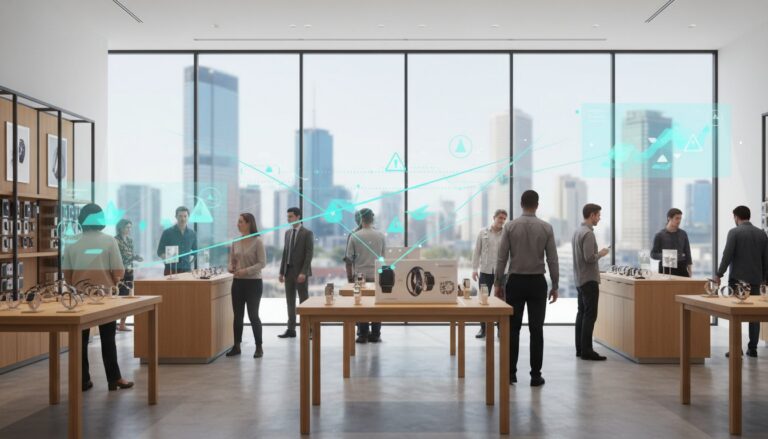
Effective space management requires a dual-track approach to data. A real-time occupancy monitoring system provides the immediate pulse of a facility, while historical analytics offer the long-term context needed for strategic growth. Live alerts allow managers to redeploy staff to busy zones instantly. If a retail floor or transport hub hits a pre-set threshold, the system triggers an immediate notification. This prevents overcrowding before it impacts the visitor experience. Conversely, historical data identifies recurring peak periods. This allows for preemptive adjustments to cleaning schedules or security presence, aligning operational costs with actual usage patterns rather than static rosters.
Thresholds aren’t one-size-fits-all. A main lobby can safely accommodate hundreds, whereas a restroom facility or a breakroom requires much tighter monitoring to maintain hygiene and comfort. FootfallCam V9 Software allows for these granular configurations across a national portfolio. By setting custom limits for different zones, you ensure that alerts are only triggered when human intervention is actually required. This reduces “alert fatigue” for facility managers and keeps the focus on high-priority zones that directly impact site safety and service quality.
Live Dashboards and Public Display Logic
Visibility builds trust between a facility and its visitors. By communicating live occupancy status via digital signage, organisations manage visitor expectations before they even enter a zone. It reduces perceived wait times and gives individuals the agency to choose less crowded periods. For facility managers, mobile alerts serve as a critical safeguard. These notifications ensure that over-capacity incidents are handled before they become compliance risks under the Work Health and Safety Amendment (Digital Work Systems) Act 2026. It’s a transparent way to handle density that benefits both the operator and the guest.
Deep Dive: The FootfallCam V9 Software Suite
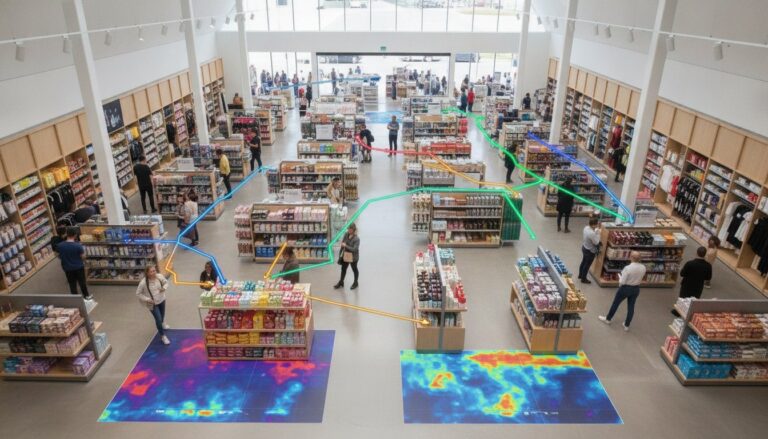
The software layer is where raw hardware data transforms into a strategic business asset. V9 Software provides automated reporting cycles that remove the manual burden of compiling performance reviews. Heatmapping features offer a visual narrative of movement, showing precisely where visitors linger and which paths are most frequently travelled. This isn’t just about counting; it’s about interpreting human behaviour. Cross-site comparison tools enable national operational benchmarking, allowing managers to see why one site outperforms another by comparing dwell times and traffic flow in a single, unified interface. It’s the essential tool for identifying best practices and scaling them across an entire organisation.
Implementing Occupancy Systems for Maximum ROI
Transitioning from a reactive to a proactive operational model requires a clear framework for return on investment. While safety is a baseline requirement, the true financial value of a real-time occupancy monitoring system lies in its ability to eliminate hidden waste. Research indicates that IoT sensors in facility management can lead to a 10-30% reduction in energy costs by ensuring that HVAC and lighting systems aren’t servicing empty zones. By automating these building controls based on live presence data, enterprises move away from static schedules that ignore the reality of human movement. This data driven approach ensures that every dollar spent on utilities is directly linked to an occupied space.
Labour remains one of the largest overheads for Australian facilities. Dynamic staffing allows you to align labour hours with actual visitor demand rather than relying on historical intuition. When your dashboard shows a 20% increase in traffic at a specific entry point, you can redeploy staff immediately to maintain service standards. Beyond staffing, space optimisation identifies underutilised areas that can be repurposed or subletted. If the data shows a third floor consistently operates at 15% capacity, that space represents a significant opportunity for rent reduction or commercial restructuring. Validating marketing efforts becomes equally precise; you can measure the live impact of national campaigns on foot traffic to determine which initiatives truly drive physical presence.
Step 1: Site Audit and Sensor Placement
Achieving 99.5% accuracy starts with a rigorous site audit. You must identify all entry and exit points, along with internal zones of interest, to ensure a complete net-occupancy calculation. Environmental factors like ceiling height and floor glare can interfere with less sophisticated sensors, which is why the FootfallCam Pro2 is engineered with wide-angle lenses to handle these variables. Ensuring 100% coverage across a facility prevents data gaps that could lead to inaccurate staffing decisions or safety compliance failures. It’s about creating a seamless digital twin of your physical environment.
Step 2: Integration and Staff Training
Data is only valuable if it leads to a specific, positive change in operations. Integrating your occupancy data with existing ERP systems allows for a unified view of business performance. Training front-line staff to interpret live alerts is critical; they need to know exactly what actions to take when a zone reaches a capacity threshold. By establishing KPIs based on people counting technology metrics, you empower your team to make decisions backed by empirical evidence. To begin your transition to a data-led facility model, consult with the specialists at Footfall Australia for a tailored implementation strategy.
Why Footfall Australia is the Strategic Partner for National Scale
Managing a national portfolio requires more than just hardware; it demands a partner with deep local roots and a proven track record. Footfall Australia brings two decades of expertise to the people counting systems Australia market, providing the stability needed for long-term investments. Our national network of certified partners ensures that whether your facility is in Sydney, Perth, or a regional hub, installation and support are seamless. We specialise in the strategic implementation of the real-time occupancy monitoring system, moving beyond simple metrics to deliver deep operational intelligence. For organisations currently burdened by outdated hardware, our Legacy Swap Out Plan offers a structured path to modernisation, replacing inefficient sensors with FootfallCam Pro2 technology with minimal operational disruption.
Data integrity is the foundation of every decision. Our Support Plans are designed to ensure 99%+ system uptime, protecting the continuity of your data streams. Whether you choose the Basic or Premium Support Plan, you gain a partner committed to the accuracy and utility of your information. We don’t just sell sensors; we provide a complete ecosystem that includes FootfallCam V9 software and ongoing technical guidance to turn raw figures into strategic growth. This comprehensive approach ensures that your data remains actionable and your systems stay compliant with evolving Australian standards.
Local Support and Maintenance Excellence
Mission-critical data requires proactive care. Our Premium Support Plan includes remote health monitoring, allowing our team to identify and resolve sensor issues before they result in data loss. This level of oversight is essential for facilities where occupancy data informs real-time safety protocols or high-stakes staffing rosters. For physical maintenance, our access to local technicians across Australia means that hardware issues are addressed promptly. This local infrastructure is a significant advantage over global providers who lack a physical presence on Australian soil. It ensures your real-time occupancy monitoring system remains a reliable asset for years to come.
Future-Proofing Your Investment
Scalability is built into our architecture. Your system can grow from a single pilot site to a national network without requiring a complete software overhaul. Regular firmware updates are delivered automatically to enhance AI accuracy and introduce new feature sets as behavioural trends shift. Our role as a strategic consultant is to help you interpret this people counting data for long-term gain. We work with you to refine your thresholds and reporting cycles, ensuring that your investment in technology continues to deliver measurable ROI in an ever-changing commercial landscape.
Future-Proofing Your Facility with Empirical Evidence
Precision is no longer optional for modern enterprises. By moving from historical reporting to live data streams, you ensure that every operational decision is backed by 99.5% accurate insights. We’ve explored how a real-time occupancy monitoring system enables dynamic staffing, reduces energy overheads, and automates safety compliance across national portfolios. Footfall Australia has been serving the local market since 2004, providing proprietary AI-driven FootfallCam technology that handles the complexities of high-traffic environments with quiet confidence.
Transitioning to a modern data model doesn’t have to be disruptive. Our dedicated Legacy Swap Out Plan allows you to upgrade existing infrastructure while maintaining continuity in your reporting. It’s time to stop relying on intuition and start leveraging the narrative of movement to drive long-term growth. Request a Strategic Consultation for Your National Occupancy Project today to see how we can help you master the future of your physical space. Your facility’s potential is waiting to be unlocked.
Frequently Asked Questions
How accurate is a real-time occupancy monitoring system?
Modern systems achieve 99.5% accuracy when utilising 3D stereo vision technology. Sensors like the FootfallCam Pro2 use dual lenses to create a depth map, allowing the system to distinguish between human beings and inanimate objects like shadows or shopping trolleys. This precision ensures that your operational decisions are based on empirical evidence rather than estimates, providing a reliable foundation for staffing and safety protocols.
Do occupancy sensors record video or identify individuals?
No, these sensors are engineered with privacy as a core principle. They process visual data at the “edge” to identify human silhouettes and coordinate movement without capturing Personally Identifiable Information (PII). This approach ensures full compliance with the Australian Privacy Principles (1.7, 1.8, and 1.9) taking effect in December 2026. The system counts presence without ever recording video or identifying specific individuals.
Can the system be integrated with existing building management systems (BMS)?
Integration is a primary function of the FootfallCam V9 software suite. By using open APIs, a real-time occupancy monitoring system can share live data with your HVAC and lighting controls. This allows for the automation of building services based on actual zone usage, which can lead to a 10-30% reduction in energy costs as reported in recent facility management research.
What happens to the data if the internet connection is lost?
The FootfallCam Pro2 features internal storage and edge-based processing to handle connectivity interruptions. If the local network fails, the sensor continues to count and cache data locally. Once the connection is restored, the device automatically synchronises the stored information with the cloud platform. This fail-safe mechanism prevents data gaps and ensures the integrity of your long-term historical analytics.
Is it possible to track occupancy in areas with multiple entrances?
Yes, the software aggregates data from all sensors across a facility to provide a single, unified occupancy count. By synchronising the “in” and “out” counts from every entry point in real-time, the system maintains an accurate net occupancy figure for the entire zone. This is essential for large retail spaces or transport hubs where visitors frequently enter and exit through different locations.
How many sensors do I need for a large open-plan space?
The number of sensors required depends on the ceiling height and the number of defined access points. A professional site audit identifies the specific field of view needed to ensure 100% coverage. While a single wide-angle sensor can cover a standard entrance, large open-plan zones may require multiple units linked together within the V9 software to provide a comprehensive real-time occupancy monitoring system.
What is the typical lifespan of an AI-powered people counter?
These units are industrial-grade hardware designed for continuous operation. With a Basic or Premium Support Plan, sensors typically provide reliable service for many years. Regular firmware updates delivered through the cloud ensure that the AI processors continue to benefit from the latest accuracy enhancements. This long-term utility makes them a stable investment for national infrastructure projects.
Does the system distinguish between staff and customers?
Yes, the system uses AI filtering and staff exclusion logic to maintain data purity. By identifying specific movement patterns or using staff exclusion tags, the sensors remove employee activity from the final visitor count. This ensures that your occupancy metrics reflect actual customer demand, allowing you to optimise rosters without the data being skewed by internal team movements.