
Cloud-Based People Counting Software: The 2026 Strategic Guide
With cumulative GDPR fines surpassing €7.1 billion as of March 2026, the risk of managing fragmented visitor data across local servers has moved from a technical nuisance to a board-level liability. You’ve likely experienced the frustration of trying to reconcile inconsistent reports from different locations while maintaining aging hardware. It’s a common challenge for national operators who need reliable evidence to back their strategic decisions rather than relying on intuition or incomplete data sets.
This strategic guide shows you how cloud-based people counting software centralizes foot traffic data to drive national operational efficiency and secure long-term ROI. By moving away from localized silos, you gain real-time visibility across every branch and ensure compliance with the tightening regulatory landscape, including the EU AI Act enforcement beginning August 2, 2026. We’ll examine how the FootfallCam Analytic Manager V9 provides a seamless bridge between raw human movement and sophisticated BI integration, turning complex behavioral trends into automated, actionable reporting for your entire organization.
Key Takeaways
- Understand why the industry shift toward real-time telemetry is essential for maintaining a single, reliable source of truth across all national branches.
- Discover how cloud-based people counting software synchronizes disparate data streams to eliminate fragmented reporting and improve organizational visibility.
- Analyze the total cost of ownership to see why cloud-native architectures offer superior scalability and long-term ROI compared to maintaining local servers.
- Learn how to bridge the gap between raw visitor counts and strategic outcomes by integrating footfall data with your existing business intelligence and management tools.
- Explore the FootfallCam V9 ecosystem’s advanced AI analytics and customizable dashboards that empower you to respond effectively to shifting behavioral trends.
Defining Cloud-Based People Counting Software in 2026
In 2026, the definition of cloud-based people counting software has evolved beyond simple data storage. It’s now a centralized intelligence platform that transforms raw telemetry from edge devices into a strategic narrative of human movement. Historically, people counting technology relied on local logging, where data remained trapped on-site or required manual extraction. Today, the shift toward Software-as-a-Service (SaaS) models means that information is processed in real-time, providing a unified view of national operations through a single interface.
This software serves as the central brain for advanced hardware like the FootfallCam Pro2. While the physical sensor captures the movement, the FootfallCam V9 software interprets that data. It applies complex algorithms to filter out staff and non-human objects, ensuring the metrics reflect actual customer behavior. This transition from local data silos to a centralized cloud ecosystem allows organizations to move from reactive observations to proactive, data-driven management. It’s a shift from “counting heads” to “understanding flow.”
The Core Components of a Cloud Ecosystem
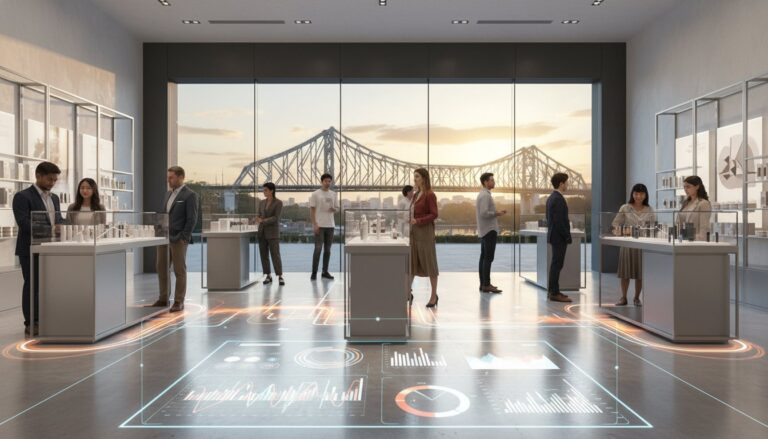
A modern cloud infrastructure relies on three pillars to maintain operational integrity. First, real-time data transmission ensures that every entry and exit is reflected in the central system within seconds. This telemetry allows for immediate decision-making at the branch level. Second, automated firmware updates and remote device management eliminate the need for costly on-site technical visits. Through the cloud, IT teams can monitor the health of FootfallCam Pro1 IP Cameras or Pro2 counters across hundreds of locations from a single interface. Finally, web-based dashboards provide accessibility from any national location. This ensures that every stakeholder, from regional managers to C-suite executives, has access to the same “source of truth” regardless of their physical location.
Why 2026 Demands Cloud Connectivity
The regulatory environment of 2026 makes cloud connectivity a necessity rather than a luxury. With the full enforcement of the EU AI Act on August 2, 2026, organizations must adopt “Privacy-First AI” protocols. Cloud processing allows for complex, encrypted data handling that meets these high-risk AI system standards, which local servers often can’t support. Scalability is another critical factor. For national organizations managing 50 or more sites, the cloud is the only viable way to aggregate data without massive infrastructure investment. Additionally, real-time occupancy monitoring has become a standard for safety compliance. Meeting these standards requires the low-latency processing that only a dedicated cloud environment can provide, ensuring that facility managers can act before capacity limits are exceeded.
The Architecture of Intelligence: Centralising National Analytics
Managing a national retail or public space footprint requires more than just local observations. It demands a sophisticated architecture that can synchronize hundreds of disparate data streams into a single, immutable source of truth. Modern cloud-based people counting software provides this backbone, ensuring that a regional manager in Sydney sees the same verified metrics as an executive at a global headquarters. This synchronization isn’t just about data collection; it’s about alignment. Without a centralized platform, organizations often struggle with data drift, where different sites use varying definitions of visitor or occupancy, leading to flawed comparisons.
The FootfallCam V9 software addresses this by applying AI-driven filters at the software level. It distinguishes between actual customers and non-human objects like shopping carts or strollers. It also uses advanced logic to exclude staff counts, ensuring that operational metrics reflect genuine consumer behavior. This level of precision is critical for establishing trust in the data. As highlighted in a government surveillance impact report, the architecture of these systems must balance high-level security with the strategic need for accurate occupancy monitoring. This ensures that every data point is both useful and protected.
Synchronising Multi-Site Data Streams
Manual data collection is no longer sustainable for growing businesses. Local logging often leads to errors during time zone transitions or server outages. A robust cloud infrastructure automates this process, maintaining consistency across diverse site types. For those managing assets in specific regions, understanding the local context is vital; for instance, leveraging people counting systems Australia helps organizations navigate regional behavioral trends while staying connected to a global reporting hierarchy. This structure allows for real-time alerting, notifying managers when occupancy limits are reached or when staffing levels need adjustment based on live traffic flows.
Advanced Metrics Beyond Simple In/Out Counts
The true value of a centralized system lies in its ability to generate advanced behavioral insights. Beyond simple entry and exit counts, the software tracks dwell time and cross-shopping patterns across a national network. This allows for precise benchmarking. You can compare why one flagship store has a higher conversion rate than another with similar traffic. By utilizing footfall data analysis, decision-makers can move from raw statistics to strategic planning, identifying where to allocate capital or marketing resources for the highest ROI. If you’re looking to modernize your current infrastructure, exploring a Legacy Swap Out Plan can help transition your older sensors into this high-intelligence ecosystem.

Cloud vs. Local Systems: Security, Scalability, and ROI
Choosing between a cloud-native architecture and a legacy on-premise system is a decision that defines your operational agility for the next decade. Traditional local systems often hide their true costs behind server maintenance, manual data backups, and the inevitable hardware obsolescence. In contrast, cloud-based people counting software shifts the burden of infrastructure to the provider, allowing your IT team to focus on strategy rather than server uptime. When you evaluate the Total Cost of Ownership (TCO), the efficiency of a centralized SaaS model becomes clear. Organizations can deploy intelligent video analytics across fifty or more sites without the proportional increase in technical overhead that local logging requires.
Scalability remains the primary differentiator for growing national brands. Adding a new location to a cloud ecosystem is a plug-and-play operation, whereas local systems often require site-specific configurations and hardware synchronization. While some stakeholders express concerns regarding the recurring nature of subscription models, the value lies in the continuous delivery of intelligence. With the FootfallCam V9 software provided at no additional cost to hardware customers, the traditional “cost vs. value” objection is largely neutralized. You aren’t just paying for data storage; you’re investing in a platform that evolves alongside shifting consumer behaviors.
Evaluating the Security of Cloud Data
Security in 2026 is a matter of strict legal necessity. With cumulative GDPR fines exceeding €7.1 billion as of March 2026, the risk of data mismanagement is immense. Modern cloud platforms utilize end-to-end encryption from the FootfallCam Pro2 sensor directly to the V9 software platform. This “Privacy-First AI” approach ensures that data is processed without capturing or storing identifiable imagery, keeping your organization compliant with the EU AI Act’s August 2, 2026 deadline. By centralizing data residency, you can enforce uniform security protocols across all national sites, a task that’s nearly impossible with fragmented local storage.
The ROI of Real-Time Accessibility
The financial return on cloud-based people counting software is found in the elimination of manual reporting. Automated dashboards reduce the hours management spends reconciling spreadsheets, allowing them to focus on high-value floor operations. Utilizing modern people counting technology enables predictive staffing, where labor costs are optimized based on verified traffic forecasts rather than guesswork. This precision directly impacts the bottom line by ensuring staff levels match customer demand in real-time. For businesses running on older infrastructure, a Legacy Swap Out Plan offers a structured path to capture these efficiencies without a total system overhaul.
Strategic Implementation: From Raw Data to Operational Excellence
Strategic implementation is the bridge between raw telemetry and tangible business growth. By integrating cloud-based people counting software with your existing transaction data, you unlock the conversion rate, which serves as the ultimate pulse of retail health. You can’t improve what you don’t measure. Connecting FootfallCam V9 to your Point-of-Sale (POS) environment allows you to see exactly how many visitors are converting into customers. This logic extends to workforce management, where API hooks feed real-time traffic data into scheduling tools to ensure staffing levels mirror actual demand. It’s about moving from a fixed schedule to a dynamic, traffic-led labor model.
Setting up automated KPIs ensures that both floor managers and executive stakeholders stay aligned on performance goals. For a store manager, this might mean a real-time alert when the visitor-to-staff ratio exceeds a specific threshold, allowing for immediate floor adjustments. For an executive, it involves a weekly automated report comparing national traffic trends across different regions. Successful onboarding requires more than just technical setup. It involves training staff to interpret these metrics, ensuring they understand that high footfall is an opportunity rather than just a workload increase. To ensure your organization is equipped for this transition, consider a Premium Support Plan for expert guidance on system optimization and staff training.
API Integration and the Unified Data Ecosystem
Modern organizations rely on a unified data ecosystem to drive efficiency. The FootfallCam V9 software is designed to connect seamlessly with third-party business intelligence tools like PowerBI or Tableau. This automation eliminates the need for manual data entry and provides a holistic view of the customer journey. When traffic data flows directly into your marketing dashboards, you can trigger real-time responses to physical visitor trends. For example, if a specific branch sees a sudden spike in dwell time but a dip in sales, your marketing team can immediately investigate and adjust localized promotions to capture that interest.
Operational Change Management
True operational excellence requires a cultural shift toward data-driven decision-making. Cloud data provides the empirical evidence needed to justify store layout changes or staffing shifts that might otherwise face internal resistance. When you can demonstrate a clear correlation between a new window display and a 15% traffic lift, stakeholders are more likely to support future innovations. Measuring the success of national marketing campaigns becomes a science rather than an art. By tracking footfall lift across specific dates and locations, you can quantify the exact impact of your advertising spend, ensuring every dollar is allocated to the strategies that drive the most human movement.
Future-Proofing with the FootfallCam V9 Cloud Ecosystem
Future-proofing your organizational strategy requires a platform that evolves as quickly as the behavioral trends it monitors. The FootfallCam V9 software isn’t just a reporting tool; it’s a comprehensive management ecosystem designed to grow with your national footprint. By choosing cloud-based people counting software that integrates directly with high-precision hardware like the FootfallCam Pro2, you eliminate the technical debt associated with fragmented legacy systems. This synergy ensures that as new AI capabilities emerge, they’re delivered directly to your dashboard through seamless cloud updates, maintaining your competitive edge without requiring hardware replacements.
The transition to a unified cloud strategy allows organizations to move beyond basic metrics. Because the FootfallCam V9 software is provided at no additional cost to customers who purchase FootfallCam hardware, the barrier to entry for high-level analytics is significantly lowered. This allows businesses to allocate resources toward interpreting data rather than just acquiring it. Whether you’re managing a single flagship store or a network of hundreds of sites, the V9 ecosystem provides the stability and scalability needed to navigate the complexities of the 2026 retail environment.
The Power of the V9 Platform
The V9 platform stands out for its user-friendly interface, specifically engineered for retail and facility managers who require insights without a degree in data science. It features a modular “App Store” approach, allowing users to activate specific AI modules like queue management or heatmapping based on their site’s unique needs. These modules transform the cloud-based people counting software into a multi-dimensional tool that tracks not just how many people enter, but how they interact with your space. Continuous firmware updates ensure that your FootfallCam Centroid or Pro1 units always operate at peak accuracy, protecting your investment from technological obsolescence.
National Support and Long-Term Success
Maintaining data integrity across a wide-reaching network requires more than just good software; it demands a robust support structure. Accessing professional people counter support is essential for ensuring that every sensor remains calibrated and every data stream stays secure. Footfall Australia supports these national deployments through a specialized partner network that handles everything from initial setup to ongoing software maintenance. This localized expertise ensures that your transition from legacy hardware to a unified cloud strategy is smooth and evidence-based. If your current systems are failing to provide a cohesive national report, a Legacy Swap Out Plan can bridge the gap, bringing your entire estate into the V9 ecosystem for a more efficient and profitable future.
Securing Your Operational Future with Data-Driven Intelligence
Transitioning to a unified analytics model is no longer a matter of technical preference; it’s a strategic necessity for national organizations. By centralizing your data through cloud-based people counting software, you eliminate the risks of fragmented reporting and ensure total compliance with 2026 privacy standards. You’ve seen how the integration of high-precision hardware and automated reporting transforms raw movement into a narrative of operational efficiency. This shift empowers your management team to back every floor decision with empirical evidence, moving away from intuition toward a culture of verifiable success.
Achieving long-term ROI requires a partner that understands the nuances of national deployments and data integrity. Whether you’re optimizing staffing levels or benchmarking regional performance, the combination of FootfallCam Pro2 hardware integration and comprehensive V9 software analytics provides a stable foundation for growth. With our national support and maintenance plans, your infrastructure remains secure and calibrated for the future. Consult with our experts on cloud-based analytics to begin your transition toward a more transparent and efficient operational model. The path to precise, actionable intelligence starts with a single source of truth.
Frequently Asked Questions
How does cloud-based people counting software differ from local storage?
Cloud software centralizes data from multiple locations into a single web-based interface, whereas local storage keeps data isolated on-site. Using cloud-based people counting software like FootfallCam V9 allows for real-time telemetry and remote device management. This architecture eliminates the need for manual data extraction from individual servers and ensures a consistent source of truth for national reporting across all branch locations.
Is cloud-based people counting data secure from cyber threats?
Modern cloud systems utilize end-to-end encryption to protect data during transmission from sensors like the FootfallCam Pro2 to the central server. The FootfallCam V9 software follows privacy-first AI protocols, processing behavioral data without storing identifiable imagery. This approach ensures your organization remains compliant with strict 2026 standards, including the EU AI Act and global data privacy regulations.
Can I integrate cloud footfall data with my existing POS system?
You can integrate footfall metrics with third-party business intelligence tools using the API hooks provided within the V9 environment. While we don’t sell POS systems, our software is designed to feed traffic data into your existing analytical platforms. This allows you to correlate visitor numbers with transaction data to calculate precise conversion rates and evaluate marketing ROI.
What internet bandwidth is required for cloud-based people counters?
Cloud-based people counters require very little bandwidth because they transmit processed numerical data rather than raw video files. A FootfallCam Pro2 unit typically uses minimal data per upload, ensuring it doesn’t strain your store network. For connectivity, your IT department simply needs to whitelist the IP address 51.255.103.189 for Port 80 and Port 443 to ensure seamless communication with the V9 portal.
Are there recurring subscription fees for cloud people counting software?
The FootfallCam Analytic Manager V9 cloud-based people counting software is provided free of charge to customers who purchase FootfallCam hardware. This model eliminates the recurring software costs often associated with SaaS platforms. Organizations can then choose to invest in Premium or Basic Support Plans to ensure long-term data accuracy and technical health without worrying about software licensing fees.
How does cloud software manage multiple sites across different locations?
The software uses a hierarchical account structure to aggregate data from hundreds of sites into a single dashboard. Users can view metrics by region, city, or individual store through a unified login. The system automatically handles time zone synchronization and site-specific configurations, providing national managers with a cohesive view of movement trends across their entire physical estate without manual data reconciliation.