How Footfall Data Improves Customer Experience: A 2026 Strategic Guide
Relying on intuition to manage a physical space is a luxury that Australia’s high-cost labor market no longer affords. You’ve likely felt the pressure of balancing staffing levels against fluctuating visitor numbers, or perhaps you’ve faced complaints about long wait times during unexpected peaks. It’s frustrating to watch potential revenue walk out the door because a layout isn’t working or a queue has grown too long. Understanding how footfall data improves customer experience is the first step toward reclaiming control over your environment.
We promise to show you how precise people counting data transforms static facilities into responsive, customer-centric spaces that drive both loyalty and profit. By moving beyond guesswork, you can back every operational decision with empirical evidence. This strategic guide explores how to reduce queue times, optimize your staff-to-customer ratios, and refine floor plans using systems like the FootfallCam Pro2 and V9 Software. We’ll examine how technical innovation meets human behavior to ensure your organization stays ahead of shifting 2026 trends.
Key Takeaways
- Shift from basic entry counting to comprehensive journey mapping, treating physical movement as a narrative of human intent.
- Eliminate friction by using real-time alerts to resolve queue bottlenecks and align staffing levels with actual visitor traffic.
- Use heatmapping to pinpoint underperforming areas and redesign facility layouts based on empirical movement patterns.
- Learn exactly how footfall data improves customer experience by measuring engagement metrics like window-to-door conversion and dwell time.
- Leverage the FootfallCam Pro2 and V9 Software to bridge the gap between complex technical metrics and strategic operational growth.
The Intersection of Analytics and Empathy: Defining Footfall Data for CX
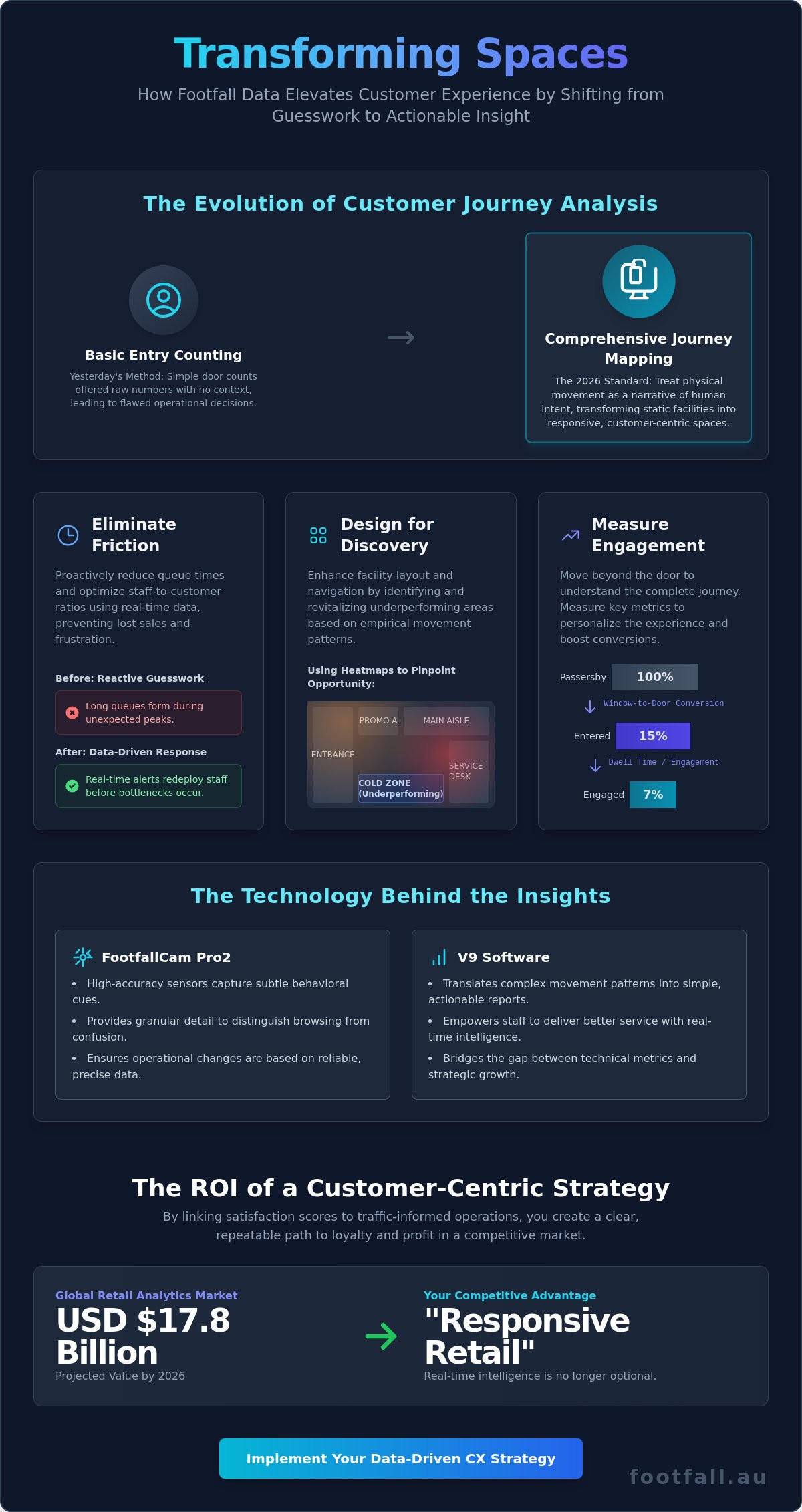
Footfall data serves as the digital footprint of physical human behavior. It represents a fundamental shift from simple door counting to a deep, analytical understanding of the customer journey. By 2026, consumers expect physical environments to be as responsive and personalized as their digital counterparts. They don’t want to wait in long lines or search for help in empty aisles. As e-commerce is projected to account for over 24% of all retail sales by 2026, physical stores must use every available metric to remain relevant. This expectation has birthed the concept of “Responsive Retail,” where real-time traffic insights allow a space to breathe and react alongside its occupants.
Understanding how footfall data improves customer experience requires moving past raw statistics and looking at the narrative of movement. Modern people counting systems provide the empirical foundation for this evolution. They allow managers to see not just that someone entered, but how they interacted with the environment once inside. This clarity removes the guesswork from management, replacing “I think” with “the data shows.” When a facility uses data to mirror human needs, it stops being a static box and starts being an active participant in the service delivery.
From Raw Numbers to Human Insights
Effective footfall data analysis acts as a vital translator between physical movement and psychological intent. High-accuracy sensors, such as the FootfallCam Pro2, capture subtle behavioral cues that traditional methods simply miss. These devices provide the granular detail needed to distinguish between a customer browsing and one who is lost. If your data is inaccurate by even a small margin, your staffing and layout decisions will be fundamentally flawed. This inaccuracy leads directly to poor customer experiences, such as understaffed service counters during peak periods or overcrowded aisles that discourage browsing. Reliable data ensures that every operational change serves the human being currently standing in your building.
The ROI of Customer-Centric Data
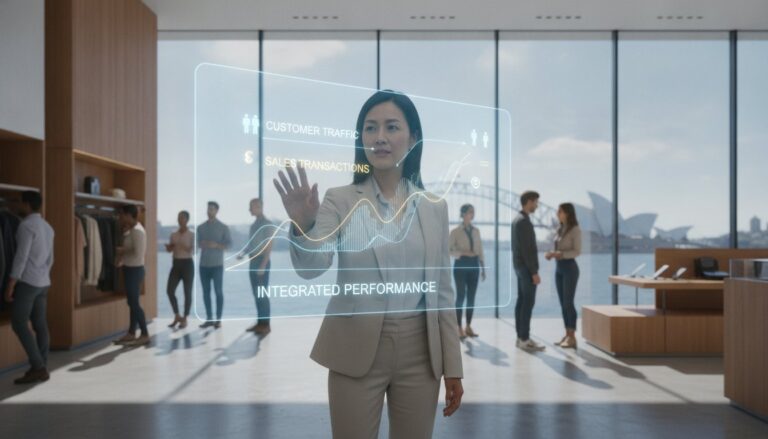
Linking customer satisfaction (CSAT) scores to traffic-informed operations provides a clear and repeatable path to growth. With the global retail analytics market projected to reach up to USD 17.8 billion by 2026, the push for real-time intelligence is no longer optional. Organizations that embrace data-driven insights consistently outperform those that rely on management intuition or outdated historical trends. In the Australian market, where operational costs remain high, this precision is a competitive necessity. When you understand how footfall data improves customer experience, you can confidently justify investments in facility improvements because you have the evidence to prove they drive loyalty. Efficiency isn’t just about cutting costs; it’s about creating a frictionless environment where customers feel their time is respected. By using systems like the FootfallCam V9 Software, managers can turn complex movement patterns into simple, actionable reports that empower staff to deliver better service in real time.
Eliminating Friction: Reducing Queue Times and Optimising Staffing
Wait times are the primary enemy of conversion. When a customer encounters a long queue, the perceived value of their purchase often drops below the cost of their time. In the Australian market, this challenge is compounded by high labor costs, making it difficult to balance service quality with operational profitability. Managers often find themselves guessing when to open a new register or when to schedule breaks. This reactive approach is where friction begins, leading to abandoned baskets and diminished brand loyalty.
Real-time alerts transform this dynamic by allowing for proactive intervention. Instead of waiting for a queue to become unmanageable, systems identify when occupancy reaches a specific threshold. This allows a floor manager to redeploy staff before the customer even notices a slowdown. Understanding how footfall data improves customer experience at the point of sale is essential for maintaining a high-performance environment. Transitioning to a data-informed model ensures that every labor hour spent contributes directly to a smoother customer journey.
Predictive Staffing Models
Aligning staff rosters with visitor flow is a science rather than an art. By leveraging historical data from people counting technology, businesses can identify their “Power Hours” with surgical precision. These are the specific windows where high-value traffic is most likely to occur. Proactive scheduling prevents staff burnout by ensuring enough hands are on deck during rushes, while also preventing the “empty store” syndrome where labor is wasted during lulls. This level of accuracy is a cornerstone of measuring retail marketing success and operational efficiency. When expert help is available exactly when a customer needs it, satisfaction scores naturally rise.
Real-Time Queue Management
Dynamic queue management focuses on the psychological impact of waiting. Live alerts set at critical occupancy levels allow for immediate action, such as opening “express” lanes or moving floor staff to checkout zones. This reduces the actual wait time and, perhaps more importantly, the perceived wait time. A visible, well-managed flow suggests an organized and professional environment. If you are struggling with inconsistent service levels, exploring modern counting solutions can provide the real-time visibility needed to stabilize your operations. By treating the exit process with the same strategic importance as the entry, you ensure the final touchpoint of the customer journey is one of ease rather than frustration.
Designing for Discovery: Enhancing Layout and Navigation
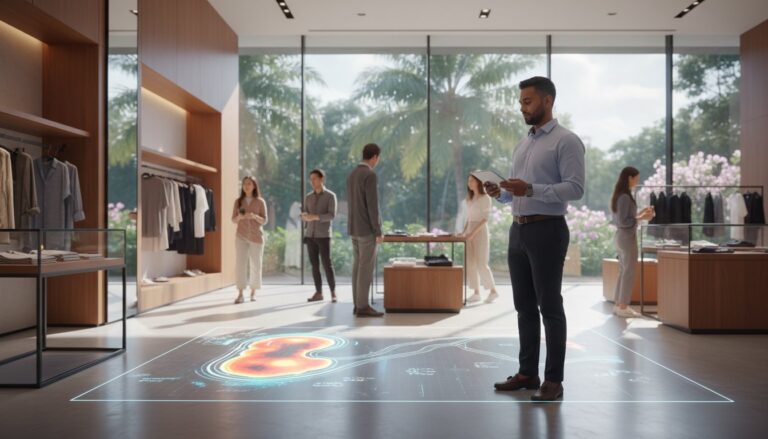
A facility’s layout is the silent director of the customer journey. If a floor plan is confusing or counterintuitive, visitors experience a cognitive load that detracts from their primary goal. Understanding how footfall data improves customer experience means treating your floor plan as a dynamic asset that adapts to actual human movement. Heatmapping reveals the “hot spots” where engagement is high and the “dead zones” that customers consistently avoid. When you identify these patterns, you can justify strategic shifts in signage, lighting, or product placement with quiet confidence.
By observing the “Path to Purchase,” managers can pinpoint exactly where navigation friction occurs. If a high-value aisle is underperforming, the data might reveal that a bottleneck at the entrance is diverting traffic away. Removing these physical barriers creates a flow that feels natural and effortless. This data-driven approach moves beyond the static architectural paths of the past, allowing for an iterative design process that prioritizes the visitor’s comfort and ease of discovery.
Heatmapping for Intuitive Navigation
Heatmaps visualize where customers congregate and where they get lost. Instead of relying on guesswork, you can use this information to place high-demand items in naturally high-traffic zones to maximize visibility. This data also highlights bottlenecks in narrow aisles or entryways that cause frustration and crowding. Eliminating these friction points ensures the physical environment remains responsive to the way people actually move. It’s a scientific method for ensuring that your space breathes and reacts to the density of the crowd in real time.
Measuring the Success of Displays
Correlating dwell time with specific promotional zones allows for a true measurement of engagement. Dwell time is the duration a visitor remains in a specific zone. By monitoring this metric, you can A/B test different floor plans or display configurations using comparative footfall metrics. If a new interactive display increases dwell time significantly, you have empirical evidence that the change is resonating with your audience. This illustrates exactly how footfall data improves customer experience by ensuring that every square meter of your facility is optimized for engagement rather than just occupancy.
Beyond the Door: Measuring Engagement to Personalize the Journey
The customer journey begins before a visitor even crosses the threshold. Measuring the “Window-to-Door” conversion rate provides an objective assessment of your brand’s external appeal and storefront effectiveness. If thousands pass by but few enter, your physical presence isn’t communicating the right message to your target audience. Once inside, the narrative of movement continues. You can identify loyal customers through repeat visitor tracking without the friction of invasive loyalty cards or manual sign-ins. This high-level visibility is a primary way how footfall data improves customer experience, as it allows you to recognize and cater to your most frequent guests with quiet precision.
By understanding the demographic distribution of your visitors, such as age and gender, you can tailor environments to match the preferences of your dominant audience. This might involve adjusting digital signage content, background music, or lighting levels to create a more welcoming atmosphere for specific groups. These subtle refinements turn a generic space into a personalized environment. When you treat physical presence as a sequence of human actions rather than just a set of statistics, you gain the ability to react to the needs of your audience in real time.
The Conversion Rate Equation
Raw traffic numbers only tell half the story. A deep CX audit requires correlating traffic volume with sales conversion to identify where the experience is failing. High traffic paired with low sales typically signals an operational breakdown, such as poor service levels, long wait times, or stock unavailability. By analyzing these “missed opportunities” during peak periods, managers can implement targeted training or inventory adjustments. This ensures staff are rewarded for the quality of their interactions rather than just the volume of people they process. It shifts the focus from simply moving people through a space to maximizing the human value of every visit.
Ethical Data and Privacy
Personalization doesn’t have to come at the cost of privacy. Modern AI counters like the FootfallCam Pro2 ensure anonymous, GDPR-compliant tracking by processing data at the edge. In Australia, the Privacy Act 1988 and the 2024 amendments require clear transparency regarding data collection, and these systems are designed to meet those rigorous standards. Using anonymous behavioral tracking is often more accurate than self-reported surveys because it captures genuine human action. Building trust through transparent data usage ensures customers feel secure while benefiting from a more responsive environment. By stripping away identifiable information at the source, you maintain compliance while gaining the human insights necessary for strategic growth.
To start refining your engagement metrics and personalizing your visitor journey, view our full range of professional people counting solutions.
Implementing a Data-Driven CX Strategy with Footfall Australia
Transitioning from intuitive management to a data-driven model requires hardware and software that can withstand the rigors of high-traffic environments. Footfall Australia provides the technical foundation necessary to turn movement patterns into operational excellence. By partnering with a specialist consultant, you move beyond simple observation and begin to actively shape the visitor journey. This shift from reactive fixes to proactive strategy is fundamentally how footfall data improves customer experience at a scale that intuition alone cannot reach. Our national support network ensures that Australian businesses across all sectors have access to the expertise required to maintain high-accuracy systems year-round.
A successful implementation starts with a commitment to accuracy. If your data foundation is weak, every subsequent decision regarding staffing or layout is compromised. We focus on providing high-quality technical solutions that integrate seamlessly into your existing infrastructure, ensuring that your strategic insights are built on a bedrock of empirical evidence. This approach provides the quiet confidence needed to make bold operational changes that lead to measurable growth.
Hardware That Understands Human Movement
The FootfallCam Pro2 stands as the gold standard for high-accuracy CX data. Utilizing advanced 3D stereoscopic vision, it achieves a verified accuracy rate of 99.5%, even in challenging lighting or high-density crowds. For businesses currently struggling with outdated or inconsistent sensors, our Legacy Swap Out Plan offers a structured path to modernize your counting infrastructure without a total system overhaul. Additionally, the FootfallCam Centroid allows you to upgrade existing CCTV systems with AI-driven analytics, turning standard security feeds into powerful tools for CX insight. These hardware solutions treat physical presence as a sequence of meaningful actions rather than just a set of digits.
Actionable Insights via V9 Software
Data is only valuable if it leads to a specific, positive change in operations. The FootfallCam V9 Software provides the intuitive reporting needed to empower your management team. You can customize dashboards to highlight the specific metrics that matter most to your industry, whether that’s dwell time in a gallery or queue density in a retail store. Automating these reports for stakeholders allows you to demonstrate how footfall data improves customer experience through concrete evidence of reduced wait times and optimized service levels. This transparency builds trust and ensures that your long-term strategy remains aligned with shifting behavioral trends.
Stop guessing and start observing with the precision your brand deserves. Empower your team with the data needed to create world-class customer experiences today. Contact Footfall Australia to explore our Premium Support Plans and find the right people counting solution for your facility.
Empowering the Future of Physical Spaces
Mastering the narrative of human movement is no longer a luxury; it’s a strategic necessity for any organization aiming to thrive in 2026. You’ve seen how shifting from reactive staffing to predictive modeling eliminates friction at the point of sale. You also understand that heatmapping and dwell time analysis provide the empirical evidence needed to transform static layouts into intuitive, discovery-led environments. This transition illustrates exactly how footfall data improves customer experience by aligning every operational choice with the actual needs of your visitors.
Footfall Australia has been serving Australian businesses since 2004, providing the specialized expertise required to navigate these shifting behavioral trends. With the AI-driven FootfallCam Pro2 delivering 99.5% accuracy and our national support and maintenance plans ensuring long-term reliability, you can lead your industry with quiet confidence. It’s time to replace intuition with evidence and create spaces that truly breathe with their occupants.
Start improving your customer experience with a tailored FootfallCam solution today. Let’s build a more responsive and efficient future together.
Frequently Asked Questions
How exactly does counting people improve their experience in my store?
Counting people provides the baseline metrics needed to align service availability with visitor demand. By identifying peak traffic periods, you can ensure adequate staffing is present to assist customers, which significantly reduces frustration caused by long wait times. This alignment is a primary way how footfall data improves customer experience, as it transforms a static environment into one that actively responds to the volume of visitors in real time.
Is footfall data collection legal under Australian privacy laws?
Yes, footfall data collection is legal provided it complies with the Privacy Act 1988 and its 2024 amendments. Modern systems like the FootfallCam Pro2 protect privacy by processing data at the edge and masking individual identities before any information is stored. This ensures the data remains anonymous and de-identified, focusing purely on movement patterns rather than personal information. This approach aligns with Australian Privacy Principles regarding data minimization.
Can people counters help with queue management in real-time?
Real-time queue management is a core feature of advanced counting systems. Sensors detect when occupancy in a specific zone reaches a pre-set threshold and trigger immediate alerts via the FootfallCam V9 Software. This allows floor managers to open additional registers or redeploy staff before the queue becomes a bottleneck. Proactive intervention ensures that the final touchpoint of the customer journey remains efficient and professional.
What is the difference between footfall data and sales data?
Sales data tells you what was purchased, while footfall data reveals the missed opportunities that never reached the register. By comparing the number of visitors to the number of transactions, you can calculate your conversion rate. This metric is vital for identifying whether low sales are due to low traffic or internal operational failures, such as poor service or layout issues that discourage browsing.
Do I need a different system for a large shopping centre versus a small boutique?
The core technology remains consistent, but the implementation scales based on the environment’s complexity. A small boutique may only require a single FootfallCam Pro2 at the entrance. In contrast, a large shopping centre utilizes a network of sensors and the FootfallCam Centroid to track movement across multiple levels and zones. Both environments benefit from the same high-accuracy reporting, though the scale of integration varies to match the facility’s size.
How accurate does the data need to be to actually make CX decisions?
High accuracy is non-negotiable for effective decision-making. Decisions based on data with even a 10% margin of error can lead to significant staffing mistakes or costly layout changes that fail to deliver results. To truly understand how footfall data improves customer experience, you need the 99.5% accuracy provided by 3D stereoscopic sensors. This precision ensures that every strategic change is based on facts rather than statistical noise.
Can footfall data help me reduce my operational costs while improving service?
Improving service and reducing costs are achieved through precise labor optimization. By using historical traffic patterns to create predictive staffing rosters, you can avoid overstaffing during quiet periods and understaffing during rushes. This ensures your labor budget is spent where it has the highest impact on the customer experience. Efficiency gained through data-driven scheduling directly reduces waste while maintaining high service standards during peak hours.
What happens if my store layout changes frequently?
Frequent layout changes are easily managed through the flexible zone configuration in the FootfallCam V9 Software. You can update your virtual tracking zones digitally without needing to move the physical hardware. This allows you to A/B test different floor plans and immediately see how the changes affect visitor flow and dwell time. The system remains a permanent tool for continuous improvement, regardless of how often you refresh your physical space.