People Counting System Tender Document: The 2026 Strategic Drafting Guide
If your footfall data is only 85% accurate, you aren’t making informed decisions; you’re just guessing with more expensive tools. Most strategic leaders understand that a people counting system tender document is more than a simple procurement hurdle. It’s the foundational blueprint for your organization’s operational intelligence. You likely recognize the frustration of investing in hardware only to find the resulting metrics are inconsistent, prone to error, or impossible to integrate with your existing business intelligence stack.
This guide empowers you to master the technical specifications and evaluation criteria required to secure a high-performing system that delivers 98%+ counting accuracy. We’ll examine how to navigate the December 2026 EU AI Act transparency obligations and compare hardware technologies, such as AI video versus legacy infrared sensors, to ensure long-term ROI. You’ll gain a strategic framework to attract high-quality vendors and implement a solution that turns physical movement into actionable, empirical evidence for your physical environments.
Key Takeaways
- Identify why a robust people counting system tender document acts as a safeguard against the “buy-twice” risk by prioritizing long-term data integrity over initial unit costs.
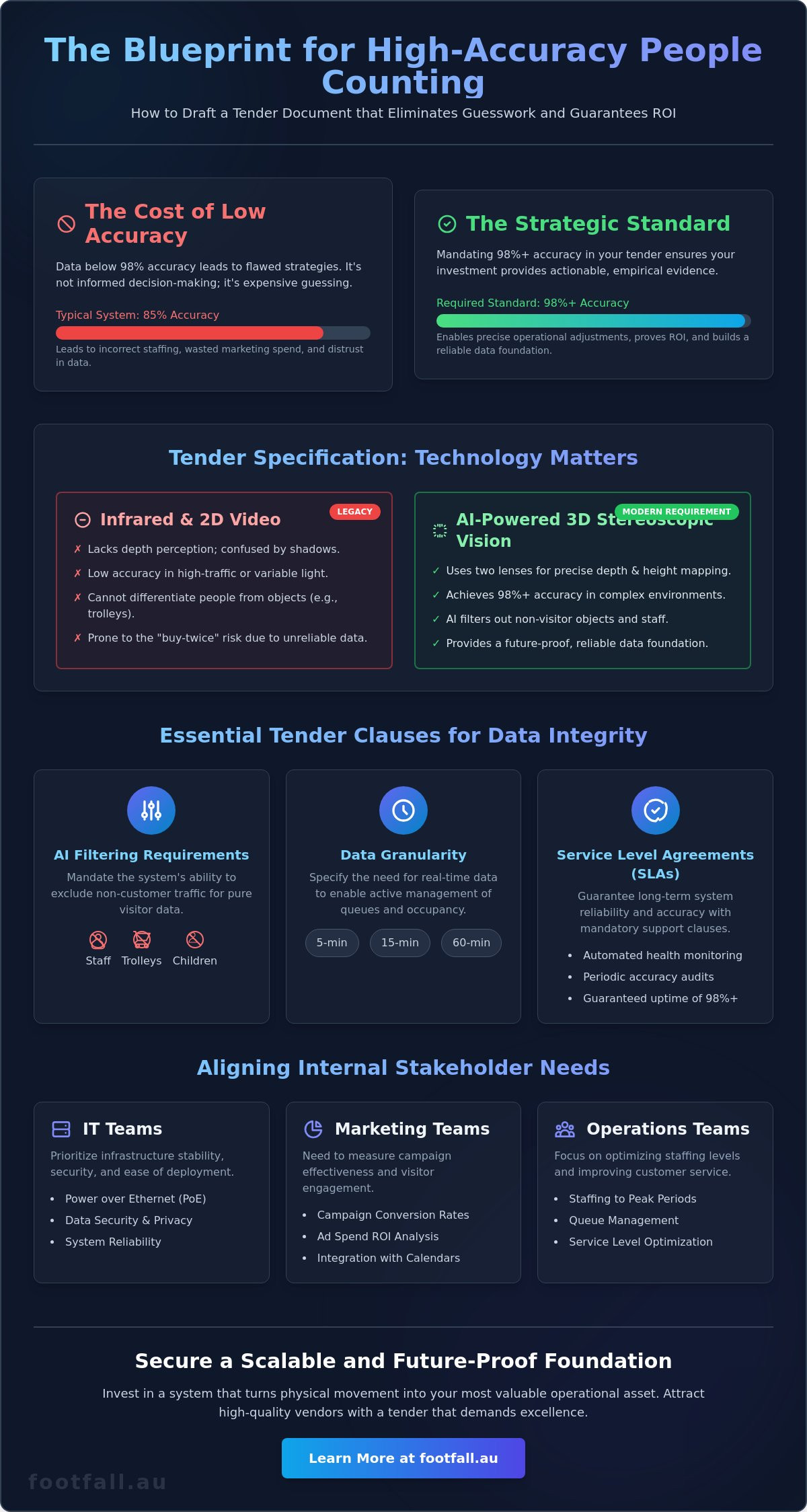
- Specify 3D stereoscopic vision and AI filtering requirements to exclude staff, trolleys, and children, ensuring the data reflects actual visitor behavior.
- Prioritize software with intuitive dashboards and automated reporting to empower non-technical staff with actionable, empirical insights.
- Include mandatory Service Level Agreements for automated health monitoring and periodic accuracy audits to guarantee 98%+ system reliability.
- Understand how selecting proven technology like the FootfallCam Pro2 provides a scalable and secure foundation for your organization’s operational strategy.
The Strategic Role of a People Counting System Tender Document
Drafting a people counting system tender document is a strategic exercise in risk mitigation. Many organizations treat this process as a simple hardware acquisition. However, the hardware itself represents only a fraction of the project’s long-term value. If you fail to define technical expectations clearly, you risk falling into the “buy-twice” trap. This occurs when a system delivers inaccurate data that leaders cannot trust, eventually leading to the entire infrastructure being stripped out and replaced within 24 months. By setting rigorous standards early, you ensure the first investment is the only one required.
In 2026, the baseline for excellence has shifted. A modern People counter must do more than break an infrared beam. It must distinguish between a human and a shopping trolley; it must recognize a staff member versus a prospect. Counting heads is only 20% of the scope. The remaining 80% is the utility of that information. Data is only valuable if it leads to a specific, positive change in operations. This shift from simple counting to behavioral analysis is what separates a successful project from a failed one.
Defining Project Scope and Key Performance Indicators
Precision is the only metric that matters. Your tender must mandate a minimum accuracy threshold of 98% to ensure the data is statistically significant. You should also define the required data granularity. While daily totals might suffice for basic reporting, real-time data is essential for active queue management or emergency occupancy monitoring. Key KPIs to include in your document are:
- Accuracy verification: Mandatory video validation to prove 98%+ precision.
- Data granularity: Ability to view footfall in 5, 15, or 60-minute intervals.
- Zone identification: Distinguishing between high-traffic main entrances and specific departmental zones.
Internal Stakeholder Requirements
Success requires alignment across three core departments. IT teams prioritize infrastructure stability; they often prefer Power over Ethernet (PoE) for its reliability and security compared to Wi-Fi. Marketing departments require integration with promotional calendars to measure campaign conversion rates. They need to know if a specific ad spend actually increased visitor volume. Simultaneously, Operations teams focus on staffing optimization. They view footfall as a narrative of movement, using the data to align labor hours with peak periods. This ensures high service levels without the waste of overstaffing.
Essential Technical Specifications for Your RFT
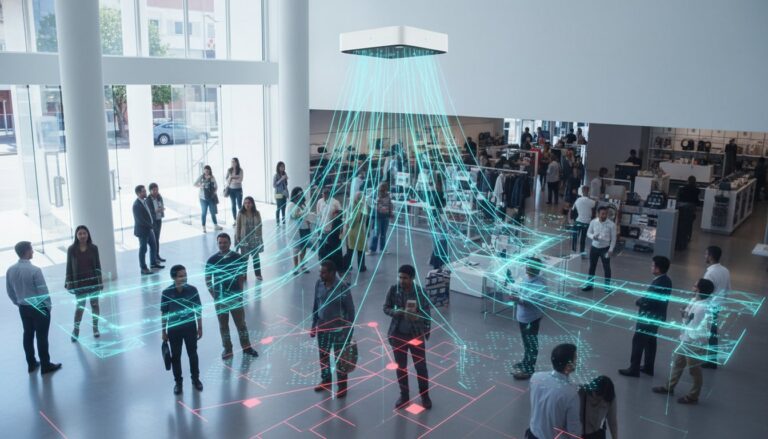
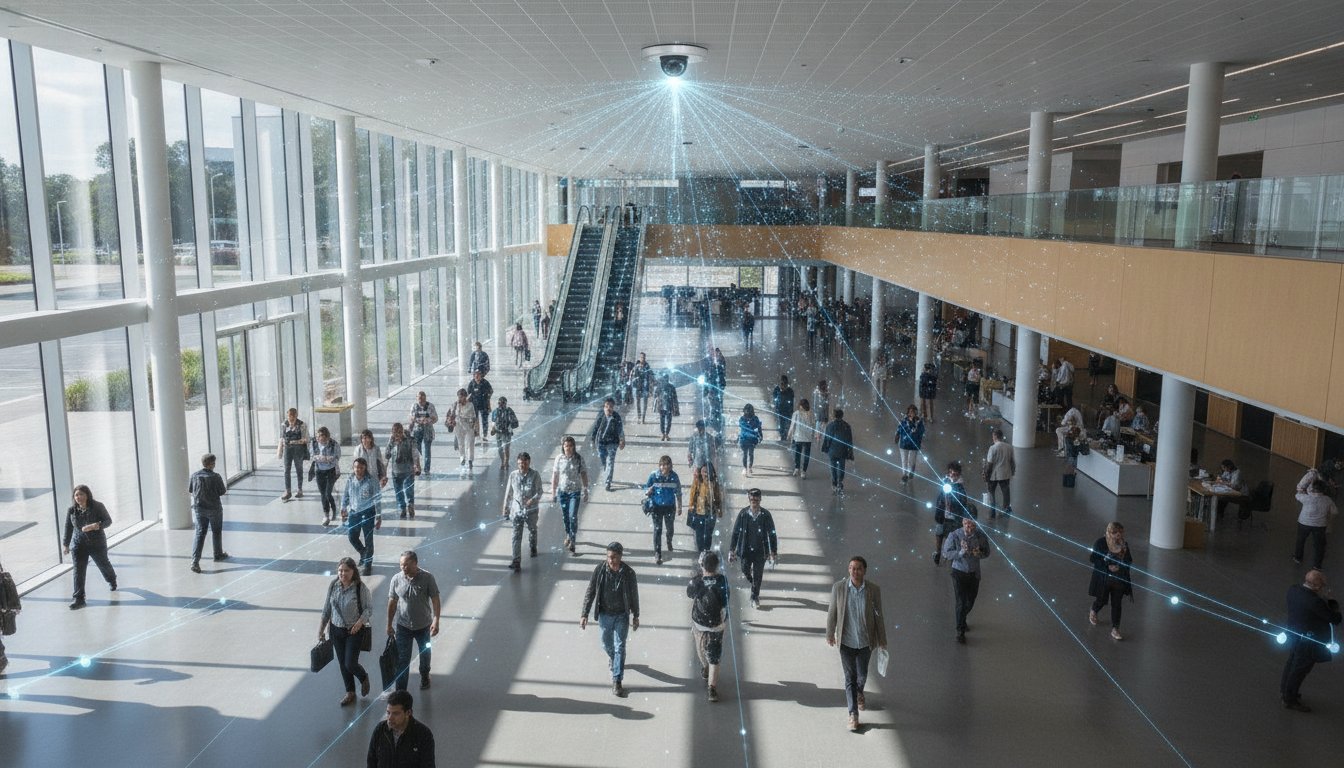
A people counting system tender document must serve as a rigorous technical filter. If your specifications are too broad, you’ll receive bids for legacy hardware that lacks the processing power required for modern behavioral analytics. Data integrity begins at the sensor level. In 2026, camera-based AI systems have reached a benchmark of 98%+ accuracy, but achieving this in a real-world retail environment requires more than just a high-resolution lens. It requires hardware that interprets depth and filters out noise that would otherwise inflate your footfall numbers.
Environmental adaptability is a critical requirement for any Request for Tender (RFT). Retail spaces are dynamic; they feature shifting shadows, varying light levels throughout the day, and high-density crowds during peak promotional periods. Your document should specify that the system must maintain its accuracy threshold regardless of these changes. Choosing a solution like the FootfallCam Pro2 ensures your infrastructure can handle these complexities while providing the granular data needed for strategic planning.
The 3D Stereoscopic Vision Standard
Legacy 2D sensors often fail because they lack depth perception. They struggle to distinguish between a person and a floor shadow or a high-contrast pattern on a rug. Your tender should mandate 3D stereoscopic vision. This technology uses two lenses to create a three-dimensional map of the entrance, allowing for precise height-based filtering. This ensures the system only counts adults while ignoring children or shopping trolleys. Additionally, require a wide field of view to maximize coverage, which reduces the total number of units needed for wide entrances and lowers your overall capital expenditure.
Data Privacy and Compliance in Australia
Privacy is a primary concern for organizational management. With the EU AI Act’s transparency obligations taking effect on December 2, 2026, for systems placed on the market before August 2, 2026, your people counting system tender document must prioritize “Privacy by Design.” In the Australian context, this means strict adherence to the Australian Privacy Principles (APPs). You must require edge-processing, where all video analysis and anonymization occur on the device itself. No video streams or Personal Identifiable Information (PII) should ever be transmitted or stored in the cloud. Ensure all data transmission uses secure protocols like HTTPS and SSL to maintain a foundation of reliability and trust.
- AI Filtering: Specify the ability to exclude staff members via Wi-Fi tracking or specialized tags.
- Object Exclusion: Require the system to ignore non-human objects like strollers and cleaning equipment.
- Anonymization: Demand that all counting data be stripped of identifiable features at the point of capture.
Evaluating Software Capabilities and Data Integration
A sophisticated hardware sensor is only as effective as the software layer that interprets its output. When drafting a people counting system tender document, you must shift your focus from the point of capture to the utility of the information. Raw data requires context to become actionable. Without a robust analytics platform, your organization will struggle to translate footfall metrics into operational improvements. The software must serve as a centralized hub, capable of managing a single device or a national fleet of over 1,000 units with equal efficiency.
Accessibility is the primary requirement for high adoption rates across your organization. Your tender should specify an intuitive User Interface (UI) that empowers non-technical staff to extract insights without specialized training. Using a platform like FootfallCam V9 Software allows managers to view real-time occupancy and historical trends through a clean, logic-driven dashboard. Automated reporting is equally vital. Require the system to generate and distribute daily, weekly, and monthly PDF reports directly to relevant stakeholders. This ensures that data-driven logic remains at the forefront of every management meeting without requiring manual data entry.
Analytics and Business Intelligence Features
Modern physical environments demand more than just entry and exit totals. Your RFT should mandate advanced behavioral analytics, including dwell time and heat mapping. These features treat physical presence as a sequence of human actions rather than just a set of statistics. By observing how visitors interact with specific zones, you can optimize store layouts and improve service delivery. Furthermore, require the ability to perform cross-location benchmarking. Comparing the performance of different sites against a national average allows you to identify high-performing locations and replicate their success across the entire network.
API and Third-Party System Integration
Data silos are the enemy of efficiency. Your people counting system tender document must require the availability of a RESTful API for seamless data extraction. This allows you to merge footfall data with sales figures from your POS or ERP systems to calculate precise conversion rates. Compatibility with industry-standard BI tools like PowerBI and Tableau is essential for creating a unified view of organizational health. Seamless API integration is the only way to ensure your footfall data contributes to a holistic and empirical understanding of business performance. This connectivity transforms a standalone counter into a vital component of your broader business intelligence ecosystem.
- Centralized Management: The ability to update and monitor all sensors from a single cloud-based portal.
- Customizable Dashboards: KPIs that can be tailored to the specific needs of Marketing or Operations.
- Data Security: Ensuring all software-level data handling meets modern encryption standards.
Service Level Agreements (SLAs) and Long-term Support
The true value of a people counting system tender document lies in its ability to protect the integrity of your data over time. Data gaps are the silent killers of ROI. If a sensor fails on a busy Saturday, you lose more than just a headcount; you lose the ability to calculate conversion rates and staff efficiency for that entire period. Your document must transform a hardware purchase into a reliable utility by mandating 24/7 automated health monitoring. This ensures that if a device goes offline, your technical team receives an alert immediately, rather than discovering the loss weeks later during a monthly review.
A robust people counting system tender document also requires mandatory periodic accuracy audits. These audits verify that the 98%+ precision promised at installation remains consistent as your physical environment evolves. Lighting changes, new store layouts, or seasonal decor can all impact sensor performance. Regular verification ensures that the empirical evidence driving your business decisions remains beyond reproach. Lifecycle management, including guaranteed firmware patches and software updates, must be baked into the contract to maintain security and performance standards.
Proactive Maintenance vs. Reactive Repair
Remote technical support is the most efficient way to maintain system uptime. A high-quality vendor will resolve most issues through firmware patches or software recalibration without needing to set foot on-site. This approach minimizes operational disruption and reduces long-term maintenance costs. You should also include a “Legacy Swap Out” process in your contract. This ensures a clear path for upgrading sensors as AI technology advances, preventing your infrastructure from becoming a sunk cost. For a deeper look at maintaining these standards, consult our guide on people counter support.
Defining the Support SLA
A clear SLA removes ambiguity during system failures. Specify tiered response times, such as a 4-hour remote response for critical data outages and a 48-hour on-site resolution for hardware failures. Local Australian-based technical assistance is a significant advantage, as it ensures support is available within your timezone and understands local operational challenges. Finally, mandate comprehensive training sessions for your staff on the FootfallCam V9 Software. Training ensures your team can navigate dashboards and interpret reports independently, maximizing the utility of the system. To ensure your project remains supported by experts who value data precision, explore our tailored support plans.
Why Footfall Australia is the Ideal Partner for Your Tender
Selecting a partner for your people counting system tender document requires more than evaluating a price list. It demands a consultant who understands the intersection of high-level AI technology and practical operational needs. Since 2004, Footfall Australia has served as a strategic expert for businesses across the continent, providing the data-driven logic necessary to optimize physical environments. We provide comprehensive solutions that span from initial hardware sales to perpetual software licenses, ensuring you own your data and the means to interpret it without hidden recurring costs.
Our national reach is a cornerstone of our reliability. Through a network of local partners, we provide consistent service and technical support regardless of your location. This ensures that a multi-site retail chain or a regional library network receives the same level of precision and response. We focus on the utility of information, treating every installation as a narrative of movement that empowers you to make specific, positive changes to your staffing and marketing strategies. By choosing a partner with over two decades of experience, you mitigate the risk of technical obsolescence and data inconsistency.
The FootfallCam Pro2: A Benchmark for Tenders
The FootfallCam Pro2 sets the industry standard for accuracy and integration. It delivers a guaranteed 98%+ accuracy rate even in complex, high-traffic conditions, meeting the most stringent RFT technical requirements. Its all-in-one AI processing simplifies installation by eliminating the need for external servers, which significantly reduces the complexity of your IT infrastructure. By specifying this technology in your people counting system tender document, you secure a system that’s both forward-thinking and deeply reliable.
Expertise in Complex Australian Environments
Our experience spans diverse sectors, including major public libraries, retail hubs, and public transport spaces. We understand that the Australian economic climate requires a clear focus on ROI, especially as household spending reached $38.63 billion in early 2026 despite fluctuating consumer confidence. Our people counting systems Australia are designed to provide the best possible return by delivering data that’s both accurate and easy to act upon. We don’t just sell sensors; we provide the strategic advantage needed to stay prepared for shifting behavioral trends. Contact our strategic consultants to help refine your tender specifications and ensure your next project is backed by empirical evidence.
Securing the Future of Physical Environment Intelligence
Building a high-performing data infrastructure requires moving beyond basic headcounts to embrace comprehensive behavioral analytics. A robust people counting system tender document ensures that your organization transitions from intuitive guesswork to empirical, data-driven management. Precision is the foundation of trust. By prioritizing 3D stereoscopic vision and rigorous Service Level Agreements, you protect your investment against technical obsolescence while guaranteeing 98%+ accuracy across your network. This strategic approach ensures that every metric captured translates into a specific, positive change in operational efficiency.
Successful implementation depends on choosing a partner with a deep understanding of local operational challenges. Since 2004, our Australian partner network has delivered GDPR and APP compliant AI technology that treats human movement as a sequence of actions rather than just statistics. This foundation of reliability empowers your team with simple, intuitive reporting that leads to long-term growth. You can now download our technical specification checklist to refine your tender and secure a system designed for maximum ROI. Take the next step toward a more transparent and efficient future today.
Frequently Asked Questions
What is the most important technical specification in a people counting tender?
3D stereoscopic vision is the most critical specification for ensuring data integrity. This technology enables the system to differentiate between human shapes and inanimate objects like strollers or shadows. Without depth perception, your data will likely suffer from significant noise during peak periods. High-quality sensors use dual lenses to create a three-dimensional map, which is essential for achieving the precision required for strategic planning.
How do I ensure the tendered people counting system complies with Australian privacy laws?
Compliance requires edge-based processing where data is anonymized directly on the device. Your people counting system tender document must mandate that no video streams or Personal Identifiable Information (PII) are transmitted to the cloud. This ensures adherence to the Australian Privacy Principles (APPs) and provides a secure foundation for organizational data. Vendors should demonstrate that their AI technology strips identifiable features at the point of capture.
Should I specify 3D or 2D sensors in my tender document?
Specify 3D sensors to ensure reliable performance in dynamic environments. 2D sensors are prone to errors caused by lighting shifts and high-traffic density. 3D stereoscopic sensors use dual lenses to map physical space, allowing for precise height filtering that excludes children or staff if required. In 2026, 3D technology has become the industry standard for organizations that value empirical evidence over vague estimates.
What is a reasonable accuracy guarantee to ask for in an RFT?
Demand a minimum accuracy guarantee of 98% for all sensors. Modern AI-driven camera systems can consistently hit this benchmark in real-world conditions. Your RFT should require vendors to provide video-validated evidence of this precision during the initial commissioning phase. This high threshold ensures that the data remains statistically significant for making staffing and marketing decisions that impact your bottom line.
How much should I budget for ongoing maintenance and software licenses?
Budgeting should account for both the initial hardware investment and ongoing lifecycle management. While costs vary based on project scale, you should look for vendors offering flexible support tiers, such as a Basic or Premium Support Plan. Some providers offer perpetual software licenses, which can reduce long-term operational expenditure compared to recurring monthly fees. Always clarify if firmware updates and health monitoring are included in the annual cost.
Can I require the new people counting system to integrate with my existing CCTV?
You can integrate AI analytics with existing CCTV using hardware like the FootfallCam Centroid. This device processes video feeds from standard IP cameras to extract footfall data. However, dedicated 3D sensors remain the gold standard for high-accuracy requirements at primary entrance points. Using a hybrid approach allows you to leverage existing infrastructure while maintaining 98%+ precision where it matters most.
What are the risks of selecting the lowest-priced vendor in a people counting tender?
Selecting the lowest-priced vendor often results in the “buy-twice” risk. Cheap sensors frequently deliver inaccurate data that lacks the granularity needed for strategic decision-making. Over time, the cost of manual audits and eventual system replacement far exceeds the initial savings of a low-quality bid. A successful tender prioritizes long-term ROI and data reliability over the lowest initial capital expenditure.
How often should accuracy audits be performed as part of the contract?
Schedule accuracy audits at least bi-annually to maintain data integrity. These periodic checks ensure the system remains calibrated as your physical layout or lighting conditions change. Including this requirement in your people counting system tender document holds the vendor accountable for long-term performance. Regular audits provide the quiet confidence that your operational decisions are backed by consistently accurate empirical evidence.