
Electronics Store Customer Behaviour Analysis: The 2026 Retail Strategy Guide
Businesses that prioritize data and analytics strategies are 23% more profitable than those relying on intuition. In a 2026 retail environment where consumers are increasingly value-conscious, this margin represents the difference between a thriving flagship and a struggling showroom. You’ve likely felt the frustration of a crowded floor where customers spend 20 minutes testing a high-end tablet only to complete the purchase on their smartphone. It’s a common challenge in high-consideration retail, where balancing technical staff schedules with peak demo times often feels like guesswork.
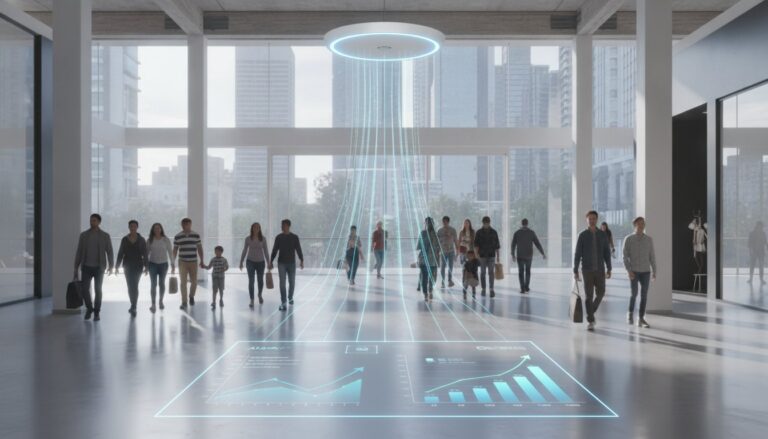
This guide helps you master electronics store customer behaviour analysis to turn these browsing sessions into confirmed sales. We’ll show you how to use advanced footfall analytics to decode the human movement behind the numbers and reclaim your floor’s profitability. By using high-precision AI tracking, you can bridge the gap between browsing and conversion with scientific accuracy. Data is only valuable if it leads to a specific, positive change in your operations.
We will explore how to eliminate bottlenecks at popular tech displays, optimize your staff-to-customer ratios during peak release windows, and provide the data-backed evidence needed for strategic layout changes. It’s time to move beyond the coldness of pure tech-speak and focus on the actionable insights that drive growth through a deeper understanding of the visitor journey.
Key Takeaways
- Transition from simple entry counting to sophisticated journey mapping using 3D LiDAR technology to capture every critical interaction on your showroom floor.
- Refine your electronics store customer behaviour analysis by using zone analytics to measure dwell times at high-value demo stations.
- Optimize staff-to-customer ratios during peak tech release windows to ensure technical experts are available for high-consideration purchases.
- Implement data-backed layout modifications that resolve bottlenecks and create a more intuitive path toward conversion.
- Establish a sustainable analytics ecosystem with a one-time hardware investment that provides continuous, actionable insights into your retail performance.
The Evolution of Electronics Store Customer Behaviour Analysis
Modern Australian retail in 2026 has moved beyond the era of simple door counting. Effective electronics store customer behaviour analysis now requires a granular understanding of the visitor journey from the moment they cross the threshold to the point of transaction. It involves the systematic study of consumer behaviour to decode how individuals interact with high-consideration technology in a physical space. While entry data tells you someone arrived, it says nothing about why they left without a box in hand.
By 2026, the retail landscape has bifurcated. High-income households continue to invest in premium tech, while others remain highly value-conscious. This economic climate makes “showrooming” a critical threat. Customers often use physical stores as tactile testing grounds before searching for a lower price online. To reclaim these sales, retailers must transition from reactive management to a proactive, data-driven strategy. Understanding the narrative of human movement allows you to intervene at the exact moment a browsing session risks becoming a lost opportunity.
Why Electronics Retail is Unique
Electronics stores face challenges that apparel or grocery retailers don’t. High-value items like OLED televisions or professional cameras lead to longer consideration phases and significantly higher dwell times. Technical demonstrations are not just a luxury; they are the primary driver of the footfall path. When a customer spends 15 minutes at a gaming console display, the store acts as an experience centre. If a technical expert isn’t available during that window, the likelihood of conversion drops. Data shows that businesses prioritizing these analytical strategies are 23% more profitable than those relying on intuition alone.
The Cost of “Blind” Retail Management
Managing a flagship store without spatial analytics creates hidden financial drains. Overstaffing during quiet Tuesday mornings wastes resources, while understaffing during a major smartphone release leads to bottlenecking and abandoned carts. Poor layout visibility often results in “dead zones” where premium floor space, despite high rent, fails to attract any engagement. Actionable insights represent the essential bridge between raw sensor data and sustained revenue growth. Without them, you’re essentially guessing where your profit is hiding. Using evidence-based success metrics allows you to optimize every square metre for maximum engagement.
- Eliminate dead zones by identifying areas with zero dwell time.
- Align technical staff rosters with real-time traffic peaks.
- Convert “showroomers” by optimizing the demo-to-purchase path.
Leveraging AI and 3D LiDAR for Precision Data Collection
High-precision hardware is the foundation of modern retail intelligence. The FootfallCam Pro2 sets the benchmark for 2026 by moving beyond the limitations of legacy systems. Older 2D thermal or standard CCTV counters often fail in the complex lighting environments of electronics stores, where bright OLED screens and reflective glass surfaces create significant visual noise. 3D LiDAR technology solves this by using rapid laser pulses to create a detailed three-dimensional map of the space, ensuring up to 99.5% accuracy even in high-density crowds during major product launches.
Sophisticated AI algorithms enhance your electronics store customer behaviour analysis by categorising visitors with surgical precision. The system distinguishes between adults and children, which is vital for electronics retailers where families may browse together but only one person makes the purchasing decision. Staff exclusion technology ensures that employee movements, such as restocking shelves or conducting demos, don’t artificially inflate footfall numbers or deflate conversion metrics. Privacy remains a core priority; the hardware processes all data at the edge, meaning no video or facial features are ever stored or transmitted. You gain the intelligence of human movement without the liabilities of personal data collection.
The Power of the FootfallCam Centroid
For retailers with established security infrastructure, the FootfallCam Centroid system acts as an intelligence bridge. It integrates with existing CCTV feeds to track visitor journeys across complex, multi-door floor plans that a single sensor might miss. This technology enables advanced metrics like group counting and gender split analysis. Understanding whether a premium home cinema system is usually researched by couples or individuals allows for more targeted sales approaches. You can explore our technical specifications to see how your current cameras can be upgraded with these AI capabilities.
Software Integration with FootfallCam V9
Data is only as useful as its accessibility. The FootfallCam V9 software provides a unified, cloud-based dashboard for real-time monitoring across national retail chains. This platform allows management to compare the performance of different departments, such as Gaming versus Home Office, with a few clicks. For businesses currently tethered to outdated 2D sensors, the “Legacy Swap Out Plan” facilitates a structured, cost-effective transition to this modern analytics ecosystem. It ensures your data remains consistent and actionable as your business scales.

Decoding the High-Consideration Journey: Dwell Time and Zone Analytics
Partitioning your floor plan into digital zones allows you to transform raw movement into a narrative of intent. In a high-consideration environment, electronics store customer behaviour analysis must distinguish between a casual browser and a high-intent buyer. Zone Analytics enables this by tracking engagement within specific departments, such as Gaming, Home Cinema, or Wearables. By 2025, retail stores accounted for 38.4% of the global footfall counter market revenue, primarily because these businesses recognized that entry data alone cannot explain why a customer chooses one product over another.
Dwell time serves as your most reliable leading indicator for conversion. While a grocery shopper values speed, an electronics customer requires time to compare specifications and test interfaces. If a visitor spends more than eight minutes at a premium laptop display, their probability of purchase increases significantly. Conversely, a high attraction rate for a promotional endcap that results in a dwell time of less than thirty seconds suggests that while the display is eye-catching, the product or price point isn’t meeting expectations. Identifying these “Power Hours”—the specific windows when your most engaged, high-dwell customers are present—allows you to align your technical resources with actual demand.
Mapping the Path-to-Purchase
Visualizing the visitor journey through heat maps reveals the common routes customers take from your entrance to the point of sale. These maps highlight where bottlenecks occur, particularly around popular product launches like new gaming consoles or flagship smartphones. If your data shows that 60% of visitors bypass your high-margin accessory wall, you have a clear mandate for a layout change. For a broader perspective on how these metrics drive national success, consult our retail footfall analysis Australia guide. Objective evidence replaces the guesswork of store design.
Measuring Engagement at Demo Stations
The correlation between physical interaction and a final sales decision is undeniable in the tech sector. Data allows you to determine if a demo unit is positioned in a high-traffic flow or tucked away in a low-engagement corner. Tracking the ratio of passers-by to active users at a demo table provides a clear metric for display effectiveness. Measuring dwell time per zone validates the ROI of experiential marketing by proving exactly how much engagement your high-cost interactive displays generate. It’s a precise method for ensuring your floor space works as hard as your sales team.
Turning Data into ROI: Staffing and Layout Optimisation Strategies
Execution is the final stage of electronics store customer behaviour analysis. Raw data provides the “what,” but a strategic framework translates those numbers into a measurable return on investment. Retailers who move beyond observation to active experimentation see the most significant gains in conversion. Implementing changes requires a structured approach to ensure every adjustment is backed by evidence rather than intuition. Use this 5-step framework to refine your operations:
- Audit: Identify your current baseline for dwell times and attraction rates across all zones.
- Synchronise: Compare historical traffic peaks with your current staff rosters to find coverage gaps.
- Intervene: Deploy technical experts to high-dwell zones during identified “Power Hours.”
- Reconfigure: Adjust floor layouts to eliminate dead zones and steer traffic toward high-margin displays.
- Validate: Measure the impact of changes on your conversion rates and iterate based on new data.
Service Level metrics are critical in high-tech retail. Unlike a self-service grocery environment, an electronics store requires a specific ratio of staff to visitors to facilitate complex sales. If your visitor-to-staff ratio exceeds 10:1 during a peak window, your “lost sales” opportunity climbs as customers grow frustrated by wait times. By maintaining a data-driven service level, you ensure that every high-intent browser has access to the expertise they need to move from consideration to purchase.
Staffing for Technical Expertise
Electronics retailers must ensure their most knowledgeable staff members are present during peaks identified by historical data. National sales events like Black Friday or major product launches require precision scheduling. Using spatial analytics, you can predict exactly when your floor will be most crowded and scale your team accordingly. Conversely, verified low-traffic windows allow you to reduce operational costs by scaling back staff without impacting the customer experience. This ensures your human resources are always deployed where they can generate the most value.
Layout Optimisation for Maximum Exposure
Store layouts should never be static. Use A/B testing to determine if moving a premium display closer to the entrance actually improves flow or simply creates a bottleneck. Strategically placing high-margin accessories, such as premium cables or protective cases, along the most-travelled paths increases the likelihood of add-on sales. You should also encourage “Cross-Shopping” by positioning complementary departments near each other; for instance, placing a soundbar zone immediately adjacent to the TV department. You can request a consultation to see how spatial analytics can reveal the hidden revenue potential in your current floor plan.
Implementing a Seamless Analytics Ecosystem with Footfall Australia
Footfall Australia provides a partnership built on transparency and technical precision. We understand that electronics store customer behaviour analysis is a critical operational standard for 2026. Our business model reflects this by offering a “one-time sale” approach for hardware, paired with perpetual software licenses. This structure removes the burden of high recurring subscription fees, allowing you to focus your budget on growth and optimization. Every project begins with a detailed site survey and custom system design. This ensures your sensors are positioned for maximum accuracy, regardless of complex store architectures, high ceilings, or challenging lighting conditions.
Our approach is rooted in the belief that sophisticated technology should be accessible and practical. We don’t just provide sensors; we provide the technological eyes your business needs to see what was previously invisible. By choosing a partner that values data-driven logic over guesswork, you gain the quiet confidence that every layout change or staffing adjustment is backed by hard evidence. It’s a strategic advantage that positions your stores as leaders in the high-consideration retail sector.
Data Integrity and National Support
Data is only as valuable as its reliability. Our Basic and Premium Support Plans are designed to maintain a 99%+ accuracy rate through proactive monitoring and remote calibration. For national electronics chains, we manage the complexities of large-scale rollouts to ensure data consistency across every state. Our People Counting Technology guide provides the technical foundation needed for this level of long-term planning. Local expertise means you’ll have a partner that understands the Australian retail landscape and responds quickly to your specific maintenance needs.
The Future of Electronics Retail in Australia
The next phase of retail evolution involves the seamless integration of traffic data with real-time POS inventory. By 2027, we expect this to be a standard requirement for staying competitive in the Australian market. This connectivity allows you to see how stock levels influence dwell times and attraction rates in real-time. The industry is moving toward “hyper-personalised” experiences where footfall patterns trigger immediate adjustments to in-store digital marketing and staff deployments. This proactive approach ensures your physical space remains an essential experience centre for modern, value-conscious consumers. You can contact Footfall Australia for a tailored retail analytics solution to start your transition toward a data-driven future.
Securing Your Competitive Edge with Data-Driven Intelligence
The transition from intuition to intelligence defines the leaders in 2026 high-consideration retail. You now have the strategic framework to replace guesswork with precision, using 3D LiDAR and zone analytics to map every critical interaction on your floor. Mastering electronics store customer behaviour analysis ensures your floor space acts as a high-performance engine for conversion rather than a passive showroom. By aligning your technical staff with verified peak traffic windows and eliminating dead zones, you transform the visitor journey into a narrative of measurable success.
Footfall Australia brings over 20 years of experience to the Australian market, providing the stability and local expertise required for complex national rollouts. Our proprietary AI-driven FootfallCam technology offers the surgical accuracy needed to make high-stakes operational decisions with total confidence. Supported by a national network of installation and maintenance partners, we ensure your analytics ecosystem remains reliable as consumer trends shift toward 2027. It’s time to reclaim your floor’s profitability through an evidence-based strategy. Optimise Your Electronics Store with Footfall Australia today and lead your business with the quiet confidence that only hard data provides.
Frequently Asked Questions
How accurate is customer behaviour analysis in a busy electronics store?
Precision reaches 99.5% when using 3D LiDAR technology to map the environment. Standard 2D sensors often struggle with reflections from glass display cases or bright OLED screens, but 3D mapping ignores these visual artifacts. This level of accuracy is essential for an electronics store customer behaviour analysis that remains reliable during high-density events like Boxing Day sales or major flagship smartphone launches.
Can people counters distinguish between staff members and customers?
Advanced AI counters use staff exclusion algorithms and specific height filtering to ensure your data reflects genuine customer intent. By excluding employee movements during restocking or floor shifts, you prevent your conversion rates from being artificially suppressed. This distinction is vital for maintaining the integrity of your performance reports and ensures that your staffing models are based on actual visitor demand.
Does footfall tracking comply with Australian privacy laws?
Modern footfall systems are fully compliant with the Australian Privacy Principles (APP) and international GDPR standards. The hardware processes all data at the edge, meaning no images or facial features are ever recorded, stored, or transmitted to the cloud. You receive actionable movement narratives and spatial analytics without compromising the personal privacy of your visitors or employees.
How does dwell time impact sales conversion in high-tech retail?
Dwell time is the primary indicator of purchase intent for high-consideration items like home cinema systems or professional cameras. Data confirms that customers who engage with a demo unit for more than five minutes are significantly more likely to complete a transaction. Tracking this metric allows you to identify which interactive displays are effectively moving visitors from the browsing phase into the final decision-making stage.
What is the ROI of installing a people counting system in an electronics store?
The return on investment stems from reduced operational waste and recovered “lost sales” during peak periods. Businesses that use data to optimize staff rosters and store layouts report a 23% increase in profitability compared to those relying on intuition. By identifying specific “Power Hours,” you ensure your technical experts are available when high-intent traffic is at its highest density.
Can I integrate footfall data with my existing POS system?
Integration with your current Point of Sale (POS) platform is a standard feature of modern analytics ecosystems. By merging traffic data with transaction records via API or FTP, you can calculate real-time conversion rates for specific departments or promotional zones. This provides a holistic view of how electronics store customer behaviour analysis directly influences your revenue across different product categories.
What happens if my store layout changes frequently?
Frequent layout changes are managed through software-defined zone recalibration within your dashboard. You don’t need to physically move sensors to track a new promotional endcap or a seasonal display; you simply update the digital boundaries in the FootfallCam software. This flexibility allows you to conduct A/B tests on new store designs and receive immediate feedback on visitor flow.
Do I need a separate system for every entrance in a large shopping centre?
Every entrance requires a dedicated sensor to maintain a 100% count of visitor traffic and ensure data integrity. However, the FootfallCam Centroid system aggregates these individual feeds into a single, unified reporting dashboard. This allows you to track the complete visitor journey and total occupancy even if your store features multiple access points or complex architectural layouts.