
Retail Analytics for Fashion Stores: A Data-Driven Guide to Growth in 2026
Inventory data tells you exactly what sold, but it remains silent on why the majority of your visitors walked out empty-handed. In a global fashion industry projected to reach $2 trillion in 2026, relying on guesswork for your physical locations is no longer a viable strategy. You likely recognize the frustration of high foot traffic that fails to convert into sales. This discrepancy usually stems from a lack of visibility into the visitor journey. By implementing retail analytics for fashion stores, you can finally decode the invisible patterns within your aisles and fitting rooms.
It’s a challenge to bridge the gap between collecting data and executing a plan. Currently, only 29% of retailers successfully connect their analytics to actionable strategies. This guide provides the roadmap to move your business into that top tier. You’ll learn how to transform raw movement into evidence-based decisions that increase conversion rates and streamline operations. We will examine the specific tools needed to measure window display success, optimize staffing for peak hours, and prepare for 2027 mandates like the EU Digital Product Passport.
Key Takeaways
- Transition from intuitive management to evidence-based decision-making by leveraging retail analytics for fashion stores to capture precise shopper behavior.
- Identify high-potential dead zones and measure the direct impact of window displays using specialized Turn-in Rate metrics.
- Optimize operational efficiency by aligning staff-to-customer ratios with peak traffic periods to maximize sales conversion rates.
- Execute data-backed store improvements through A/B testing of window designs and strategic floor layout adjustments based on actual visitor paths.
- Integrate advanced sensor technology like the FootfallCam Pro2 with intuitive reporting software to transform raw data into actionable intelligence.
What is Retail Analytics for Fashion Stores in 2026?
Modern retail management has moved beyond reviewing end-of-day sales figures. Retail analytics for fashion stores represents the systematic collection and analysis of movement data within the physical environment, paired with digital reporting. In 2026, successful retailers view their floor space as a living laboratory where every interaction provides a data point. This approach integrates the broader principles of Retail Intelligence to create a transparent view of store health. Australian fashion retailers are increasingly abandoning “gut feeling” management in favor of evidence-based strategies, recognizing that intuition cannot scale in a $2 trillion global market.
This “Phygital” approach is essential for growth. It bridges the physical reality of the shop floor with the precision of digital reporting. The framework relies on three fundamental pillars. First, traffic counting establishes the baseline of opportunity. Second, conversion tracking measures how effectively that opportunity is captured at the point of sale. Finally, spatial analytics decode how visitors move through different zones, such as denim walls or accessory islands. Together, these pillars transform a store from a static space into a responsive, data-driven environment.
The Evolution of Fashion Data
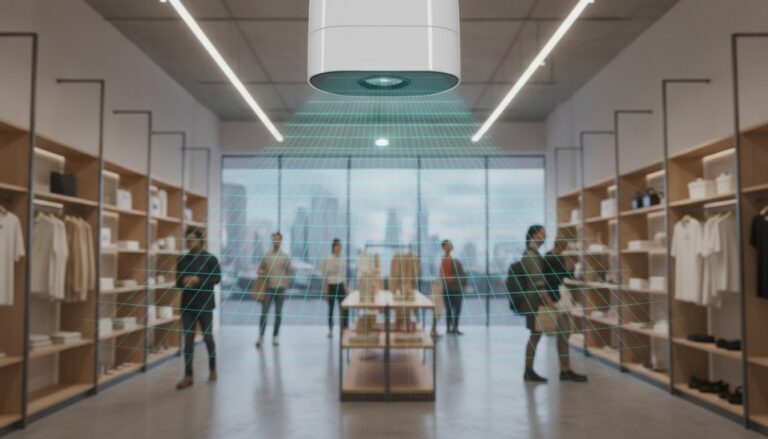
Traditional sales reports only tell part of the story. They record what was purchased, but they ignore the high volume of visitors who engaged with the brand and left empty-handed. Advanced people counting technology provides the missing context that POS data lacks. Modern sensors use AI to distinguish between staff members and genuine customers, ensuring a 99.5% accuracy rate. This precision allows managers to see real-time visitor metrics, providing a clear window into store performance throughout the day rather than waiting for a weekly summary.
Why Fashion Retailers Face Unique Analytical Challenges
Fashion retail involves unique complexities like short product lifecycles and rapid seasonal shifts. Trends that peak in early 2026 might vanish within months. High-quality retail analytics for fashion stores allow brands to monitor these shifts through traffic trends rather than just inventory levels. The apparel buying process also relies heavily on the “touch and feel” experience. Understanding the visitor journey into the fitting room is critical, as this is the primary conversion funnel in fashion. Tracking dwell time and engagement in these high-intent zones reveals whether a product’s fit, style, or price is the actual barrier to a sale.
Decoding the Visitor Journey: Beyond the Point of Sale
A sale is the final chapter of a story that begins outside your window. While inventory systems track the ending, retail analytics for fashion stores reveal the narrative arc of the visitor journey. Leading brands have harnessed the power of data to move beyond the transaction, focusing instead on the engagement that precedes it. This starts with identifying “dead zones,” those corners of the floor where customer footfall drops to nearly zero. If a high-margin collection sits in a dead zone, it doesn’t matter how attractive the items are; they simply won’t be seen.
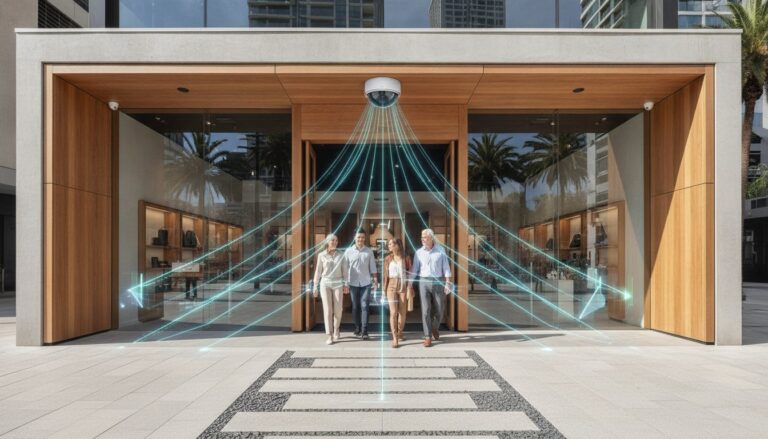
Measuring the “Turn-in Rate” provides immediate feedback on your storefront’s effectiveness. This metric calculates the percentage of people passing your store who choose to enter. In a 2026 market where the global fashion industry is valued at approximately $1.8 trillion, even a 1% increase in turn-in rate can translate to significant revenue growth. Spatial analytics then assign a value to every square meter of your shop, allowing you to treat your floor space like high-stakes real estate. If you want to maximize your floor’s potential, you can request a spatial audit to see where your customers are actually spending their time.
Mapping Customer Flow and Pathing
Visualizing how shoppers move reveals the “Golden Path,” the most frequent route through your store. Pathing is the visual trace of customer movement used to optimise floor plans. If your data shows a bottleneck near the entrance, it might be preventing shoppers from reaching the seasonal displays at the back. By identifying these friction points, you can reconfigure the layout to ensure a seamless flow toward high-margin items and improve the overall shopping experience.
The Power of Dwell Time Analysis
Dwell time is a powerful indicator of purchase intent. In fashion, there’s a direct correlation between time spent in a fitting room and final basket value. Shoppers who dwell for more than 10 minutes in a fitting room are significantly more likely to convert than those who spend less than five. Distinguishing between aimless browsing and high-intent engagement requires precise time-based data. Utilizing retail footfall analysis Australia allows you to identify categories that attract high traffic but suffer from low dwell time, suggesting a mismatch in product appeal, sizing, or pricing. This level of retail analytics for fashion stores ensures you aren’t just guessing why items stay on the rack.

Key Metrics to Master for Fashion Growth
Raw foot traffic is a vanity metric unless it’s paired with purchase data. To achieve growth in 2026, you must look beyond the total number of visitors and focus on the efficiency of your operations. Implementing retail analytics for fashion stores allows you to isolate the specific variables that drive revenue. While inventory management remains important, your primary focus should be on how people interact with your brand and staff. By mastering a few key metrics, you can transform a busy store from a chaotic environment into a high-conversion machine.
Success in the current market requires a deep dive into five essential KPIs:
- Sales Conversion Rate: The percentage of visitors who make a purchase. It’s the ultimate health check for any retail location.
- Staff-to-Customer Ratio: A measure of service capacity. If this ratio is too high, you’re overspending on labor; if it’s too low, you’re losing sales to poor service.
- Average Transaction Value (ATV) vs. Footfall: Tracking whether high traffic leads to bulk buying or just small, incidental purchases.
- Return on Marketing Investment (ROMI): Correlating specific marketing campaigns or window display changes with immediate spikes in traffic.
- Fitting Room Conversion: This is the most critical link in the fashion funnel. If 40% of visitors enter a fitting room but only 5% buy, the issue isn’t traffic; it’s likely product fit or pricing.
Calculating and Improving Conversion Rates
The standard formula for success is simple: (Total Transactions / Total Footfall) x 100. While the global fashion retailing market is growing at a CAGR of 13.25%, many individual stores struggle to maintain healthy margins because they don’t know their baseline. In Australia, fashion retailers typically aim for a conversion rate between 15% and 25%, depending on the sub-sector. If your numbers fall below this range, you can use footfall data analysis to diagnose the problem. It helps you determine if the issue is low-quality traffic, poor stock availability, or a failure in floor salesmanship.
Optimising Staffing with Traffic Data
Labor is often a retailer’s highest controllable expense. Moving from fixed rosters to data-driven “Power Hours” ensures your most experienced staff are on the floor when traffic is highest. Data shows that 74% of retailers want to be data-driven, yet only 29% successfully connect their analytics to these types of operational changes. By analyzing retail analytics for fashion stores, you can identify “dead” periods where staffing can be safely reduced. This precision allows you to reallocate those labor hours to peak Saturday afternoon rushes, directly protecting your conversion rate during high-pressure windows.
Actionable Strategies: Turning Data into Store Sales
Collecting information is only the first step. The real value of retail analytics for fashion stores lies in the ability to pivot based on what the numbers reveal. If your turn-in rate drops after a window change, you have immediate evidence that the new creative isn’t resonating. You can perform A/B testing by swapping displays between two similar locations or changing elements within a single store every 72 hours. This rapid iteration ensures that your storefront remains a high-performing asset rather than a static expense.
Strategic floor reorganizations should follow customer pathing data. If shoppers consistently bypass the middle of your store, you can move high-margin impulse items into the high-dwell zones you’ve identified, such as the areas surrounding fitting room entrances or accessory walls. This ensures that every high-intent visitor is exposed to your most profitable products. Additionally, you can train your floor team to recognize when a customer has spent more than 10 minutes in a specific zone without engaging. This high-dwell, low-conversion scenario is a prime opportunity for a service intervention that can save a potential sale.
Visual Merchandising Optimisation
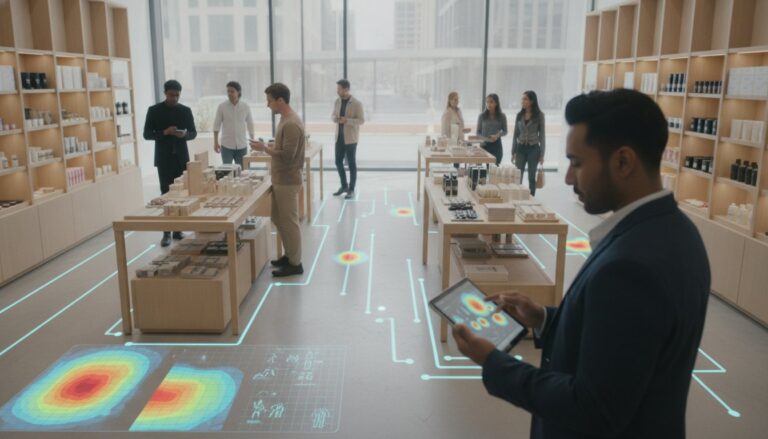
Heat maps provide a visual representation of which mannequins and displays actually attract attention. Heat mapping identifies “hot” and “cold” zones by visualizing the intensity of customer presence and dwell time throughout the floor plan. You can use this data to validate the impact of “End-of-Aisle” promotions. If a specific rack doesn’t generate the expected foot traffic spike, you can adjust the lighting, signage, or product mix immediately. Optimize your store layout today to ensure no corner of your floor is wasted.
Marketing Campaign Validation
Physical stores don’t exist in a vacuum. You must track the “halo effect,” where digital marketing campaigns drive physical store visits. By comparing weekend traffic across different regions, you can assess the local reach of your social media ads or email blasts. Integrating advanced people counting systems Australia with your promotional calendar allows you to see the direct correlation between a marketing spend and a visitor spike. This evidence-based approach ensures your budget is allocated to the channels that actually put people in your aisles.
Implementing FootfallCam: The Smart Strategist’s Choice
Implementing a robust system for retail analytics for fashion stores requires hardware that matches the sophistication of your brand. The FootfallCam Pro2 has emerged as the industry standard because it solves the specific environmental challenges of apparel retail. It offers a seamless marriage of complex sensor technology and intuitive reporting, allowing managers to focus on growth rather than troubleshooting technical discrepancies. By choosing a proven platform, you ensure that every decision is backed by high-precision data rather than hardware-driven estimates.
The transition from raw data to actionable intelligence happens within the V9 Analytic Manager software. This platform provides over 60 different reports designed to help you decode the visitor journey and optimize store performance. A significant advantage of the FootfallCam ecosystem is the commercial transparency it offers. Many configurations include a lifetime license for core software metrics, providing a perpetual solution that avoids the rising costs of recurring subscriptions. This model allows you to secure a long-term strategic advantage with a predictable initial investment.
Hardware Excellence: The Pro2 Advantage
Precision is the foundation of any analytical strategy. The Pro2 utilizes AI-based counting to deliver 99.5% accuracy by filtering out non-customer movement. It ignores shadows, children, and staff members, ensuring your conversion data isn’t skewed by internal operations. Its wide-angle lens provides comprehensive coverage for large flagship entrances; meanwhile, the discreet, professional design ensures it blends into high-end boutique aesthetics without disrupting your visual merchandising. This balance of power and subtlety is essential for maintaining the premium feel of a fashion environment.
Strategic Partnership and Support
Reliable data depends on consistent uptime and expert calibration across your entire network. Our national network provides comprehensive people counter support to maintain 24/7 data integrity. Local expertise is essential for interpreting complex spatial data into simple, profitable actions on the shop floor. Whether you’re managing a single boutique or a nationwide chain, the right partner helps you stay ahead of the shifting consumer trends of 2026. Your next step toward mastering retail analytics for fashion stores is requesting a professional site survey to identify the optimal sensor placement for your specific floor plan.
Securing the Future of Your Fashion Retail Network
In 2026, the gap between thriving retailers and those struggling to maintain margins is defined by data maturity. Successful brands don’t guess why customers walk away; they use precision metrics to decode every step of the visitor journey. By mastering conversion rates and optimizing spatial layouts, you transform your physical store into a high-performance asset. Implementing retail analytics for fashion stores provides the transparency needed to manage short product lifecycles and seasonal shifts with absolute confidence.
Footfall Australia brings over 20 years of expertise in the Australian market to help you bridge the gap between raw traffic and actionable intelligence. Our AI-powered sensors deliver 99.5% counting accuracy, ensuring your strategic decisions are built on a foundation of truth. Combined with our proprietary V9 Analytics software, you gain real-time insights that empower your team to act immediately.
Optimise your fashion store with Footfall Australia’s data-driven solutions today.
The future of physical retail is scientific. The tools to lead that transformation are ready for your next move.
Frequently Asked Questions
How accurate is retail analytics for fashion stores?
Modern AI-powered sensors achieve a counting accuracy of 99.5% by utilizing advanced silhouette recognition. This high level of precision ensures that your conversion rate calculations and labor planning are based on verified human movement rather than environmental noise. High-fidelity retail analytics for fashion stores filter out non-human objects and lighting changes to maintain data integrity across all store conditions.
Can people counters distinguish between staff and customers?
Specialized AI algorithms and staff exclusion tags distinguish employees from visitors with high reliability. This feature is critical because staff movement can skew your conversion data by more than 5% if left unmanaged. By filtering out your team, the system provides a pure view of customer behavior and ensures that sales performance metrics reflect actual shopper interactions.
What is a good conversion rate for an Australian fashion boutique?
Boutique conversion rates in the Australian market typically range between 15% and 25%. While high-volume retailers might see different patterns, luxury boutiques often focus on achieving a lower conversion rate paired with a much higher Average Transaction Value. Monitoring this specific KPI helps you determine if your current inventory and service levels align with your visitor demographic.
How does footfall data help with store layout optimisation?
Footfall data identifies exactly where shoppers dwell and which aisles they bypass entirely. Visualizing these patterns allows you to move underperforming categories into high-traffic “Golden Paths” or place high-margin impulse items in high-dwell zones. This objective approach to floor planning eliminates the reliance on subjective visual merchandising and maximizes the revenue potential of every square meter.
Is retail analytics software difficult to integrate with my existing POS?
Integration is a streamlined process using secure APIs or automated CSV data imports to merge sales and traffic data. The V9 software is designed to communicate with most modern POS systems to automatically generate conversion rate reports. This synchronization eliminates the need for manual data entry and provides a unified dashboard for all your essential store performance metrics.
What is the ROI of installing a people counting system in a fashion store?
Most retailers achieve a full return on investment within 6 to 12 months through improved conversion rates and optimized labor costs. By identifying “Power Hours,” you can reallocate staff to peak times where they generate the most revenue. Precision in retail analytics for fashion stores provides the evidence needed to justify operational changes that directly impact your bottom line.
Do people counters capture personal identifiable information (PII)?
Modern sensors do not capture or store any personal identifiable information or facial features. The technology processes video streams locally on the device to count anonymous silhouettes, transmitting only numerical data to the cloud. This privacy-by-design architecture ensures total compliance with Australian privacy principles and international GDPR standards for data protection.
Can I track how many people walk past my store without entering?
Outside traffic sensors track the volume of pedestrians passing your storefront in real time. Comparing this street-level traffic to your internal footfall allows you to calculate your Turn-in Rate, which measures the effectiveness of your window displays. This data reveals whether your external marketing and visual merchandising are successfully converting passersby into potential shoppers.