
How to Measure Retail Store Traffic: The 2026 Guide to Footfall Intelligence
Your store feels busy, but the sales figures don’t reflect the activity. Staffing decisions are based on intuition, and marketing spend feels like a gamble in a competitive Australian retail market. This disconnect between perceived traffic and actual performance is a common and costly challenge. The solution is to replace guesswork with evidence. Mastering how to measure retail store traffic is the foundational step toward transforming your physical space into a highly optimised, data-driven environment. It’s the key to understanding the story your visitors are telling with their feet.
This guide provides a clear framework for that transformation. We will demystify the technology-from infrared beams to AI video analytics-so you can choose the right system with confidence. You will learn to move beyond simple counts to calculate crucial metrics like conversion rates and identify peak traffic hours. By the end, you’ll have the intelligence needed to optimise staff rosters, refine marketing strategies, and turn raw footfall data into your most powerful tool for sustainable growth.
Key Takeaways
- Move beyond simple visitor counts to understand the complete customer journey, transforming raw data into experiential insights for the Australian market.
- Identify the critical inaccuracies of legacy methods and discover how modern AI delivers the precision required for confident, data-driven decision-making.
- Learn how to measure retail store traffic effectively by focusing on actionable KPIs like sales conversion rates and dwell time, not just raw entry numbers.
- Navigate the specific requirements for implementation in Australia, from auditing your infrastructure to ensuring compliance with the Australian Privacy Principles (APP).
Why Measuring Retail Store Traffic is Essential in 2026
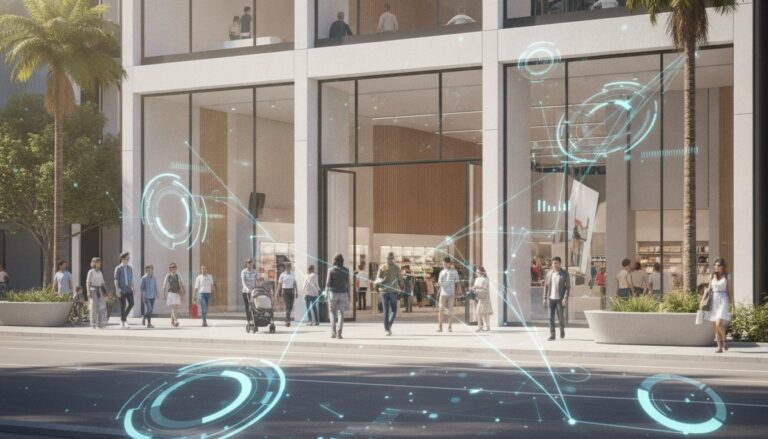
In the hyper-competitive Australian retail landscape of 2026, intuition is no longer enough. Precision is paramount. This is where footfall intelligence becomes the cornerstone of strategy, moving far beyond a simple number at the door. Think of it as the ‘Google Analytics’ for your physical brick-and-mortar store. Just as you wouldn’t operate a website without understanding user clicks, you can no longer afford to manage a store without visibility into customer movement. The market has shifted decisively from transactional counting to experiential measurement, and understanding how to measure retail store traffic is the first step.
Operating without this data isn’t just a blind spot; it’s a significant financial liability. The cost of ignorance manifests in tangible ways: overstaffing during a quiet Tuesday morning can waste hundreds of dollars in wages, while being understaffed during a Saturday peak leads directly to lost sales and a diminished customer experience. This lack of insight creates a cycle of inefficiency that silently erodes your bottom line.
The ROI of Traffic Measurement
Implementing a system to measure store traffic delivers a clear and immediate return on investment. It provides the actionable intelligence needed to make smarter, more profitable decisions. You can:
- Identify ‘power hours’ to align staffing with peak customer flow, maximising sales opportunities and improving service.
- Benchmark performance across diverse locations, understanding why your Sydney CBD store might outperform your Perth suburban outlet on key metrics.
- Validate marketing spend by tracking the direct lift in your ‘passerby-to-visitor’ ratio after launching a new window display or local campaign.
From Gut Feel to Data-Driven Logic
The era of managing by ‘gut feel’ is over. Human observation is statistically unreliable for high-volume retail, often missing crucial peaks and troughs. In contrast, modern people counting systems provide the objective, verifiable data needed to move forward with confidence. This evidence-based approach reassures stakeholders, justifies operational changes like adjusting store hours, and fundamentally shifts your management style from being reactive to proactively shaping a data-driven retail strategy.
Methods for Measuring Foot Traffic: Legacy vs. Modern AI
Understanding how to measure retail store traffic has evolved dramatically. Early methods provided a basic headcount, but modern solutions deliver the actionable intelligence needed to drive growth. Making the right technology choice means moving beyond legacy systems that create data blind spots and embracing the precision of AI.
Legacy technologies, while once standard, now present significant limitations:
- Manual Clickers: Often seen as a low-cost entry point, manual counting is notoriously unreliable. Human error, staff distraction, and the high cost of wages (often exceeding A$25/hour) make it the most expensive ‘cheap’ method due to inaccurate data.
- Infrared Beam Sensors: These simple break-beam counters cannot distinguish direction, count individuals in a group, or differentiate between an adult and a shopping trolley. They are easily defeated by wide entrances, leading to significant undercounting.
- Wi-Fi & Bluetooth Tracking: The rise of privacy features like randomised MAC addresses in modern smartphones has rendered this method increasingly inaccurate for obtaining a reliable visitor count.
The clear successor is AI Video Analytics, poised to become the gold standard by 2026. This technology moves beyond simple counts to provide rich, anonymised data on the complete visitor journey. It delivers unparalleled accuracy, making it essential for retailers who need to validate how their online marketing, which a recent NCBI study shows drives traffic to offline stores, translates into real-world behaviour.
The Evolution of Counting Technology
The leap to 99%+ accuracy was driven by 3D stereoscopic vision, which mimics human depth perception to overcome the shadow and light issues that plagued older 2D cameras. Modern systems now use ‘edge computing’ to process data directly on the device, ensuring real-time speed and enhanced data privacy. This is why integrated AI hardware consistently outperforms software-only add-ons for existing CCTV, delivering superior reliability and precision.
Choosing the Right Hardware for Your Entrance
Effective measurement depends on correct sensor placement. Key factors like ceiling height and entrance width dictate the type of device required for complete coverage. Retailers must also distinguish between indoor-only sensors and weather-resistant outdoor counters for exposed entryways. As technology advances, a ‘Legacy Swap Out’ plan is crucial to replace obsolete hardware and maintain the integrity of your long-term traffic data.
Key Retail Metrics: What to Measure Beyond the Raw Count
Raw footfall numbers provide a baseline, but true operational intelligence comes from a deeper analysis of visitor behaviour. Understanding how to measure retail store traffic is foundational; leveraging that data to calculate performance metrics is what separates thriving retailers from the rest. These metrics transform raw counts into a clear narrative about your store’s health, revealing precise opportunities for growth and optimisation.
To move from simple counting to strategic analysis, focus on these critical metrics:
- Sales Conversion Rate: The ultimate KPI for retail health, measuring the percentage of visitors who make a purchase.
- Dwell Time: The length of time customers spend in specific zones, indicating engagement with displays and products.
- Turn-in Rate (Capture Rate): The effectiveness of your storefront and window displays in converting passersby into visitors.
- Staffing-to-Traffic Ratio: The alignment of your service capacity with customer demand throughout the day.
Calculating and Improving Conversion Rates
Your sales conversion rate is the most direct measure of in-store performance. Calculate it with this essential formula: (Number of Transactions / Total Footfall) x 100. This figure is one of the most crucial key performance indicators for assessing operational effectiveness. A dip in traffic isn’t always negative if your conversion rate is climbing, as it may indicate you’re attracting more qualified, high-intent buyers. Correlating low conversion rates with specific times or shifts can also pinpoint crucial training gaps, providing actionable data for team development.
Spatial Analytics and Path Mapping
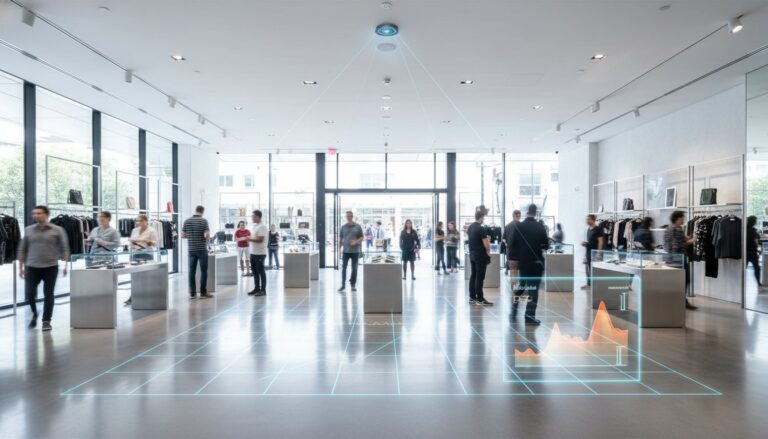
Go beyond who enters your store to understand what they do inside. Spatial analytics, such as heatmapping, visualises the visitor journey, identifying high-engagement ‘hot zones’ and underperforming ‘dead zones’. This intelligence allows you to measure the real-world impact of new end-cap displays and seasonal promotions. By decoding customer paths, you can strategically optimise your store layout to guide shoppers from the entrance towards high-margin products and, ultimately, to a seamless point of sale.

Implementing Traffic Technology in the Australian Market
Deploying a foot traffic monitoring system is a strategic investment in data-driven decision-making. For Australian retailers, a successful implementation hinges on a structured approach that balances technical precision with local compliance. The right technology is fundamental to understanding how to measure retail store traffic accurately, transforming raw numbers into actionable intelligence.
Follow this four-step process to ensure a seamless and effective rollout:
- Step 1: Audit Your Existing Infrastructure. Before any installation, conduct a thorough assessment of your store’s power, Wi-Fi, and existing CCTV systems. Leveraging current infrastructure can significantly reduce deployment costs and timelines, creating a more efficient pathway to gathering data.
- Step 2: Select an APP-Compliant System. Your chosen technology must adhere to the Australian Privacy Principles (APP). Prioritise systems that use privacy-by-design methodologies to protect customer anonymity while delivering precise analytics.
- Step 3: Mandate Professional Installation and Calibration. To achieve the industry benchmark of 98%+ accuracy, professional installation is non-negotiable. Expert technicians will correctly position sensors and calibrate them to your unique store layout, eliminating data anomalies caused by environmental factors.
- Step 4: Integrate with POS Systems. The ultimate goal is to connect foot traffic with sales outcomes. A seamless integration with your Point of Sale (POS) system automates the calculation of conversion rates, average transaction value, and other critical KPIs, providing a complete view of store performance.
Privacy and Compliance in Australia
Navigating Australia’s privacy landscape is critical for maintaining customer trust. Unlike traditional video surveillance, modern people counting systems use anonymous feature extraction. This technology converts visual data into numerical metadata without recording or storing personally identifiable information, ensuring full compliance with the Privacy Act. Clearly communicating this anonymous data collection process to customers via simple in-store signage fosters transparency and reinforces your commitment to their privacy.
Local Support and Installation Logistics
For retailers with a national footprint, local support is essential. Coordinating a multi-store rollout across cities like Brisbane, Sydney, Melbourne, and Perth requires a partner with an established Australian network. Local technicians ensure consistent installation standards, provide timely maintenance, and can recalibrate systems as store layouts change. For multi-site operations, cloud-based data storage offers a scalable solution, providing centralised access to analytics and reporting from anywhere, without the need for on-premise servers at each location. These actionable insights are the key to unlocking growth.
The Footfall Australia Advantage: Precision Meets Strategy
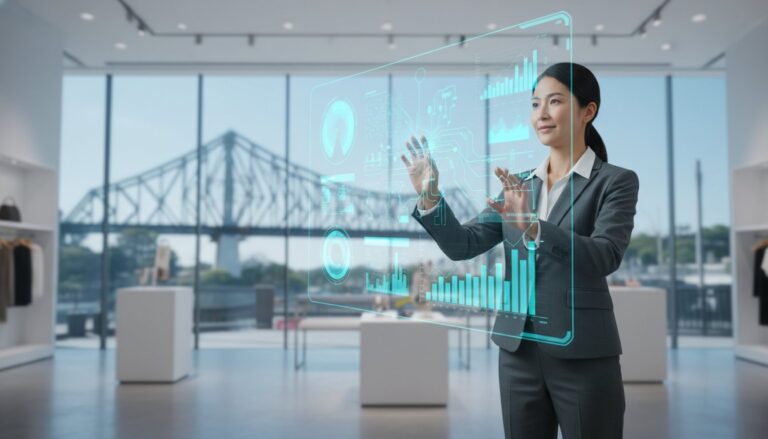
Understanding how to measure retail store traffic is the critical first step, but choosing the right technology partner is what transforms that data into profit. The FootfallCam Pro2 stands as the market leader in Australia, leveraging advanced 3D AI technology to deliver over 98% accuracy in counting and analysing the complete visitor journey. This precision hardware is paired with our intuitive FootfallCam V9 analytics software, which translates complex datasets into clear, strategic directives for your business.
To make this transition seamless for established businesses, we developed the ‘Legacy Swap Out Plan’. This initiative provides an affordable pathway for Australian retailers to upgrade from outdated, inaccurate systems to our intelligent AI platform. This commitment is backed by our deep local expertise, established in Australia since 2004, ensuring you receive dedicated support that understands the unique challenges and opportunities of the local retail market.
Intuitive Reporting for Busy Managers
We believe data should empower, not overwhelm. Our system is designed for operational efficiency, delivering actionable insights directly to decision-makers without the need for a data scientist. Key features include:
- Customisable Dashboards: Move beyond raw data to focus on the metrics that matter most to your store, from conversion rates and dwell times to zone analytics and queue management.
- Automated Weekly Reports: Receive a comprehensive performance summary in your inbox every Monday morning, perfectly timed for your weekly strategy meetings.
- Mobile App Access: Monitor real-time traffic and key performance indicators across all your locations, right from your smartphone, wherever you are.
Future-Proofing Your Retail Business
Our solutions are engineered to evolve alongside you. Whether you operate a single boutique or a growing national chain, our scalable system expands to meet your needs. Through ongoing firmware updates, we ensure your AI sensors remain at the cutting edge of performance, protecting your investment for years to come. Stop guessing and start measuring with a partner dedicated to your long-term success. Contact our Australian team for a custom traffic analysis plan and discover how precision data can redefine your retail strategy.
From Foot Traffic to Future-Proofing Your Retail Strategy
As we move towards 2026, the imperative for physical retailers is clear: guesswork is no longer a viable strategy. The journey from simple counts to sophisticated spatial analytics is what separates thriving stores from the rest. Understanding how to measure retail store traffic is the critical first step, but the real power lies in transforming that data into actionable intelligence-optimising layouts, improving staff scheduling, and boosting conversion rates.
For Australian retailers ready to harness this power, Footfall Australia provides the precision and local expertise needed to succeed. Since 2004, we have equipped businesses with industry-leading technology, guaranteeing over 98% accuracy with professional calibration and backing it with dedicated support teams in every major capital city. See how our intelligence platform can decode your customer journey and unlock new growth opportunities.
Take the definitive step towards data-driven decision-making. Request a Free Demo of the FootfallCam Pro2 today and discover the clarity that comes with true footfall intelligence. The future of your retail success is waiting to be measured.
Frequently Asked Questions
How accurate are modern people counting systems?
Modern people counting systems, particularly those using 3D stereo vision and AI, achieve accuracy rates of over 98%. This level of precision is fundamental to how to measure retail store traffic effectively, eliminating the guesswork of manual counts. The data provides a reliable foundation for critical business decisions, from staffing levels to marketing analysis. It transforms raw footfall into actionable intelligence, ensuring your strategies are based on hard evidence, not assumptions.
Do people counters record video of my customers?
Our systems are engineered with privacy as a core principle. While they use advanced optical sensors, they do not record or store video footage of individuals. Instead, the technology converts human shapes into anonymous data points for counting. This privacy-by-design approach ensures you can gather precise footfall intelligence while remaining fully compliant with the Australian Privacy Act. Your customers’ identities are protected, and you receive the strategic data you need.
Can I integrate footfall data with my current POS system?
Yes, seamless integration is a core feature of our platform. By connecting footfall data with your Point of Sale (POS) system, you unlock the most critical retail metric: your store’s conversion rate. This powerful synthesis allows you to correlate visitor numbers directly with sales transactions. Understanding this relationship provides actionable insights into staff performance, marketing effectiveness, and overall store profitability, moving beyond simple traffic counts to a holistic view of your business.
What is the average cost of a retail traffic counter in Australia?
The investment in a retail traffic counting system in Australia varies based on your specific needs. For a single-entrance store, hardware and software subscriptions typically start from around A$50 to A$100 per month. More complex multi-entrance or multi-level environments will require a customised solution. It’s best to view this as a strategic investment in business intelligence, as the actionable data on traffic and conversion consistently delivers a strong return on investment.
How do I measure conversion rate if I have multiple entrances?
To accurately measure conversion rates with multiple entrances, a networked system is essential. Each entrance is fitted with a sensor, and the software intelligently aggregates the data to provide a single, unified count of total visitors entering your store. This method ensures you have a precise total footfall figure to compare against your POS transaction data. This holistic view prevents data silos and provides a true, evidence-based conversion rate for the entire premises.
Will the system count my staff members as customers?
Our intelligent systems are designed to differentiate between staff and customers, ensuring data purity. This is achieved through advanced features like AI-powered uniform recognition, designated staff exclusion zones, or the use of small wearable tags. By filtering out staff movements, the system delivers a highly accurate count of genuine customer traffic. This precision is vital for calculating true conversion rates and making evidence-based staffing decisions without skewed data.
Can people counters help with social distancing or occupancy limits?
Absolutely. People counters are a highly effective tool for managing occupancy and ensuring compliance with public health guidelines. The system provides a real-time count of visitors currently inside your space, which can be displayed on a public-facing screen at the entrance. Automated alerts can be configured to notify staff when limits are being approached or reached. This not only ensures a safe environment for customers but also streamlines operations by automating a critical compliance task.