Integrating People Counter with POS System: The 2026 Guide to Actionable Retail Intelligence
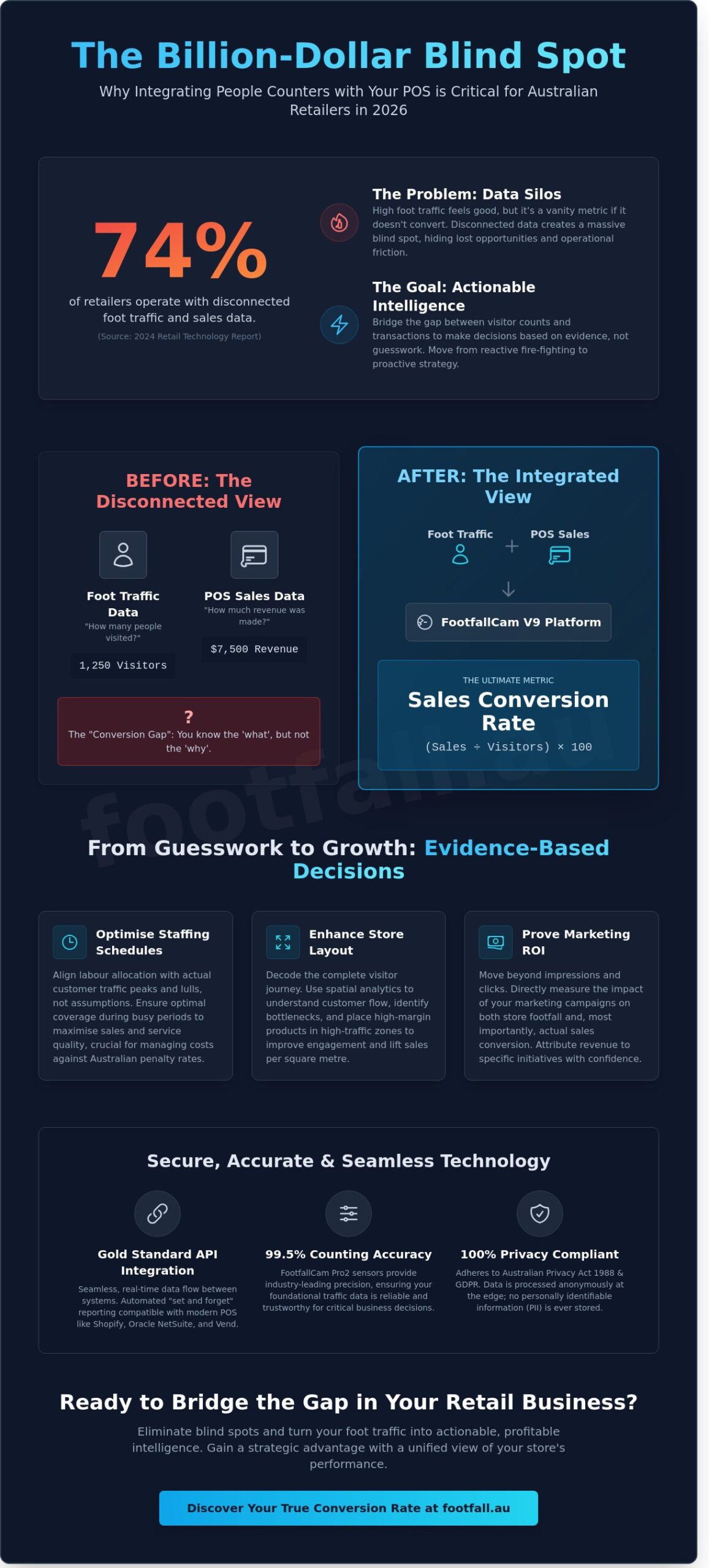
Research from the 2024 Retail Technology Report indicates that 74% of physical retailers still operate with a total disconnect between their door counts and their sales data. You likely understand that high foot traffic is a vanity metric if it doesn’t translate into revenue. It’s a common frustration for Australian store managers who see busy aisles but struggle to explain a dip in daily takings. This gap exists because your data lives in silos, but integrating people counter with POS system technology eliminates that blind spot instantly.
By synchronising these two vital streams, you’ll gain the quiet confidence that comes from making decisions based on evidence rather than guesswork. Discover how to bridge the gap between foot traffic and sales transactions to unlock powerful conversion insights and operational efficiency. We’ll show you how to create a single dashboard for all your retail KPIs and automate conversion rate reporting to prove your marketing ROI. This guide provides the strategic framework to move beyond simple counting toward actionable intelligence, ensuring your staffing schedules and floor layouts are optimised for the 2026 Australian retail environment.
Key Takeaways
- Eliminate business blind spots by bridging the gap between visitor traffic and transactional data to gain a complete view of your store’s performance.
- Discover why the Sales Conversion Rate is the ultimate metric for Australian retailers and how it highlights specific operational areas for improvement.
- Streamline your technical setup by integrating people counter with POS system through the FootfallCam V9 platform for centralized, high-precision reporting.
- Follow a clear implementation roadmap to ensure your hardware is integration-ready, facilitating a seamless data handshake between sensors and software.
- Gain a strategic advantage by decoding the visitor journey, turning complex spatial analytics into simple, evidence-based decisions for your business.
The Missing Link in Retail Intelligence: Why People Counting Needs POS Data
Retail success depends on clarity. Most managers track sales figures daily, looking at the total revenue on their Point-of-sale (POS) system. This only tells half the story. It shows who bought something, but ignores the high percentage of visitors who walked out empty-handed. This is the ‘Conversion Gap.’ It’s a massive business blind spot that hides lost opportunities and operational friction. By integrating people counter with POS system technology, you bridge this gap. You start seeing exactly why people leave. You see the relationship between staff levels and sales volume. FootfallCam Pro2 sensors provide the precision needed for this level of detail, tracking movement with up to 99.5% accuracy. When you pair this with transactional records, you stop guessing. You move from reactive fire-fighting to a proactive, data-led strategy that anticipates consumer needs before they become problems.
Defining Integrated Retail Analytics
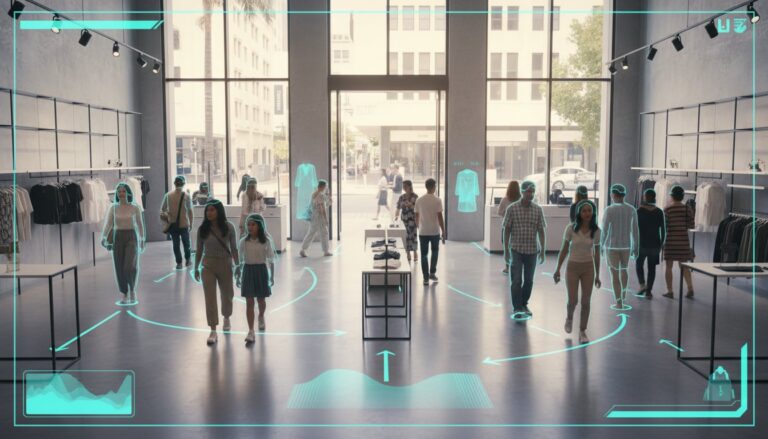
Integrated retail analytics merge two distinct data streams into one unified truth. This isn’t just about counting visitors anymore. It’s about measuring the visitor journey from the moment they cross the threshold to the final transaction. Manual data entry is the enemy here. It’s slow, prone to human error, and creates a lag in decision-making. Automated integration ensures your reports are ready when you arrive at the office, providing a seamless view of how foot traffic correlates with hourly sales. You can identify if a 2:00 PM dip in sales is due to low traffic or poor service during a busy period. This level of insight turns raw numbers into a narrative of human movement that you can finally decode.
The Strategic Advantage for Australian Retailers
Australian retailers face specific pressures in 2026. High operational costs and a competitive national landscape mean every square metre of floor space must perform. Evidence-based decisions must replace gut feelings to maintain a healthy bottom line. By linking people counting to your core business metrics, you ensure long-term viability. Integrating people counter with POS system data allows you to optimize staff rosters against actual peak times rather than traditional assumptions. This precision is vital in a market where the national minimum wage and penalty rates require surgical efficiency in labour allocation. It’s about surviving the shift where data is the primary currency for growth. You don’t just see the crowd; you see the profit potential within it.
Technical Mechanics: How to Integrate People Counters with Your POS System
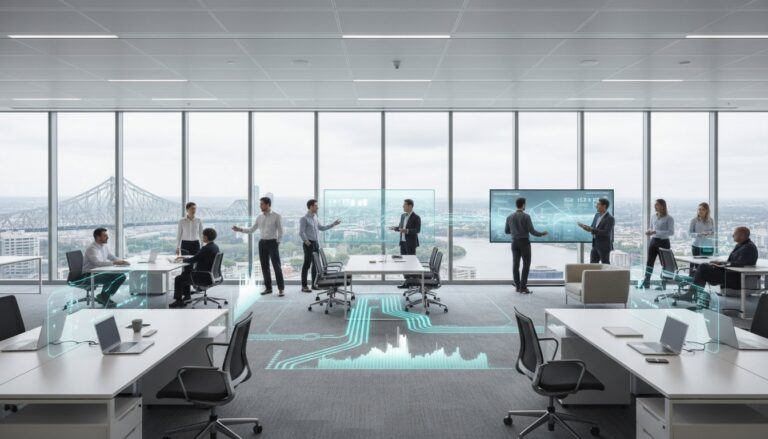
Establishing a digital handshake between your door sensors and your transaction software transforms raw counts into strategic intelligence. This process involves synchronising time-stamped visitor entries with transaction records to calculate your store’s conversion rate accurately. The FootfallCam V9 platform serves as the central intelligence hub, aggregating these disparate data streams into a single source of truth for your management team. This integration replaces guesswork with evidence, allowing you to see exactly how many opportunities entered your store compared to how many sales were finalised.
Security remains a non-negotiable priority for Australian retailers. Our systems adhere to the Australian Privacy Act 1988 and global GDPR standards by processing all data anonymously at the edge. No personally identifiable information (PII) is stored; the sensors only record mathematical vectors to ensure 100% privacy compliance while maintaining a 98% counting accuracy. This approach ensures your business stays compliant with local regulations while gathering the high-precision data required for sophisticated spatial analytics.
API Integration: The Gold Standard
Application Programming Interfaces (APIs) allow for a seamless, real-time flow of information between systems. Integrating people counter with POS system via API means your traffic data and sales figures communicate without human intervention. Modern systems such as Shopify, Oracle NetSuite, and Vend support these direct links, enabling “set and forget” reporting that updates automatically. This automation eliminates the 15% margin for error often found in manual data entry, providing a live view of store performance across your entire network.
CSV and SFTP: Reliable Alternatives
Legacy POS systems that lack modern API capabilities can still achieve high-level integration through scheduled file exports. This method involves the POS system generating a daily CSV file containing sales totals, which is then uploaded to a secure server for processing. Setting up automated SFTP (Secure File Transfer Protocol) transfers ensures that these daily uploads occur at 2:00 AM, ready for analysis by the time your team starts their shift. You can view our technical documentation to see how these secure transfers protect data integrity during bulk moves.
FootfallCam V9 Software Capabilities
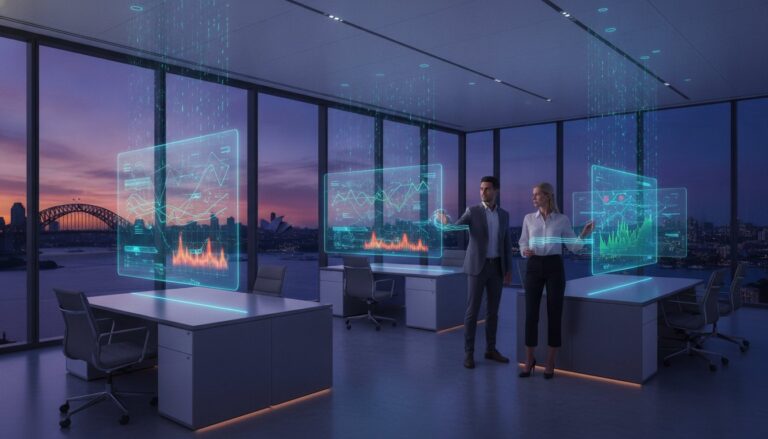
The V9 software visualises sales and traffic on a single, intuitive dashboard to reveal the correlation between visitor volume and revenue. The FootfallCam V9 platform acts as a sophisticated bridge that unifies disparate data streams into actionable retail insights. Managers can customise reports to highlight specific retail KPIs, including:
- Conversion Rate: The percentage of visitors who made a purchase.
- Average Transaction Value (ATV): The mean spend per customer.
- Sales per Shopper: The total revenue divided by the total number of visitors.
By centralising this information, retailers can identify why a 20% increase in foot traffic didn’t result in a proportional rise in sales. It provides the technological eyes to see if a drop in performance was due to poor staff scheduling or a failure in the sales process itself.
Beyond the Door: Actionable Metrics Unlocked by Integrated Data
Raw foot traffic is a vanity metric when viewed in isolation. It tells you the store was busy, but it doesn’t explain why revenue didn’t follow suit. By integrating people counter with POS system software, retailers bridge the gap between visitor behavior and financial outcomes. This fusion creates a transparent view of the store’s performance, moving beyond guesswork to high-precision strategy. It allows you to see the human story behind the transaction logs.
Calculating and Improving Conversion Rates
The sales conversion rate is the most critical metric for any physical storefront. You calculate this by taking your total transactions and dividing them by total visitor traffic. If your store sees 1,200 visitors but only 300 transactions, your conversion rate is 25%. Identifying “lost opportunities” is the primary goal here. When traffic is high but sales are low, it indicates a friction point in the customer journey that needs immediate attention.
Sophisticated retail footfall analysis Australia wide demonstrates that these gaps often result from specific store bottlenecks. It might be an understaffed changing room or a confusing floor plan. Data removes the mystery, allowing you to fix the specific issue rather than guessing. Successful Australian retailers use this data to set realistic KPIs for floor managers, focusing on converting the traffic they already have before spending more on acquisition.
Staffing Efficiency and Customer Service
Labor represents a significant portion of Australian retail overheads. Integrated systems allow managers to predict peak hours with 95% accuracy by cross-referencing historical traffic with seasonal sales trends. This precision lets you align staff rosters with actual visitor flow. You can reduce queue times during surges and cut unnecessary labor costs during quiet periods. It’s about having the right people in the right place at the right time.
- Optimised Ratios: Maintain a 1:10 staff-to-visitor ratio during high-value periods to maximize service quality.
- ATV Growth: When staff are available to assist, the Average Transaction Value (ATV) typically increases as upsell opportunities are captured.
- Queue Management: Real-time alerts can trigger extra register openings before a queue becomes a reason for a customer to walk out.
Marketing Effectiveness and Store Layout
Marketing spend is often difficult to track in physical retail. By integrating people counter with POS system data, you can finally measure the true ROI of national or local campaigns. You can see if a specific window display increased the “draw-in” rate and if those extra visitors actually reached the point of sale. This level of detail lets you justify an A$10,000 marketing spend through direct conversion tracking rather than vague estimates.
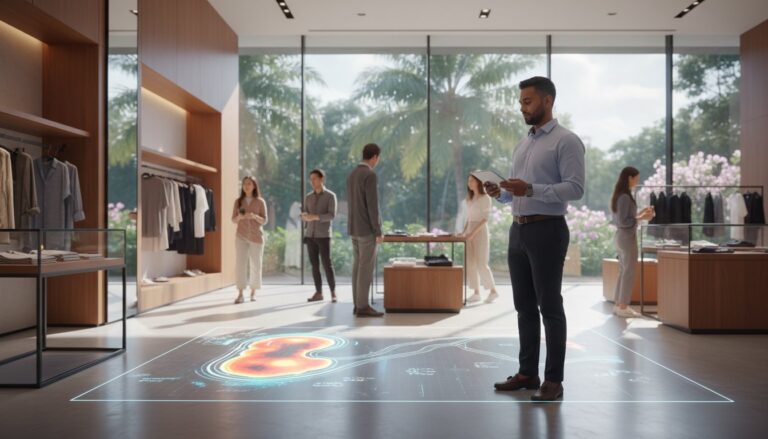
Testing store layout changes becomes a scientific process. Use heatmaps to identify high-dwell zones and correlate them with sales data. If customers spend three minutes in a specific corner but sales for that category are stagnant, the data suggests a need for better signage or revised pricing. This evidence-backed approach ensures every square metre of your floor space generates maximum profit.
Implementation Roadmap: Choosing the Right Integration Strategy
Moving from siloed data to a unified retail intelligence platform requires a disciplined execution plan. Integrating people counter with POS system technology transforms raw traffic numbers into a clear narrative of store performance. You’ll need to follow a structured roadmap to ensure the technical architecture supports your business goals without creating data bottlenecks or reporting errors.
Step 1: System Compatibility Audit
Audit your hardware first. Check the firmware on your FootfallCam Pro2 sensors to ensure they support the latest API protocols. If you’re running legacy hardware that doesn’t allow for cloud-to-cloud synchronisation, consider the Legacy Swap Out Plan to modernise your infrastructure. This ensures your hardware can handle the 2026 standards for data throughput. Identify any POS software limitations early, as some older Australian systems require a middleware bridge to export transaction data effectively.
Step 2: Data Mapping and Synchronisation
Precision depends on alignment when integrating people counter with POS system data. Map your sales fields carefully, focusing on net revenue, transaction quantity, and precise time stamps. Set your sync frequency based on your operational agility. Hourly updates are ideal for adjusting staff levels on the fly, while daily batches suit high-level performance reviews. For Australian retailers managing sites across multiple states, align all data to a single time-zone or UTC offset. A two-hour discrepancy between a Sydney store and a Perth store can result in a 20% error margin in conversion reporting.
Step 3: Dashboard Customisation and Action
Data is only useful when it’s actionable. Build an Executive View that highlights the 10% of metrics that drive 90% of your growth. Set automated alerts for when conversion rates dip below your 12-month average. This allows managers to intervene in real-time during a shift rather than reviewing a missed opportunity on Monday morning. Integrate these insights into weekly operational meetings to foster a culture of evidence-based decision-making across the entire organisation.
Before a national rollout, run a 30-day pilot program in a high-volume flagship store. This trial validates that the data flowing from your sensors matches the receipts in your POS system with 98% accuracy. Once verified, you can scale with total confidence in your numbers and train your management teams to interpret these new insights effectively.
Ready to bridge the gap between traffic and transactions? Consult with our integration experts to start your system audit.
The Footfall Australia Advantage: Seamlessly Connecting Traffic and Transactions
Footfall Australia has served as a trusted partner for national retailers since 2004. We don’t just sell hardware. We provide the technical backbone for data-driven growth. By integrating people counter with POS system data, we help brands move beyond simple tallies to understand the true logic behind every sale. This transition from guesswork to evidence-based strategy defines the modern retail leader. Our approach centers on the “Smart Strategist” persona, where every piece of data serves a specific operational purpose.
Proprietary Technology and Local Expertise
Precision is the non-negotiable foundation of any POS integration. The FootfallCam Pro2 AI sensor utilizes advanced 3D stereoscopic vision to distinguish between adults, children, and staff with over 99.5% accuracy. This level of granularity ensures that your conversion rate metrics remain untainted by non-buyer traffic. When paired with the Centroid system, retailers gain access to sophisticated spatial analytics that map the entire visitor journey from the lease line to the point of purchase.
Footfall Australia ensures data integrity through professional people counter support to keep your analytics stream uninterrupted and your return on investment secure. Our Australian-based technical teams provide localized maintenance plans that eliminate the lag times often associated with international vendors. We understand the local market conditions and the specific operational requirements of Australian retail environments, ensuring your hardware remains calibrated for local foot traffic patterns.
Future-Proofing Your Retail Operation
The retail landscape of 2026 demands a platform that scales with your ambition. Whether you manage a specialized Australian label like Dryft or a national network of 200+ storefronts, our solutions adapt to your specific footprint. We’re currently preparing our partners for the next generation of AI-driven spatial analytics. This future-proofed tech will integrate environmental factors and real-time staff optimization directly into your core dashboard, making the “invisible” aspects of your store visible.
Don’t leave your store’s performance to chance. Footfall Australia acts as your strategic consultant, turning raw numbers into actionable intelligence. By integrating people counter with POS system software today, you’re building the infrastructure needed for long-term resilience. You can take the first step toward total transparency by requesting a technical integration consultation with our specialist team to audit your current data gaps.
- 99.5% accuracy with Pro2 AI sensors.
- Local Australian support since 2004.
- Scalable solutions for single stores or national chains.
- Seamless API integration with major POS providers.
Master Your Retail Conversion Strategy
Retail success in 2026 hinges on the ability to bridge the gap between visitor traffic and completed transactions. Integrating people counter with POS system eliminates the blind spots that hinder growth; it turns vague estimates into a precise roadmap for operational efficiency. You’ll gain the ability to pinpoint high-traffic periods where sales staff are stretched thin or identify why high footfall isn’t translating into revenue. This level of clarity allows you to optimise staff rosters and marketing spend with absolute confidence.
Footfall Australia has empowered local businesses with data-driven insights since 2004. Our FootfallCam V9 sensors achieve 99.5% accuracy, providing the reliable metrics you need to lead your market. We support your implementation through a national network of expert installation partners, ensuring your hardware and software sync perfectly from day one. It’s time to move beyond simple counting and start mastering the science of the visitor journey. Your data is ready to work harder for your bottom line.
Maximise your retail conversion with a FootfallCam integration consultation
Frequently Asked Questions
Can any people counter be integrated with a POS system?
Most modern people counters can integrate with a POS, but the effectiveness depends on the sensor’s data output capabilities. Integrating people counter with POS system data requires a device that supports API or SFTP protocols to ensure a smooth handshake between platforms. While basic infrared beams often lack the necessary granularity, 3D LiDAR sensors provide the 98% accuracy required for reliable conversion rate calculations.
Does integrating my POS system with a people counter pose a security risk?
Integration doesn’t compromise your transaction security because the sensor only exports numerical traffic data to a central dashboard. FootfallCam systems use 256-bit encryption and comply with the Australian Privacy Act 1988 by processing all visitor data anonymously. You aren’t sharing sensitive credit card details; you’re simply merging two distinct datasets to gain a clearer picture of store performance without exposing customer identities.
What are the most common POS systems compatible with FootfallCam?
How long does it take to see an ROI from POS and people counter integration?
Most retailers achieve a full return on investment within 4 to 7 months after integrating people counter with POS system analytics. By identifying that a store has high visitor counts but a low 12% conversion rate, managers can implement targeted sales training or layout changes. A modest 3% lift in conversion often covers the total cost of the hardware and software within the first two quarters of operation.
Is it possible to integrate data for multiple store locations into one dashboard?
You can centralise data from 2 to 5,000 locations into a single cloud-based reporting suite for total visibility. The FootfallCam Analytic Manager V9 allows regional managers in Sydney to compare the performance of Perth or Melbourne outlets in real-time. This bird’s-eye view helps identify which locations are underperforming relative to their specific foot traffic, allowing for evidence-based resource allocation across your entire national network.
What happens if my POS system doesn’t have an open API?
You can still achieve integration through automated CSV exports or SFTP transfers if your POS lacks an open API. Approximately 80% of legacy retail systems in Australia allow for scheduled data exports to a secure server folder. Our software then fetches this data automatically at set intervals, ensuring your conversion metrics remain accurate without requiring a costly overhaul of your existing point-of-sale infrastructure.
Can I track the conversion rate of specific store departments?
Yes, you can track departmental conversion by installing secondary sensors at specific zones like footwear or high-end electronics. Data from 2024 shows that retailers using zone-based tracking see a 15% improvement in staff placement efficiency. By comparing department-specific traffic against the sales processed at those specific registers, you gain a granular understanding of which product categories are actually driving your profit.
How does integrated data help with staff scheduling in Australia?
Integrated data allows you to align your roster with actual visitor peaks while remaining compliant with Fair Work Australia regulations. Instead of relying on gut feel, you can use 15-minute interval data to see exactly when your “power hours” occur each day. Retailers often reduce unnecessary labour costs by 18% during quiet periods, ensuring they have enough staff to maintain high service levels only when footfall spikes.