
Optimising Checkout Counter Placement: A Data-Driven Retail Strategy
What if the most valuable square footage in your store is currently being wasted on a “dead zone” simply because of a layout chosen by intuition rather than evidence? Retailers often face the quiet drain of long queues deterring customers and inefficient staffing during peak periods. You likely understand the pressure of balancing floor space with customer flow, especially when 71.3% of shoppers in 2026 report that price and value are their primary drivers. It’s frustrating to lose a sale at the final hurdle because the physical path to purchase feels like an obstacle rather than a service.
Discover how optimising checkout counter placement using precise footfall data can eliminate these friction points to maximise sales and improve operational efficiency. By leveraging 3D AI technology like the FootfallCam Pro2, which offers over 98% counting accuracy, you can move beyond guesswork. This guide explores how to integrate human movement patterns with ADA compliance standards and modern payment trends. We will examine the strategic shift toward data-driven layouts that ensure your staff and registers are exactly where your customers need them to be.
Key Takeaways
- Analyze the psychological impact of counter visibility to ensure the final stage of the customer journey feels intuitive and frictionless.
- Identify natural customer paths and high-traffic hotspots using heatmaps to ensure counters are placed in high-utility zones.
- Compare the strategic advantages of different floor positions when optimising checkout counter placement to balance security with browsing depth.
- Apply real-time occupancy data to design efficient queue paths that prevent aisle blockages and maintain store-wide accessibility.
- Leverage FootfallCam Pro2 hardware and V9 Software to convert movement metrics into a clear strategy for layout refinement.
The Strategic Impact of Checkout Counter Placement
View the checkout as the anchor of your store layout. It isn’t just where money changes hands; it’s the final touchpoint that defines the entire shopping experience. Strategic placement ensures that every square metre of your floor is utilised effectively. By aligning your counter position with established retail design principles, you can dictate the pace and path of the customer journey. This isn’t about guesswork. It’s about understanding how physical space influences human movement.
Counter visibility plays a vital role in psychological comfort. If a customer can’t see the exit or the payment area, they often experience wayfinding anxiety, which reduces their willingness to explore deeper aisles. Conversely, optimising checkout counter placement involves positioning the area so it’s visible but doesn’t dominate the entrance. This balance encourages longer dwell times. When shoppers feel they can easily exit when ready, they’re more likely to spend time browsing high-margin sections. Data from 2026 suggests that while 71.3% of shoppers prioritise price, the physical ease of the transaction remains a critical factor in completing a purchase.
Effective placement also serves as a passive loss prevention tool. A counter positioned with a clear line of sight across the sales floor creates a natural deterrent for shrinkage. It’s about data-backed surveillance. By using technical tools like the FootfallCam Pro2, retailers can verify if their current counter position allows staff to monitor high-risk zones while managing active transactions. This creates a secure environment without the need for intrusive security measures that can alienate honest customers.
Beyond the Transaction: The Modern Cash Wrap
The modern cash wrap is a strategic data collection point. It must balance the need for impulse purchase revenue with the demand for exit speed. Avoid placing checkouts directly in the decompression zone, which is the first few metres of the store where shoppers are still adjusting to the environment. Placing counters here creates a bottleneck that stifles the initial flow of traffic. Instead, use data to find the point where browsing naturally concludes.
The Cost of Poor Placement
Poor placement creates “dead zones” where traffic never penetrates, leading to wasted inventory space. In Australia, where consumer price sensitivity is high, a bottlenecked checkout leads directly to cart abandonment. If the physical effort of waiting exceeds the perceived value of the goods, the sale is lost. This damage to brand loyalty is often permanent. Shoppers quickly learn to associate specific store layouts with friction rather than efficiency, driving them toward competitors with more streamlined environments.
Using Footfall Data to Optimise Counter Location
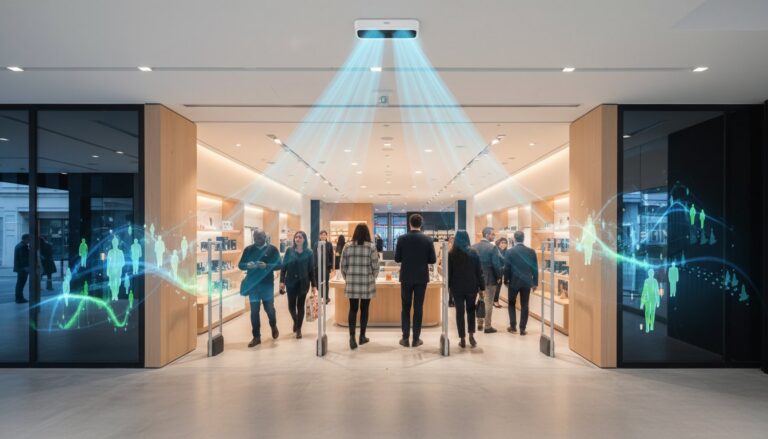
Decisions regarding store layout shouldn’t rely on gut feeling or tradition. Modern retail management requires a granular view of how shoppers interact with physical space. By deploying high-accuracy sensors like the FootfallCam Pro2, you can visualise exactly how traffic flows from your entrance to the point of sale. Heatmaps are the primary tool for this transition. They highlight “hotspots” where customers linger and “cold zones” that are consistently bypassed. If your heatmaps show a high concentration of activity in an area far from your registers, it indicates a disconnect between product interest and the purchase path.
Measuring the capture rate is equally vital for operational success. This metric tracks the percentage of total store visitors who enter a specific department or zone. If a high-traffic zone has a low capture rate for the checkout area, the physical placement is likely creating an unnecessary barrier. Analysing queue dwell time metrics then allows you to determine if you need more registers or simply a better location for existing ones. Empirical footfall data analysis provides a framework for these adjustments, ensuring that every change is backed by evidence rather than aesthetics. Retailers looking to refine their layout can explore tailored solutions at Footfall Australia.
Heatmapping and Path Analysis
Visualising the customer journey reveals the friction points that intuition often misses. Path analysis shows where shoppers hesitate, double back, or lose momentum. By using retail footfall analysis Australia, businesses can validate whether their current layout facilitates a natural progression toward the exit. If path data shows customers wandering aimlessly before finding the counter, the layout is failing. Correcting this involves optimising checkout counter placement to align with these natural movement patterns and reduce “search friction” for the shopper.
Conversion Rate Benchmarking
The true test of layout efficiency is the browsing-to-buying ratio. Linking door counts to transaction data creates a holistic view of performance that goes beyond simple sales figures. This quantitative approach removes the bias of anecdotal feedback from staff. It allows for rigorous A/B testing of floor plans. You can move a counter, monitor the impact over a fortnight, and compare the results against historical benchmarks. This ensures that any change to the store environment results in a measurable improvement in the conversion funnel.

Comparing Checkout Layouts: Front, Back, or Middle?
Selecting a layout is a decision of utility over aesthetics, where optimising checkout counter placement becomes a tool for traffic control. Retailers must align their choice with their specific business model and floor size. A high-volume convenience store requires a different structural logic than a luxury boutique. The objective remains constant: reduce friction while maximising the value of every square metre. By comparing established models against footfall data, management can move beyond “vibe-based” design toward a layout that actively supports sales targets.
Front-End Placement: Pros and Cons
Positioning the counter near the entrance is the standard for high-frequency, low-dwell time retail. It prioritises convenience, allowing shoppers to grab items and exit quickly. This model also provides high visibility for staff to monitor the entrance and exit, which is a core component of passive loss prevention. However, this layout requires precise calibration. If the counter is too close to the door, it encroaches on the decompression zone and causes congestion during peak Australian shopping hours. Using historical traffic benchmarks helps determine the exact distance required to allow for a smooth entrance while keeping the payment area accessible. It’s a balance of immediate service and floor accessibility.
Rear-Store Placement: Deep Engagement
Placing the checkout at the back of the store is a strategic move common in fashion and specialty retail. By optimising checkout counter placement in the rear, you essentially extend the customer’s path to purchase. This forces a “full circuit” of the store, increasing exposure to merchandise and building brand immersion. While this drives impulse buys, it carries the risk of customer frustration if the path is unclear. Management must implement effective queue management strategies to ensure that once a customer decides to buy, the physical journey to the counter is logical and unobstructed. Clear signage and wide aisles are mandatory to maintain a positive experience in this model.
For large-format retail or department stores, the “Central Hub” model often proves most efficient. This involves placing counters in the middle of the floor or at the intersection of major aisles. It serves as a service anchor, reducing the distance a customer must travel from any given section. This layout is particularly effective when integrated with real-time occupancy data. It allows staff to see which zones are busiest and move to the central register that best serves the current crowd. Selecting the right layout isn’t about following trends; it’s about using quantitative movement data to match the physical environment to the shopper’s intent.
Optimising for Queue Management and Labor Efficiency
Operational efficiency at the point of sale is often mistaken for software speed. While fast processing is helpful, the physical geometry of the checkout area dictates the actual throughput of your store. Optimising checkout counter placement requires a balance between floor space utility and the human need for order. When a queue becomes unmanaged, it acts as a physical barrier that segments the store, preventing other customers from reaching high-value aisles. Reducing “walk-aways” is a matter of line-of-sight. If a shopper can see a clear, structured path to payment, they’re more likely to commit to the purchase even during busy periods.
The Geometry of the Queue
Designing a “queue snake” is a precise exercise in spatial management. You must calculate the square footage required for peak-hour traffic to ensure the line doesn’t block primary circulation paths. In Australia, maintaining an aisle width of at least 36 inches is a regulatory requirement for accessibility, but it’s also a practical necessity for smooth traffic flow. Strategic placement allows you to use the queue as a final merchandising zone. By guiding customers through a structured path, you create opportunities for last-minute impulse buys without compromising the speed of the exit. This layout should be validated by real-time occupancy data to ensure the queue never exceeds its designated footprint.
Staffing for Success
Your counter location directly influences your labor costs. A central or highly visible placement often allows a single staff member to monitor multiple registers or self-checkout kiosks effectively. Using people counting technology enables management to move from reactive to predictive staffing. Instead of opening a new register only when a line has already formed, you can use historical footfall data to predict traffic peaks and roster staff accordingly. This integration of movement metrics with rostering software reduces overstaffing during quiet periods while ensuring you have adequate coverage when it matters most. To see how data can refine your staffing strategy, explore our retail analytics solutions.
Implementing a Data-Driven Checkout Strategy with Footfall Australia
Implementing a data-driven environment requires more than just a change in floor plans. It involves a systematic shift in how management perceives the relationship between physical space and customer behavior. Footfall Australia facilitates this transition by providing the technological infrastructure needed to move beyond intuition. By optimising checkout counter placement through empirical evidence, national retailers can ensure their operational decisions are both transparent and reliable. This evidence-based approach transforms the checkout from a simple exit point into a high-utility asset that responds to shifting behavioral trends. It’s a strategic move that aligns store geometry with the actual narrative of human movement.
Precision Hardware: The FootfallCam Pro2
The foundation of any robust analytics strategy is the FootfallCam Pro2. This hardware is the industry standard for high-density retail environments, utilizing 3D AI technology to achieve over 98% accuracy in people counting. In the context of a busy checkout area, this precision is essential for distinguishing between active customers, staff members, and children. The Pro2 also prioritises ethical data collection by masking all personally identifiable information at the source. This ensures that your layout optimization remains privacy-compliant while delivering the granular movement metrics required for strategic growth. It’s a sophisticated solution designed for the practical challenges of modern retail management.
Actionable Insights with V9 Analytics
Raw data only becomes valuable when it’s translated into actionable insights through intuitive reporting. FootfallCam V9 Software provides the analytical layer necessary for total visibility across your store network. By integrating transaction data from your existing systems with traffic metrics, V9 allows you to calculate sales conversion rates with surgical precision. Management can access custom dashboards that highlight queue performance and identify underperforming store zones in real-time. Leveraging this type of footfall data analysis empowers retailers to refine their environments continuously. It’s about building a future-proof retail space that adapts as quickly as consumer habits change.
Footfall Australia supports this journey by offering a range of services, including the Premium and Basic Support Plans, to ensure your hardware maintains peak performance. For retailers with older systems, the Legacy Swap Out Plan provides a clear path to upgrading to the latest AI-driven technology. Transitioning to an evidence-based layout isn’t a one-time project; it’s an ongoing commitment to efficiency. By partnering with a specialized consultant, you gain the tools to turn your physical floor space into a measurable, optimisable engine for conversion.
Future-Proofing Your Retail Environment
Effective store management requires a shift from traditional intuition toward a framework of empirical evidence. By optimising checkout counter placement based on traffic flow and heatmapping, you transform the point of sale into a strategic asset that enhances the customer journey. This approach doesn’t just reduce queue friction; it ensures that your labor resources are allocated with precision during peak periods. Implementing these insights creates a physical space that’s both accessible and profitable.
Footfall Australia has been a trusted partner for Australian retailers since 2004, providing the technology needed to interpret human movement. With the FootfallCam Pro2 delivering 99.5% accuracy through AI-driven analytics, you can make layout changes with total confidence. Our comprehensive local support and maintenance plans ensure your systems remain a reliable foundation for long-term growth. Optimise your store layout with Footfall Australia today and take control of your environment with clarity and precision. Staying ahead of shifting behavioral trends starts with a commitment to accurate measurement.
Frequently Asked Questions
What is the best checkout counter placement for a small retail store?
The front left corner is generally the most effective position for small retail environments. This placement leverages the natural counter-clockwise movement of most shoppers. It ensures the payment area is visible without obstructing the entrance or the decompression zone. By keeping the counter near the exit, a single staff member can effectively manage transactions while monitoring the door for security purposes.
How does checkout placement affect retail sales conversion rates?
Checkout placement influences sales conversion rates by reducing the physical effort required to complete a purchase. If a counter is poorly positioned, it can lead to cart abandonment when shoppers perceive the queue or the path as an obstacle. By using V9 Software to link door counts with transaction data, you can quantify exactly how layout changes impact the browsing to buying ratio.
Can people counters help reduce customer wait times at the checkout?
People counters help reduce wait times by providing predictive data on customer arrival patterns. Hardware like the FootfallCam Pro2 monitors real-time occupancy and queue density. This allows management to open additional registers before a bottleneck forms. Moving from reactive to proactive staffing ensures that service speed remains consistent even during unexpected traffic surges.
Should the checkout counter be on the left or right side of the store?
Placing the checkout on the left side of the store is often the most strategic choice. Since the majority of shoppers instinctively turn right upon entering, a left-side placement encourages them to traverse the entire floor. This increases exposure to merchandise and impulse purchase opportunities. It ensures the checkout serves as the logical conclusion of the customer journey rather than a premature exit.
How much space should be allocated for a checkout queue?
You should allocate at least 36 inches of width for the queue path to remain compliant with accessibility standards. The total length of the queue area must be calculated based on your peak-hour footfall benchmarks. Optimising checkout counter placement involves ensuring that even at maximum capacity, the line doesn’t encroach on primary aisles or block access to high-margin product displays.
What are the benefits of a central checkout hub in large stores?
A central checkout hub provides a service anchor that reduces the distance customers must travel in large-format stores. This layout improves labor efficiency by allowing staff to monitor multiple departments from a single vantage point. It also facilitates faster service in high-traffic environments where a single exit-based counter might become overwhelmed. Central hubs are particularly effective when integrated with real-time occupancy tracking.
How do I measure if my new checkout placement is successful?
Measuring success requires a comparison of conversion rates and dwell times before and after the layout change. Use the FootfallCam V9 Software to run A/B tests against your historical traffic benchmarks. A successful placement will show a measurable increase in the capture rate of the checkout area and a reduction in the average wait time per customer. Success is defined by quantitative metrics rather than anecdotal feedback.
Does checkout placement impact store security and loss prevention?
Strategic placement is a fundamental tool for passive loss prevention. A counter positioned with an unobstructed line of sight across the sales floor creates a natural deterrent for shrinkage. It allows staff to maintain a presence in the store while handling transactions. This is a primary benefit of optimising checkout counter placement, as it enhances security without requiring intrusive surveillance measures that could alienate honest shoppers.