People Counter vs Security Camera: Choosing the Right Intelligence for Your Business
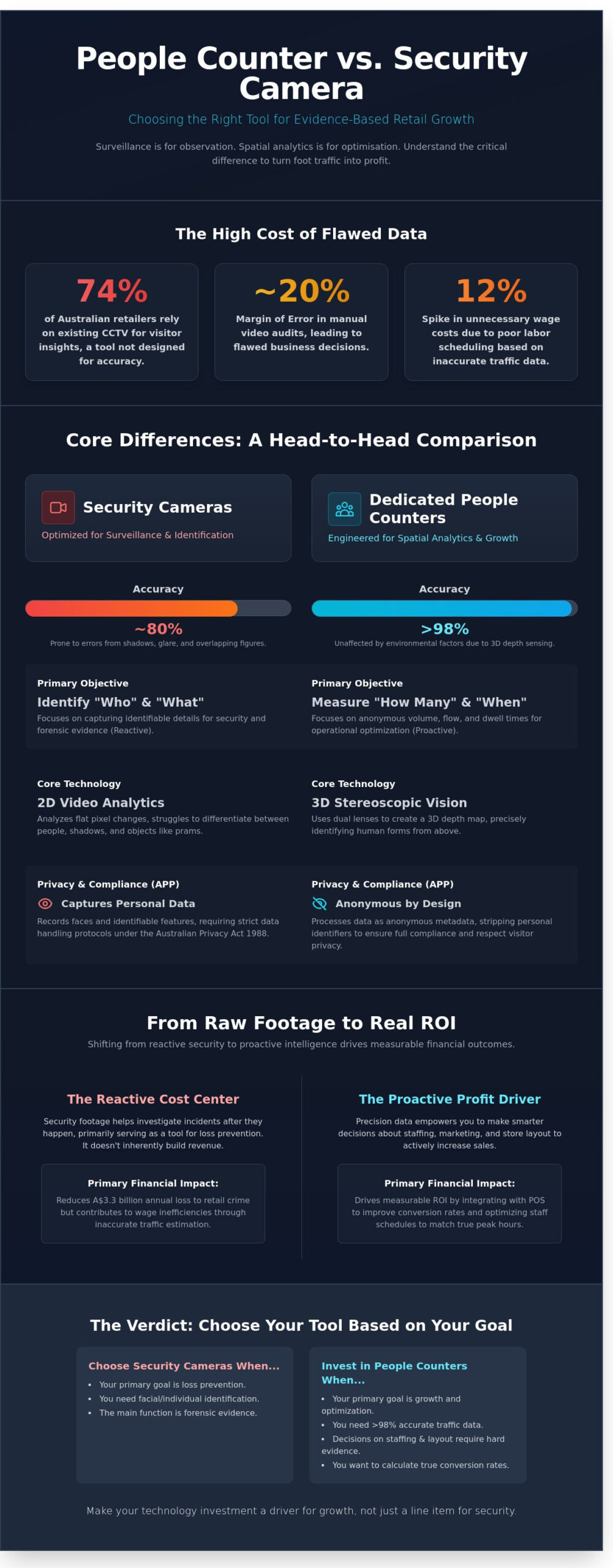
What if your most expensive security asset is providing flawed data that silently drains your bottom line? Research indicates that 74% of Australian retailers still rely on existing CCTV for visitor insights, yet manual video audits often carry a 20% margin of error. When evaluating a people counter vs security camera, it’s vital to recognise that surveillance is designed for observation, while spatial analytics is engineered for evidence-based logic.
You understand that security is non-negotiable for protecting assets and staff. However, relying on standard footage for labor scheduling often results in a 12% spike in unnecessary wage costs during off-peak hours. This guide clarifies the critical differences between recording events and capturing actionable intelligence. You’ll discover how to achieve 98% counting accuracy while remaining fully compliant with the Australian Privacy Act 1988, ensuring your technology investment drives measurable growth rather than just static footage.
Key Takeaways
- Distinguish between identifying individuals for security and measuring spatial patterns for growth to ensure your technology investment aligns with specific operational objectives.
- Learn why 3D stereoscopic sensors outperform traditional lenses, providing the technical clarity needed to settle the people counter vs security camera debate for your facility.
- Navigate Australian Privacy Principles (APP) with confidence by understanding how to implement anonymous data collection that remains fully compliant with local regulations.
- Calculate the true long-term ROI in A$ by evaluating how precision data integrates with POS systems to drive measurable conversion rate improvements.
- Explore hybrid integration strategies that leverage existing CCTV infrastructure to gain deep behavioral insights without sacrificing high-precision entrance counting.
Defining Objectives: Surveillance vs. Spatial Intelligence
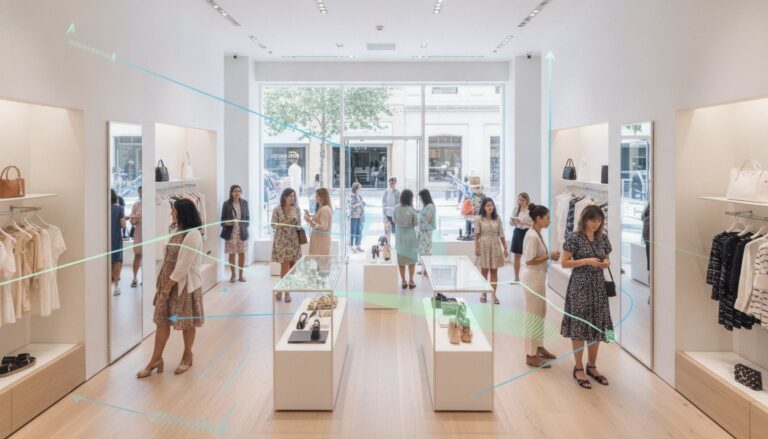
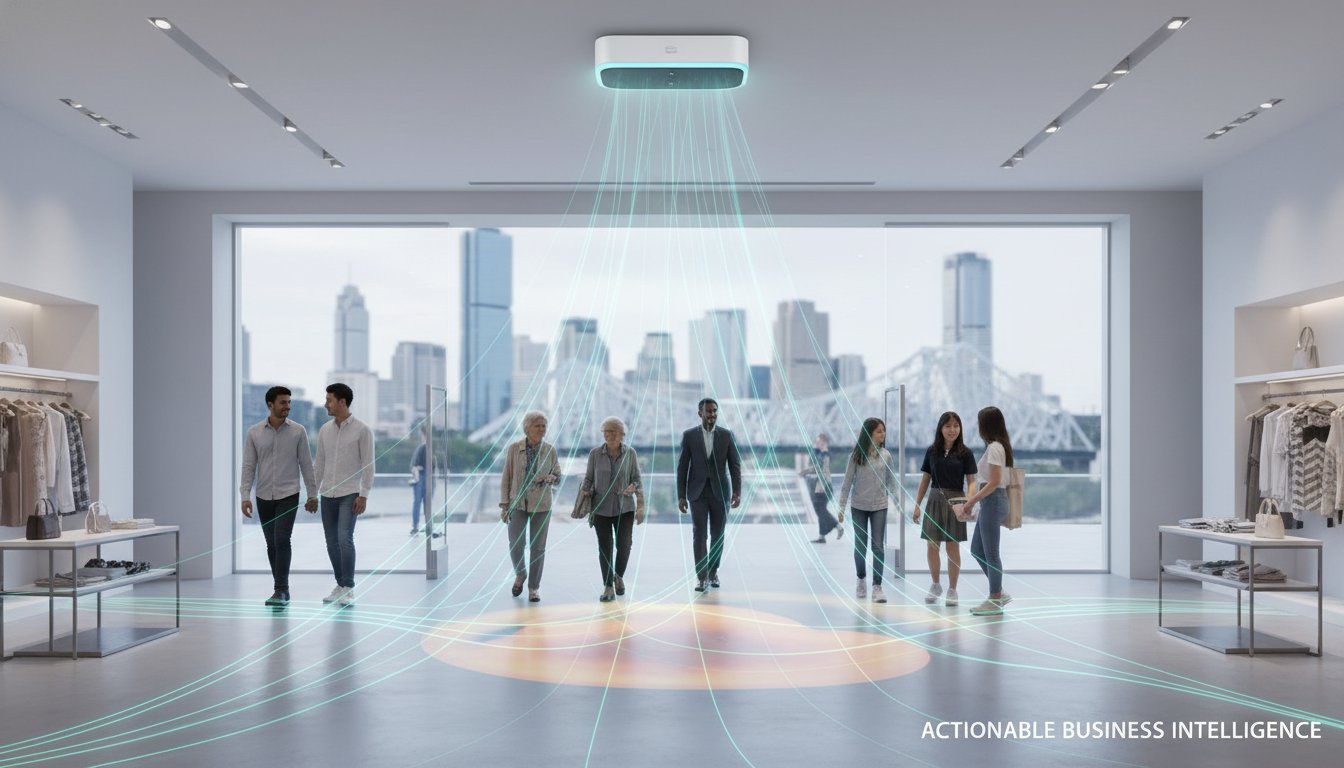
Choosing between a people counter vs security camera starts with a fundamental question: are you protecting your assets or growing your revenue? Security cameras identify “who” and “what” by capturing facial details and physical actions. They’re built for wide-angle surveillance to cover as much floor space as possible. In contrast, people counting technology focuses on “how many” and “when.” These dedicated sensors use top-down perspectives to achieve 98% accuracy, a level of precision standard security feeds can’t match due to perspective distortion and overlapping figures.
The psychological impact on your customers also differs significantly. Customers react differently to hardware depending on its visibility. A prominent dome camera creates a sense of being watched. While this is vital for deterrence, it can feel intrusive in high-end Australian boutiques or quiet galleries. Discrete counting sensors are nearly invisible. They respect privacy by stripping away personal identifiers, gathering the data needed for operational excellence without making visitors feel monitored.
- Security Cameras: Optimized for identification, facial recognition, and forensic evidence.
- People Counters: Designed for high-precision volume tracking, dwell times, and flow analysis.
Loss Prevention vs. Profit Optimization
Security systems are reactive. They provide evidence after a theft or incident occurs. While essential for reducing the A$3.3 billion lost annually to retail crime in Australia—a goal often requiring the professional-grade hardware found at CCTV Shop—they don’t help you sell more. People counting is a proactive strategy. It transforms the visitor journey into a series of actionable metrics. By understanding peak hours, you can align staff rosters with actual traffic. This ensures no customer is left waiting during a Saturday rush at a Sydney flagship store, directly impacting your bottom line.
The Limitations of ‘Eyeballing’ Video Feeds
Manual counting is a drain on resources. Research shows human accuracy in counting crowds drops by 25% after just 20 minutes of observation due to fatigue. Paying a staff member A$30 per hour to review CCTV footage for traffic patterns is an expensive, unreliable exercise. Modern retail management requires shifting from anecdotal observations to structured footfall data analysis.
This transition replaces guesswork with hard evidence. It allows managers to justify marketing spend or store layout changes based on real conversion rates rather than gut feelings. Moving away from manual reviews saves time and eliminates the bias inherent in human observation. You gain a clear, objective view of how your space actually performs.
Technical Precision: Why Counting Accuracy Matters in 2026
Accuracy isn’t just a technical metric; it’s the bedrock of your business intelligence. In 2026, a 5% margin of error isn’t a minor discrepancy; it’s a financial blind spot that leads to overstaffing or missed sales opportunities. When evaluating a people counter vs security camera, the technical architecture determines whether you’re seeing reality or a digital approximation. Professional sensors provide the evidence required to make high-stakes decisions with absolute confidence.
3D Stereoscopic Vision vs. 2D Video Analytics
Stereoscopic vision is the use of two dedicated lenses to create a real-time 3D depth map for precise object differentiation. This dual-lens approach allows the sensor to perceive the physical volume of an object, making it easy to distinguish between a human being and a shopping trolley or a pram. 2D video analytics, commonly found in standard security cameras, rely on flat pixel changes. They can’t tell the difference between a person and their shadow on a bright afternoon.
In high-traffic Australian shopping centres like Chadstone or Westfield Sydney, floor glare and overlapping crowds frequently cause 2D systems to fail. Because they lack depth perception, they often count two people walking closely together as a single large blob. Dedicated 3D sensors maintain >99.5% accuracy by looking down from the ceiling to identify individual heads and shoulders, ensuring every visitor is accounted for even during peak holiday sales.
Filtering and Data Cleansing
Raw numbers are often misleading without context. To maintain data integrity, your system must filter out non-visitor traffic that doesn’t contribute to revenue. Australian retailers face unique challenges with wide-open storefronts where staff frequently cross the threshold. Using AI-driven height filtering and wearable staff tags ensures your data remains clean. This technology automatically excludes employees from the final count, providing a pure look at your actual customer base.
- Buying Units: Modern sensors identify groups, such as a family of four, as a single “buying unit” to provide more realistic conversion rate data.
- U-Turn Logic: The system tracks the specific path of an individual, ignoring those who step inside and immediately walk back out.
- Environmental Resilience: High-glare entrances and low-light conditions don’t compromise the data, as 3D sensors use active infrared illumination to see in all conditions.
Implementing these precision tools allows you to optimise staff rosters based on actual visitor demand rather than educated guesses. It’s the difference between reacting to the day and strategically planning for the week ahead. When you eliminate the noise of staff movements and environmental interference, you gain a transparent view of your store’s performance.
Privacy, Compliance, and Australian Regulatory Standards
Adhering to the Australian Privacy Principles (APP) requires a clear distinction between capturing an image and capturing an insight. Australian businesses face strict penalties for mishandling Personally Identifiable Information (PII). Under the Privacy Act 1988, storing a customer’s face constitutes the collection of sensitive biometric data. This creates a significant liability if a breach occurs. The Office of the Australian Information Commissioner (OAIC) reported 497 data breaches in the first half of 2023, highlighting the growing risks of storing sensitive visual files.
The fundamental difference in the people counter vs security camera debate lies in the data’s lifecycle. Security cameras are designed for surveillance, meaning they record and store identifiable video for later review. People counters are built for analytics, processing data at the source and discarding visual information immediately. This ensures your business remains a data-driven entity rather than a surveillance state. It’s a strategic move that shifts the focus from watching people to understanding patterns.
Anonymous Data vs. Identifiable Surveillance
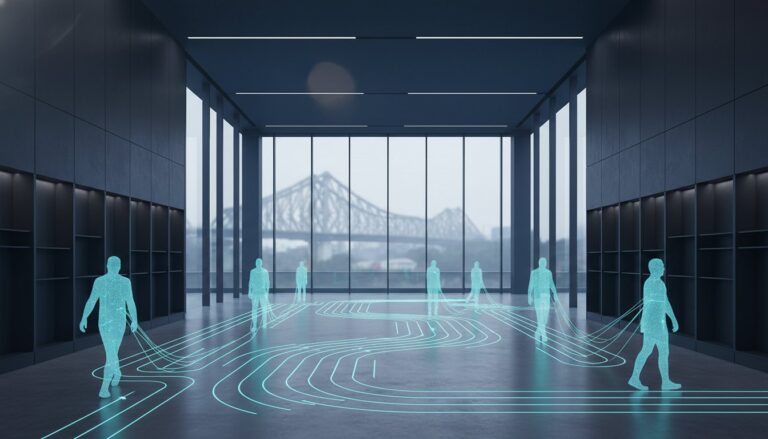
Modern sensors convert visual input into anonymous (x,y) coordinates directly at the edge. The system processes the movement and discards the video feed within milliseconds. No faces are stored; no identities are tracked. This “Privacy by Design” approach makes people counting technology the safer choice for public spaces and libraries. In contrast, a security camera records identifiable features. If a hacker accesses a Network Video Recorder (NVR), they gain a database of customer faces. If they access a people counter’s data packet, they only find a list of numerical strings. This reduces your “blast radius” in the event of a cyberattack.
GDPR and APP Alignment
Global standards like GDPR have influenced the Australian market, raising the bar for transparency. Using AI-driven analytics requires businesses to be upfront about data collection. People counters simplify this by removing the “personal” from the data. A 2023 study found that 74% of Australian shoppers express concern about facial recognition in retail environments. By choosing a solution that prioritises anonymity, you build long-term trust. The risk profile of a people counter vs security camera is vastly different. One is a potential regulatory minefield; the other is a compliant tool for operational growth. Aligning your hardware with both local APP and global GDPR benchmarks ensures your investment is future-proofed against evolving privacy laws; similarly, for professionals in the real estate and legal sectors, AML Partners offers the advisory and software tools necessary to manage complex anti-money laundering obligations.
- Data Minimisation: Only collect what’s necessary for business logic.
- Edge Processing: Ensure video never leaves the sensor housing.
- Risk Mitigation: Numerical data packets are useless to identity thieves.
- Transparency: Provide clear signage that analytics are anonymous.
Calculating the Real ROI: Beyond the Initial Price Tag
Smart business owners look past the initial capital expenditure (Capex) to understand the total cost of ownership. While a standard security camera might appear cost-effective at first, the operational expenses (Opex) of using it for analytics often escalate. Dedicated people counters typically maintain 98% accuracy right out of the box, whereas security cameras repurposed for counting frequently require manual recalibration every three to six months to account for lighting shifts or seasonal floor plan changes. This ongoing technical intervention adds hidden costs that erode your initial savings.
The debate of people counter vs security camera often centers on hardware, but the true value lies in the data integrity. High-quality sensors provide a foundation for comprehensive people counter support, ensuring your metrics remain precise through 2026 and beyond. Without this reliability, your ROI calculations are based on flawed assumptions, leading to expensive strategic errors.
Integration with POS and Labor Scheduling
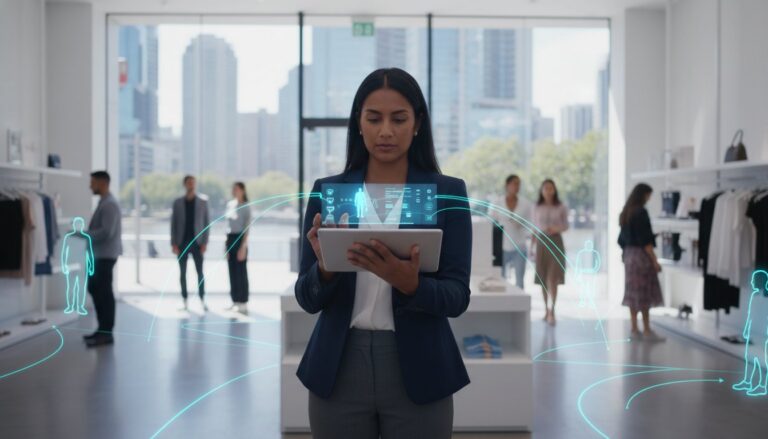
Connecting your traffic data with Point of Sale (POS) systems transforms raw numbers into actionable intelligence. This integration reveals your true conversion rate by comparing visitor volume against actual transactions. If a Melbourne flagship store sees 1,200 visitors but only 120 sales, you have a 10% conversion rate. Knowing this allows you to identify “Power Hours,” those specific windows where high-traffic volume meets high-purchase intent. By aligning your most skilled staff with these periods, you maximize revenue potential. Conversely, identifying low-traffic periods helps reduce wage wastage. In the Australian retail market, where award rates for casual staff can exceed A$30 per hour, cutting just four hours of unnecessary roster time per week across a 10-store network saves over A$62,000 annually.
Maintenance and Data Reliability
Security cameras prioritize visual clarity for surveillance, not the mathematical precision required for spatial analytics. Firmware updates on CCTV systems can inadvertently break analytics configurations, leading to data gaps that take weeks to notice. Dedicated sensors operate on specialized processors that handle counting locally, which minimizes bandwidth strain and ensures consistent performance across a national Australian rollout. Whether you’re managing a single boutique in Sydney or a 50-site network across Perth and Brisbane, consistency is vital. Maintaining a people counter vs security camera setup requires understanding that dedicated hardware is built for longevity. It doesn’t just record video; it decodes human movement into a strategic narrative that stays accurate year after year.
Ready to stop guessing and start growing? Contact Footfall today for a data-driven site assessment.
The Hybrid Future: Integrating Counting with Existing Security
Modern spatial intelligence moves beyond the binary choice of a people counter vs security camera. Leading Australian retailers are now adopting a hybrid model that blends dedicated hardware with existing surveillance assets. This approach maximizes return on investment by using the right tool for the right location, creating a comprehensive map of the visitor journey without redundant hardware costs.
FootfallCam Centroid: Leveraging Existing Infrastructure
The FootfallCam Centroid transforms standard IP security cameras into high-precision analytical tools. It’s a localized AI processing unit that plugs into your network and extracts data from your current CCTV feeds. This allows businesses to leverage their previous A$2,000 to A$15,000 investments in security hardware. Retrofitting with the Centroid can reduce total implementation costs by up to 40% compared to installing new sensors in every aisle. It maintains over 95% accuracy, even when processing wide-angle or distorted security feeds, by applying advanced deep learning algorithms to distinguish between customers, staff, and inanimate objects.
Selecting the Right Infrastructure
A balanced strategy uses specialized sensors where precision is non-negotiable and leverages CCTV where broad spatial awareness is needed. Use this checklist to evaluate your current hardware for a 2026-standard rollout:
- Entrance Precision: High-traffic entries require 99.5% accuracy to calculate reliable conversion rates. The FootfallCam Pro2 remains the gold standard for these critical points.
- Aisle Behavior: Use existing security cameras processed through a Centroid unit to monitor dwell times and product engagement.
- Unified Reporting: Ensure all data streams into a single dashboard to avoid fragmented insights.
- Local Compliance: Verify that your data processing meets Australian privacy standards and GDPR-level anonymity.
It’s vital to consult with local Australian partners who understand the specific layout challenges of domestic shopping centres and high-street stores. Whether you’re managing a single boutique in Melbourne or a national rollout across 50 locations, a seamless implementation depends on professional calibration. Australian businesses currently face rising operational costs, and optimizing spatial intelligence is the most direct path to recovering those margins. By integrating a dedicated people counter vs security camera analytics, you gain the clarity needed to make evidence-based decisions. Your next step should be a site audit to determine which of your existing cameras are ready for an AI upgrade.
Transform Your Spatial Data into Strategic Growth
Deciding between a people counter vs security camera defines whether you’re simply monitoring a space or actively optimizing it. While security cameras serve a vital role in loss prevention, they often lack the technical precision needed for complex spatial intelligence. Footfall’s Pro2 sensors deliver a guaranteed 99.5% counting accuracy, providing the reliable evidence you need to calculate true conversion rates and dwell times. These Red Dot Award-winning devices ensure your business remains fully compliant with Australian privacy regulations by processing data without capturing sensitive personal imagery.
We’ve spent over 20 years helping Australian retailers and public venues replace guesswork with actionable insights. This long-term expertise ensures that your national rollout integrates seamlessly with existing infrastructure while maximizing your ROI. You don’t have to settle for “good enough” data when precision is within reach. Take the first step toward evidence-based management today. Request a free consultation for your national people counting rollout and secure the intelligence your business deserves. Your future operations will be more efficient for it.
Frequently Asked Questions
Can I use my existing security cameras for people counting?
You can use existing IP cameras for basic counting, but accuracy levels often drop below 80% due to lens distortion and improper mounting angles. Dedicated 3D LiDAR or AI sensors maintain 99.5% accuracy by utilizing a top-down perspective. This precision is vital for calculating exact conversion rates across your Australian retail footprint rather than relying on rough estimates from security footage.
Is a people counter more accurate than a security camera?
Dedicated sensors outperform security cameras by a margin of at least 15% in high-traffic environments. When evaluating a people counter vs security camera, the primary difference lies in depth perception. While a security camera might struggle with shadows or overlapping groups, a 3D sensor uses spatial analytics to distinguish between individuals. This technical edge provides the reliable data needed for labor scheduling.
Do people counters record video of my customers?
Professional people counters don’t record or store identifiable video of your customers. These devices convert visual input into anonymous X-Y coordinates instantly at the edge. This privacy-first approach ensures you gather intelligence on the visitor journey without ever creating a digital footprint of an individual’s face. It’s a transparent way to monitor foot traffic while respecting consumer anonymity.
What is the price difference between a people counter vs security camera?
A high-end AI people counter typically costs between A$800 and A$1,500 per entrance, while a basic security camera might start at A$300. However, the manual labor required to extract data from security footage can cost a business over A$2,000 annually in lost productivity. Automated sensors deliver a lower total cost of ownership through instant, actionable insights and seamless reporting.
How do people counters handle staff and security guards?
Modern systems filter out staff and security guards automatically to ensure your conversion data remains pure. By using wearable IR tags or AI-based gait analysis, the sensors subtract employees from the total visitor count. This ensures your 10:00 AM rush data isn’t skewed by shift changes or security patrols, providing a true reflection of potential customer opportunities.
Can people counters help with Australian privacy law compliance?
People counters simplify compliance with the Australian Privacy Act 1988 because they don’t collect Personal Identifiable Information (PII). Unlike security cameras that store facial data, these sensors process information locally and only transmit numerical statistics to the cloud. You gain deep insights into dwell time while remaining fully compliant with local data protection regulations and Australian privacy standards.
Do I need a separate internet connection for people counting sensors?
You don’t need a dedicated internet line for these sensors. Most units utilize a standard Power over Ethernet (PoE) connection, drawing approximately 15 watts of power from your existing network. They transmit small data packets, typically less than 5MB per day; therefore, they won’t impact your store’s primary network bandwidth or point-of-sale systems during peak trading hours.
How long does it take to see an ROI from a people counting system?
Retailers typically see a full return on investment within 120 days of implementation. By identifying a 5% gap in staff scheduling or a 2% opportunity in conversion rates, a single store can generate an extra A$10,000 in monthly revenue. The data provides a logical roadmap for optimizing floor layouts and marketing spend based on hard evidence rather than guesswork.