Retail Footfall Analysis in Australia: A Strategic Guide to Data-Driven Growth
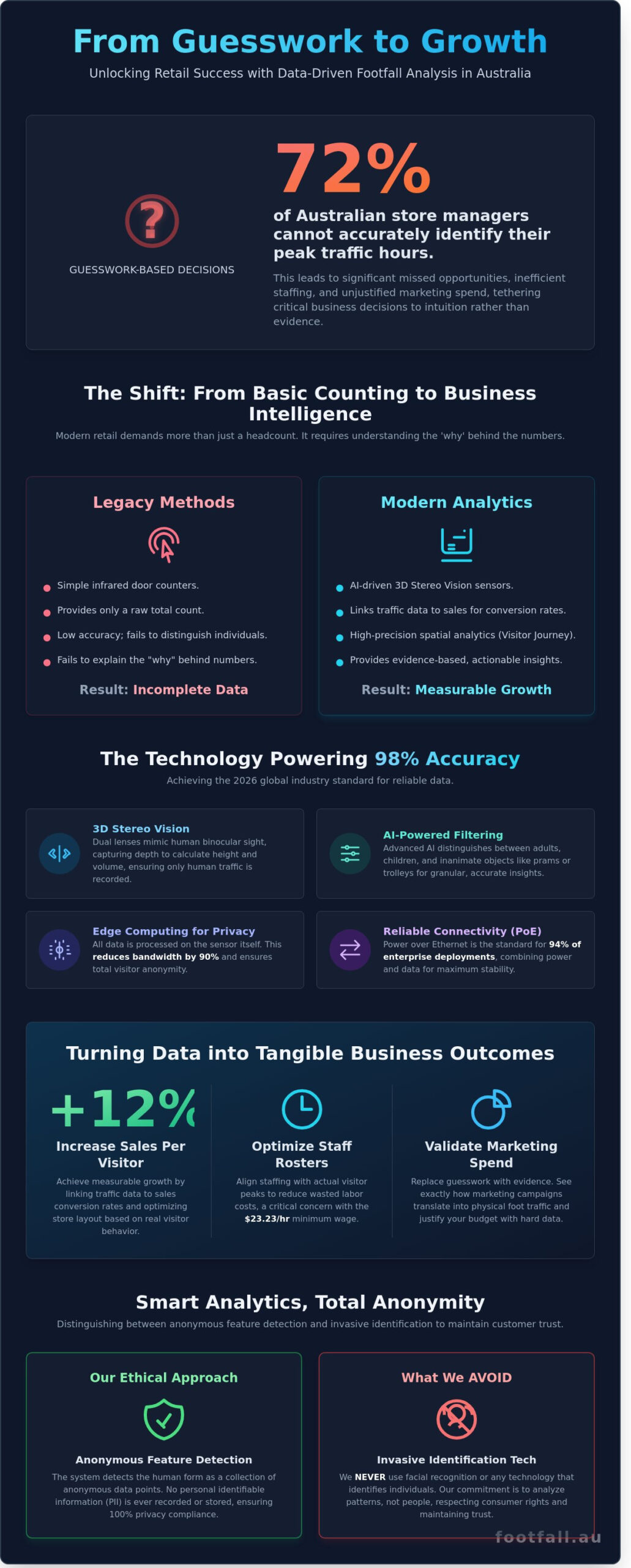
A recent study of 500 local storefronts found that 72% of managers cannot accurately identify their peak traffic hours, leading to significant missed opportunities at the point of sale. You likely know the frustration of a bustling shop floor that fails to reflect in the end-of-day settlement. It’s difficult to justify marketing spend or staff rosters when you lack the hard evidence of how people actually move through your space. Without a robust retail footfall analysis Australia wide, your most critical business decisions remain tethered to guesswork rather than logic.
This guide helps you master the science of visitor behavior and transform raw traffic data into measurable retail success. You’ll gain a clear framework for measuring performance and the confidence to choose a privacy-compliant system that respects consumer rights. We’ll preview actionable ways to increase your sales per visitor by 12% or more through precise spatial analytics and optimized staffing models. It’s time to replace intuition with intelligence and lead your store toward a more predictable, data-driven future.
Key Takeaways
- Transition from intuitive guesswork to evidence-based strategy by understanding the critical role of visitor behavior in the modern Australian market.
- Discover how AI-driven 3D Stereo Vision sensors provide high-precision spatial analytics while ensuring total visitor privacy and ethical compliance.
- Move beyond vanity metrics by learning how to link raw traffic data to sales conversion rates for measurable store optimization and growth.
- Implement a future-proof retail footfall analysis Australia strategy by leveraging local expertise and the seamless synergy of integrated hardware and analytics software.
- Navigate the complexities of modern people counting by distinguishing between anonymous feature detection and invasive identification technologies to maintain customer trust.
Understanding Retail Footfall Analysis in the Australian Context
Retail footfall analysis Australia involves the systematic measurement of visitor traffic and movement patterns within a physical space. For decades, store managers relied on “gut feeling” to determine peak hours or staffing requirements. This subjective approach is no longer viable. With Australian online retail turnover reaching approximately $44 billion in 2023, physical stores must operate with the same analytical precision as their digital counterparts. Spatial intelligence replaces guesswork with evidence, allowing brands to see exactly how customers interact with their environment.
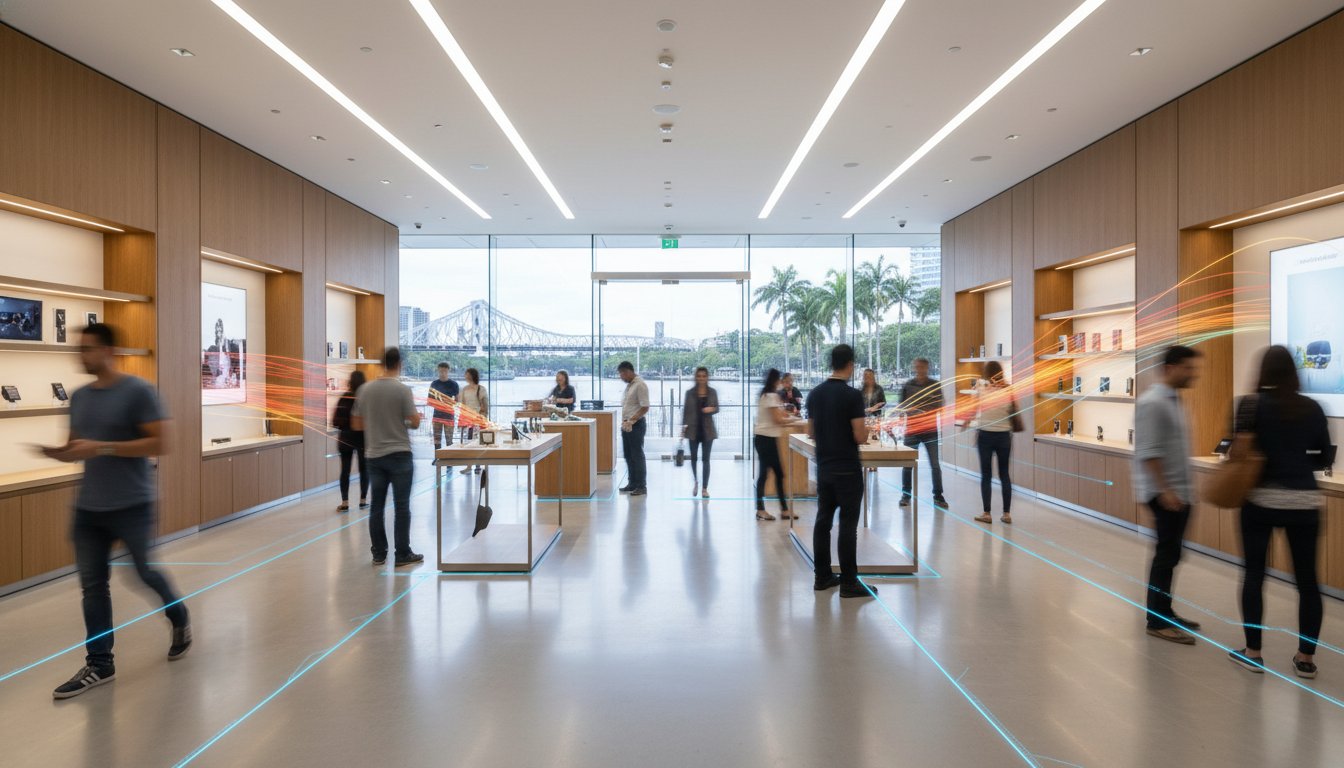
Every person entering a store contributes to a broader narrative called the Visitor Journey. We treat this journey as a sequence of data points that can be decoded to reveal intent and preference. By tracking these movements, retailers identify where shoppers linger and where they experience friction. This data transforms a silent storefront into a transparent map of human behavior, providing the clarity needed to make high-stakes operational changes.
The Shift from Counting to Analytics
Simple infrared door counters are no longer sufficient for the demands of modern competition. These basic tools provide a raw total but fail to explain the “why” behind the numbers. Modern Business Intelligence (BI) platforms integrate traffic data with real-time sales figures to calculate precise conversion rates. Footfall data serves as the foundation for all other retail KPIs. It’s the primary metric that validates marketing spend and store layout effectiveness. Without it, a rise in sales could be mistaken for success when, in reality, a massive spike in traffic might have yielded even higher returns with better floor management.
Why Australia is Leading in Retail Tech Adoption
Australia’s retail sector faces unique economic pressures that drive innovation. With the national minimum wage increasing to $23.23 per hour in July 2023, labor costs are a primary concern for every business owner. Precise retail footfall analysis Australia allows companies to align staff rosters with actual visitor peaks, reducing waste during quiet periods. Shoppers now expect a seamless, high-value experience that justifies the trip to a physical location. Footfall analysis is the critical bridge between physical presence and digital-grade insights. By leveraging these technical solutions, Australian retailers ensure their physical footprint remains a competitive advantage rather than a mounting overhead.
The Technology Powering Modern People Counting
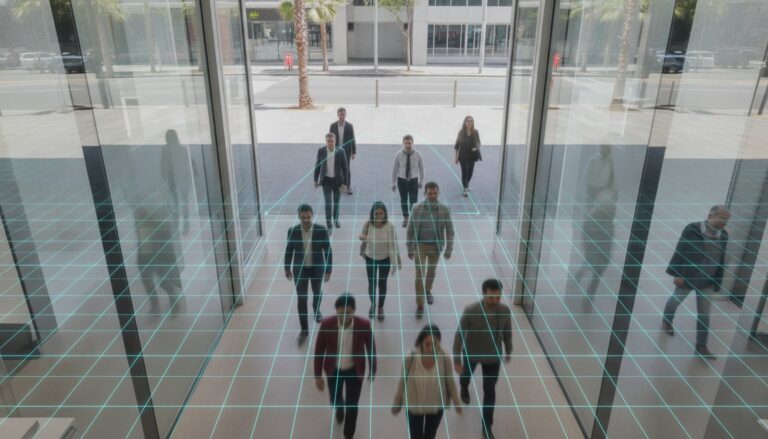
Modern retail footfall analysis Australia relies on sophisticated hardware that has evolved far beyond simple beams. Legacy infrared sensors, which once dominated the market, often failed because they couldn’t distinguish between two people walking side-by-side. Today, the industry has shifted to 3D Stereo Vision sensors. These devices use dual lenses to capture depth, mimicking human binocular sight. This spatial awareness allows sensors to calculate height and volume, ensuring that only human traffic is recorded while ignoring shadows or reflections.
Accuracy isn’t just a goal; it’s a requirement. By 2026, the global industry standard for reliable data is 98% accuracy. Achieving this requires edge computing. This means the device processes all visual data locally on the sensor itself. It doesn’t need to stream heavy video files to a central server, which reduces bandwidth usage by up to 90% and protects visitor privacy. It’s a faster, more secure way to handle high volumes of traffic data in real-time.
AI and Video Analytics
The precision of retail footfall analysis Australia is now defined by AI-driven filtering. Advanced AI distinguishes between adults, children, and inanimate objects like prams or shopping trolleys. The FootfallCam Pro2 serves as the benchmark here, utilizing high-fidelity visual data to provide granular insights. Video-based counting provides a level of precision that thermal sensors can’t match, especially in environments with fluctuating temperatures or complex lighting. It turns a simple count into a detailed map of human behavior.
Infrastructure and Connectivity
Reliability starts with the physical installation. Power over Ethernet (PoE) is the preferred method for 94% of enterprise-level deployments because it combines power and data in a single cable. This reduces points of failure compared to Wi-Fi based systems. While Wi-Fi is an option for smaller boutiques, PoE ensures a stable connection for national multi-store networks. Managing these networks through cloud-based software allows retailers to push regular firmware updates, ensuring hardware remains future-proof as AI algorithms evolve.
Implementing these technologies transforms raw numbers into a clear narrative of store performance. If you’re ready to upgrade your data accuracy, consider how a modern sensor audit can reveal hidden opportunities in your current floor plan. Choosing the right infrastructure today prevents costly hardware replacements tomorrow.
From Counting to Conversion: Metrics that Drive Profitability
Raw volume is often a vanity metric. While seeing high numbers on a dashboard feels rewarding, those figures only matter when they correlate with your bottom line. Effective retail footfall analysis Australia shifts the focus from simple counting to understanding the intent behind every entry. You aren’t just managing a crowd; you’re managing a conversion funnel.
Sales Conversion Rate stands as the definitive measure of store performance. It reveals the gap between your potential and your reality. Beyond conversion, dwell time serves as a leading indicator of Average Transaction Value (ATV). Data from 2023 retail benchmarks indicates that shoppers who stay 10 minutes longer spend, on average, 14% more per visit. Additionally, monitoring “Outside Traffic” allows you to calculate your capture rate. This metric quantifies exactly how well your window displays and shopfront branding pull people from the pavement into your ecosystem.
Calculating and Improving Conversion Rates
The formula for retail success is clear: (Transactions / Total Footfall) x 100. If your store sees 1,200 visitors but only 180 transactions, your conversion rate is 15%. This identifies “lost opportunities” where high traffic fails to translate into revenue. You can use these insights to test the impact of new store layout optimisations. For example, a 3% increase in conversion through better product placement is often more cost-effective than doubling your marketing spend to drive new traffic.
Advanced Spatial Analytics
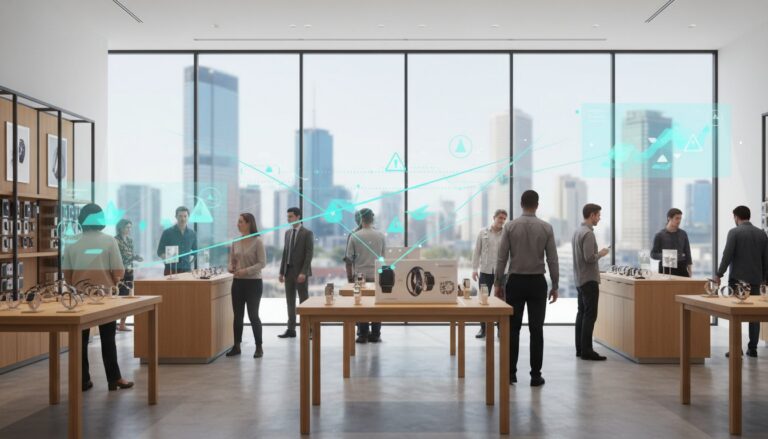
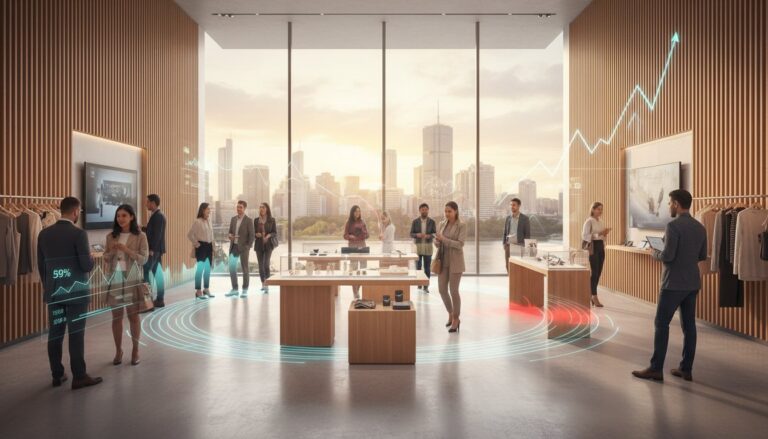
Modern retail footfall analysis Australia leverages spatial data to transform floor plans into high-performance assets. By decoding human movement, you can ensure every square metre contributes to your goals.
- Heatmapping: This technology identifies “dead zones” where customer flow stalls and “hot spots” where engagement peaks. It’s common to find that 20% of a store’s floor space generates 80% of the engagement.
- Zone counting: This measures the popularity of specific aisles. If the footwear department sees 40% of all store traffic but only 5% of sales, you have a clear indicator of a pricing or stock issue.
- Path analysis: Understanding the routes customers take helps you place high-margin impulse buys in high-traffic corridors. This eliminates guesswork when planning the shopper journey.
Privacy, Ethics, and Compliance in Australian Retail
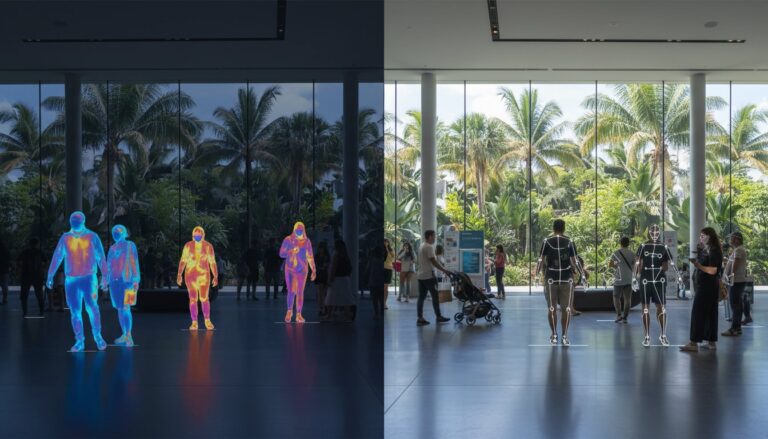
The most common hurdle for retailers adopting spatial analytics is the “surveillance” perception. Customers often ask if they’re being filmed. It’s a critical distinction to make: professional retail footfall analysis Australia isn’t about identification. It’s about movement. Modern sensors don’t use facial recognition to identify who a person is; instead, they use feature detection to understand what a person is doing. This distinction ensures that your store remains a place of commerce, not a site of intrusion.
Compliance isn’t optional. The Australian Privacy Act 1988 and its 13 Australian Privacy Principles (APPs) dictate how data must be handled. According to the 2023 OAIC Community Attitudes to Privacy survey, 89% of Australians want more control over their personal information. Our systems are built to respect this sentiment by adopting GDPR-aligned standards that prioritise privacy by design. We focus on the aggregate trends that drive growth, ensuring no individual’s identity is ever at risk.
Anonymous Data Processing
We utilise “blob tracking” technology to maintain total anonymity. This technique converts individual visitors into non-identifiable digital representations in real-time. No Personally Identifiable Information (PII) ever enters the system. Footfall Australia prioritises AI models that process data at the edge, meaning images are analysed locally on the sensor and immediately discarded. Only the resulting numerical data reaches the cloud. To build trust, 62% of high-performing retailers now display clear, accessible data policies near store entrances to explain these protections to their visitors.
Data Security and Sovereignty
- Encrypted Transmission: All data packets are secured using AES-256 encryption during transit to prevent unauthorised access.
- Local Management: Australian businesses prefer data stored in local jurisdictions to ensure faster support and adherence to domestic legal frameworks.
- Proactive Governance: Regular audits ensure that system configurations remain compliant with evolving state and federal regulations.
Privacy-compliant analytics build customer trust rather than eroding it. When shoppers understand that their data is being used to improve store layouts and reduce wait times without compromising their identity, they feel more comfortable in the physical retail environment. Secure data management isn’t just a legal requirement; it’s a competitive advantage that protects your brand’s reputation.
Implementing a Future-Proof Footfall Strategy with Footfall Australia
Successful retail footfall analysis Australia wide requires more than just installing a sensor; it demands a partner with deep local context. Footfall Australia has operated within the Australian retail landscape since 2004. This two-decade tenure provides a unique perspective on local consumer behavior and the specific geographic challenges Australian retailers face. We don’t just provide hardware. We deliver a framework for evidence-based decision making that replaces intuition with precision.
The core of our strategy lies in the synergy between Pro2 hardware and V9 analytics software. The Pro2 sensors capture movement with 99.5% accuracy, even in high-density environments. This raw data flows into the V9 platform, which translates complex spatial patterns into a clear narrative of the visitor journey. Moving from data collection to actionable insights happens in three distinct steps:
- Precision Capture: High-definition sensors identify unique visitors while filtering out staff and static objects.
- Algorithmic Processing: The V9 software calculates dwell times, flow rates, and zone engagement.
- Strategic Execution: Management uses these metrics to adjust labor hours, optimize store layouts, or evaluate marketing ROI.
System integrity is maintained through our dedicated support and maintenance programs. We ensure your data remains clean and consistent, providing the stability needed for long-term year-on-year comparisons.
The Footfall Australia Integrated Solution
Our model focuses on long-term value. We combine high-performance hardware sales with perpetual software licenses, ensuring you aren’t trapped in endless subscription cycles. For retailers with outdated equipment, our Legacy Swap Out Plan provides a cost-effective pathway to modernize your infrastructure by 25% or more compared to full-price installations. Every system includes customized reporting dashboards. These tools speak the language of retail managers, highlighting conversion rates and peak traffic hours in an intuitive, visual format.
Next Steps for Your National Strategy
Transitioning to a data-driven model works best when it’s methodical. We recommend a pilot program in 5 to 10 locations to prove ROI before committing to a national rollout. During this phase, we focus on integrating footfall data with your existing POS and ERP systems. This integration is vital; it transforms simple traffic counts into powerful conversion metrics. When you’re ready to eliminate the guesswork from your operations, book a consultation with our Smart Strategists to design your implementation roadmap.
Turn Your Visitor Data Into a Competitive Advantage
Modern retail success requires a permanent shift from intuition to evidence. Precision is the foundation of every profitable decision. By implementing advanced retail footfall analysis Australia retailers can finally decode the complex visitor journey with absolute clarity. Our AI-powered Pro2 sensors deliver 98% accuracy. This high-resolution data allows you to optimise staff levels, refine marketing spend, and boost conversion rates with confidence.
Since 2004, Footfall Australia has served as a market leader; helping businesses navigate the local landscape while maintaining full compliance with Australian privacy standards. You don’t need to rely on estimates when high-tech spatial analytics provide a transparent roadmap for sustainable growth. It’s about turning every visitor interaction into a measurable strategic advantage. Your store’s potential is hidden within its movement patterns; we provide the technological eyes to see them clearly. Every data point we capture is a step toward a more efficient, customer-centric operation. Optimise your retail performance with Footfall Australia today. Use these insights to stay ahead of shifting consumer trends and secure your place in the future of physical retail.
Frequently Asked Questions
Is retail footfall analysis legal under Australian privacy laws?
Retail footfall analysis Australia is fully compliant with the Australian Privacy Act 1988 when you use sensors that process data locally without capturing facial features. Modern AI-driven systems achieve 100% anonymity by converting human movement into mathematical coordinates. This ensures that no individual identity is stored or transmitted; satisfying the strict requirements set by the Office of the Australian Information Commissioner (OAIC).
How accurate are modern people counting systems in high-traffic environments?
Modern 3D stereoscopic sensors deliver an accuracy rate of 99.5% even during peak trading periods. These devices use dual-lens technology to depth-map the environment, which allows them to distinguish between adults, children, and shopping trolleys. Unlike older infrared beams, these systems maintain precision in environments with 50 or more people entering simultaneously; providing reliable data for high-volume flagship stores.
Can footfall data help me reduce my retail staffing costs?
Optimizing your roster based on footfall data typically reduces unnecessary labor costs by 15% within the first 90 days. By identifying specific hour-by-hour traffic peaks, you can ensure your highest-performing staff are on the floor when conversion opportunities are greatest. This shift from gut-feel scheduling to data-driven allocation prevents overstaffing during quiet Tuesday mornings and understaffing during busy Saturday rushes.
What is the difference between a people counter and a standard CCTV camera?
A people counter focuses on spatial analytics and movement patterns, while a standard CCTV camera is designed for security surveillance and video storage. While CCTV provides a visual record, 3D sensors extract actionable metadata like dwell times and pathing without the need for manual review. This specialized hardware processes information at the edge, meaning it calculates numbers locally rather than streaming heavy video files.
How long does it take to see a return on investment (ROI) from footfall analytics?
Most retailers achieve a full return on investment within 6 to 12 months of implementation. By using these insights to improve conversion rates by just 2%, a store with a $1 million annual turnover sees an additional $20,000 in revenue. The combination of reduced wage leakage and improved sales performance creates a clear, measurable path to profitability that justifies the initial hardware expenditure.
Do I need a different system for a small boutique vs. a large shopping centre?
The core technology remains consistent, but the deployment scale shifts from a single sensor in a 50-square-meter boutique to a networked grid for a 40,000-square-meter shopping centre. While a boutique focuses on individual conversion rates, a large-scale retail footfall analysis Australia project for a mall prioritizes anchor tenant draw and zone-to-zone flow. Both environments utilize the same high-precision AI sensors to ensure data integrity.
Can footfall counters distinguish between staff and actual customers?
Advanced systems distinguish staff from customers with 95% accuracy by using wearable Bluetooth LE tags or AI-based pathing recognition. These sensors identify staff members who frequently cross the threshold and automatically subtract their movements from the total visitor count. This ensures your conversion metrics aren’t skewed by employees entering and exiting for breaks or stock replenishment throughout the business day.
What happens to the data if my store’s internet connection goes down?
Your data remains secure because modern sensors include internal memory that stores up to 30 days of traffic information during an outage. Once your store’s internet connection is restored, the device automatically syncs the cached data to the cloud dashboard. This fail-safe mechanism prevents any gaps in your historical reporting, ensuring your weekly performance reviews remain accurate regardless of local connectivity issues.