The Definitive Guide to Accurate People Counter Devices in 2026
In the competitive Australian retail landscape, relying on “near enough” data is no longer a viable strategy. Many operators remain frustrated by inconsistent figures from entry-level sensors that fail to distinguish between groups or miss children entirely, leaving a significant blind spot in their operational awareness. Compounding this challenge is the critical need for strict adherence to Australian Privacy Principles (APP), making it difficult to find a solution that balances high-resolution data with total compliance. To drive genuine growth, your business requires an accurate people counter device that moves beyond simple tallies to decode the nuances of the visitor journey.
This guide provides a strategic roadmap for selecting and implementing technology that delivers 98%+ counting accuracy. You will discover how to transition from raw foot traffic to actionable business intelligence through seamless POS and ERP integrations. We will explore how to automate your reporting to eliminate guesswork, ensuring every decision you make is backed by hard evidence and sophisticated spatial analytics. By the end of this article, you will have the clarity needed to transform your physical space into a high-performance environment optimized for the modern consumer in 2026.
Key Takeaways
- Understand how data precision eliminates the high cost of error and empowers you to optimize staffing ROI through sophisticated visitor journey mapping.
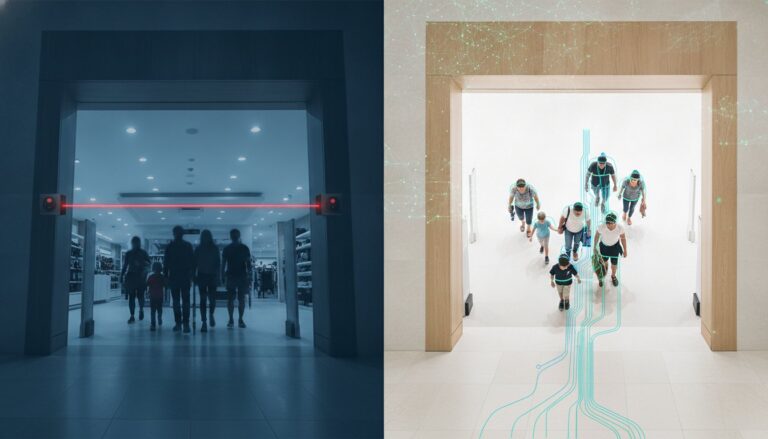
- Evaluate the performance gap between legacy infrared sensors and modern AI-driven 3D technology to ensure your data meets 2026 commercial standards.
- Learn how to select the ideal accurate people counter device tailored to specific Australian retail environments, from narrow boutique entrances to wide mall facades.
- Discover the “Video Validation” process and why remote calibration is critical for maintaining day-one precision across your business fleet.
- Explore how industry benchmarks like the FootfallCam Pro2 provide a scalable foundation for national franchises to turn raw traffic into actionable intelligence.
Why Precision Matters: The Business Case for an Accurate People Counter Device
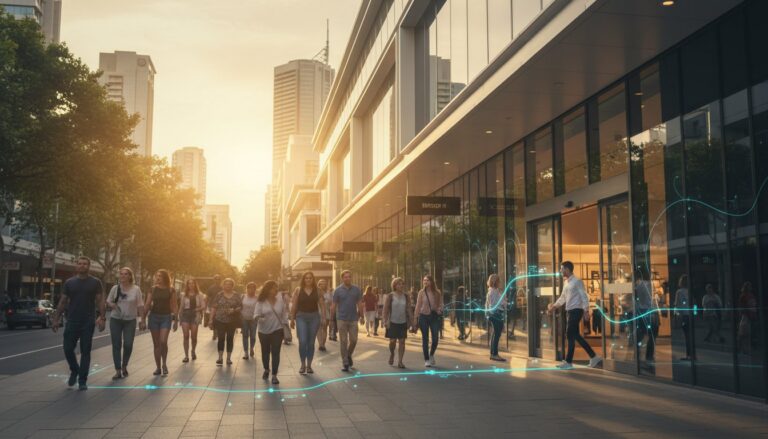
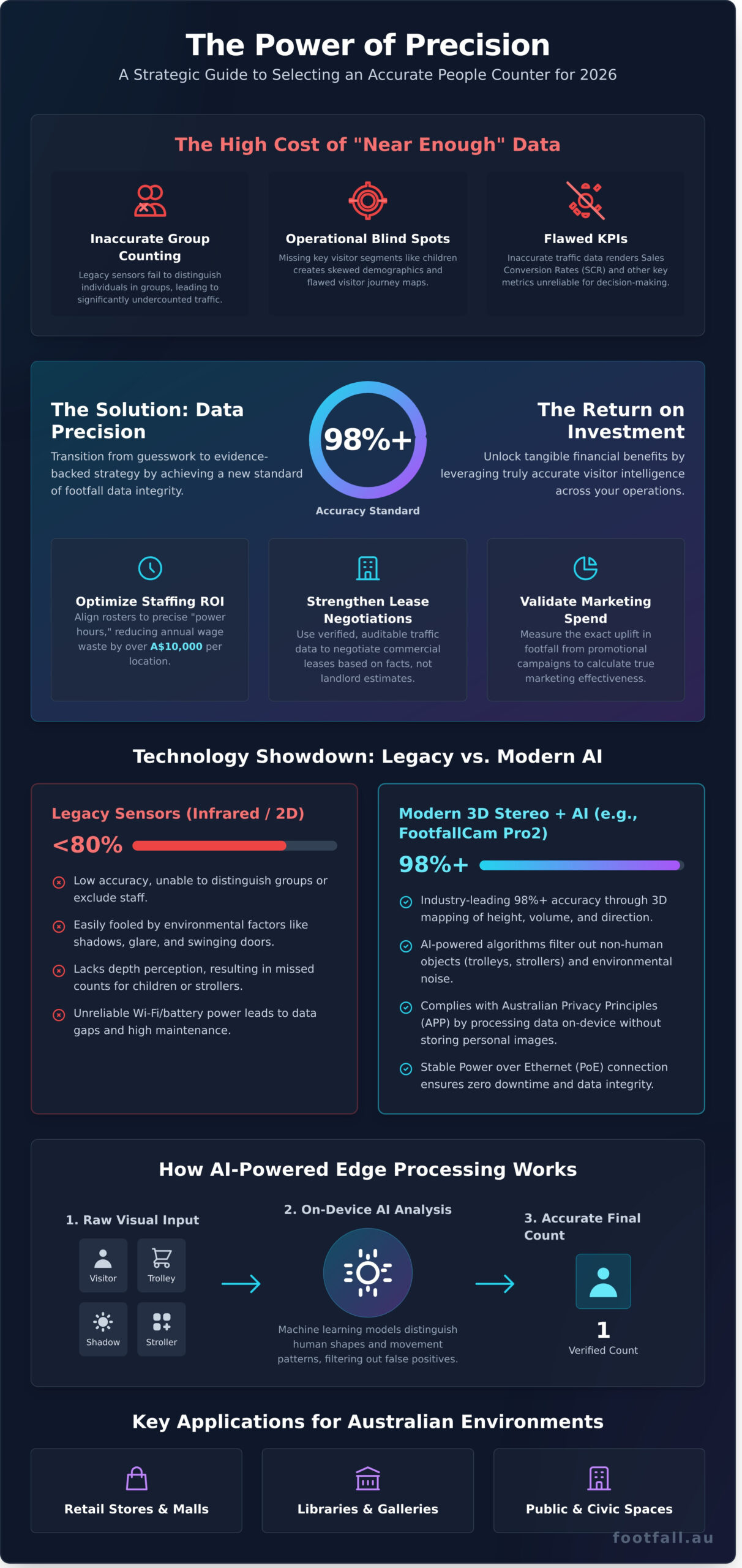
In the competitive Australian retail landscape, “near enough” is no longer good enough. Relying on data with a 5% error margin might seem negligible, but for a high-volume storefront, this discrepancy can ruin your staffing ROI. When decision-makers work with inflated or deflated figures, they risk misallocating labor hours, leading to either avoidable wage waste or lost sales due to poor service. An accurate people counter device transforms raw footfall into a strategic asset, moving beyond simple headcounts to decode the sophisticated visitor journey.
Precision is the foundation of a reliable Sales Conversion Rate (SCR). If your traffic data is skewed, your SCR becomes a fiction rather than a KPI. Understanding people counting technology allows businesses to validate data-driven decisions with quiet confidence, ensuring that every shift in strategy is backed by hard evidence rather than optimistic guesswork.
The ROI of 98%+ Accuracy
The financial impact of precision is most visible in labor optimization. With Australian retail award rates, overstaffing by just one person during a misidentified “quiet” period can cost a business upwards of A$10,000 annually per location. High-fidelity traffic timestamps allow managers to identify “power hours”-the precise windows where high-value traffic peaks-ensuring peak performance when it matters most.
- Staffing Efficiency: Aligning rosters with 98%+ accurate traffic flows to reduce A$ leakage.
- Lease Negotiations: Using verified data to negotiate commercial lease renewals in major Australian malls based on actual entrance traffic rather than landlord estimates.
- Marketing Validation: Measuring the exact uplift in footfall following localized promotional campaigns.
Beyond Retail: Accuracy in Libraries and Public Spaces
For the public sector, an accurate people counter device is a tool for transparency and safety. Public libraries and galleries across Australia rely on audited visitor statistics to secure essential government funding. Inaccurate reporting can lead to budget shortfalls that impact community services. Furthermore, precise real-time data is critical for managing occupancy limits to ensure safety compliance in high-traffic civic spaces.
Whether managing a boutique or a regional gallery, the goal remains the same: transforming movement into actionable intelligence. For more on specialized applications, explore our insights on Visitor Counting for Libraries & Museums.
Decoding the Technology: AI vs. 3D Stereo vs. Time-of-Flight
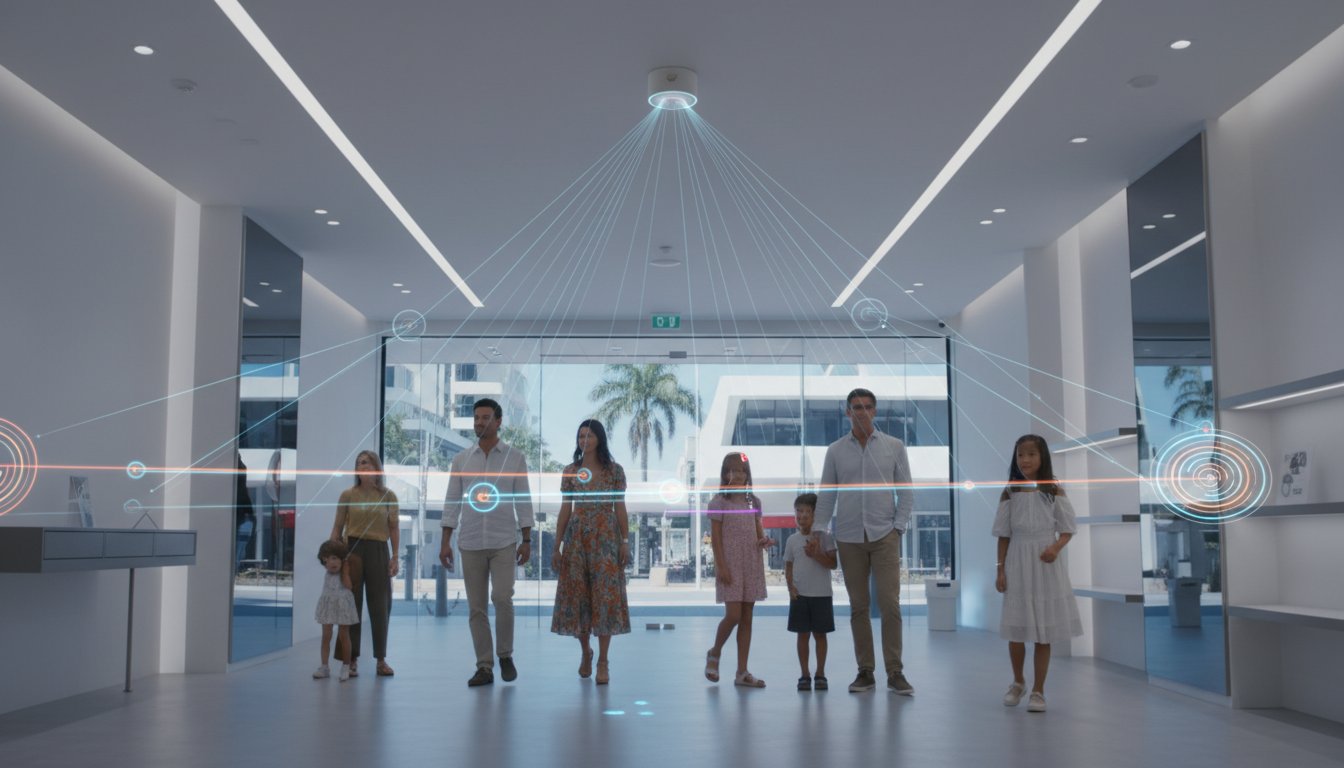
In 2026, the landscape of spatial analytics has moved decisively beyond simple beam-breaking. Legacy 2D and infrared sensors are no longer sufficient for modern commercial needs; they lack the depth perception required to distinguish between a group of shoppers and a single person, or even a swinging door. To deploy a truly accurate people counter device, businesses now rely on 3D Stereo Vision and Time-of-Flight (ToF) sensors. These technologies create a three-dimensional map of the entrance, ensuring that height, volume, and directionality are factored into every count.
Stability is the backbone of data integrity. Modern installations prefer Power over Ethernet (PoE), which provides a dedicated, hardwired connection for both power and data. This eliminates the common pitfalls of battery-operated or Wi-Fi-dependent sensors, such as signal dropouts or maintenance downtime. When verifying people counter accuracy, industry research highlights that environmental variables-such as fluctuating light levels and complex movement patterns-are the primary drivers of data discrepancy in inferior hardware.
AI-Powered Edge Processing
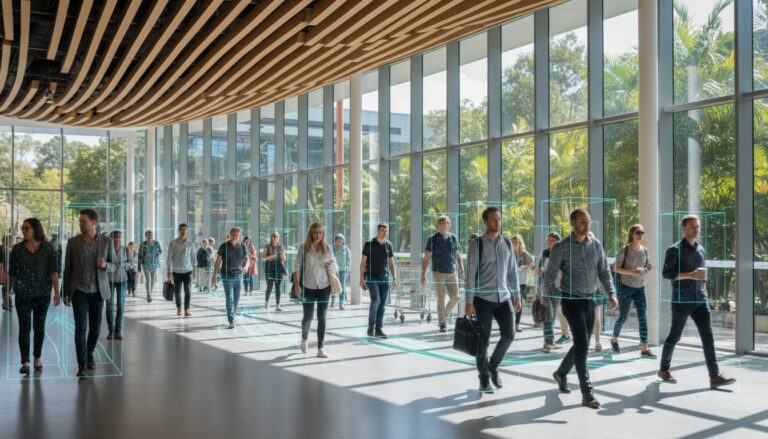
The Footfall Australia Pro2 utilizes edge computing to process visual data locally on the hardware itself. By leveraging advanced machine learning, the device distinguishes between human visitors and non-human objects like shopping trolleys, strollers, or cleaning equipment. For Australian retailers, whose storefronts often feature high-glare glass and intense natural light, our “shadow removal” algorithms are essential. They ensure that moving shadows or reflections are filtered out, providing an accurate people counter device performance that reflects genuine foot traffic rather than environmental noise.
Privacy by Design and APP Compliance
Maintaining public trust is as important as data precision. Our technology is engineered to meet the Australian Privacy Principles (APP) through a “Privacy by Design” framework. It is vital to understand the distinction between facial detection and facial recognition:
- Facial Detection: Identifies a human head and shoulders to verify a count (Anonymised).
- Facial Recognition: Identifies and tracks specific individuals (Intrusive).
Footfall Australia strictly employs the former. The sensor converts video frames into anonymised data strings instantly at the edge. No video footage or Personal Identifiable Information (PII) is ever recorded or transmitted, ensuring total compliance with Australian regulations while delivering the strategic insights necessary for growth.
Selecting the Optimal Device for Australian Environments
Selecting an accurate people counter device requires more than just technical specifications; it demands a deep understanding of the physical environment. In Australia, where architectural designs often feature expansive glass facades and varied ceiling heights, a one-size-fits-all approach is insufficient. To maintain data integrity, businesses must account for several critical variables:
- Entrance Geometry: While a single doorway is easily monitored, wide-open mall facades require sensors with a broad field of view or “daisy-chained” configurations to eliminate blind spots.
- Ceiling Heights: Ultra-high ceilings in transit hubs or low-clearance boutique entries require specific lens focal lengths to ensure the sensor captures the necessary depth for 3D counting.
- Lighting Conditions: The harsh Australian sun creates high-contrast shadows and glare near glass entries. Advanced hardware leverages computer vision and deep learning methods to filter out these environmental anomalies, ensuring the count remains precise regardless of the time of day.
- Durability and IP Ratings: For outdoor precincts or coastal retail strips, devices must possess high IP ratings (typically IP65 or higher) to withstand dust, moisture, and salt air.
Retail and Shopping Centre Configurations
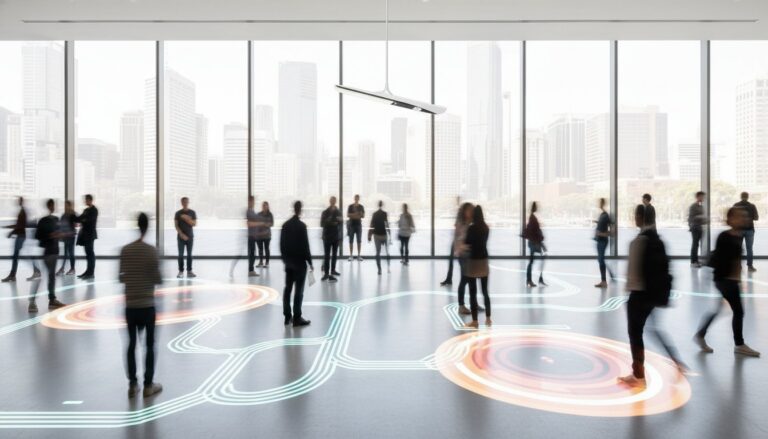
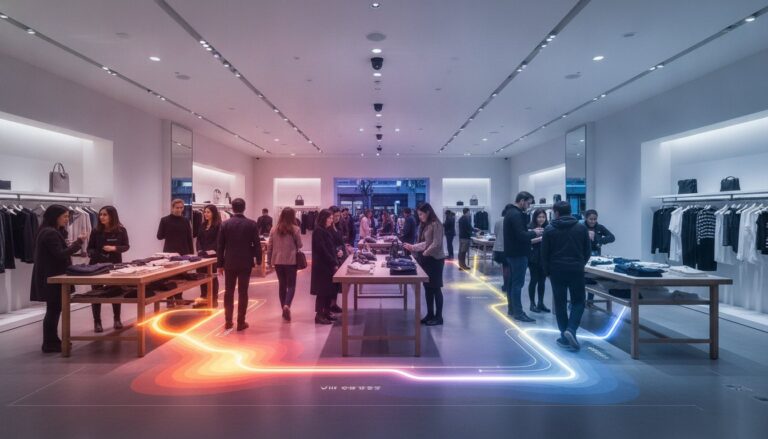
High-density environments like Sydney CBD or Melbourne Central require sophisticated spatial analytics. For wide-area coverage, FootfallCam Centroid allows management to leverage existing CCTV infrastructure, transforming standard video feeds into actionable traffic data. By integrating multiple sensors across various zones, retailers can create a seamless “global” view of the visitor journey, identifying high-dwell zones and bottlenecks in real-time. This ensures that even in massive shopping centres, every accurate people counter device contributes to a unified data ecosystem.
Smart Offices and Space Utilization
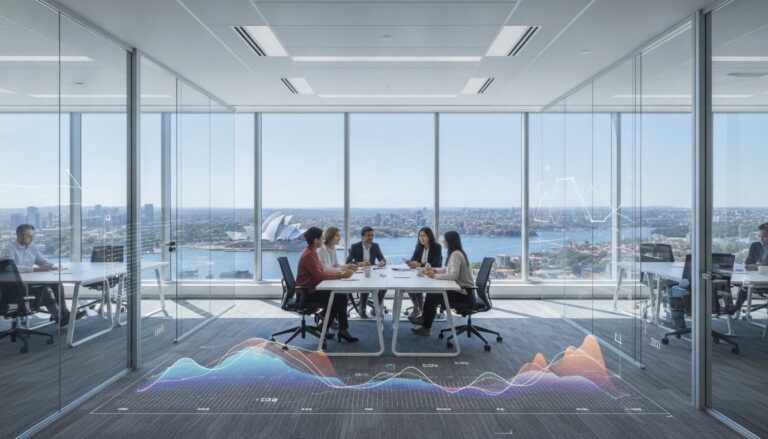
Modern Australian workplaces are pivoting toward high-granularity monitoring to drive efficiency. High-precision sensors can monitor individual desk and meeting room occupancy, providing the evidence needed for Smart Office Space Optimisation. Beyond simple headcounts, this data allows facility managers to automate building systems. By adjusting HVAC and lighting based on real-time human presence, businesses can achieve significant reductions in operational overheads, often saving thousands in annual energy costs while maintaining a comfortable environment for staff.
The Accuracy Audit: How to Verify and Maintain Performance
Investing in an accurate people counter device is the first step toward data-driven management, but maintaining that precision requires a structured audit process. Data integrity is not a “set and forget” metric; it is a living standard that must be verified against real-world human movement to ensure your strategic decisions are based on evidence rather than approximation.
This commitment to precision extends to all industrial operations. From retail logistics relying on accurate scales to heavy industry requiring specialized services like concrete batching plant calibration Australia, maintaining calibrated equipment is fundamental to operational integrity.
The cornerstone of this process is Video Validation. This involves comparing manual headcounts against the system’s digital logs. By reviewing time-stamped video, our technicians ensure the AI correctly identifies unique entries while ignoring non-human objects like strollers or security pedestals. Remote calibration is essential for day-one precision, allowing for fine-tuning without on-site disruptions. This proactive approach accounts for environmental shifts-such as new store lighting or seasonal layout changes-that could otherwise compromise your spatial analytics.
Step-by-Step Verification Protocol
To guarantee the highest level of data reliability, follow this streamlined verification sequence:
- Manual Sample: Perform a 15-minute manual count during peak traffic periods to establish a baseline of actual footfall.
- Cross-Reference: Compare your manual tally against the analytics dashboard logs to identify any variance in the accurate people counter device performance.
- Remote Optimization: Adjust “counting lines” and “exclusion zones” via software to filter out staff movement or reflections from new glass displays.
Long-term Maintenance and the Legacy Swap Out
To maintain peak intelligence, sensors require periodic firmware updates that refine their AI object-recognition capabilities. If your current hardware frequently miscounts or fails to distinguish between groups, it likely lacks the processing power required for modern retail. Our Legacy Swap Out Plan provides a clear path for Australian businesses to upgrade older, less reliable systems to high-precision 3D sensors.
For national Australian rollouts, a Premium Support Plan is vital. This ensures that your entire fleet remains synchronized and accurate, providing a seamless flow of actionable insights across every location. Whether you are managing a single site or a nationwide network, ongoing technical support acts as the final safeguard for your data integrity. For more information on maintaining your system, visit footfall.au.
Future-Proofing Your Business with Footfall Australia
The Australian retail landscape is evolving rapidly, and staying competitive requires more than just intuition; it demands precision. As we look toward 2026, the FootfallCam Pro2 has established itself as the industry benchmark for reliability. This accurate people counter device provides the granular data necessary to navigate shifting consumer patterns with confidence. Whether you are managing a single boutique in Perth or overseeing a national franchise, the system offers seamless scalability, ensuring your analytical capabilities grow alongside your footprint.
True business intelligence emerges when data silos are broken down. By integrating footfall metrics with your existing POS and ERP systems, you achieve a 360-degree view of your operations. This alignment allows you to calculate exact conversion rates, optimise staff rosters against peak traffic, and justify marketing spend with hard evidence. Partnering with Footfall Australia ensures that this high-tech innovation is backed by local expertise and Australian-based support, providing a bridge between complex spatial analytics and practical retail application.
The FootfallCam V9 Software Ecosystem
Data is only valuable if it leads to action. The FootfallCam V9 software ecosystem translates raw counts into sophisticated heatmaps and dwell time reports, revealing how visitors interact with your physical space. Automated reporting features ensure that regional managers and stakeholders receive consistent, evidence-based insights directly to their inboxes. For enterprises requiring a bespoke setup, our robust API integrations allow for the seamless export of data into custom business intelligence dashboards, centralising your strategic planning.
Getting Started with a National Partner
Successful implementation requires a partner who understands the local terrain. We provide professional installation services across all major Australian cities, ensuring your hardware is positioned for maximum field-of-view accuracy. Our team specialises in customised solution designs that address unique architectural challenges-such as high vaulted ceilings or wide open-front entrances-ensuring every accurate people counter device is calibrated for the specific nuances of your site.
Stop relying on guesswork and start leading with logic. Enquire about a high-accuracy people counting solution for your business today and secure the data-driven future of your enterprise.
Transforming Foot Traffic into Actionable Strategy
In 2026, the gap between business intuition and operational excellence is bridged by data. As we have explored, the implementation of an accurate people counter device is the foundational step toward mastering spatial analytics and understanding the nuances of the visitor journey. By leveraging advanced AI and 3D stereo technologies, your organization can move beyond simple headcounts to capture the intelligence required for precise labor optimization and conversion growth.
Choosing the right technology is only half the battle; ensuring it remains calibrated for the unique demands of the Australian environment is what secures your long-term ROI. Since 2004, Footfall Australia has supported Australian businesses with sophisticated solutions that guarantee 98%+ accuracy through meticulous professional calibration. Our systems are engineered to be fully compliant with Australian Privacy Principles (APP), providing you with a secure, ethical, and evidence-based framework for decision-making.
Don’t leave the performance of your physical space to chance. Request a Custom Quote for Your People Counting System today and empower your business with the clarity it deserves. We look forward to helping you navigate the future of retail and public spaces with quiet confidence and scientific precision.
Frequently Asked Questions
How accurate are modern people counter devices in real-world conditions?
Modern technology has advanced significantly, with high-end sensors achieving accuracy levels of 98% or higher. An accurate people counter device utilizes sophisticated algorithms to filter out non-human objects like shopping carts, strollers, or shadows. This precision ensures that your conversion rates and staff scheduling are based on reliable evidence rather than estimates. In real-world retail environments, these devices maintain high performance despite varying light levels or high-density foot traffic.
What is the difference between a 3D stereo vision counter and a 2D sensor?
A 3D stereo vision counter employs dual lenses to perceive depth, much like the human eye. This allows it to distinguish between objects of different heights and volumes, providing superior accuracy in crowded areas. In contrast, 2D sensors rely on a single lens and flat image processing, which often leads to errors when people walk close together. For Australian businesses requiring precise spatial analytics and dwell time data, 3D technology is the industry standard.
Can people counters distinguish between adults and children?
Yes, advanced sensors use height-based filtering to differentiate between adults and children. By setting specific height thresholds, the system can exclude children from your primary footfall data, ensuring your sales conversion metrics remain focused on potential buyers. This capability is essential for retailers who want to understand the true intent of their visitors and refine their marketing strategies based on adult customer behaviour and the human journey through the store.
Do people counting devices record video for surveillance purposes?
Professional sensors are designed with “privacy by design” principles. They do not record or store identifiable video footage for surveillance. Instead, the device processes visual data locally to identify human shapes and converts that movement into anonymous data points. This approach ensures full compliance with the Australian Privacy Act while providing the deep insights needed to optimise your business operations without compromising visitor anonymity or data security.
How high can a people counter be mounted while maintaining accuracy?
Mounting heights vary depending on the specific lens and sensor model. Standard devices typically operate optimally between 2.5 and 4.5 metres. However, specialised high-ceiling sensors can be mounted up to 10 metres or more while remaining an accurate people counter device. It is crucial to select the correct lens configuration for your ceiling height to ensure the field of view covers the entire entrance without losing the resolution required for precise counting.
Is a Wi-Fi connection required for an accurate people counter to work?
While some models offer Wi-Fi connectivity, a wired Power over Ethernet (PoE) connection is generally recommended for maximum reliability. A wired connection ensures consistent data transmission and provides power to the device through a single cable. This setup minimises the risk of signal interference or dropouts, which is critical for maintaining a continuous and accurate stream of visitor data for your strategic analytical reports and real-time occupancy monitoring.
What happens to the data if the internet connection goes down?
High-quality sensors include internal memory to cache data locally in the event of a network outage. Once the internet connection is restored, the device automatically synchronises and uploads the stored data to the cloud or your local server. This fail-safe mechanism prevents any loss of information, ensuring your long-term historical trends and daily performance metrics remain complete and reliable even during temporary technical disruptions to your local network.
How much does a professional people counting system cost in Australia?
In the Australian market, a professional-grade 3D sensor typically costs between A$1,200 and A$2,500 per entrance, including hardware and initial configuration. Many businesses also opt for a managed software subscription, which can range from A$30 to A$80 per month. This investment provides the actionable insights and technical support necessary to transform raw footfall numbers into a strategic advantage, helping you stay ahead of shifting consumer trends in physical retail.