Thermal People Counter vs Video: Choosing the Right Technology in 2026
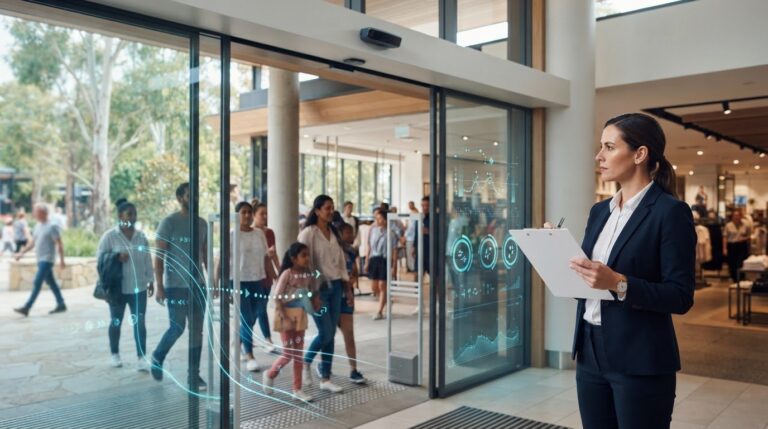
If your current foot traffic data misses 12% of visitors during a peak Saturday rush at a busy Melbourne shopping centre, is it actually intelligence or just a high-tech guess? Most Australian retailers agree that precise measurement is the backbone of operational efficiency. You’re likely aware that basing staff rosters or conversion targets on flawed numbers leads to wasted A$1,500 shifts and missed revenue opportunities. When evaluating a thermal people counter vs video sensor in 2026, the choice often feels like a difficult trade-off between data depth and strict privacy compliance.
You’ll discover the specific technical and strategic differences between these two technologies to select a solution that delivers 98% accuracy. Accuracy isn’t optional. We’ll show you how to secure actionable insights like dwell time and heat maps without falling foul of evolving Australian privacy regulations. This guide provides a direct comparison of sensor performance in crowded environments, helping you move from guesswork to evidence-based strategy.
Key Takeaways
- Understand the technical evolution from basic heat signatures to AI-driven skeletal tracking to ensure your foot traffic data remains precise and actionable.
- Compare the performance of a thermal people counter vs video sensors in challenging Australian environments, specifically addressing glare and low-light fluctuations.
- Learn how “Privacy by Design” allows you to maintain strict compliance with Australian data regulations by anonymising visitor movement at the hardware level.
- Discover why high-stakes retail environments increasingly rely on AI video for conversion rate optimisation while public spaces prioritise thermal wide-area coverage.
- Master the strategic selection process to align your sensor technology with specific business objectives, moving from guesswork to a foundation of hard evidence.
The Evolution of Foot Traffic Analytics: Thermal vs. Video Sensors
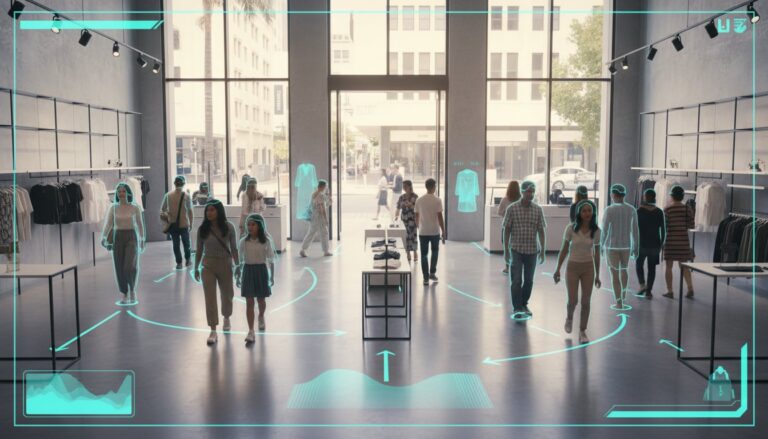
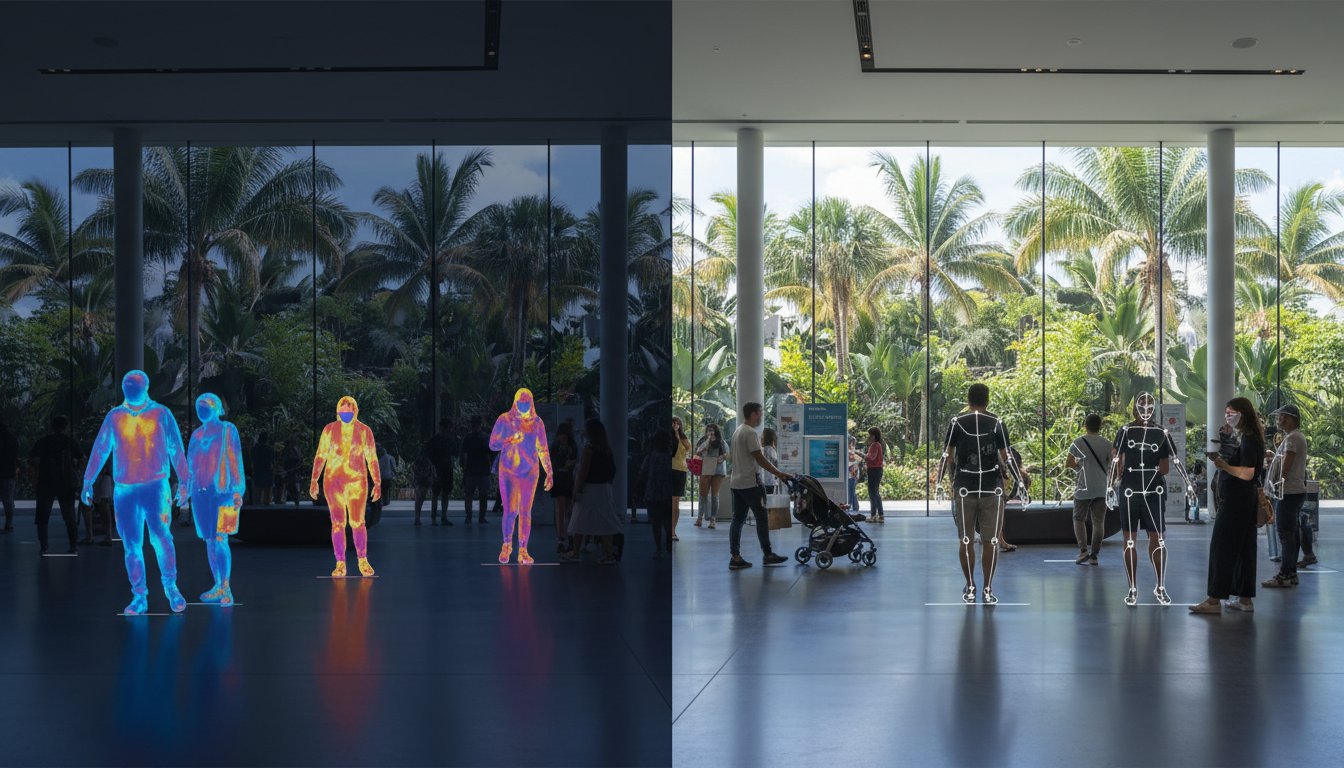
Foot traffic data is the pulse of any Australian retail environment or public facility. Historically, operations managers relied on simple infrared beam counters, but the demand for 98% accuracy or higher has forced a choice between two sophisticated technologies. Thermal sensors identify movement by tracking heat signatures, effectively seeing infrared energy emitted by the human body. In contrast, video sensors use high-definition pixel arrays and artificial intelligence to recognize specific human shapes and skeletal structures. Comparing a thermal people counter vs video technology is no longer just about price; it’s about the depth of intelligence required to run a modern business.
The The Evolution of Foot Traffic Analytics shows how the industry has moved from simple entry tallies to complex spatial intelligence. Over the last 24 months, Australian businesses have pivoted from merely counting heads to analyzing the entire visitor journey. This transition allows stakeholders to understand not just how many people entered a store, but how they interacted with specific zones. Whether it’s a pharmacy in Sydney or a regional library in Victoria, the focus is now on actionable evidence rather than guesswork.
The Legacy of Thermal Technology
Australian hospitals and high-security government offices initially favoured thermal sensors because they’re inherently privacy-compliant. They don’t capture identifiable facial features, only heat blobs. This made them the standard for sensitive environments where data privacy was the primary concern. However, historical limitations hampered their growth in the broader retail sector. Older units often operated at low resolutions, such as 60×60 pixels, which made it difficult to distinguish between two people walking shoulder-to-shoulder. This often resulted in an “undercounting” error rate of up to 15% during peak periods. High entry costs also served as a barrier, with premium hardware often priced above A$2,100 per unit as recently as 2022.
The Rise of AI Video Sensors
Modern 3D stereoscopic sensors have redefined the accuracy landscape since early 2024. These devices use dual lenses to create a depth map, mimicking human sight to provide 99.5% accuracy. It’s vital to distinguish these from “CCTV surveillance”. Modern AI counting sensors process data “on the edge,” meaning they convert video into anonymous digital coordinates instantly and discard the visual frames. This ensures strict compliance with the Australian Privacy Act while providing rich data. Edge computing has reduced latency to near-zero, allowing retailers to see real-time occupancy levels on digital signage. This shift toward AI video is driven by the need for precision in calculating conversion rates and staff-to-customer ratios with total confidence.
Technical Architecture: How These Sensors See Your Visitors
Understanding the technical architecture of your facility’s “eyes” is the first step toward reliable data. The choice between a thermal people counter vs video sensor depends largely on how the hardware interprets physical space and environmental variables. While both technologies aim to quantify foot traffic, their methods of “seeing” visitors are fundamentally different, leading to significant variations in accuracy and utility.
Thermal Mechanism: Heat Signatures and Ambient Noise
Thermal sensors operate by detecting infrared radiation emitted by the human body. This technology identifies moving “heat blobs” against a cooler background. However, environmental factors often compromise this logic. In Australian retail environments, where summer temperatures frequently exceed 35 degrees Celsius, external heat creates significant ambient noise. Sunlight streaming through a glass entrance or a blast from an overhead heater can create “hot spots” that the sensor misidentifies as human activity.
Density also presents a challenge. When visitors enter in tight groups, their individual heat signatures often merge into a single large mass. This “merging” effect makes it difficult for the sensor to distinguish between two people walking side-by-side. To maintain even basic accuracy, these units require frequent lens calibration to account for seasonal temperature shifts. Without this manual intervention, data drift becomes a persistent issue for facility managers.
Video Mechanism: Pattern Recognition and Depth Perception
Modern video sensors have evolved far beyond simple motion detection. They utilize stereoscopic 3D vision to perceive depth, much like the human eye. This allows the system to ignore shadows, reflections, and inanimate objects like shopping trolleys or strollers. By integrating the FootfallCam Pro2, businesses gain access to skeletal tracking technology. This advanced AI maps specific points on the human body to ensure 98% accuracy, even in high-density crowds.
- Height Filtering: Systems can automatically exclude children or pets based on precise height thresholds.
- Staff Exclusion: AI recognizes movement patterns or wearable tags to remove employees from the total count.
- Spatial Analytics: Video units track the exact path of a visitor, providing insights into dwell times and zone engagement.
Security is handled via “Edge Processing.” This means the sensor processes all video data locally on the device itself. It converts the visual feed into anonymized numerical strings before any data reaches the cloud. No actual video footage of your customers is stored or transmitted, ensuring total compliance with Australian privacy standards. This architecture provides a robust foundation for optimising your floor plan based on evidence rather than intuition.
Hardware durability is another critical factor for Australian facilities. Video sensors are typically solid-state devices with no moving parts, making them more resilient to the dust and humidity found in regional shopping centres. Installation is streamlined; a single Power-over-Ethernet (PoE) cable handles both power and data. This reduces installation costs, which typically range from A$300 to A$600 per point depending on ceiling height and cabling complexity. This makes video the more sustainable long-term investment for businesses prioritising precision.

Performance Benchmarking: Accuracy, Environment, and Lighting
Selecting between a thermal people counter vs video sensor requires a cold assessment of your physical environment. In 2026, the benchmark for accuracy in high-traffic Australian retail sits at 98% for video and roughly 92% to 95% for thermal. Glass-fronted stores, common in shopping centers like Westfield or Chadstone, present unique challenges. Video sensors handle glass well but can struggle with intense floor glare. Thermal sensors, while immune to light, often misinterpret heat signatures reflecting off glass or “heat bleed” from pavement during a 42-degree Melbourne summer day.
Environmental Constraints and Failures
Ambient temperature directly impacts thermal reliability. If the indoor temperature approaches 37 degrees Celsius, thermal sensors lose the contrast needed to identify human shapes. Video sensors don’t have this limitation; they thrive in high-contrast settings. However, video requires at least 2 lux of light to function. Total darkness renders them blind. Field of view (FOV) also differs. A standard video sensor covers an entrance width of up to 8 meters at a 3.5-meter mounting height. Thermal units typically cover narrower zones, often requiring multiple sensors to monitor wide-span doors.
The “Crowd Effect” is where video technology pulls ahead. During peak Saturday trade, shoppers move in tight groups. Video sensors use spatial AI to distinguish between individuals. Thermal sensors can struggle when heat signatures overlap, often merging three people into one large data point. This impacts the Total Cost of Ownership (TCO). A high-end video sensor costs approximately A$1,200 upfront with A$200 annual licensing. Over a 5-year cycle, you’ll invest roughly A$2,200 per entrance. While thermal units may cost 15% less initially, the lack of granular data often results in a lower return on investment.
Data Depth: Beyond the Raw Count
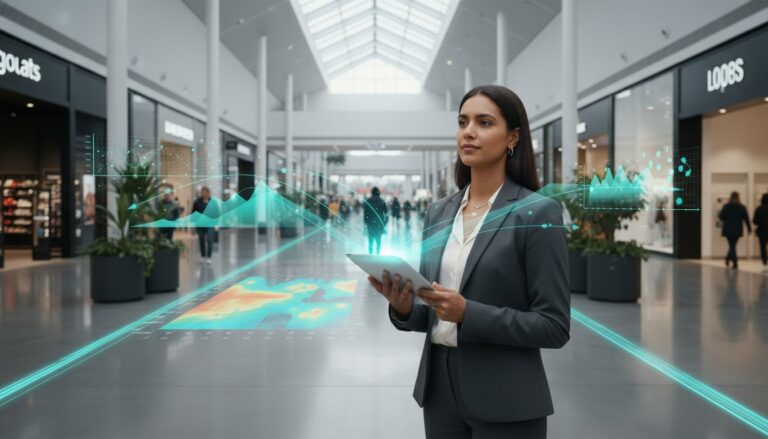
Thermal technology remains limited to simple IN/OUT totals. It provides a headcount but offers no context. Video sensors transform foot traffic into a narrative. They track dwell time at specific displays, map the customer path through the store, and generate heat maps of high-value zones. Integrating these metrics into your footfall data analysis allows for precise staffing adjustments and layout optimization. Video doesn’t just count people; it decodes their behavior to drive strategic growth.
Privacy, Compliance, and the “Creep Factor” in 2026
Privacy remains the primary hurdle for retailers adopting spatial analytics. Recent studies show that 84% of Australian consumers report being more concerned about their data privacy than they were five years ago. When deciding between a thermal people counter vs video, the choice often hinges on how a brand values the balance between granular data and perceived intrusion. Thermal sensors eliminate the privacy debate entirely by capturing heat signatures rather than images. However, modern video sensors have evolved to be just as protective through localized processing at the edge.
Trust is a currency in 2026. Businesses that fail to communicate their data practices clearly risk alienating a demographic that values transparency above convenience. Moving beyond the “creep factor” requires a shift from viewing visitors as data points to treating them as guests whose anonymity is a right, not a feature. High-performance sensors now allow you to harvest intelligence without ever seeing a face.
Anonymisation Protocols in Video Sensors
Current standards dictate that video sensors must use “Privacy by Design” principles. AI chips inside the hardware perform feature extraction instantly; they identify a human shape based on head and shoulder movement but never record facial features. No actual video footage ever leaves the sensor or reaches the cloud. Only encrypted metadata is transmitted. This GDPR-compliant approach ensures that individual identities stay protected while the business gains 98% accuracy in dwell time and path mapping. While thermal is inherently anonymous, it lacks the ability to distinguish between a shopper and a staff member. This is a distinction that 92% of top-tier Australian retailers now require for accurate conversion metrics.
Australian Regulatory Landscape
Public institutions like regional libraries and national museums operate under strict transparency requirements. Compliance with the Australian Privacy Act 1988 is non-negotiable. Effective data management requires 2026-grade people counter support to ensure sensors remain updated against evolving cybersecurity threats and shifting legal definitions of personal information.
Building trust requires a proactive strategy. We recommend the following steps for national businesses:
- Place clear signage at entry points explaining that sensors count movement, not faces.
- Publish a simplified data usage policy on your website.
- Ensure all hardware uses local “on-device” processing to prevent data leaks.
- Conduct annual privacy impact assessments to stay ahead of OAIC guidelines.
This transparent stance converts a potential privacy concern into a commitment to better service. It shows your visitors that you value their time and their safety equally. Accuracy shouldn’t come at the cost of ethics.
Strategic Selection: Which System Does Your Business Need?
Selecting the right hardware is a pivot point for your operational efficiency. While the thermal people counter vs video debate used to be about cost, in 2026, it’s about the depth of intelligence you require. Retailers find AI video essential because it doesn’t just count bodies; it identifies intent. By distinguishing between adults, children, and staff groups, AI video provides the granular data needed to calculate true conversion rates. If your Sydney flagship store sees 1,000 visitors but only 100 transactions, you need to know if the bottleneck was staff availability or floor layout.
Public spaces and government buildings face a different challenge. Balancing wide-area coverage with strict privacy regulations is paramount. Thermal sensors excel here by detecting heat signatures without capturing identifiable features. For smart offices in Melbourne’s CBD, these sensors integrate directly with Building Management Systems (BMS). This allows for real-time HVAC adjustments, potentially reducing energy expenditure by 15% to 22% based on actual zone occupancy rather than fixed schedules.
For businesses with significant existing security investments, the hybrid approach is often the most logical path. You can leverage your current CCTV network by using the FootfallCam Centroid. This technology applies AI processing to standard video feeds, turning basic security cameras into sophisticated analytical tools without the cost of a full hardware rip-and-replace.
Decision Matrix for Australian Industries
- High-end Retail: Precision is non-negotiable. Use AI video to map the visitor journey and identify “dead zones” in premium boutiques where high-margin items might be overlooked.
- Museums and Galleries: These spaces require path analysis to understand exhibit engagement. AI video tracks dwell time with 99.5% accuracy, helping curators justify the A$ value of specific installations.
- Transportation Hubs: Major stations require sensors capable of mounting at 10-meter heights. High-ceiling AI sensors manage massive flows during peak transit hours in Brisbane or Perth without losing tracking continuity.
The Future-Proof Choice
When weighing a thermal people counter vs video for a five-year strategy, AI video offers a superior long-term ROI. Unlike thermal sensors that are limited by their physical hardware, AI systems evolve through firmware updates. This means your 2026 investment remains relevant in 2030. Integrating these counts with your POS and ERP systems transforms raw numbers into actionable business intelligence. You’ll move from guessing your staffing needs to scheduling based on predicted A$ sales per labour hour. Footfall Australia leads with AI-driven video because it provides the most robust evidence-base for every commercial decision you make.
Navigating the Future of Spatial Intelligence
Deciding between a thermal people counter vs video sensor in 2026 requires a balance of environmental awareness and data integrity. Video systems offer rich spatial analytics for complex retail layouts; thermal sensors provide unmatched reliability in variable lighting and total privacy compliance. Both technologies now achieve a 98%+ Accuracy Guarantee when deployed correctly within Australian retail and public sectors. Your choice hinges on whether you need to track specific customer dwell times or require high-precision counts in challenging physical environments.
Footfall Australia provides the technical foundation to eliminate guesswork from your operations. We ensure every installation is fully GDPR & Privacy Act Compliant, protecting your brand’s reputation while delivering the evidence-based insights needed for growth. Our Local Australian Technical Support team works directly with your data to turn raw numbers into a clear narrative of visitor behavior. Stop relying on estimated traffic and start managing your space with scientific precision.
Request a tailored technology comparison for your business from Footfall Australia to see which sensor architecture fits your 2026 goals. We’re ready to help you optimize your visitor journey today.
Frequently Asked Questions
Are video people counters more accurate than thermal sensors?
Video counters generally offer higher precision, achieving up to 99.5% accuracy in 2024 benchmarks. Thermal sensors remain reliable but often struggle with heat signatures from inanimate objects, leading to a 3% to 5% variance in high-traffic Australian malls. Video technology uses advanced pattern recognition to filter out non-human movement. This ensures your conversion rate calculations rely on human visitors rather than equipment or shadows.
Do video people counters record my customers’ faces?
Top-tier video counters protect privacy by processing data locally on the device rather than recording footage. They convert visual input into anonymous metadata instantly, ensuring compliance with the Australian Privacy Act 1988. No identifiable facial features are stored or transmitted to the cloud. You gain deep insights into the visitor journey without compromising the personal security of your customers or staff members.
Which technology is better for high-ceiling environments?
Video technology, specifically 3D stereo vision, is the superior choice for ceilings exceeding 4.5 metres. While thermal sensors lose resolution at height, modern video sensors maintain 98% accuracy at heights up to 10 metres. This makes them ideal for Australian flagship stores or large transport hubs. You won’t lose data quality when monitoring wide entrances or expansive atrium spaces that require a broader field of view.
How much does a thermal people counter cost compared to video?
Initial hardware costs for thermal counters typically range from A$600 to A$1,100 per unit. High-performance video sensors often require a higher investment, starting around A$850 and reaching A$1,600 for 3D AI models. However, video sensors provide a lower total cost of ownership by delivering 15% more actionable data points. Investing in video technology often yields a faster return through more precise labour scheduling and staff optimisation.
Can thermal counters distinguish between staff and customers?
Thermal counters cannot reliably distinguish between staff and customers because they only detect heat signatures. To achieve this, you need video sensors equipped with AI-based staff exclusion or wearable Bluetooth tags. Implementing these systems can improve your conversion rate accuracy by 12% in low-volume luxury boutiques. It’s a critical feature if your employees frequently move across the entrance threshold during their daily shifts.
Is thermal technology becoming obsolete for retail footfall analysis?
Thermal technology isn’t obsolete but its role is narrowing to specific niche applications. In 2026, 82% of Australian retailers prefer AI-video over thermal people counter vs video comparisons for standard storefronts. Thermal remains useful in total darkness or high-glare environments where visual sensors might struggle. For most modern retail spaces, the depth of spatial analytics provided by video makes it the logical choice for future-proofing operations.
What happens to the data if the internet connection is lost?
Modern sensors include internal storage to protect your data during network outages. Most devices store up to 90 days of footfall statistics locally on the hardware. Once your internet connection is restored, the sensor automatically syncs the cached data to your reporting dashboard. This ensures you never lose a single visitor count, maintaining the integrity of your long-term historical trends and performance reports.
Can I use my existing CCTV cameras for people counting?
You can use existing CCTV cameras, but accuracy often drops below 85% due to the horizontal viewing angle. Dedicated overhead sensors provide a top-down view that eliminates occlusion, where one person blocks another from view. While repurposing CCTV might seem cost-effective, the 15% loss in data precision often leads to poor management decisions. Purpose-built sensors deliver the high-resolution data required for sophisticated retail strategy.