Best People Counter Solutions for Australian Businesses
Did you know the Australian market for traffic intelligence is projected to reach $77.1 million by 2029? This rapid growth reflects a fundamental shift from management by intuition to decisions backed by empirical evidence. You likely understand the frustration of relying on legacy beam counters that distort your conversion rates and leave you unable to justify staffing rosters during peak periods. Finding a reliable people counter Australia wide is the first step toward reclaiming control over your store performance.
In this article, you’ll discover how advanced technology transforms raw footfall into actionable business intelligence to improve conversion rates and operational efficiency. We will examine the latest innovations in privacy-compliant optical tracking and explain how tools like the FootfallCam Pro2 and V9 Software provide the enterprise-wide visibility needed to stay ahead of shifting consumer trends.
Key Takeaways
- Distinguish between legacy hardware and modern optical sensors to ensure your spatial occupancy data remains accurate and actionable for long-term planning.
- Evaluate site-specific architectural factors, such as ceiling height and entrance width, when selecting a high-performance people counter Australia solution.
- Correlate physical footfall with point-of-sale transactions through native API integrations to benchmark marketing ROI and store conversion rates.
- Centralise multi-site performance analytics using cloud-based software to optimise workforce management and justify staffing rosters against empirical traffic peaks.
Evaluating People Counter Technology for Australian Commercial Environments
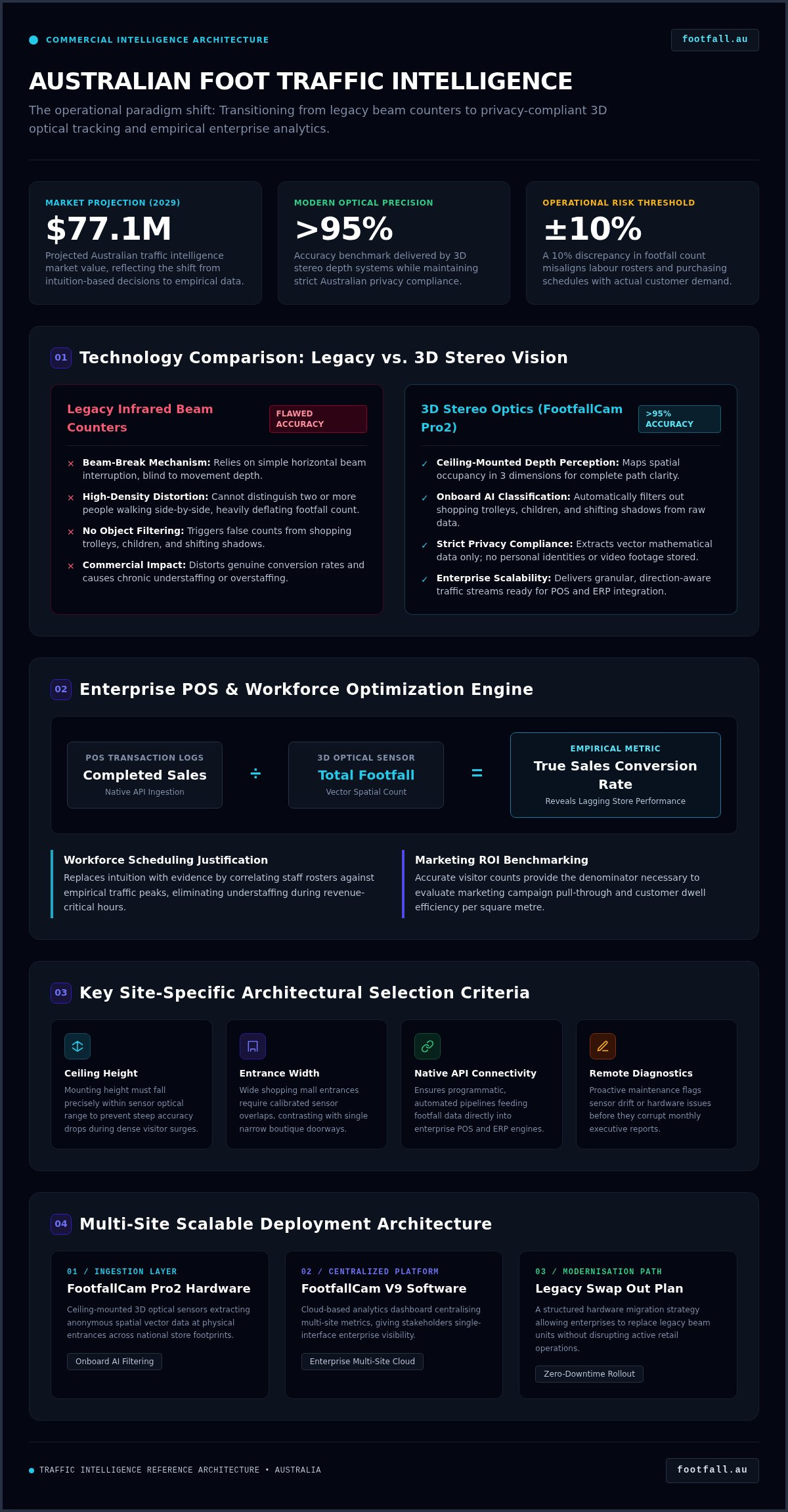
Modern people counters are no longer simple tally tools. They’re dedicated optical devices designed to calculate spatial occupancy and movement direction with surgical precision. For a reliable people counter Australia provides, the focus has shifted toward systems that interpret human action rather than just counting breaks in a light beam. Inaccurate footfall data leads to flawed commercial staffing and purchasing decisions. If your data is off by even 10%, your labour costs or stock levels will quickly become misaligned with actual demand. Relying on intuition in a data-rich environment is an operational risk that modern enterprises can no longer afford.
The evolution of people counting technologies has moved from basic mechanical triggers to sophisticated AI-driven vision. Changing visitor behaviour, such as unpredictable dwell times and group shopping, demands real-time footfall metrics. You need to see how people flow through physical premises to optimise the environment effectively. This visibility allows you to transform physical space into a measurable asset, ensuring every square metre contributes to your bottom line.
Comparing Legacy Infrared Sensors with 3D Stereo Vision Systems
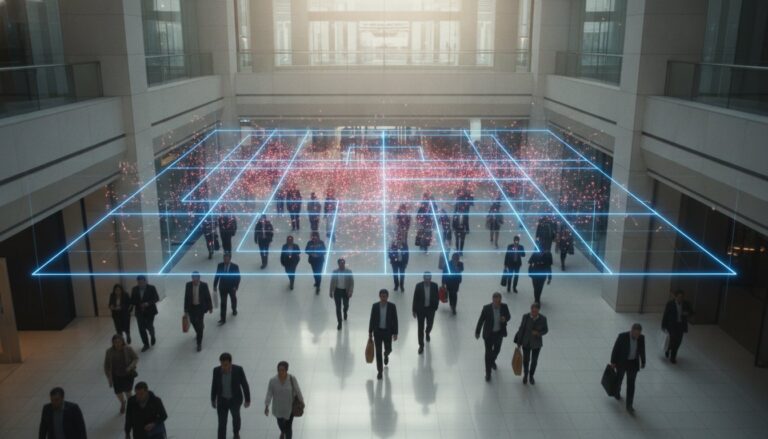
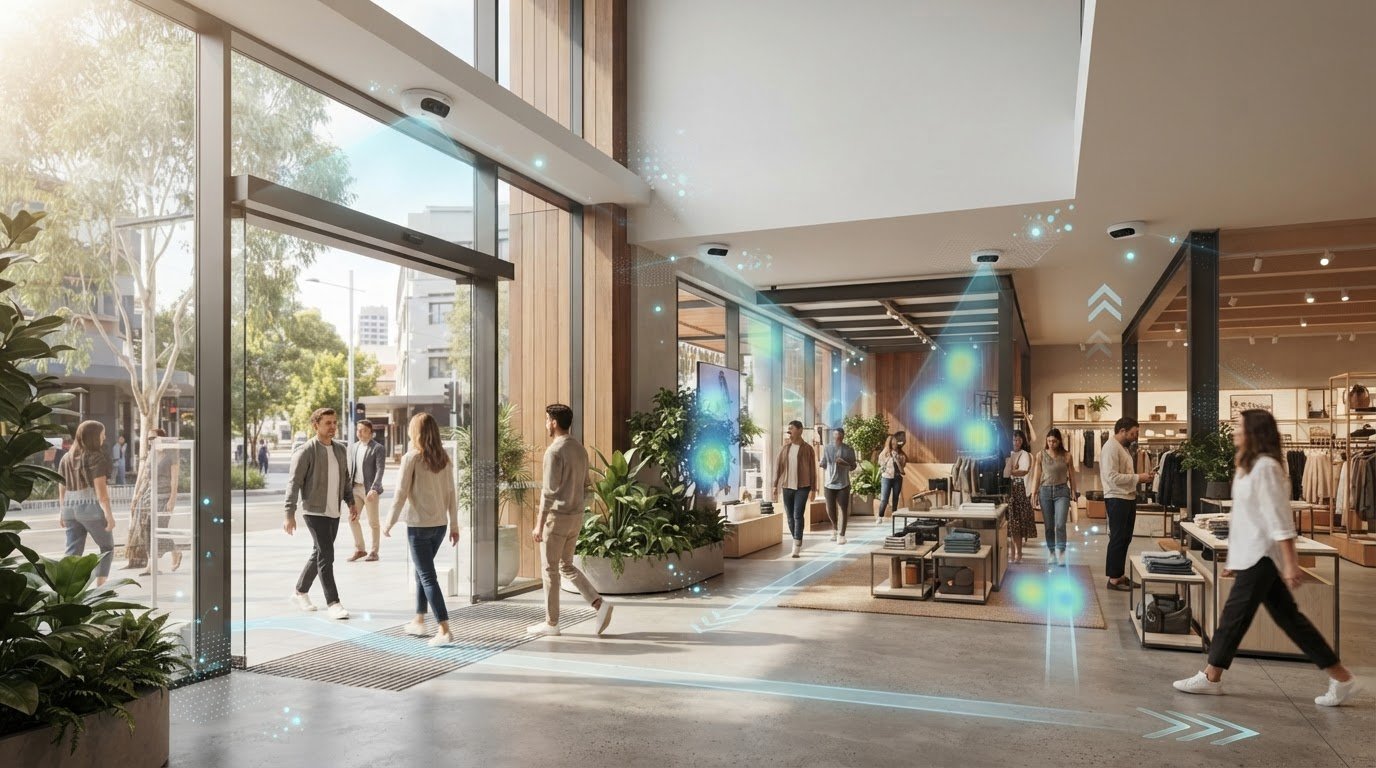
Legacy infrared sensors rely on horizontal beams. These fail during high-density movement because they can’t distinguish between two people walking side-by-side. Ceiling-mounted stereo optics, such as those found in the FootfallCam Pro2, solve this by using depth perception to map the environment in three dimensions. Onboard AI filters out non-human elements like shopping trolleys, children, and shifting shadows. Crucially, these systems ensure privacy compliance. They extract vector data for analysis without storing personal identities or video footage. This approach meets Australian privacy standards while maintaining accuracy rates often exceeding 95%.
Key Criteria for Selecting a People Counting System in Australia
Selecting a people counter Australia businesses can trust requires a thorough evaluation of site-specific physical constraints. You must assess entrance width, ceiling height, and ceiling architecture before committing to hardware. A wide mall entrance requires different sensor overlaps than a narrow boutique door. If the mounting height is outside the sensor’s optimal range, accuracy drops significantly during high-traffic events. It’s about matching the optics to the environment to ensure the data remains reliable.
Connectivity and support are just as vital as the physical install. Require native API connectivity so you can correlate foot traffic directly against point-of-sale transactions. This integration turns raw numbers into strategic assets. You should also verify the vendor’s remote diagnostic capabilities. Systems that offer proactive maintenance ensure long-term data integrity by flagging issues before they impact your monthly reporting. This level of precision is becoming standard in Australian infrastructure, where a smart system uses thermal imaging cameras to manage high-density pedestrian flow with absolute reliability.
Integrating Foot Traffic Metrics with Enterprise POS and Workforce Platforms
Calculating genuine sales conversion rates is impossible without integrating visitor data with your transaction logs. By dividing completed sales by total footfall, you identify exactly where store performance lags. This logic allows you to align staff rosters with empirical peak hours, ensuring you aren’t understaffed when demand spikes. It’s about replacing guesswork with evidence. When choosing a people counter Australia operations can scale, consult The Definitive Guide to People Counting Systems in Australia (2026) for detailed procurement steps. If you’re looking to refine your store analytics, exploring advanced traffic sensors is a logical next step.
Implementing Scalable Foot Traffic Solutions Across Australian Operations
Deploying a robust footprint across multiple locations requires hardware engineered for precision and scale. Specialised devices like FootfallCam Pro2 People Counters deliver the granular data stream required to evaluate national operations accurately. Centralising these multi-site performance analytics occurs within the cloud-based FootfallCam V9 Software dashboard, providing stakeholders with enterprise-wide visibility from a single interface. For organisations burdened by older, inaccurate sensors, leveraging the Legacy Swap Out Plan offers an efficient pathway to modernise outdated infrastructure without disrupting daily operations. This structured migration pattern ensures a seamless transition to high-fidelity data collection for any commercial network seeking a dependable people counter Australia platform.
Ensuring Long-Term Data Integrity with Enterprise Support Plans
Data precision diminishes over time without structured oversight and calibration. Maintaining continuous audit validation and software updates via a Basic or Premium Support Plan safeguards your hardware investment against environmental shifts. If a complete hardware overhaul isn’t immediately viable across all properties, you can repurpose existing IP video streams into analytics sensors using FootfallCam Centroid. This hybrid approach mitigates the infrastructure costs and deployment friction often associated with the challenges of using smart technologies in complex commercial environments. Strategic oversight ensures your business views physical presence as a sequence of human actions to be optimised. Ready to optimise operations? Explore people counting systems from Footfall Australia today to establish an empirical foundation for your physical footprint.
Optimising Your Physical Footprint with Data-Driven Logic
Accurate traffic intelligence is no longer a luxury; it’s a foundational requirement for physical commerce. Transitioning from legacy beam sensors to enterprise-grade 3D stereo vision eliminates the guesswork that plagues conversion reporting and staff scheduling. Integrating these metrics ensures every operational decision is backed by empirical evidence. Footfall Australia has served the national commercial market continuously since 2004. Our proprietary hardware and FootfallCam V9 Software provide the transparency needed to interpret human movement as strategic actions. With a dedicated nationwide partner network, you receive the support required for seamless multi-site deployment. It’s time to replace intuition with accuracy.
Upgrade your traffic intelligence with Footfall Australia today. Finding the right people counter Australia partner ensures your data remains a high-value asset for years to come.
Frequently Asked Questions
How accurate are modern overhead people counting systems in high-traffic commercial venues?
Modern systems like the FootfallCam Pro2 achieve accuracy rates typically exceeding 95% by using 3D stereo vision. Unlike legacy beam counters, these overhead sensors use depth perception to distinguish individual visitors even in dense crowds. This precision ensures your conversion metrics remain reliable during peak seasonal sales or major marketing events across any commercial site.
Can people counting systems distinguish between entering customers and on-duty retail staff?
Advanced systems use AI-based filtering and specialized exclusion logic to remove staff from customer counts. By identifying specific movement patterns or using wearable tags, a people counter Australia businesses deploy can provide a clean data set. This allows management to calculate genuine sales conversion rates without the noise of employee movements distorting the final figures.
What happens if our building changes network providers or experiences an internet outage?
High-quality hardware includes internal storage to cache footfall data locally during connectivity interruptions. Once the internet connection is restored, the device automatically syncs the stored records with the FootfallCam V9 Software dashboard. This fail-safe mechanism prevents data gaps, ensuring your long-term traffic trends and historical benchmarks remain intact regardless of temporary infrastructure failures.
Is customer privacy protected when using video-based people counters in Australia?
Customer privacy is a core design feature of modern optical sensors. These devices process images locally to extract anonymous vector data and then discard the video stream immediately. No personally identifiable information is stored or transmitted, ensuring compliance with the Privacy Act 1988. This approach protects consumer anonymity while providing the high-fidelity metrics needed for operational growth.