Footfall Data for Multi-Store Locations: The 2026 Strategic Guide
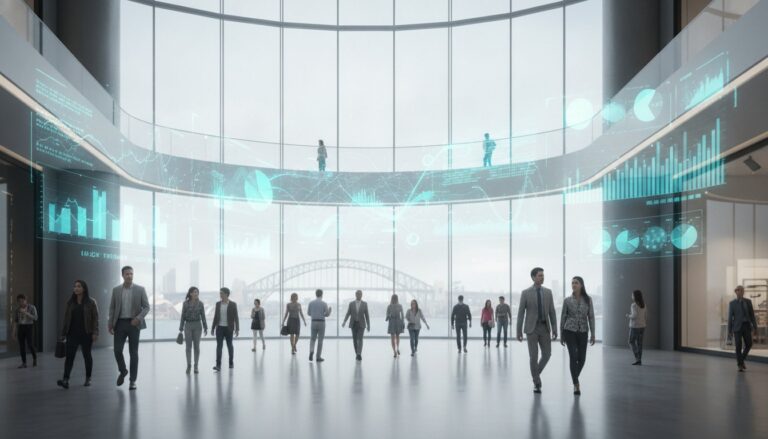
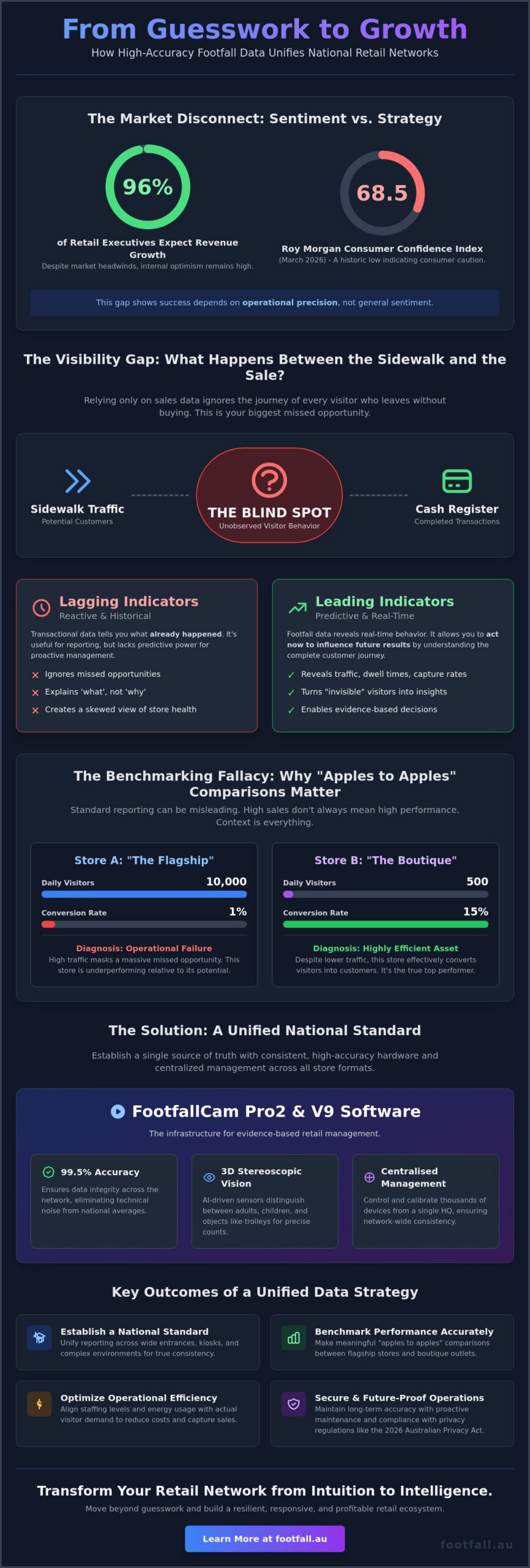
While the Roy Morgan consumer confidence index dropped to 68.5 in March 2026, 96% of retail executives still expect revenue growth this year. This discrepancy highlights a critical reality for national retailers: success in a volatile market depends on operational precision rather than general sentiment. You likely recognize the frustration of seeing inconsistent performance across different store formats or facing high operational costs without a clear understanding of why certain sites underperform. Relying on intuition to manage a complex network often leads to missed opportunities and inefficient resource allocation. Leveraging high-accuracy footfall data for multi-store locations provides the empirical evidence needed to move beyond guesswork and establish a single source of truth for your entire organization.
We understand that managing human movement at scale requires a balance of technical innovation and practical application. This strategic guide explores how to unify your retail network, benchmark performance across diverse regions, and use AI-driven insights to optimize staffing and marketing. You’ll learn to identify the specific behaviors that drive sales conversion while maintaining strict compliance with the 2026 Australian Privacy Act reforms. This article provides a clear framework for making evidence-based decisions that transform raw traffic into measurable growth through the intelligent application of the FootfallCam Pro2 2025 and V9 software ecosystem.
Key Takeaways
- Bridge the visibility gap by moving beyond lagging transaction indicators to observe the human behavior behind every store visit.
- Establish a reliable national standard with footfall data for multi-store locations to unify reporting across wide entrances, kiosks, and complex retail environments.
- Learn how to benchmark performance accurately across your network, allowing for meaningful comparisons between flagship stores and smaller boutique outlets.
- Optimize operational efficiency by aligning staff levels and energy usage with actual visitor demand to reduce costs and capture more sales opportunities.
- Secure the long-term accuracy of your insights through proactive maintenance and the strategic replacement of fragmented legacy hardware.
The Visibility Gap in Multi-Store Management
Many national retail networks operate with a significant visibility gap. This gap represents the blind spot between the sidewalk and the cash register, where the vast majority of customer behavior remains unobserved. While a sale provides a definitive data point, it doesn’t explain the journey of the visitors who entered the store but left empty-handed. Relying solely on transactional data creates a skewed perspective of store health, as it ignores the missed opportunities occurring every hour of the operational day.
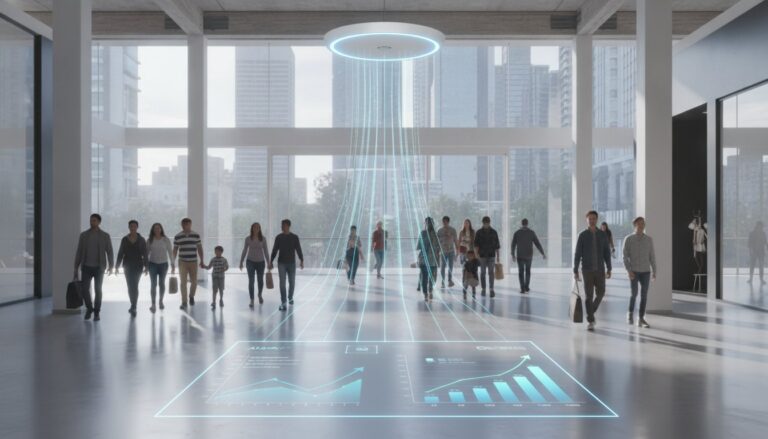
Transactional data is a lagging indicator. It tells you what happened in the past, but it lacks the predictive power required for proactive management. It’s impossible to diagnose why a store is underperforming if you only see the end result. In contrast, People counting systems offer leading indicators by revealing real-time traffic volume, dwell times, and capture rates. Implementing footfall data for multi-store locations allows management to see the full narrative of movement within their spaces, transforming “invisible” visitors into actionable insights.
The challenge for national managers often lies in balancing standardized brand guidelines with highly localized footfall patterns. A layout that works in a high-street flagship might fail in a suburban mall kiosk because the flow of human movement is fundamentally different. Without granular visibility, headquarters may inadvertently enforce rigid policies that stifle local performance. Data-driven logic provides the bridge between these two worlds, ensuring that brand standards are maintained while allowing for evidence-based local adjustments.
Why Standardised Reporting Fails Without Context
From Intuition to Evidence-Based Logic
Moving away from gut feel is essential for modern organizational management. Performance reviews shouldn’t rest on a store manager’s subjective opinion about why a weekend was “quiet.” Instead, empirical evidence provides the quiet confidence required to justify significant operational changes to stakeholders. Whether it’s adjusting opening hours to match actual demand or reallocating staff to handle peak periods, every decision becomes a logical extension of observed behavior. This evidence-based approach ensures that multi-site investment decisions are backed by reality rather than intuition, leading to a more resilient and responsive retail network.
Building a Unified Infrastructure with FootfallCam Pro2
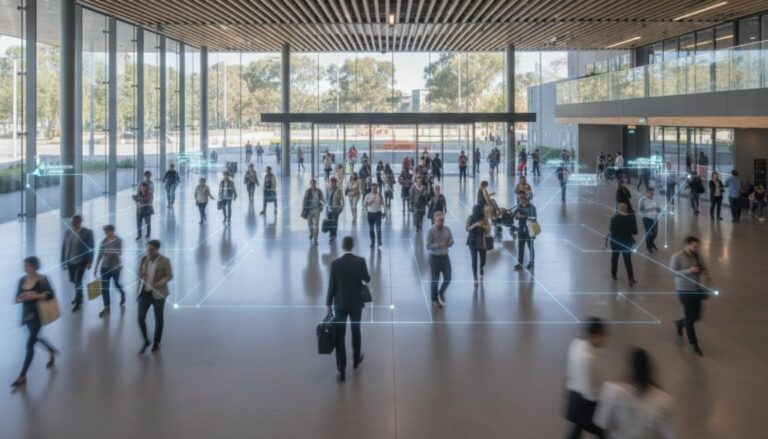
Establishing a unified infrastructure across a national network requires hardware that delivers consistency regardless of the store format. The FootfallCam Pro2 has emerged as the national standard for Australian retailers because it eliminates the variability often found in fragmented systems. Whether monitoring a wide-entry flagship store or a compact mall kiosk, these AI-driven sensors use 3D stereoscopic vision to distinguish between adults, children, and inanimate objects like shopping trolleys. This level of precision is vital. When managing footfall data for multi-store locations, a minor discrepancy in one site can skew national averages. Maintaining 99.5% accuracy ensures that your benchmarking remains untainted by technical noise.
Centralised management is the cornerstone of a resilient retail infrastructure. It’s no longer practical to manage devices individually or rely on local store managers for data uploads. A robust system allows you to control a thousand devices from a single headquarters, ensuring every sensor is calibrated and functioning correctly. This level of oversight is a prerequisite for effective Operational Optimisation, as it provides the reliable foundation needed to enhance customer retention and store efficiency across the entire brand portfolio. Reliable data isn’t just a metric; it’s the infrastructure of growth.
FootfallCam V9: The Centralised Analytics Hub
Centroid and Pro3 AI: Enhancing Existing Infrastructure
For locations where installing new sensors isn’t immediately feasible, FootfallCam Centroid offers a sophisticated alternative. It leverages existing CCTV infrastructure, using an AI box solution to extract high-accuracy footfall data from standard video feeds. This is particularly useful for complex site layouts where traditional mounting positions are limited. These systems are designed with privacy-first architecture, processing data locally to ensure compliance with the 2026 Australian Privacy Act reforms. If you’re ready to unify your network, exploring a tailored sensor deployment is the first step toward total visibility.
Benchmarking Performance Across Your National Network
Comparing a sprawling flagship store in the Sydney CBD to a boutique outlet in a regional center often leads to the “Apples to Apples” problem. Revenue figures alone fail to account for the vastly different traffic opportunities available to each site. By implementing footfall data for multi-store locations, you can normalize performance metrics across your entire network. This approach allows you to rank stores by their efficiency in capturing and converting visitors rather than just their total turnover. It reveals which managers are truly maximizing their local potential and which high-revenue sites are actually underperforming relative to their massive street traffic.
Identifying the “Power Hours” for each specific location provides the foundation for precise resource allocation. These are the windows where visitor density is at its peak, requiring maximum staff presence and optimized energy usage. Using retail footfall analysis Australia helps you set realistic sales targets that reflect the actual opportunity on the ground. Instead of applying a flat growth percentage across the board, you can assign targets based on verified traffic trends. This level of granular benchmarking ensures that your national strategy remains grounded in the physical reality of each individual marketplace.
The Sales Conversion Rate Framework
Success in multi-store management follows a logical formula: Traffic multiplied by Conversion Rate multiplied by Average Transaction Value (ATV). When a high-traffic store fails to meet its revenue goals, footfall analytics help you diagnose the root cause. You can determine if the issue lies in a poor store layout that creates bottlenecks, inadequate staffing during peak periods, or a mismatch in stock levels. In 2026, a competitive sales conversion benchmark for Australian specialty retail sits at approximately 20%, providing a clear baseline for evaluating network health. Identifying stores that fall below this mark allows for targeted interventions that address specific behavioral friction points.
Zone Strength and Heatmapping
Optimizing merchandising across dozens of locations requires an understanding of how customers move through different departments. Dwell time data and heatmapping reveal which zones draw the most attention and which remain “dead space.” This evidence allows you to A/B test store layouts on a small scale before rolling out changes nationally. You might discover that a specific product placement drives a 5% increase in dwell time in your Melbourne stores, providing the confidence to implement that layout across the rest of the country. This iterative process turns every store into a laboratory for movement-based optimization, ensuring that your national brand standards are always evolving based on empirical success.
Operational Optimisation: Staffing and Marketing at Scale
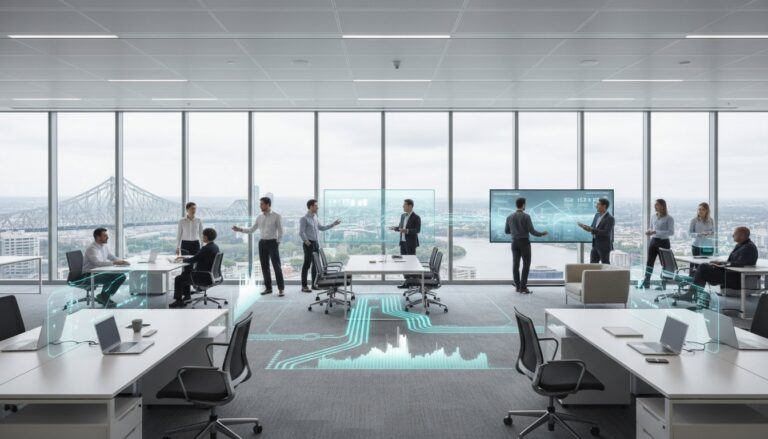
Operational efficiency at the national level requires more than just standard operating procedures; it demands a real-time alignment of resources with human movement. By integrating footfall data for multi-store locations, retailers move away from static rosters based on historical sales and toward dynamic scheduling based on actual visitor demand. This shift addresses the high operational costs associated with overstaffing during quiet periods while ensuring that high-traffic “power hours” are sufficiently covered. When you observe the narrative of movement across fifty or one hundred sites, you gain the ability to pinpoint exactly where labor is being wasted and where it’s desperately needed to capture sales.
Beyond staffing, these insights provide a powerful lever for lease management. Using people counting systems Australia allows national managers to validate rent negotiations with empirical evidence. If a shopping centre claims a specific footfall volume to justify high premiums, you can counter with your own verified capture rates and external traffic data. This transparency ensures you only pay for the actual opportunity provided by the location. If you’re looking to refine your operational overheads, request a consultation for a national rollout to see how data-driven logic can protect your margins.
Data-Driven Staff Scheduling
Calculating the optimal staff-to-customer ratio is a brand-specific science. For a luxury retailer, the ratio might be one staff member for every three visitors; for a high-volume discounter, it could be one to fifteen. Footfall analytics allow you to maintain these ratios consistently across the network. By reducing overstaffing during low-traffic Tuesday mornings and reallocating those hours to busy Saturday afternoons, you protect the customer experience without increasing the total wage bill. This proactive approach prevents “walk-outs” caused by long queues or unassisted shoppers, directly improving the conversion DNA of every site.
Validating Marketing ROI Nationally
National marketing campaigns often suffer from a lack of local accountability. By comparing pre-campaign and post-campaign footfall at every location, you see which regions respond best to specific promotional triggers. This data allows you to allocate future marketing spend based on “growth potential” rather than simply repeating last year’s budget. If a digital campaign drives a 10% traffic increase in Queensland but only 2% in Victoria, you have the evidence to adjust your regional strategy. This ensures every marketing dollar works to drive physical presence where it has the highest likelihood of resulting in a transaction.
Future-Proofing Operations with Footfall Australia
A national retail network is a living organism, and its health depends on the continuous flow of accurate information. Establishing a foundation of footfall data for multi-store locations is only the first step. Long-term success requires a commitment to data integrity through a robust national support network. Sensors in a Perth flagship must deliver the same level of precision as those in a Sydney boutique to ensure that national benchmarking remains valid. Without proactive maintenance and calibration, even the most advanced systems can suffer from drift, leading to a slow erosion of the evidence-based logic that drives your organization.
Data loses its utility if it doesn’t lead to a specific, positive change in operations. Future-proofing your network means moving beyond simple data collection and toward a model of constant optimization. This requires a partner that understands the technical nuances of human movement and the logistical challenges of managing a distributed infrastructure. By prioritizing reliability and integration, you ensure that your investment in analytics continues to pay dividends as consumer behaviors shift and new regulatory requirements, such as the 2026 Australian Privacy Act reforms, take effect.
The Legacy Swap Out Strategy
Fragmented hardware is the primary cause of “dirty data” in large-scale retail environments. Many organizations struggle with a mix of old infrared beams, basic 2D cameras, and modern AI sensors, making it impossible to achieve a unified view of performance. The Legacy Swap Out Plan addresses this challenge directly by providing a structured path to modernize your entire ecosystem. Transitioning to a unified hardware standard eliminates technical discrepancies and reduces the total cost of ownership by simplifying maintenance. A single, high-accuracy sensor type across all sites ensures that your comparative analysis is always based on a consistent, reliable metric.
Support and Maintenance for Data Integrity
Maintaining 99.5% accuracy across hundreds of sites requires more than occasional check-ins. It demands a systematic approach to people counter support. Depending on your operational needs, choosing between Basic and Premium support plans allows you to scale your oversight. Premium plans often include remote health checks and proactive sensor recalibration, ensuring 24/7 visibility across all time zones without requiring local store managers to intervene. This centralized technical oversight guarantees that your footfall data for multi-store locations remains a trustworthy source of truth for every stakeholder in the company.
Ready to unify your data and eliminate the visibility gaps in your network? Contact Footfall Australia for a national audit and discover how a standardized analytics infrastructure can transform your retail operations.
Mastering the Narrative of Movement
Mastering a national retail network in 2026 requires moving beyond the visibility gap of transactional data. By identifying the conversion DNA of your top-performing sites, you can replicate success across every region. High-accuracy footfall data for multi-store locations provides the empirical foundation needed to optimize staffing, validate marketing ROI, and benchmark performance with quiet confidence. This evidence-based approach ensures that every operational change is a logical extension of observed human behavior.
Trusted by Australian retailers since 2004, Footfall Australia provides the technical innovation and practical support required for large-scale deployments. Whether you’re upgrading fragmented systems through our Legacy Swap Out Plan or implementing the FootfallCam Pro2 with its 99.5% accuracy guarantee, you’re investing in a single source of truth for your organization. It’s time to replace intuition with accuracy and future-proof your network against shifting behavioral trends. Optimise Your Multi-Store Network with Footfall Australia today and lead your brand toward a more resilient, data-driven future.
Frequently Asked Questions
How does footfall data differ between a flagship store and a smaller outlet?
Flagship stores typically experience high traffic volumes due to prime locations, yet they often report lower conversion rates compared to smaller outlets. Smaller boutique stores usually attract more intentional shoppers, resulting in higher efficiency despite lower visitor numbers. Analysing footfall data for multi-store locations allows you to move past total revenue and evaluate each site based on its unique conversion DNA and local market potential.
Can I integrate footfall data with my existing POS system for multi-store reporting?
Yes, integration is a standard feature of the FootfallCam V9 software ecosystem. By combining visitor counts with transaction data, you can calculate precise sales conversion rates for every store in your network. This integration transforms raw traffic numbers into a critical performance metric, allowing national managers to identify which stores are successfully turning browsers into buyers and which require operational adjustments.
What is the most accurate way to count people across multiple entrances?
The most reliable method involves deploying 3D stereoscopic sensors, such as the FootfallCam Pro2, across all entry points. These devices are synchronized to function as a single system, ensuring that a visitor who enters through one door and exits through another is only counted once. This unified approach eliminates the risk of double-counting, providing a clean and accurate dataset for complex retail layouts.
How does the FootfallCam V9 software handle data from different time zones?
The V9 software automatically synchronizes data based on the specific geographic coordinates and local time zone of each individual store. This ensures that when you run a national report, the “Power Hours” for a store in Perth are accurately compared against those in Sydney or Brisbane. This automated synchronization is essential for maintaining data integrity when managing a distributed national retail network across Australia.
Is it worth upgrading my old beam counters to AI people counters in 2026?
Upgrading is essential if you require data you can actually trust for strategic decision-making. Legacy infrared beam counters often suffer from high error rates because they cannot distinguish between groups, children, or inanimate objects like shopping trolleys. Modern AI sensors provide the 99.5% accuracy required for reliable footfall data for multi-store locations, ensuring your benchmarking isn’t compromised by technical limitations or “dirty data.”
How can multi-store footfall data help in lease negotiations with landlords?
Footfall analytics provide empirical evidence to challenge or validate the traffic claims made by shopping centre landlords. By presenting your own verified capture rates and external traffic counts, you can negotiate rent based on the actual opportunity the location provides. This transparency ensures that lease costs remain aligned with the physical performance of the site rather than relying on generalized mall-wide estimates.
What support plans are available for national retail chains in Australia?
Footfall Australia offers both Basic and Premium Support Plans tailored to the needs of large-scale deployments. The Premium option includes proactive remote health checks and regular sensor recalibration to ensure 24/7 data integrity. These plans are designed to provide national managers with quiet confidence, knowing that their entire analytics infrastructure is being monitored and maintained by specialists who value accuracy above all else.
How does people counting technology ensure customer privacy across all sites?
Modern sensors prioritize privacy by using edge computing to process data locally on the device itself. Instead of capturing identifiable facial features, the technology interprets human movement as anonymous silhouettes or coordinate points. This approach ensures that your data collection remains fully compliant with the 2026 Australian Privacy Act reforms, protecting consumer anonymity while still delivering the granular insights required for operational optimization.