
How to Convince Your Boss to Buy a People Counter: A Data-Driven Business Case
Retailers typically realize 10% to 20% labor cost savings in the first quarter after aligning their staff schedules with peak footfall data. You’ve likely felt the frustration of staffing for a rush that never arrives or watching potential sales walk out because your team is overwhelmed. Operating on gut feel isn’t just stressful; it’s an expensive liability. Mastering how to convince your boss to buy a people counter requires moving past these anecdotal frustrations and presenting a business case built on undeniable fiscal logic.
Leadership doesn’t buy sensors; they buy certainty and optimization to mitigate the high cost of guesswork. We’ll show you how to transform foot traffic from a nice-to-have metric into a mandatory strategic asset. You’ll learn to build a clear ROI framework, navigate 2026 privacy regulations like the updated CCPA and EU AI Act, and gain the confidence to secure approval for a FootfallCam Pro2 system. This guide provides a structured path from identifying a business blind spot to gaining a permanent strategic advantage through actionable intelligence.
Key Takeaways
- Identify the hidden costs of relying on “gut feel” and learn how to replace anecdotal feedback with objective, 24/7 automated data.
- Master how to convince your boss to buy a people counter by presenting a clear ROI framework that quantifies the value of incremental conversion rate improvements.
- Address executive concerns regarding privacy and accuracy by highlighting the precision of AI sensors over the limitations of standard security cameras.
- Transform visitor traffic into a strategic narrative by decoding human movement into actionable insights that align with core business objectives.
- Leverage the reliability of the FootfallCam Pro2 system, backed by a national support network established in Australia since 2004.
The Hidden Cost of Business Guesswork: Why “Gut Feel” Fails
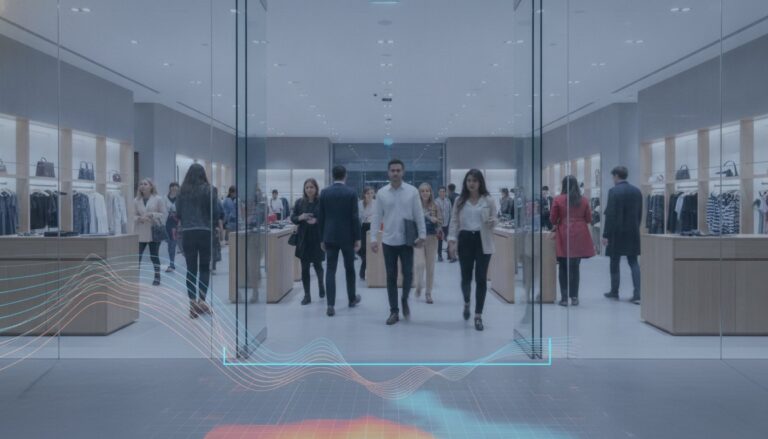
Operating a physical space without precise metrics is like navigating a ship through a storm without radar. While many managers rely on “gut feel” or end-of-day sales reports, these are lagging indicators that obscure the true story of your floor. They fail to capture the 15% of potential customers who walked out because of a long queue or the quiet Tuesday mornings where three extra staff members stood idle. Understanding What is a people counter? is the first step toward closing these visibility gaps. By automating data collection, you transition from subjective anecdotes to an objective, 24/7 reality that captures every missed opportunity.
When you’re researching how to convince your boss to buy a people counter, you must highlight that these blind spots aren’t just operational inconveniences; they’re financial leaks. In 2026, data-driven logic is the minimum standard for competitive retail. If your competitors optimize their layouts based on spatial analytics while you still rely on staff feedback, you’re operating with a significant disadvantage. People counting technology serves as the “eyes” of your business strategy, providing a foundation of evidence that “vibe-based” management can’t match.
The High Price of Inefficient Staffing
Staffing is often your largest operational expense. Overstaffing during lulls wastes capital that could be better spent on inventory or marketing. Understaffing during peak periods is even more damaging; it kills conversion rates and frustrates your most loyal customers. Unpredictable footfall spikes place immense stress on employees, leading to fatigue and decreased performance. By identifying “Power Hours,” the high-traffic windows where revenue potential peaks, you can align your team’s energy with the greatest opportunity. This ensures your highest-performing staff are on the floor exactly when they’re needed most, maximizing every visitor’s value.
Marketing Without Measurement is Speculation
Marketing spend without traffic data is essentially speculation. You might see a 5% lift in sales after a specific campaign, but without knowing if footfall increased, you can’t prove the marketing was the cause. Perhaps your team simply worked harder to convert existing traffic. Footfall data validates the success of expensive campaigns by measuring the actual influx of new visitors. It allows you to calculate True ROI by comparing the cost of the campaign against the physical response it generated. Actionable insights are the bridge between raw data and revenue, turning a list of numbers into a clear directive for future growth and smarter budget allocation.
Strategic Benefits: Aligning Footfall Data with Executive Goals
Executives don’t invest in hardware; they invest in results. To bridge the gap between technical capability and corporate objectives, you must frame retail footfall analysis Australia as a driver of operational excellence. This transition turns raw numbers into a narrative of human behavior. By decoding the visitor journey, you provide leadership with a clear map of how customers interact with physical assets. This clarity empowers store managers to move beyond daily task lists and become “Smart Strategists” who use evidence to justify every floor change or staffing adjustment.
Modern people counting technology integrates seamlessly into existing workflows, ensuring that data is accessible without adding administrative burden. When you’re determining how to convince your boss to buy a people counter, focus on how this integration provides a “single source of truth.” It removes the friction between departments, allowing marketing, operations, and finance to work from the same validated dataset. This alignment is essential for scaling operations efficiently in a competitive 2026 market where precision is the baseline for success.
Optimising Conversion Rates, Not Just Traffic
Total sales figures are a lagging indicator; they tell you what happened, but not what you missed. Conversion rates provide the leading insight. Traffic data identifies the “walk-aways,” those customers who entered your space but left without making a purchase. By quantifying these missed opportunities, you can pinpoint exactly where the sales process failed. This data allows for targeted staff coaching and layout adjustments. If conversion drops during high-traffic periods, it’s a clear signal that staffing levels or queue management needs immediate attention. You can explore our analytical solutions to see how these metrics translate into daily reports.
Spatial Analytics and Asset Management
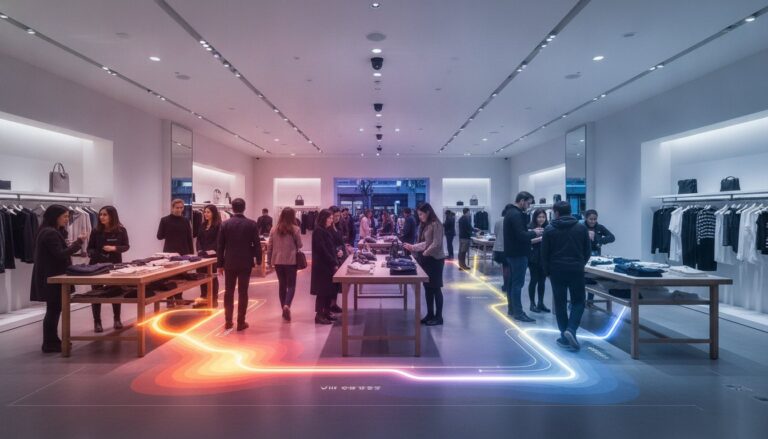
Dwell time and spatial intelligence offer a deeper look at how your physical environment performs. High dwell time in a specific zone indicates strong product interest or a potential bottleneck. Understanding these patterns informs high-stakes decisions regarding product placement and store flow. This spatial intelligence extends beyond retail into libraries, galleries, and corporate offices, where it helps optimize utility costs and space allocation. For those ready to review the technical specifications that make this possible, the FootfallCam Pro2 buying guide provides a detailed breakdown of enterprise-level AI hardware. These sensors offer 98% accuracy, ensuring that your strategic decisions are built on a foundation of precision rather than estimates.

Overcoming Executive Objections: Accuracy, Cost, and Privacy
Executives often view new technology through the lens of redundant costs. A common hurdle in learning how to convince your boss to buy a people counter is the assumption that existing CCTV systems can perform the same task. While security cameras are excellent for loss prevention, they lack the specialized algorithms required for high-precision analytics. Repurposing security footage for traffic data results in significant error margins, often missing up to 30% of actual visitor movement. By contrast, dedicated AI sensors provide the granular intelligence needed for board-level reporting. Understanding how to convince your boss to buy a people counter involves demonstrating that specialized hardware is a prerequisite for accuracy, not an optional luxury.
Frame the purchase not as an added expense, but as a one-time investment that secures recurring returns through optimized operations. Data integrity is the foundation of any strategic initiative. Without reliable figures, your recommendations will always be questioned by leadership. This is why people counter support is critical; it ensures your system remains calibrated and your data remains actionable throughout its lifecycle. This long-term reliability transforms a simple sensor into a permanent pillar of your business intelligence strategy.
Data Integrity and Privacy Compliance
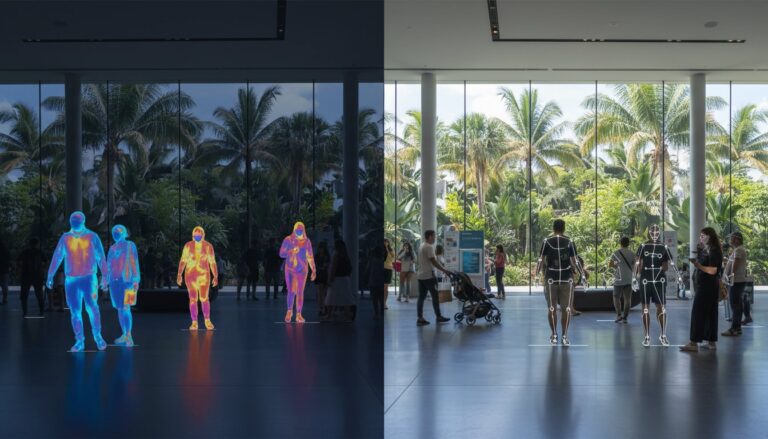
Privacy is a primary concern for leadership, especially with the 2026 updates to the CCPA and existing GDPR standards. Modern people counters utilize “Privacy by Design” to eliminate these risks. Unlike security cameras, these sensors process data locally on the device and don’t store personal imagery. They distinguish between counting movements and tracking individuals, ensuring your business remains compliant with Australian Privacy Principles and international regulations. This anonymous approach allows you to gather deep spatial intelligence without infringing on visitor anonymity, removing a major legal and ethical barrier to implementation.
Accuracy Under Pressure
Board-level decisions require 98% accuracy or higher to be considered valid. AI-driven sensors like the FootfallCam Pro2 excel in complex environments where basic sensors fail. They accurately filter out children, ignore staff members via exclusion tags, and maintain precision in varying light conditions or high-density group entries. If your boss is concerned about investing in technology that might soon become obsolete, mention the Legacy Swap Out Plan. This program allows businesses to modernize their infrastructure without the friction of a full-scale overhaul, ensuring your data collection remains at the cutting edge of industry standards for years to come.
The ROI Framework: Proving the Value in 5 Steps
Proving the financial viability of a new system requires a shift from qualitative benefits to quantitative returns. When you’re preparing how to convince your boss to buy a people counter, follow this five-step ROI framework to build an unshakeable case. This structure moves the conversation away from the “cost” of hardware and toward the “profit” of optimization. Leadership responds to hard numbers, so ensure your presentation focuses on these specific fiscal levers.
- Step 1: Baseline your current conversion rate. Use your existing sales volume and compare it against your “estimated” traffic. Highlighting the uncertainty in these current estimates proves the need for precision.
- Step 2: Quantify the value of a 1% increase in conversion. If a store sees 10,000 visitors monthly with a $50 average transaction, raising conversion by just 1% generates an additional $5,000 in monthly revenue.
- Step 3: Calculate labor savings. Use the industry benchmark of 10% to 20% labor cost savings by aligning staffing levels with actual peak periods rather than static shift patterns.
- Step 4: Factor in marketing spend optimization. Identify campaigns that drive footfall versus those that only drive noise, allowing you to reallocate budget to high-performing channels.
- Step 5: Compare the “Cost of Inaction” against the system price. Show how the daily loss of unmeasured opportunities far exceeds the one-time investment in a sensor.
This calculation is often the final piece of the puzzle for how to convince your boss to buy a people counter, as it demonstrates that the system pays for itself through recovered revenue. You can request a customized ROI calculation to help visualize these returns for your specific locations.
Calculating the “Cost of Inaction”
The “Cost of Inaction” is the financial leak caused by unmeasured store traffic and missed sales opportunities. For example, if a store is understaffed during a two-hour peak, it might lose $500 in potential revenue as frustrated customers walk out. When these incidents occur multiple times a week, the annual loss reaches tens of thousands of dollars. Logic dictates that a system providing the “eyes” to stop these leaks pays for itself within months, not years. It’s an investment in stopping preventable losses.
Long-Term Strategic Advantage
Beyond immediate labor savings, footfall data analysis builds a historical record that informs future planning. This data becomes a significant asset during lease negotiations or when selecting new sites, as it provides hard evidence of a location’s true value. Benchmarking performance across multiple national locations allows leadership to identify high-performing “model” stores and replicate their success. This long-term record transforms your physical space into a measurable, predictable, and scalable corporate asset.
Presenting the Solution: Why Footfall Australia is the Strategic Choice
Success in retail analytics depends on the reliability of your partner as much as the accuracy of your sensors. Footfall Australia has maintained a national presence since 2004, establishing a support infrastructure that ensures data integrity for enterprise clients across the continent. When you present your case, you aren’t just proposing a piece of hardware; you’re suggesting a partnership with an organization that understands the unique pressures of the Australian market. This established history provides the quiet confidence leadership needs to approve a long-term technological investment.
The FootfallCam Pro2 stands as the industry-leading AI hardware, designed specifically to bridge the gap between complex spatial analytics and practical business application. It works in tandem with FootfallCam V9 software to deliver intuitive reporting that translates raw counts into actionable strategic narratives. This seamless marriage of high-tech innovation and accessible reporting empowers you to present clear, evidence-based recommendations to the board every month. It’s a solution that prioritizes clarity over complexity, ensuring your insights are never lost in technical jargon.
Expertise You Can Trust
Our local partner network spans across Australia, ensuring that deployment is seamless and reliable regardless of your location. We operate as High-Tech Consultants rather than simple hardware vendors, focusing on solving specific operational problems through data-driven logic. This commitment to your success is reinforced by our comprehensive support plans, which provide the ongoing calibration and technical oversight necessary to maintain 2026 compliance standards. We ensure your system remains a strategic asset for its entire lifecycle.
Next Steps for Your Pitch
Preparing for the final meeting requires a structured approach to ensure your proposal is received with professional interest. As you finalize your plan for how to convince your boss to buy a people counter, gather these essential components for your presentation:
- Current estimated traffic gaps versus known sales figures.
- Your ROI calculation showing the value of a 1% conversion lift.
- Evidence of vendor reliability, highlighting our two decades of Australian expertise.
If leadership remains cautious about a full-scale rollout, propose a single-site pilot program. This “soft close” allows you to prove the ROI in a controlled environment before expanding the system across your entire portfolio. Contact Footfall Australia for a tailored ROI proposal to show your boss and take the first step toward transforming your business into a data-driven leader.
Securing Your Competitive Edge with Data-Driven Certainty
Transitioning from anecdotal observations to objective data turns your physical space into a measurable asset. You’ve seen how aligning staff with peak hours and quantifying conversion rates provides a clear path to recovered revenue. By utilizing AI technology with 98%+ counting accuracy, you move past the limitations of standard security cameras and enter a realm of strategic precision. This evidence-based approach ensures that every operational change is backed by logic rather than speculation.
Mastering how to convince your boss to buy a people counter is ultimately about shifting the narrative from a hardware purchase to a long-term business investment. Footfall Australia has been a trusted partner for national retail and public sectors since 2004, providing the local expertise needed for reliable deployment and compliance. Don’t let your operations continue in the dark when actionable intelligence is within reach. You have the framework to prove the value; now it’s time to secure the approval.
Request a Business Case Consultation with Footfall Australia to build a tailored proposal that leadership cannot ignore. Start leading with intelligence today.
Frequently Asked Questions
How do I explain the difference between a people counter and CCTV to my boss?
CCTV is designed for security and loss prevention, while a people counter is a specialized tool for operational intelligence. Standard security cameras lack the processing power to filter out staff, children, or trolleys, often resulting in error margins as high as 30%. The FootfallCam Pro2 uses dedicated AI to achieve 98% accuracy. It provides the granular data needed for strategic scheduling and conversion analysis that security footage simply cannot provide.
Will a people counting system violate Australian privacy laws?
Modern people counters are designed with “Privacy by Design” to ensure full compliance with the Australian Privacy Principles (APPs). These sensors process all data locally on the device and don’t store or transmit personal imagery. They count anonymous movements rather than tracking individuals. This approach ensures your business meets 2026 privacy standards, including the updated CCPA and GDPR requirements, right out of the box.
What is the typical ROI period for a people counting system?
Most businesses realize a full return on investment within 3 to 6 months of deployment. This rapid ROI is driven by the 10% to 20% labor cost savings typically found in the first quarter after aligning staff schedules with peak footfall. When you’re determining how to convince your boss to buy a people counter, focus on these immediate fiscal gains alongside the long-term revenue growth from improved conversion rates.
Can I integrate people counter data with my existing POS system?
Yes, footfall data is most powerful when integrated with your sales figures to calculate real-time conversion rates. While we don’t sell POS systems, our FootfallCam V9 software is designed to ingest external sales data seamlessly. This integration allows you to identify the “walk-away” rate; the percentage of visitors who entered but didn’t buy; providing the actionable insights needed to refine your sales process and store layout.
Is the FootfallCam Pro2 difficult for our IT team to maintain?
The system is designed for minimal IT intervention through a “plug-and-play” Power-over-Ethernet (PoE) setup. Once the hardware is connected to your network, the device manages its own health checks and software updates via our cloud platform. This centralized management reduces the administrative burden on your local team. It’s a reliable, enterprise-grade solution that functions as a “set and forget” asset for your technical department.
How accurate are these sensors in high-traffic or group environments?
AI-driven 3D sensors maintain 98% accuracy even during dense crowd surges or group entries. Unlike older infrared or 2D systems, the FootfallCam Pro2 uses depth perception to distinguish between individual adults and children. This precision is essential for board-level reporting. It ensures that your strategic decisions are built on a foundation of validated evidence rather than the skewed figures produced by lower-grade sensors.
What happens if we have multiple entrances or a complex store layout?
The FootfallCam V9 software automatically aggregates data from multiple sensors to provide a unified view of your entire site. It doesn’t matter if you have two entrances or twenty; the system syncs the data to track the complete visitor journey. This capability is a key part of how to convince your boss to buy a people counter, as it allows for sophisticated zone-to-zone movement analysis across complex retail environments.
Do we need a support plan for our people counters?
A support plan is highly recommended to ensure long-term data integrity and system health. These plans cover proactive remote recalibration and software optimization as your store environment changes. Maintaining a support plan protects your investment by ensuring the data remains accurate and actionable for years. It provides the peace of mind that your strategic decisions are always backed by a calibrated and high-performing system.