People Counter for Art Galleries: A 2026 Guide to Curatorial Intelligence
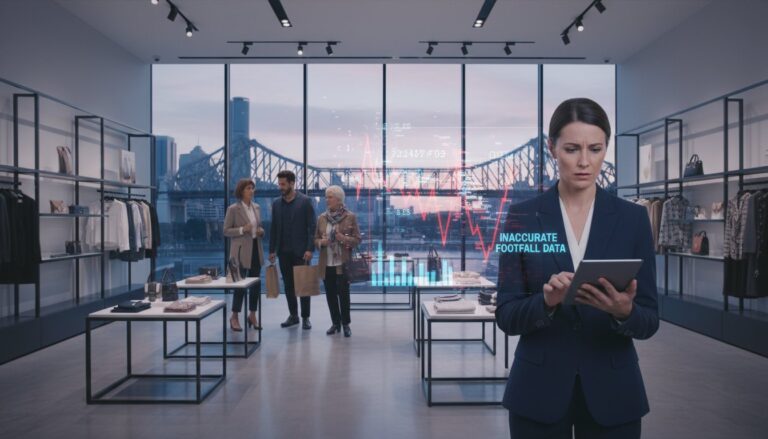
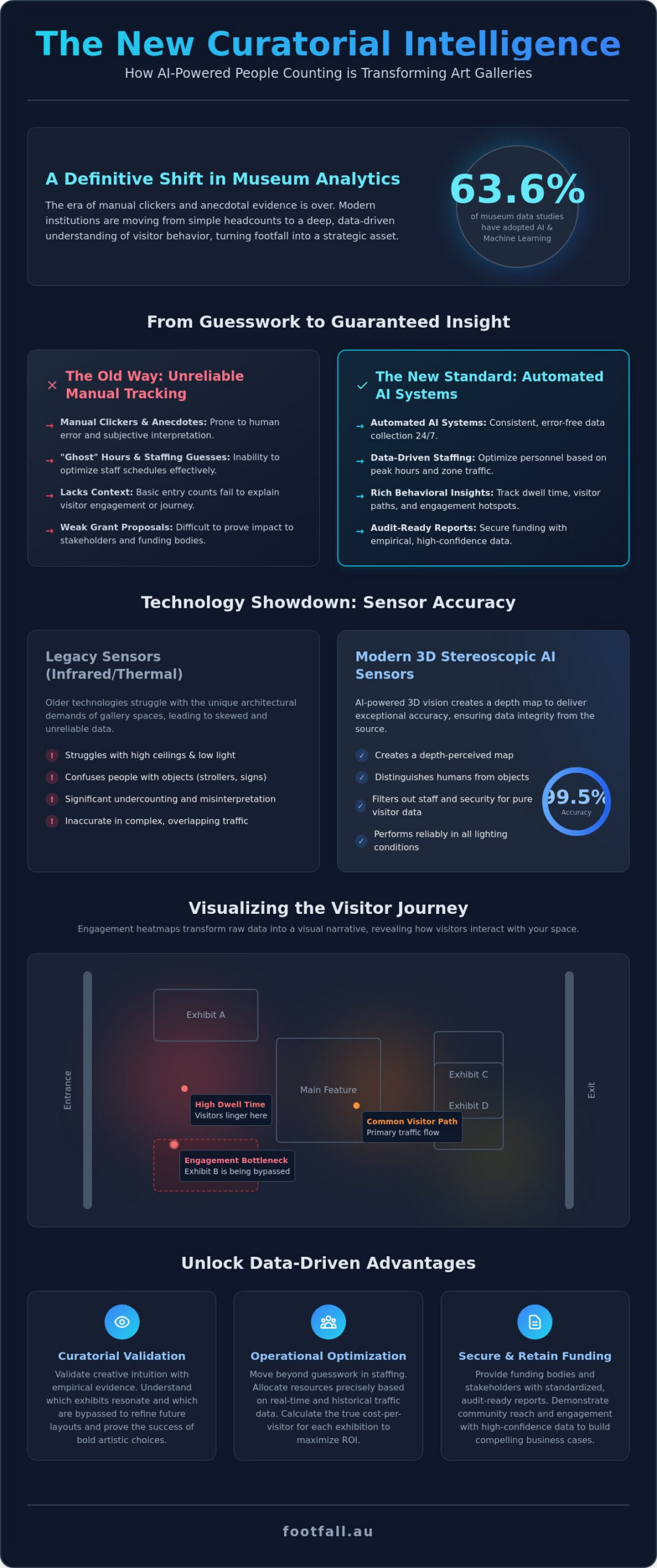
63.6% of museum data studies have now adopted AI and machine learning tools, marking a definitive shift from simply counting heads to deeply understanding human movement. You likely know the frustration of relying on manual clickers or anecdotal evidence to prove an exhibit’s success to stakeholders or grant bodies. It’s difficult to optimize staffing when you’re forced to guess at “ghost” hours or interpret unreliable reports that lack context. Implementing a sophisticated people counter for art galleries has become the foundation for solving these operational gaps with empirical evidence.
This guide demonstrates how advanced sensing technology transforms gallery management by moving beyond basic entry tracking into the realm of curatorial intelligence. You’ll discover how to leverage automated, audit-ready reporting and engagement heatmaps to validate your creative decisions. We will outline the path toward improved ROI through precise visitor behavior analysis, ensuring every square meter of your space performs at its peak potential. By the end of this article, you’ll understand how to turn raw footfall into a strategic asset for your institution.
Key Takeaways
- Transition from unreliable manual tracking to automated AI systems to secure audit-ready visitor reports for grant applications and stakeholder reviews.
- Identify why 3D stereoscopic sensors provide 99.5% accuracy in complex gallery environments, significantly outperforming legacy thermal and infrared hardware.
- Calculate the precise cost-per-visitor for every exhibition to validate curatorial decisions and optimize operational expenditure through data-driven staffing.
- Discover how a people counter for art galleries uses heatmapping to visualize the visitor journey and eliminate engagement bottlenecks in temporary exhibit layouts.
- Understand the long-term benefits of the FootfallCam Pro2 and the importance of a specialized Australian partner for technical integration and hardware longevity.
Beyond the Turnstile: Why Art Galleries Need Advanced People Counting in 2026
The role of a people counter for art galleries has transitioned from a basic security measure to a core component of curatorial intelligence. It’s no longer enough to know that someone walked through the door. Modern institutions need to understand why they stayed, where they lingered, and how they interacted with the physical space. This shift replaces the unreliability of manual clickers with automated AI systems that provide audit-proof reporting. By removing the margin for human error, galleries gain a level of strategic clarity that was previously impossible to achieve through observation alone.
This evolution in tracking isn’t just about efficiency; it’s about institutional survival. In a competitive cultural landscape, data serves as a strategic intelligence layer. It allows management to treat the gallery as a living environment that can be optimized based on real-time feedback. When you move beyond simple entry counts, you begin to see the narrative of movement. This narrative tells you which exhibits are resonating and which are being bypassed, providing a psychological benefit to curators who can finally back their creative intuition with empirical evidence. For exhibits that explore the intersection of culture and well-being, similar to the work of Tribu Spirit, this data ensures that the message of ancient wisdom is reaching and moving the modern visitor.
The Evolution of Visitor Metrics
Traditional attendance figures are often categorized as vanity metrics. They look impressive on a surface level but offer little insight into the actual success of an exhibit. Sophisticated people counting technologies now allow curators to track dwell time and return visitor rates with surgical precision. Digital-native audiences, who are accustomed to highly optimized online environments, expect physical galleries to be equally responsive and inclusive. Moving toward actionable engagement data ensures that curatorial decisions are based on observed human behavior rather than subjective guesswork. You can now identify precisely how long a visitor spends with a specific piece, turning “interest” into a measurable statistic.
Data as the Foundation for Grant Acquisition
Securing state and federal arts funding in 2026 requires more than just a compelling narrative. Funding bodies now demand high-confidence data for grant acquittal. Automated systems provide the empirical evidence needed to prove community reach and meet specific inclusivity goals. When presenting to a board of directors, having standardized, audit-ready reports transforms a request for more resources into a logical business case. This empirical foundation builds immense curatorial confidence. It allows staff to defend bold artistic choices with hard evidence, proving that specific layouts or challenging works are actually resonating with the public. Using a people counter for art galleries ensures that your reporting remains transparent and reliable for every stakeholder involved.
The Technology of Observation: AI vs. Legacy Sensors in Art Spaces
Many art galleries still operate with legacy infrared or thermal sensors that struggle with the unique architectural demands of cultural spaces. High ceilings and dramatic, low-light lighting schemes often cause these older devices to undercount or misinterpret movement. A modern people counter for art galleries must utilize 3D stereoscopic vision to maintain accuracy levels as high as 99.5%. This technology creates a depth-perceived map of the entrance, allowing the system to distinguish between human shapes and inanimate objects like strollers or exhibition signage. Researchers at the Louvre have previously explored noninvasive Bluetooth monitoring to augment visitor insights, but 3D AI sensors remain the primary foundation for high-fidelity footfall data.
Upgrading isn’t just a hardware refresh; it’s a commitment to data integrity. If your sensors can’t filter out security guards or staff members, your engagement metrics are inherently skewed. Utilizing a Legacy Swap Out Plan allows institutions to replace inaccurate hardware with AI-driven sensors that process information at the edge. This ensures your data remains clean and actionable from the moment it’s captured, providing a reliable basis for curatorial decisions. High-precision filtering is essential in complex gallery environments where staff movement often overlaps with visitor paths.
AI People Counting: The New Gold Standard
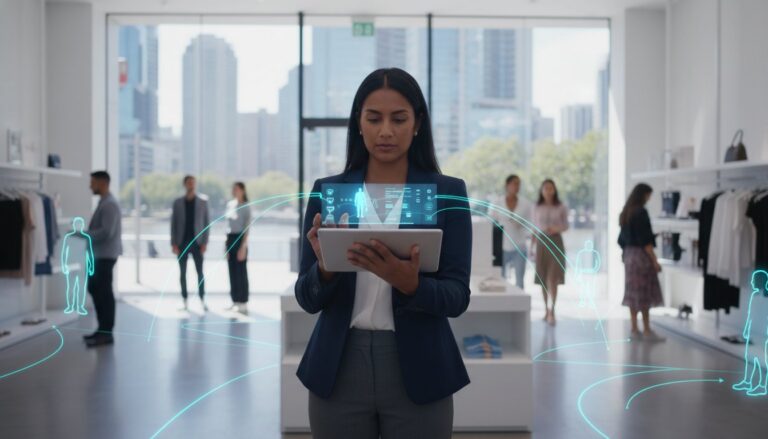
The FootfallCam Pro2 represents the current pinnacle of this technology, utilizing edge computing to process all data locally on the device. This eliminates cloud lag and ensures that reporting is nearly instantaneous. The 3D vision capabilities are sophisticated enough to distinguish between adults, children, and groups, providing a more nuanced view of your audience demographics. AI people counting is a privacy-first, non-biometric tracking method that analyzes human silhouettes rather than capturing identifiable facial features. This technical distinction is vital for maintaining the “quiet confidence” required in public cultural institutions.
Privacy and Anonymity in Public Spaces
It’s vital to distinguish between CCTV surveillance and anonymous people counting. While security cameras are designed to identify individuals, AI sensors are designed to count patterns. This approach ensures full compliance with Australian privacy standards and global GDPR frameworks. By using non-intrusive data collection, galleries can build long-term visitor trust. You’re capturing the narrative of movement without compromising the anonymity of the individual. This transparency is a key requirement for modern institutions that prioritize both data-driven growth and ethical visitor management.
Justifying ROI: The Economic Impact of Gallery Analytics
Evaluating the financial viability of an exhibition requires a departure from qualitative appreciation toward quantitative analysis. A people counter for art galleries provides the essential metrics to calculate the precise cost-per-visitor, allowing management to evaluate which exhibits are truly profitable. This data-driven approach transforms footfall from a passive statistic into a strategic asset for negotiating fair lease rates with gallery café or gift shop tenants. When you’re able to prove exactly how many potential customers pass a specific storefront, your bargaining position becomes unassailable based on empirical evidence.
For institutions seeking a broader perspective on the national technological landscape, reviewing a resource on people counting systems Australia helps contextualize the long-term economic benefits. These systems aren’t just an expense; they’re an investment in operational transparency that pays for itself by highlighting inefficiencies in space utilization. By treating the gallery as a measurable environment, you can justify budget allocations with the quiet confidence that your decisions are backed by hard data.
Data-Driven Staffing and Security
Labor remains one of the highest operational expenditures for any gallery. Aligning floor staff and security shifts with actual peak hours rather than arbitrary schedules directly reduces overhead. By identifying “ghost” hours, management can redistribute resources to high-traffic periods where they have the most impact on visitor satisfaction. Data from the Annual Survey of Museum-Goers suggests that overcrowding is a primary detractor from the gallery experience. Art museums currently enjoy a high average visitor satisfaction rating of 4.6 out of 5, but maintaining this standard requires constant operational adjustment to prevent bottlenecks before they occur.
Commercial Revenue Optimization
Commercial revenue optimization relies on understanding the conversion rate between gallery visitors and gift shop customers. Identifying “prime real estate” within your floor plan for high-margin merchandise becomes a simple task when you can visualize traffic density. Strategic placement of donation boxes in high-dwell areas also maximizes passive revenue by capturing visitors when they’re most engaged. For most cultural institutions, the return on investment for these systems is typically realized within three to six months. This rapid recovery of costs makes high-accuracy sensors an essential tool for modern fiscal sustainability.
Strategic Gallery Management: Curatorial Flow and Exhibit Optimization
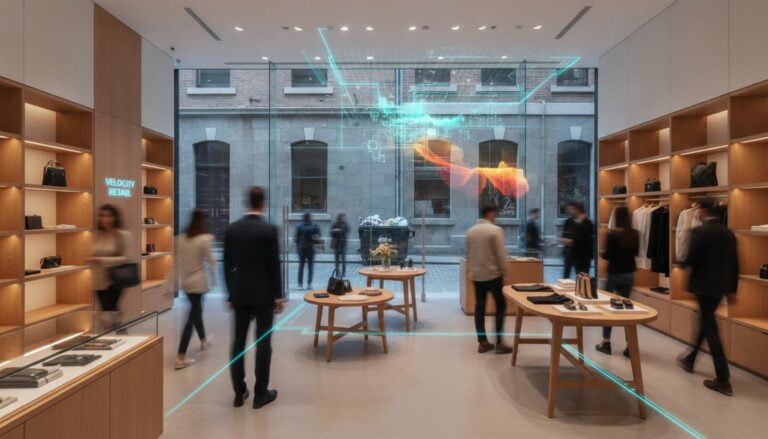
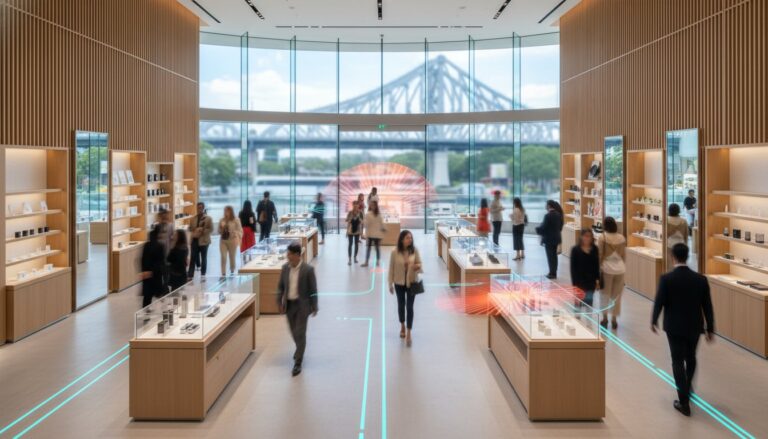
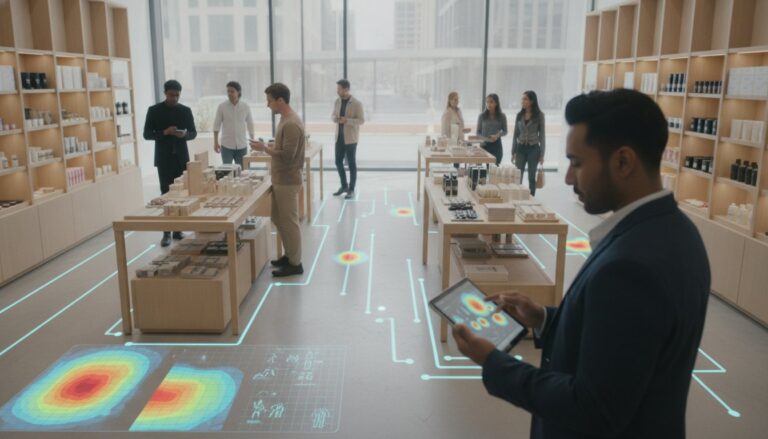
Institutional management often focuses heavily on the front entrance, yet the true strategic advantage lies in understanding what happens once a visitor moves past the lobby. Using a people counter for art galleries within individual exhibit halls allows for the creation of engagement heatmaps. These visualizations reveal the narrative of movement, showing exactly where visitors linger and where they accelerate. By identifying “cold spots” in temporary layouts, curators can adjust lighting or signage to draw attention to overlooked works. This iterative approach to spatial design is a core element of modern people counting technology, turning a static room into a responsive environment.
The Louvre Museum demonstrated the power of this logic when it reported a 15% increase in visitor engagement simply by rearranging exhibits based on foot traffic data. This level of optimization isn’t possible with manual observation. It requires a steady stream of empirical evidence to validate how spatial changes affect behavior. Testing the effectiveness of a new lighting scheme or a descriptive plaque becomes a scientific process rather than a subjective one. You can measure the exact increase in dwell time that follows a curatorial adjustment, ensuring that every square meter of your gallery serves the institution’s mission.
Curatorial Path Analysis
Understanding the “natural” flow of a space is essential for effective narrative storytelling. Curators can compare the performance of different artists or themes within the same hall to identify what resonates most with their specific audience. This data also informs long-term decisions regarding permanent collections. If a particular wing consistently underperforms, the data provides the necessary justification to rotate works or redesign the entrance to that space. It’s about ensuring the visitor’s journey feels intuitive and unhurried, allowing the art to remain the primary focus while the technology works silently in the background.
Occupancy-Based Facility Management
Beyond curatorial decisions, footfall data provides a foundation for sophisticated facility management. Integrating sensor data with HVAC systems allows for energy-efficient climate control that adjusts based on real-time occupancy. This is particularly vital for preserving sensitive artworks, as it helps manage humidity fluctuations caused by large crowds. Automated cleaning schedules can also be triggered by actual room usage rather than fixed intervals, reducing operational costs while maintaining high standards. To explore how these systems integrate with your existing infrastructure, consult with our specialized technical team for a tailored implementation plan that prioritizes both preservation and efficiency.
Implementing a Future-Proof Solution with Footfall Australia
Selecting a specialized partner is the final step in securing the long-term utility of your institutional data. Footfall Australia provides the localized expertise necessary to ensure hardware longevity and consistent technical support across the continent. The FootfallCam Pro2 has established itself as the premier people counter for art galleries in 2026, offering the 98-99% accuracy required for high-stakes curatorial reporting. Central to this ecosystem is the V9 software platform, which simplifies complex footfall data analysis into intuitive, actionable insights for management teams. This combination of high-fidelity hardware and sophisticated software ensures that your institution remains prepared for shifting visitor trends.
The transition from legacy systems to modern AI-driven sensors is streamlined through a structured implementation process. It begins with national site audits to determine optimal sensor placement based on your gallery’s unique architecture and lighting. Professional installation follows, ensuring that every device is calibrated to filter out staff and inanimate objects with precision. By choosing a partner that understands the Australian cultural sector, you gain a system that is not just a tool for counting, but a foundation for long-term strategic growth.
The Footfall Australia Advantage
Working with a local partner provides access to a national network of experts for ongoing maintenance and calibration. For institutions currently hindered by outdated technology, the Legacy Swap Out Plan offers a clear path to modernization without the need for a total infrastructure overhaul. You can also deploy customizable reporting dashboards that track gallery-specific KPIs, such as exhibit-specific dwell time or gift shop conversion rates. These tools empower your team to present data that is both visually compelling and mathematically sound during board-level reviews.
Next Steps: From Data to Action
Moving from raw numbers to curatorial intelligence requires a clear roadmap. Requesting a demo of the FootfallCam V9 software allows your team to see how movement patterns are translated into strategic reports in real time. Consulting with a strategic expert will help define your gallery’s specific data goals, whether you’re focused on securing federal grants or optimizing seasonal staffing levels. Taking this step ensures your institution is equipped with the empirical evidence needed to thrive in a data-driven cultural economy. Contact Footfall Australia for a tailored gallery solution to begin your institutional transformation.
Transforming Footfall into Curatorial Intelligence
The shift toward data-driven gallery management is no longer a future prospect; it’s a current necessity for institutional growth. By replacing outdated manual methods with a high-precision people counter for art galleries, you secure the empirical evidence needed to validate curatorial vision and optimize limited resources. These systems provide the transparency required for grant acquittal while offering the heatmapping insights necessary to refine spatial design. You’re no longer guessing how visitors interact with your space; you’re observing it with surgical precision.
Footfall Australia has been serving Australian institutions since 2004, providing the local national support and maintenance plans essential for long-term operational success. Utilizing the FootfallCam Pro2 AI ensures 99.5% accuracy in even the most challenging architectural environments, turning visitor movement into a strategic asset. It’s time to replace intuition with evidence and lead your institution into a new era of curatorial intelligence. With the right technology in place, you can focus on what matters most: creating meaningful connections between your audience and the art.
Request a Professional Gallery Traffic Audit from Footfall Australia to begin optimizing your space today.
Frequently Asked Questions
How accurate are people counters in low-light art gallery environments?
Modern 3D stereoscopic sensors maintain 99.5% accuracy in dramatic or low-light gallery environments. Unlike legacy infrared systems that rely on light contrast, these devices use depth perception to map the environment in three dimensions. This ensures reliable data capture even in high-contrast exhibition spaces where shadows or dim lighting often confuse older technology.
Do people counters for art galleries record video or identifiable images?
No identifiable images or videos are ever recorded or stored by the system. A people counter for art galleries utilizes on-device AI to analyze silhouettes and movement patterns anonymously at the edge. This privacy-by-design approach ensures full compliance with Australian privacy standards and global GDPR regulations, protecting visitor anonymity while gathering essential metrics.
Can people counters distinguish between staff, security, and visitors?
Advanced AI filtering distinguishes between staff and visitors by analyzing height, shape, and recurring movement patterns. The system can be configured to exclude security guards on patrol or curatorial staff moving through specific zones. This technical precision ensures your engagement metrics reflect actual visitor behavior rather than institutional movement, providing a clean dataset for analysis.
How does people counting data help with gallery grant applications?
People counting data provides the empirical evidence required for high-stakes grant acquittals and future funding submissions. Automated, audit-ready reports prove community reach and inclusivity goals with a level of confidence that manual clickers cannot match. This replaces anecdotal claims with hard data that state and federal funding bodies now prioritize for 2026 allocations.
What is the difference between a simple door counter and curatorial path analysis?
Door counters only measure total entry volume, while curatorial path analysis visualizes the visitor’s internal journey through the space. Path analysis uses engagement heatmaps to identify exactly where visitors linger and where they accelerate through a gallery. This deeper intelligence allows you to optimize the narrative flow of an exhibit based on observed human behavior.
Can I integrate my existing gallery security cameras into a people counting system?
You can integrate existing CCTV infrastructure using the FootfallCam Centroid. This device applies AI video analytics to your current security feeds, effectively turning them into high-accuracy sensors without the need for new ceiling-mounted hardware. It’s a cost-effective way to expand your tracking capabilities while leveraging your institution’s previous technology investments.
How much maintenance does a professional people counting system require?
Professional systems require minimal manual intervention once the initial calibration is complete. Footfall Australia offers Basic and Premium Support Plans that include proactive remote monitoring and automated software updates to ensure consistent uptime. Most hardware is designed for long-term stability in high-traffic public environments, requiring only occasional remote health checks.
Is it possible to track how long a visitor stands in front of a specific painting?
Tracking dwell time in front of specific artworks is a standard feature of a modern people counter for art galleries. By defining “interest zones” within the V9 software, you can measure exactly how many seconds or minutes visitors spend engaging with a particular work. This data helps curators understand which pieces drive the deepest engagement and informs future placement decisions.