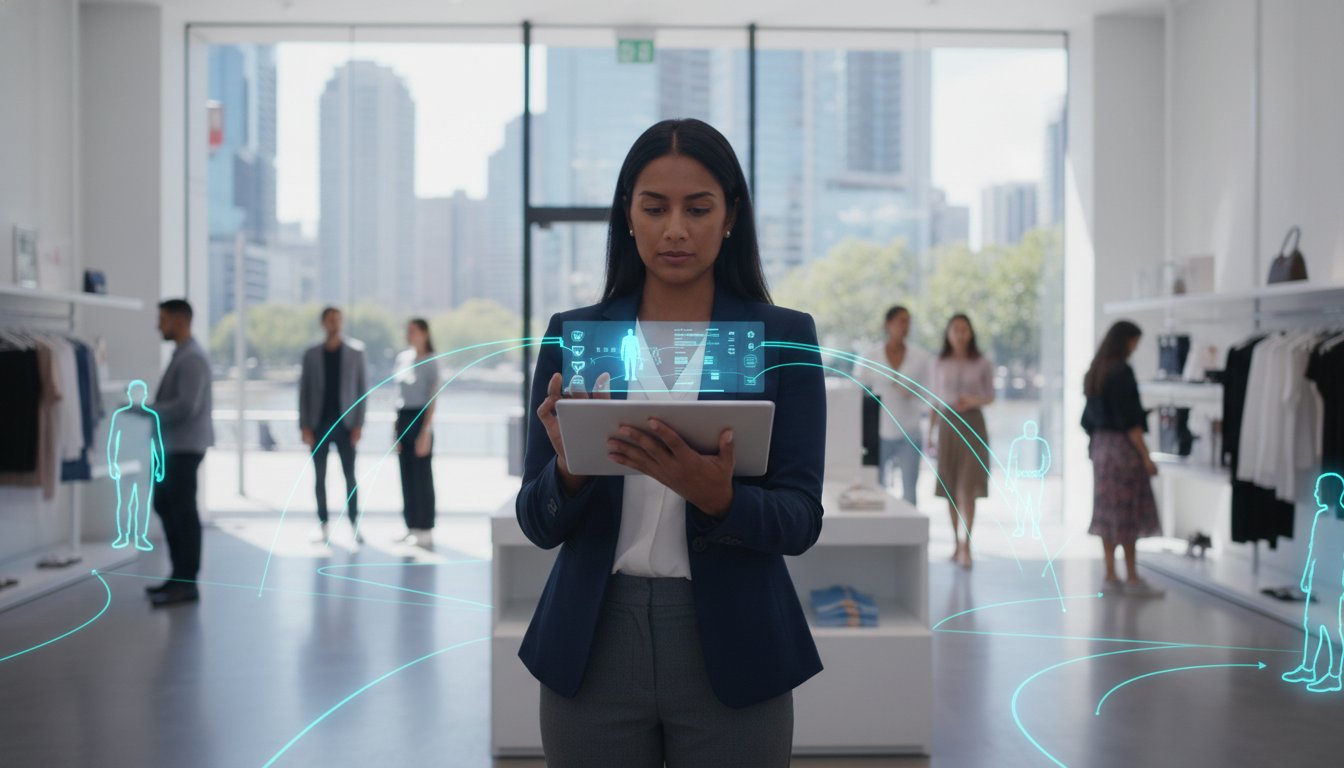
The Strategic Guide to a People Counter Upgrade in 2026
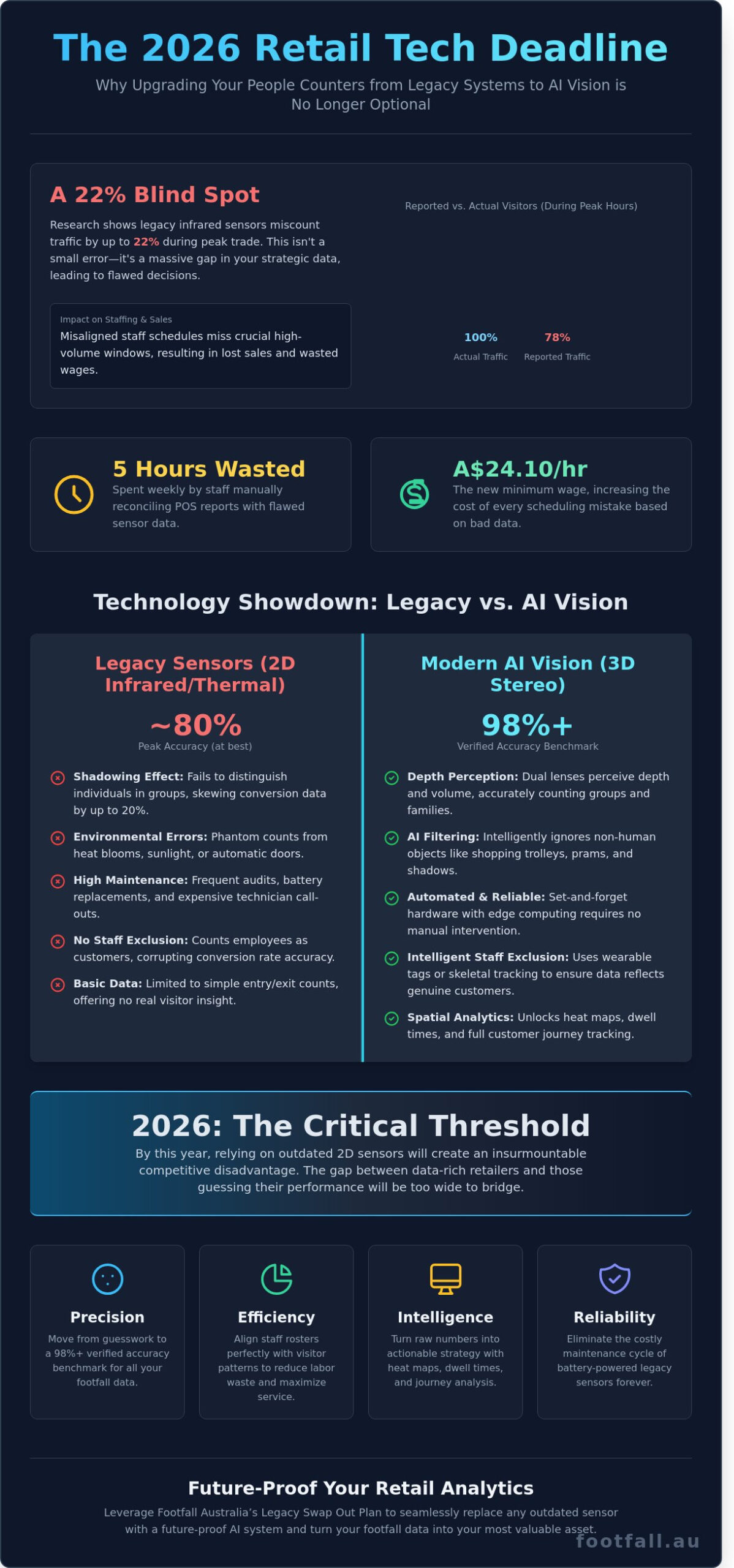
Research from 2024 indicates that legacy infrared sensors in Australian retail environments miscount visitor traffic by as much as 22 percent during peak Saturday trade. This discrepancy isn’t just a technical glitch; it’s a strategic blind spot that directly impacts your bottom line. You likely recognize the frustration of looking at data that doesn’t reflect the reality of your shop floor. Spending five hours a week manually reconciling POS reports with outdated sensor logs is a drain on your resources, often leading to staff schedules that miss the mark during critical high-volume windows.
Executing a strategic people counter upgrade allows you to replace these approximations with AI-driven precision, turning raw footfall into actionable evidence for your next board meeting. We’ll show you how to move from guesswork to a system that delivers automated reporting and proves its own ROI to stakeholders. This guide outlines the path to a seamless migration that clarifies the Australian customer journey and empowers you to make decisions based on hard evidence rather than intuition.
Key Takeaways
- Understand why 2026 marks the obsolescence of 2D sensors and how to adapt your data strategy to meet evolving Australian consumer behaviors.
- Execute a seamless people counter upgrade by leveraging AI Vision and Centroid technology to transform existing infrastructure into high-precision analytical tools.
- Shift from static reporting to dynamic growth by integrating FootfallCam V9, turning raw visitor numbers into actionable spatial analytics and clear ROI.
- Secure your historical data and maintain operational continuity with a structured migration guide designed for zero-disruption technical transitions.
- Explore how Footfall Australia’s Legacy Swap Out Plan simplifies the replacement of any outdated sensor brand with future-proof AI systems.
Why 2026 is the Critical Year for a People Counter Upgrade
2026 represents a definitive threshold for Australian retailers. The days of relying on estimated foot traffic or “gut feel” are over. A people counter upgrade is no longer a luxury for the top tier; it’s a survival requirement for any business managing high-cost physical space. With the Australian Fair Work Commission increasing the national minimum wage to A$24.10 per hour as of July 2024, the margin for error in labor allocation has vanished. If your staffing levels don’t align perfectly with visitor arrival patterns, you’re either wasting capital on idle hands or losing sales due to poor service.
Modern retail environments have evolved beyond simple entry and exit points. Post-pandemic consumer behavior in Australia shows a shift toward purposeful, high-intent shopping trips. Shoppers visit less frequently but expect more when they arrive. This change demands a transition from “counting people” to “understanding the visitor journey.” You need to know if a customer spent ten minutes in the footwear department or if they left because the queue at the register exceeded five people. Legacy systems simply can’t provide this level of spatial intelligence.
The history of people counting technology has moved from manual tallies to sophisticated AI, yet 35% of Australian shopping centre tenants still rely on hardware installed over a decade ago. These aging sensors create a blind spot that prevents managers from seeing the true conversion potential of their floor space. By 2026, the gap between data-rich retailers and those guessing their performance will be too wide to bridge.
The Limitations of Legacy Infrared and Thermal Sensors
Horizontal beam counters fail in high-traffic Australian shopping centres because they can’t distinguish between a single shopper and a family of four. This “shadowing” effect frequently skews conversion data by up to 20%, leading to flawed business decisions. Thermal sensors often struggle with “heat blooms” near automatic doors or air conditioning vents, causing phantom counts. Beyond accuracy, maintenance fatigue is a hidden drain on resources. Old sensors require frequent manual audits and battery replacements that cost more in technician call-out fees than the hardware is worth.
Meeting the 2026 Standard for Data Accuracy
The 98% accuracy benchmark is the new requirement for modern business intelligence. Achieving this level of precision requires 3D Stereo Vision technology, which uses dual lenses to perceive depth and volume. These systems handle group counting with ease and can differentiate between a child and an adult based on height parameters. Advanced AI algorithms now filter out non-human objects like shopping trolleys or prams. Perhaps most importantly, a people counter upgrade allows you to exclude staff members from your totals using wearable tags or skeletal tracking, ensuring your conversion rates reflect genuine customer opportunities.
- Precision: Move from 80% accuracy to a 98% verified benchmark.
- Efficiency: Reduce labor wastage by aligning staff rosters with A$24.10/hr award rates.
- Intelligence: Capture dwell times and heat maps rather than just total entries.
- Reliability: Eliminate the maintenance cycle of battery-powered legacy beams.
Investing in a people counter upgrade today prepares your business for the analytical demands of tomorrow. It turns a simple metric into an actionable strategy for growth. When you treat every visitor as a data point in a larger narrative, you gain the clarity needed to optimize every square metre of your Australian retail footprint.
Comparing Legacy Sensors vs. AI People Counting Technology
Legacy systems often rely on 2D infrared or thermal technology, both of which suffer from inherent physical limitations. 2D sensors fail to distinguish between shadows and humans, frequently resulting in accuracy rates as low as 75% during peak sunlight hours in Australian retail environments. Thermal sensors, while more private, lose efficacy when indoor temperatures approach 34°C, as the heat signature of a visitor blends into the background. A modern people counter upgrade replaces these reactive tools with proactive AI vision.
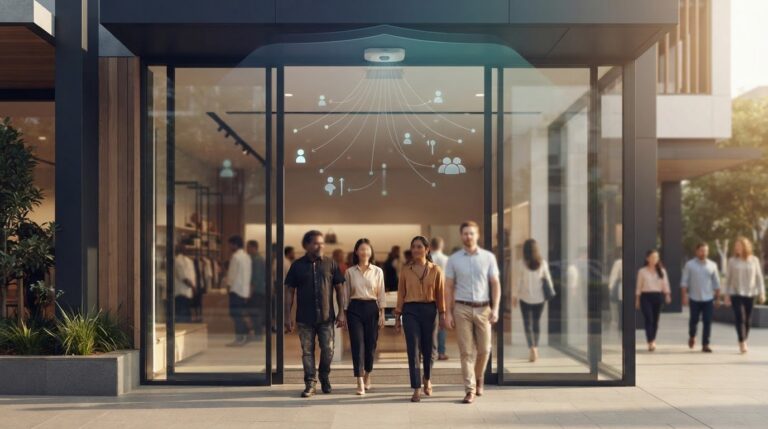
Modern AI people counting technology utilizes edge computing to process data locally on the sensor itself. This architectural shift is vital for compliance with the Australian Privacy Principles (APP). Unlike legacy video systems that transmit raw footage to a central server, AI sensors convert visual input into anonymous data points instantly. No identifiable images ever leave the device. This ensures 100% visitor anonymity while providing granular insights into dwell times and path mapping.
- 2D Sensors: Basic beam-breaking or silhouette detection with limited accuracy in crowded groups.
- Thermal Sensors: Heat-based tracking that struggles in high-ambient temperatures common in Australian summers.
- AI Vision: Deep learning algorithms that identify human features, achieving 99.5% accuracy regardless of environmental conditions.
3D Stereo Vision: The Gold Standard for Retail
The FootfallCam Pro2 uses dual-lens technology to create a three-dimensional map of the entrance area. This depth perception allows the device to filter out non-human objects like shopping trolleys, children’s prams, or swinging doors that typically trigger false counts in older systems. It remains unaffected by floor reflections or sudden shifts in lighting. 3D Stereo Vision is the mimicry of human binocular sight for spatial precision. By establishing a clear Z-axis, these sensors maintain 99.5% accuracy even in high-traffic environments where visitors walk closely together.
FootfallCam Centroid: Upgrading Without Replacing Everything
For businesses managing expansive sites, a full hardware overhaul isn’t always the most efficient path. The FootfallCam Centroid acts as an AI bridge, connecting to existing IP CCTV networks to extract high-level spatial analytics. This approach reduces initial capital expenditure by up to 45% compared to a complete hardware swap. A typical people counter upgrade using Centroid can save an average of A$850 per entrance in installation and cabling costs. It’s an ideal solution for large-scale venues like Sydney’s transport hubs, regional distribution centres, or expansive warehouses where installing hundreds of new sensors is logistically challenging.
Centroid applies deep learning algorithms to your current video streams, turning standard security cameras into intelligent data collectors. You gain access to heatmaps, queue management data, and zone counting without the need for extensive rewiring. If you’re unsure which path fits your current infrastructure, you can request a technical site audit to evaluate your existing camera compatibility and potential cost savings.
The Strategic ROI of Upgrading Your Analytics Software
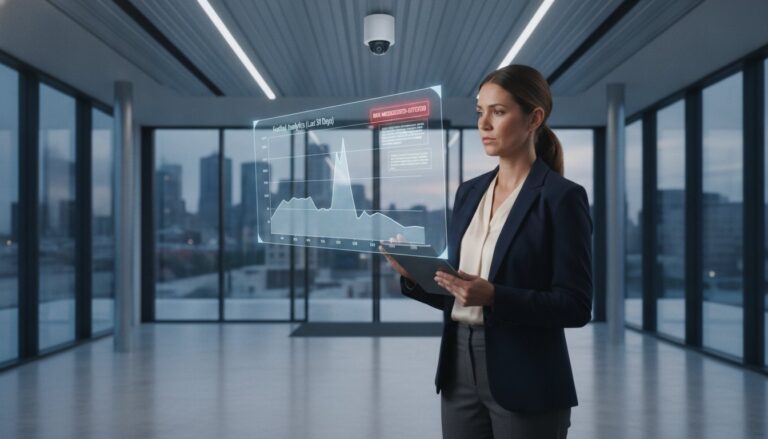
Hardware provides the raw data; the software acts as the engine that transforms those numbers into revenue. Many legacy systems trap data in static PDF reports that arrive too late for meaningful action. By upgrading your analytics software, you transition to the FootfallCam V9 platform. This moves your operations from reactive reporting to dynamic, AI-driven dashboards. These tools visualize the visitor journey, letting you see exactly where store performance falters in real time. You aren’t just looking at a number; you’re looking at a live map of your business’s health.
Integrating your people counter upgrade with your Point of Sale (POS) system is the most direct path to a measurable ROI. It allows you to calculate conversion rates instantly. If a Melbourne store sees 1,000 visitors but only 100 transactions, you have a 10% conversion rate. Knowing this number allows you to test layout changes or sales training immediately. You don’t have to wait for end-of-month reviews to realize a marketing campaign failed to convert. You’re measuring the effectiveness of your entire retail environment as it happens.
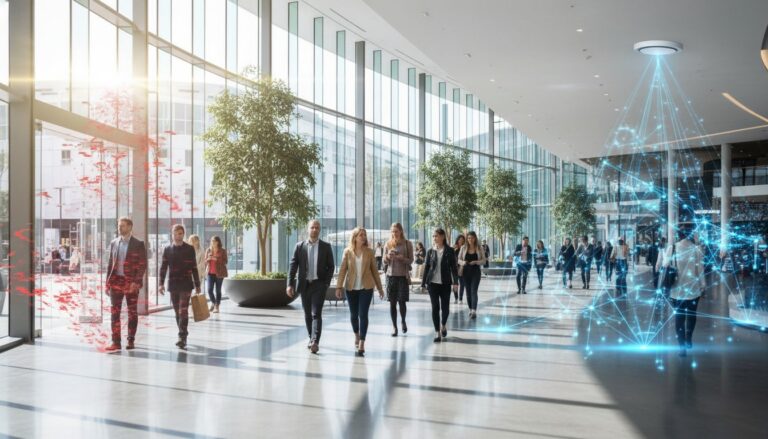
Spatial analytics like heat mapping and dwell time provide a narrative for human movement. You can identify “dead zones” where customers never tread or high-traffic areas where they linger without buying. Adjusting a display based on these 3D insights often results in a 15% to 20% uplift in product engagement. It’s about precision. When you know where people stop, you know where to place your high-margin inventory. This data-driven approach removes the guesswork from visual merchandising, ensuring every square metre of your floor space contributes to the bottom line.
Automated Reporting and Staff Optimisation
Predictive analytics forecast next week’s foot traffic for Australian retailers using historical patterns and local event data. Aligning staff rosters with these peaks eliminates wage leakage. In Australia, where retail award rates are high, overstaffing by even two hours a day can cost a business upwards of A$5,000 annually per location. Your people counter upgrade provides the evidence needed to justify leaner shifts during lulls and extra support during surges. Data shows that a 5% relative increase in conversion rates, achieved through better staff placement during peak hours, can double the net profit for stores operating on tight margins.
Cross-Store Benchmarking for Australian Retail Chains
Compare a Sydney flagship store against a Perth boutique with objective metrics that account for regional differences. You can identify “Best Practice” locations using hard data instead of management intuition. If the Sydney store has a 25% higher dwell time, you can investigate their floor plan and replicate it in Perth. Automated alerts notify regional managers when a store’s conversion drops 10% below its 30-day average. This allows for immediate intervention. It ensures every location maintains the brand standard regardless of geography. You gain a bird’s-eye view of your entire Australian network from a single, centralized portal that empowers your team to act decisively.
A Step-by-Step Migration Guide: Upgrading Without Disruption
Transitioning to modern spatial analytics doesn’t require a total operational halt. A successful people counter upgrade relies on a structured methodology that preserves historical context while introducing superior hardware. We prioritise a zero-gap approach to data. This ensures your year-on-year comparisons remain intact during the V9 platform integration. Many Australian retailers lose valuable insights during hardware transitions; we prevent this through a synchronised data migration strategy that protects your legacy records.
Success starts with acknowledging that your old system likely left gaps in your understanding of the visitor journey. By upgrading, you’re not just replacing a sensor; you’re installing a strategic tool designed for the complexities of modern retail environments. This process is handled with surgical precision to ensure that your business intelligence remains fluid and uninterrupted. We treat the migration as a bridge between your past performance and your future growth potential.
Conducting a Site Audit and Infrastructure Check
Modern AI sensors demand more than just a basic power point. Our technicians begin by verifying Power over Ethernet (PoE) availability across your network. This eliminates the need for separate power cables and simplifies the overall architecture. We measure ceiling heights precisely; most V9 sensors perform optimally between 2.5 and 4.5 metres. If your shopfront features high-glare glass, common in many Sydney or Melbourne CBD locations, we adjust the sensor angles to account for light bounce and reflection.
Identifying historical blind spots is a core part of this audit. Legacy systems often missed up to 15% of traffic due to poor placement near structural pillars or exceptionally wide entrances. We map these areas during the site survey to ensure the new sensors provide 100% floor coverage. We also check network stability to ensure the local bandwidth can handle the encrypted data packets required for real-time reporting without slowing down your Point of Sale systems.
Minimising store downtime is our operational priority. The physical swap is typically completed within a 90-minute window per entrance, often scheduled during low-traffic periods to avoid customer interference. While the hardware changes, the data flow remains constant. We migrate your existing historical records into the V9 environment. This allows you to compare 2023 performance against new 2024 benchmarks without switching between fragmented software interfaces or losing sight of long-term trends.
Verifying Accuracy Post-Installation
Precision is a requirement, not an aspiration. We target a 98% accuracy rate from the moment of activation. This is achieved through a rigorous manual video validation process. A technician compares live video feeds against the sensor’s digital count to ensure every entry and exit is logged correctly. This isn’t a one-off check; it’s a verification of the system’s ability to distinguish between a customer and a security guard or a shopping trolley.
The first 48 hours are essential for system bedding. During this window, the AI learns the specific environmental shadows and lighting shifts of your unique space. It calibrates itself to the specific footfall patterns of your Australian storefront, filtering out non-human movements that often trigger false positives in older tech. Once the system hits the 98% accuracy threshold, we move to the final phase of the people counter upgrade: team empowerment.
Training your team to interpret the V9 dashboard is where the technology becomes a tool for growth. We show your managers how to move beyond raw counts and start looking at dwell times and spatial heatmaps. This turns the data into actionable insights that can influence staff rosters and store layouts immediately. You’ll move from guessing why a promotion failed to seeing exactly where the visitor journey broke down in real-time.
Future-Proofing with Footfall Australia’s Legacy Swap Out Plan
Transitioning away from end-of-life hardware like Irisys thermal sensors or aging Brickstream video units doesn’t have to be a logistical burden. Our Legacy Swap Out Plan provides a structured, evidence-based path for a comprehensive people counter upgrade. We replace obsolete sensors with 99.5% accurate AI-driven technology that captures more than just raw numbers. This transition is managed by our senior engineers who ensure your existing historical data is preserved and integrated into a modern, unified dashboard. We don’t just replace hardware; we optimize the mounting angles and environmental settings to ensure the new AI sensors perform at peak efficiency from day one.
The financial logic of our plan centers on long-term stability. Many international providers now enforce a subscription trap where businesses pay recurring fees just to access their own data. Footfall Australia operates on a perpetual license model. You own the hardware and the data insights it generates. This approach can save a national retail chain between A$15,000 and A$40,000 in annual recurring software costs over a five-year period. It is a logical strategy for businesses that value data sovereignty and want to avoid the risk of sudden price hikes from offshore SaaS companies. We prioritize transparency, ensuring your CAPEX investment delivers a measurable return without hidden monthly overheads.
Our engineers handle the technical heavy lifting during the migration process. We prioritize data continuity; mapping your historical legacy data into our modern spatial analytics platform. This ensures your year-on-year comparisons remain valid and actionable. You won’t lose the context of your past performance just because you’ve moved to a superior hardware platform. We build a bridge between your past results and your future growth, reducing the margin of error from a typical 15 percent in legacy systems to less than 0.5 percent with our latest AI sensors.
The Footfall Australia Advantage
Since 2004, we’ve supported the Australian retail sector with local expertise and data-driven logic. By 2026, our history will span over two decades of technical evolution in the domestic market. Having dedicated teams in Brisbane, Sydney, and Melbourne ensures rapid deployment and physical site audits that remote providers simply can’t offer. Footfall Australia provides a seamless marriage of complex AI with intuitive reporting. Our systems decode the visitor journey, turning physical movement into a narrative of conversion rates and dwell times that empowers your management team.
Taking the Next Step: Your Upgrade Roadmap
We recommend a structured approach to your people counter upgrade to ensure zero data loss. Start with a proof-of-concept for a single high-traffic location. This allows you to verify our 99.5% accuracy against your current legacy system in a live environment. Once the data validates the investment, we scale the solution across your national network using our local installation teams. This minimizes downtime and ensures consistency in data reporting across every state. You gain a partner that looks over the horizon to help you stay ahead of shifting consumer trends.
Enquire about our Legacy Swap Out Plan today to secure your data future and eliminate recurring subscription costs.
Future-Proof Your Physical Space Before 2026
Success in the 2026 retail landscape depends on the precision of your data. Transitioning from legacy hardware to AI 3D Stereo Vision isn’t just a technical update; it’s a strategic move to capture 98%+ accuracy in every visitor interaction. By eliminating the blind spots of outdated sensors, you gain the clarity needed to optimize staffing and maximize conversion rates across your entire portfolio. It’s time to stop guessing and start measuring the human behavior that defines your bottom line.
Footfall Australia has guided local businesses through technological shifts since 2004. We don’t just ship hardware; we provide a dedicated partnership with local support teams in all major Australian capital cities. Implementing a people counter upgrade now ensures your operations remain resilient and data-driven as consumer behaviors evolve. Our Legacy Swap Out Plan handles the complexity so you can focus on the actionable insights that drive growth. We’ve built our reputation on turning complex spatial analytics into simple, intuitive reporting that empowers your team.
Ready to replace guesswork with evidence-based strategy? Request a Free Consultation for Your People Counter Upgrade and secure your competitive advantage today. Let’s turn your visitor journey into your greatest asset.
Frequently Asked Questions
Can I keep my historical data if I upgrade to a new people counting system?
Yes, you can import your historical data into the FootfallCam portal to maintain business continuity. We provide a structured CSV import tool that merges your existing traffic figures with new AI-driven insights. This process preserves your year-on-year growth metrics and historical trends. Maintaining a single source of truth is vital for accurate long-term forecasting. Our technical team assists with the data mapping to ensure 100% accuracy during the transition.
How much does a people counter upgrade cost for a standard retail store in Australia?
A standard people counter upgrade for a single-entrance retail store in Australia typically costs between A$850 and A$1,200 per unit. This investment includes the AI-powered hardware and access to the cloud-based analytics suite. Ongoing software costs are often bundled into a single annual fee of approximately A$180 per device. These figures vary based on ceiling height and specific mounting requirements. Investing in high-precision hardware reduces long-term operational costs by eliminating manual audits.
Do I need to replace my existing cabling when upgrading to FootfallCam Pro2?
You don’t need to replace your cabling if your current system uses standard Cat5e or Cat6 Ethernet cables. The FootfallCam Pro2 operates on Power over Ethernet (PoE) technology, which draws both power and data through a single line. If your legacy system used older coaxial or basic power cables, a new data run will be necessary. This single-cable setup reduces installation labor by 40% compared to traditional dual-wire systems.
What is the difference between a software-only upgrade and a full hardware replacement?
A software-only upgrade updates your reporting dashboard, while a full hardware replacement installs new AI-driven sensors at your entrance. Software updates provide better visualization but can’t improve the 60% accuracy of old infrared beams. Replacing legacy hardware with the Pro2 increases accuracy to over 95% immediately. This hardware shift enables advanced features like staff exclusion and dwell time tracking that software alone cannot provide.
How long does it take to install and calibrate a new AI people counter?
Physical installation of a new AI counter usually takes between 60 and 90 minutes per device. Once the unit is live, our engineers perform a remote calibration and verification process within 24 to 48 hours. This ensures the sensor correctly identifies human shapes and ignores inanimate objects. You’ll receive a full accuracy report confirming the system is performing at its 95% threshold before the setup is finalized.
Will a new system integrate with my existing Shopify or Xero POS data?
Yes, the system integrates seamlessly with Shopify and Xero to automate your conversion rate calculations. By pulling sales data from your POS and matching it with foot traffic, the portal generates real-time performance metrics. This eliminates the need for manual data entry and reduces reporting errors by 100%. Our API supports over 60 different POS systems used across Australia to ensure your data remains actionable and centralized.
Is the FootfallCam Pro2 compliant with Australian privacy laws?
The FootfallCam Pro2 is fully compliant with the Australian Privacy Act 1988 and the Australian Privacy Principles. The sensor uses edge processing to track movement patterns without recording identifiable facial features or personal information. It converts video into anonymous data points instantly. This privacy-by-design approach ensures your business meets local regulatory standards while still gaining deep spatial insights. You can confidently monitor visitor behavior without compromising individual anonymity.
What happens if my internet goes down? Will the upgraded counter lose data?
You won’t lose any data if your internet connection fails because the counter stores information locally. The device features an internal memory cache that holds up to 25 days of traffic data. Once the connection is restored, the system automatically uploads the stored logs to the cloud portal. This fail-safe mechanism ensures your analytics remain continuous and reliable, even during local network outages or ISP disruptions.