People Counter Maintenance Cost: A 2026 Guide to Total Cost of Ownership
A people counter that isn’t maintained is merely a decorative sensor, not a strategic asset. You likely invested in footfall technology to gain clarity on visitor behavior, yet many organizations watch their people counter maintenance cost spiral due to data drift and hardware failure. It’s frustrating to face unexpected subscription hikes or sensors that lose accuracy just after the warranty expires, especially when your board expects precise reporting for critical operations. We understand that data is only valuable if it leads to specific, positive changes in your physical environment.
This 2026 guide clarifies the total cost of ownership by examining the 5 to 10 percent annual expenditure typically required for sensor upkeep and replacement. We’ll show you how to transform these recurring expenses into a predictable budget that protects your long-term investment. You’ll discover how to leverage options like the FootfallCam Legacy Swap Out Plan and professional support tiers to eliminate system downtime. This structured approach ensures your V9 analytics software remains a reliable foundation for empirical decision-making and high-integrity reporting.
Key Takeaways
- Calculate your true Total Cost of Ownership by integrating installation and multi-year upkeep into your initial budgeting process.
- Manage your people counter maintenance cost by addressing the physical, software, and analytical pillars required for sustained 98% accuracy.
- Evaluate the cost-benefit of proactive maintenance models versus reactive support to ensure high data integrity for board-level reporting.
- Implement strategic infrastructure choices, such as high MTBF hardware and PoE cabling, to reduce long-term electrical and technical overhead.
- Explore how the Legacy Swap Out Plan provides a structured method for upgrading aging systems while maintaining predictable annual expenses.
Understanding the Total Cost of Ownership (TCO) for People Counters
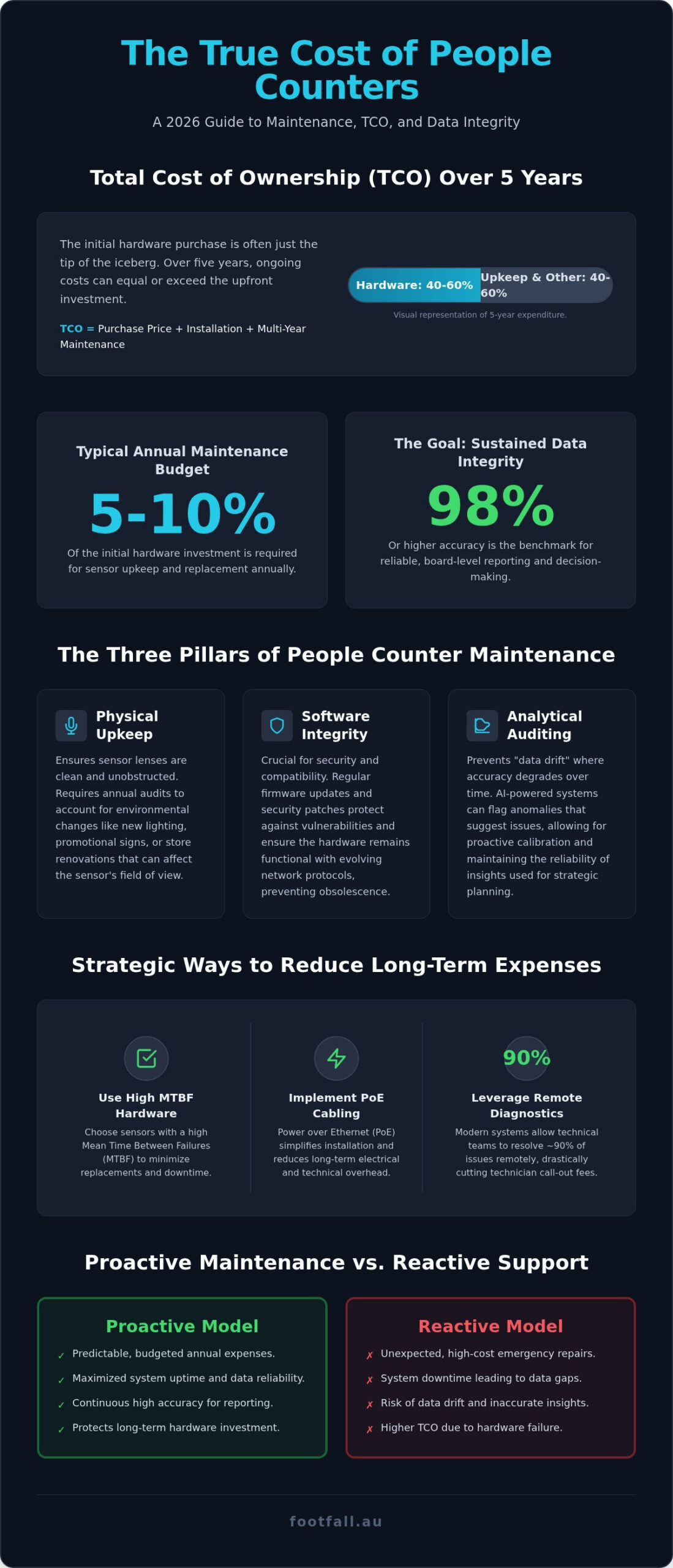
A people counter investment requires a strategic outlook that extends far beyond the initial purchase order. We define Total Cost of Ownership (TCO) as the cumulative sum of the purchase price, professional installation, and multi-year technical maintenance. For many Australian organizations, the initial hardware outlay represents only 40% to 60% of the total five-year expenditure. This reality often surprises stakeholders who focus solely on upfront costs, yet ignoring the long-term people counter maintenance cost can lead to significant budgetary friction later. Primary drivers of recurring expenses in the local market include technical site audits, hardware recalibration, and the necessity of maintaining high-integrity network connectivity.
Choosing “cheap” sensors often results in a false economy. While the entry price is lower, these devices frequently lack the robust build quality or sophisticated firmware needed for longevity. This leads to higher operational overhead as staff spend more time troubleshooting connectivity issues or manually verifying data. A strategic expert views hardware as the foundation, but recognizes that the true value lies in the system’s ability to remain accurate year after year.
Hardware vs. Software: Where the Money Goes
Distinguishing between one-time capital expenditure and recurring operational costs is essential for accurate budgeting. Hardware like the FootfallCam Pro2 represents a fixed asset, while software, such as the FootfallCam V9 Software, facilitates the actual utility of the data. Perpetual licenses offer long-term stability, yet even these require ongoing attention. Firmware updates are a non-negotiable requirement; they ensure your sensors remain compatible with evolving network protocols and security standards. Without these updates, hardware becomes vulnerable to obsolescence, significantly increasing your eventual replacement costs.
The Price of Data Inaccuracy
Data is only useful if it’s accurate. A 10% error rate in footfall metrics doesn’t just look bad on a report; it directly compromises staffing decisions and operational efficiency. If your counts are consistently off, you might overstaff during quiet periods or miss peak opportunities, eroding your bottom line. Regular calibration is a hidden but essential people counter maintenance cost that protects the integrity of your insights. High-quality data reliability is the primary driver behind the overall ROI of people counting, ensuring that every strategic move your board makes is backed by empirical evidence rather than intuition.
The Three Pillars of People Counter Maintenance Costs
Maintaining a high-performance counting system requires a structured approach that extends beyond simple hardware checks. To sustain accuracy levels of 98% or higher, organizations must manage three distinct pillars: physical upkeep, software integrity, and analytical auditing. Neglecting any of these tiers leads to data drift, where the information used for board reporting slowly loses its grounding in reality. Modern systems leverage AI to automate much of this oversight, flagging anomalies in visitor flow that might indicate a blocked lens or a network disruption. By utilizing remote diagnostics, technical teams can resolve approximately 90% of system issues without stepping foot on-site, effectively lowering the long-term people counter maintenance cost by reducing technician call-out fees.
Physical Upkeep and Environment Factors
Physical maintenance ensures the sensor’s “eyes” remain clear and correctly positioned. In high-traffic Australian retail environments, dust accumulation or insect activity can obscured lenses, leading to undercounts. Environmental shifts also play a role; a change in store lighting or the installation of a new hanging promotional sign can interfere with the sensor’s field of view. Hardware like the FootfallCam Pro2 is engineered for longevity, yet it still requires an annual physical audit. If you undergo a store renovation, relocating a sensor involves more than just unscrewing a bracket. It requires a professional recalibration to account for the new floor layout and entry paths, ensuring the system continues to interpret human movement patterns correctly.
Software Updates and Security Patches
The digital layer of your system is just as critical as the physical hardware. Because people counting technology evolves rapidly, staying on a legacy version of firmware can create security vulnerabilities or compatibility issues with your existing IT infrastructure. Cloud-based software like FootfallCam V9 requires regular security patches and server maintenance to protect the privacy of the data collected. As your business grows, you’ll likely want to integrate footfall metrics with your ERP or other management tools. These integrations require periodic maintenance to ensure data bridges remain functional following third-party software updates. Investing in a structured support plan ensures these technical updates happen seamlessly in the background, preventing system downtime.
Analytical Auditing and Data Integrity
The final pillar is the most overlooked: the cost of inaccurate data. Analytical maintenance involves periodic “truth-testing” where system counts are compared against short bursts of manual video validation. This process identifies subtle shifts in accuracy caused by changing visitor behaviors, such as groups entering closer together or children being counted differently than adults. AI-driven systems now perform much of this heavy lifting by identifying patterns that don’t match historical norms. However, a strategic expert should still review these reports quarterly to ensure the logic used to interpret human actions remains sound. This proactive auditing is the most effective way to keep your people counter maintenance cost predictable while maintaining the high data integrity required for operational success.
Comparing Support Plans: Basic vs. Premium Maintenance Models
Choosing a support model is a pivot point for operational stability and long-term financial planning. A reactive “break-fix” approach might seem cost-effective initially, but it often inflates the total people counter maintenance cost through hidden downtime and emergency technician fees. Proactive maintenance, by contrast, treats data integrity as an ongoing process rather than a one-time fix. In the Australian market, where on-site technician call-out fees can be substantial, the ability to resolve issues through remote diagnostics is a critical factor in maintaining a lean operational budget.
Premium models leverage automated health checks to monitor every sensor in your network simultaneously. This empirical approach replaces the “wait and see” method with a system that identifies potential failures before they result in data loss. When your board relies on footfall metrics for high-stakes decisions, the quiet confidence provided by a proactive support structure becomes an essential business insurance policy.
The Basic Support Framework
The Basic Support Plan focuses on essential system continuity. It typically includes email-based technical assistance, software bug fixes, and manual firmware updates. This framework suits small-scale deployments or independent retailers with internal IT resources capable of performing basic troubleshooting. However, businesses relying on this model must account for potential “pay-per-incident” costs. If a sensor fails or requires recalibration outside of standard parameters, the lack of a comprehensive agreement can lead to higher hourly rates for remote support or physical site visits. It’s a functional choice for those who prioritize low upfront monthly fees over immediate response guarantees.
Premium Support: Proactive Data Integrity
The Premium Support Plan shifts the burden of oversight from your team to a dedicated strategic partner. This model features daily automated system health checks that flag connectivity drops or data anomalies before they impact your reporting. Investing in comprehensive people counter support ensures that data gaps are prevented through immediate proactive alerts and priority service level agreements (SLAs).
- Dedicated Account Management: Having a single point of contact for data auditing ensures your system’s logic remains aligned with your specific site layout.
- Rapid Response Times: Premium users in Australia often benefit from remote response times within 4 to 8 business hours, compared to the 24 to 48 hour window common in basic tiers.
- Expert Data Reviews: Quarterly sessions with data specialists help interpret visitor flow patterns, ensuring your people counter maintenance cost translates directly into actionable business intelligence.
- Automated Health Monitoring: Constant background checks eliminate the need for manual staff audits, freeing your team to focus on customer-facing operations.
Strategic Ways to Reduce Long-Term Maintenance Expenses
Modern AI-driven sensors further lower overhead by incorporating self-calibration features. These systems automatically adjust to shifting floor layouts or changing environmental light, maintaining high accuracy without the need for manual technician adjustments. This level of technical autonomy ensures your data remains an actionable asset while keeping your operational budget lean.
Leveraging Remote Diagnostics
Data indicates that approximately 90% of people counter issues can be resolved via remote login. This capability is the single most effective way to lower your people counter maintenance cost by avoiding on-site technician call-out fees. When a sensor flags an anomaly, a technical expert can verify the field of view, update firmware, or adjust counting logic from a secure remote terminal. It is vital to partner with a provider that maintains a local Australian network; this ensures that remote support is available during your operational hours and that any necessary physical components are dispatched quickly from local stock. You can optimise your footfall infrastructure today by switching to a system designed for remote-first serviceability.
Standardising Hardware Across Sites
Uniformity is a powerful tool for cost reduction. Using the same device, such as the FootfallCam Pro2, across every entry point reduces the complexity of your spare part inventory. Your IT team and store staff only need to learn one interface, which significantly improves training efficiencies and reduces the likelihood of user error during basic troubleshooting. Adopting standardised people counting systems in Australia allows for a more streamlined procurement process and ensures that software updates roll out consistently across your entire network. This consistency prevents the “patchwork” system effect where legacy devices create security vulnerabilities or data gaps that require individual, time-consuming attention.
Ensuring Data Reliability with Footfall Australia’s Support
Footfall Australia provides a structured ecosystem designed to mitigate the long-term people counter maintenance cost. We offer two distinct tiers: the Basic Support Plan for essential technical continuity and the Premium Support Plan for organisations requiring proactive data auditing and priority response. Our proprietary FootfallCam V9 Software acts as a primary maintenance tool by automating system health checks and anomaly detection. This reduces the manual oversight required by your IT department, ensuring that your footfall analytics remain accurate without constant intervention. With a local presence in Australia since 2004, our team provides technical assistance grounded in the specific operational realities of the domestic market. This local expertise translates to faster response times and a deeper understanding of regional network requirements.
The Legacy Swap Out Plan Explained
Many organisations fall into a “maintenance trap” where they continue to spend money repairing obsolete hardware that can no longer support modern AI analytics. Our Legacy Swap Out Plan addresses this by allowing you to upgrade older units to state-of-the-art FootfallCam Pro2 hardware at a significantly reduced cost. This strategy ensures your technical infrastructure remains forward-thinking while providing long-term budget predictability. Instead of unpredictable repair fees for aging sensors, you gain a refreshed system with a new warranty and improved Mean Time Between Failures (MTBF). It’s a calculated move that ensures your people counter maintenance cost remains an investment in growth rather than a tax on legacy equipment. This plan provides a clear path for lifecycle management, allowing for the seamless transition from older sensors to sophisticated 3D vision systems.
Next Steps: Securing Your Investment
Data integrity isn’t a static achievement; it’s a result of consistent, professional oversight. We recommend starting with a comprehensive system audit to identify current maintenance gaps or sensors that have drifted out of calibration. This empirical review allows us to tailor a support plan that fits your national footprint, whether you manage a single flagship location or a complex multi-site network. By aligning your maintenance strategy with your strategic goals, you ensure that every visitor count contributes to a clearer understanding of human behaviour in your space. Predictable annual budgeting starts with a clear view of your current assets and their health.
Get a custom maintenance quote from Footfall Australia to protect your data accuracy and optimise your total cost of ownership.
Securing Long-Term ROI Through Strategic Oversight
Managing a sophisticated counting network requires moving beyond the initial purchase to focus on the full lifecycle of your assets. We’ve explored how a proactive approach to your people counter maintenance cost prevents the data drift that compromises board-level reporting. By standardising hardware and leveraging remote diagnostics, you can significantly reduce on-site service fees while maintaining the high data integrity your operations demand. The true value of footfall technology lies in its ability to provide stable, actionable insights year after year.
Our local Australian technical team is dedicated to ensuring your system remains a pillar of your strategic planning. We provide a 98%+ Data Accuracy Guarantee to give you confidence in every metric; additionally, our Legacy Swap Out Plan ensures you’re never stuck with obsolete technology. It’s time to transition from reactive troubleshooting to a model of predictable growth and operational excellence.
Protect your data with a FootfallCam Support Plan today. You have the tools to turn visitor movement into your most powerful competitive advantage.
Frequently Asked Questions
Do people counters require monthly maintenance?
People counters don’t typically require physical monthly maintenance, but they do benefit from automated digital health audits. These monthly checks verify that the network connection is stable and ensure that data hasn’t drifted from established accuracy benchmarks. Physical cleaning of the lens is usually only necessary every six to twelve months, depending on the dust levels in your specific environment.
What is the average lifespan of a FootfallCam Pro2 device?
The FootfallCam Pro2 is engineered for high durability, typically offering an operational lifespan of five to seven years in standard retail or public environments. This longevity is supported by high Mean Time Between Failures (MTBF) ratings and robust internal components. When a device eventually reaches the end of its functional life, the Legacy Swap Out Plan provides a cost-effective path to upgrade to the latest hardware.
Is remote support cheaper than on-site maintenance in Australia?
Remote support is significantly more cost-effective because it eliminates technician travel time and expensive call-out fees. In the Australian market, where geographic distances are vast, remote diagnostics allow technical teams to resolve approximately 90% of issues from a central location. This efficiency is a primary strategy for organisations looking to lower their overall people counter maintenance cost.
Do I have to pay for software updates for my people counter?
Software update structures depend on your chosen support plan and licensing model. While essential security patches and minor bug fixes are often included, major version upgrades or advanced AI features may require an active Premium Support Plan. Staying updated is a non-negotiable requirement to ensure your system remains compatible with evolving IT security standards and network protocols.
What happens to my data if I stop paying for a maintenance plan?
Your historical data remains your property, but you’ll lose access to proactive monitoring and real-time system health alerts. Without an active maintenance agreement, your system stops receiving the automated audits required to guarantee data integrity. If a sensor fails or loses calibration, you won’t be notified, which often results in undetected data gaps that compromise your reporting accuracy.
How often should I recalibrate my people counting sensors?
Recalibration is necessary whenever there’s a significant change to the physical environment, such as a store renovation or a shift in entry-point lighting. Outside of these events, we recommend a professional accuracy audit once per year. This routine check ensures the system continues to achieve 98% accuracy by accounting for subtle changes in visitor behaviour or group entry patterns.
Can I perform maintenance on my people counters myself?
Basic physical upkeep, such as gently cleaning the sensor lens with a soft cloth, can be performed by on-site staff. However, technical maintenance involving firmware updates or analytical recalibration requires specialised expertise. Attempting to modify the counting logic without proper training can inadvertently increase your people counter maintenance cost by causing systemic data errors that require professional correction.
What are the most common causes of people counter hardware failure?
Power surges and network hardware instability are the most frequent drivers of system downtime. Physical obstructions, such as new promotional banners or hanging signs blocking the sensor’s field of view, are often mistaken for hardware failure but are actually environmental issues. High-quality devices like the FootfallCam Pro2 mitigate these risks through robust internal circuitry and AI-driven alerts that flag when a lens is obscured. For professionals who apply this same standard of reliability to their vehicle safety, THINKWARE 台灣 provides dash cam technology built with the same focus on long-term durability and performance.