Visitor Counting for Libraries: 2026 Data-Driven Guide
What if your library’s budget wasn’t a matter of debate, but a mathematical certainty? In 2026, relying on manual clicks and guesswork is no longer a viable strategy for securing council support. Modern visitor counting for libraries has evolved from simple headcounts into a strategic engine for community advocacy. You likely feel the constant pressure of justifying every dollar spent while managing shifting visitor patterns and heightened privacy expectations. We understand that your goal isn’t just to collect numbers, but to tell a compelling story of community impact backed by empirical evidence.
This guide explores how AI-driven technology and 99% accurate analytics empower Australian libraries to optimize staffing and prove facility ROI with absolute confidence. You’ll discover how to transition from legacy systems to privacy-compliant, automated reporting that reflects the true value of your services. We examine the latest 2026 trends in integrated data, providing a clear roadmap to transform raw footfall into actionable operational growth and better community outcomes.
Key Takeaways
- Secure council funding by transforming raw data into evidence-based reports that clearly demonstrate the social value and ROI of your facility.
- Replace unreliable manual methods with AI-driven technology like the FootfallCam Pro2 to achieve 99% accuracy in modern visitor counting for libraries.
- Map the narrative of movement within your facility to distinguish between brief visits and deep community engagement using advanced dwell time analytics.
- Optimize operational efficiency by aligning staff rosters with actual peak usage trends and identifying opportunities for cost-saving during low-demand periods.
- Future-proof your library with a seamless transition from outdated beam counters to sophisticated, privacy-compliant systems through the Legacy Swap Out Plan.
The Strategic Role of Visitor Counting in Modern Library Management
In 2026, empirical data serves as the primary currency for public space management. Libraries have moved far beyond their traditional roles, acting instead as multi-functional community centers. For management, this shift means that visitor counting for libraries is no longer a luxury; it’s a fundamental operational requirement. Precise footfall data provides the evidence needed to manage these complex environments with quiet confidence. By observing how patrons navigate your space, you can transition from reactive planning to a proactive, evidence-based strategy.
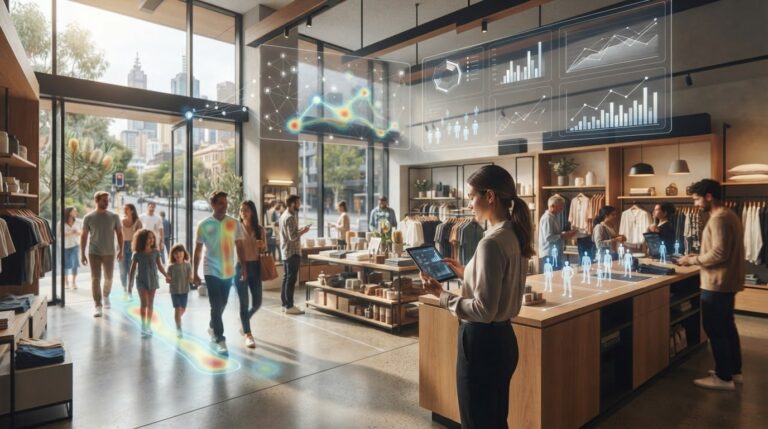
Traditional metrics used to stop at the entrance. Today, sophisticated analytics allow us to look deeper into the narrative of movement. We examine dwell time and zone engagement to understand the human behavior behind the statistics. While various people counting technologies have been available for years, modern AI integration has turned simple tallies into strategic insights. This information protects library assets by ensuring resources are deployed exactly where they’re needed most.
Justifying Funding and Budget Allocations
Securing national or local government grants requires a high level of transparency. You can’t rely on anecdotal evidence or intuition when you’re presenting a case for increased funding. Accurate visitor counting for libraries provides the objective proof needed during council reviews. It allows you to correlate visitor volume directly with program success, such as holiday workshops or community exhibitions. By presenting a clear ROI narrative, you demonstrate that your library is a high-performing community asset. This data-driven approach removes the guesswork from budget requests, making your funding submissions virtually unassailable.
Adapting to Shifting Community Needs
Library usage has changed significantly following the digital transformation of the last decade. Patrons now use physical spaces for diverse activities, from remote work to collaborative technology sessions. Many visitors utilize library high-speed internet to research further education and career pathways through platforms like CourseFinder. Identifying these trends is the key to future-proofing your facility. Analyzing movement patterns helps you understand how different zones are utilized throughout the day. If your quiet study areas are consistently at capacity while your media labs sit empty, the data will tell you. This insight allows for strategic planning that reflects actual community behavior.
- Optimise Facility Layouts: Use movement data to redesign underutilised zones based on actual traffic flow.
- Validate Programming: Measure the exact attendance of specific events to refine your community offerings.
- Enhance Service Quality: Ensure resources are available during peak periods to improve the visitor experience.
Strategic decisions should always be backed by empirical evidence. When you understand the flow of people through your building, you can make smarter choices about everything from furniture placement to long-term capital investments. This ensures your library remains a vital, relevant part of the community for years to come.
Precision Technology: How AI Sensors Transform Library Analytics
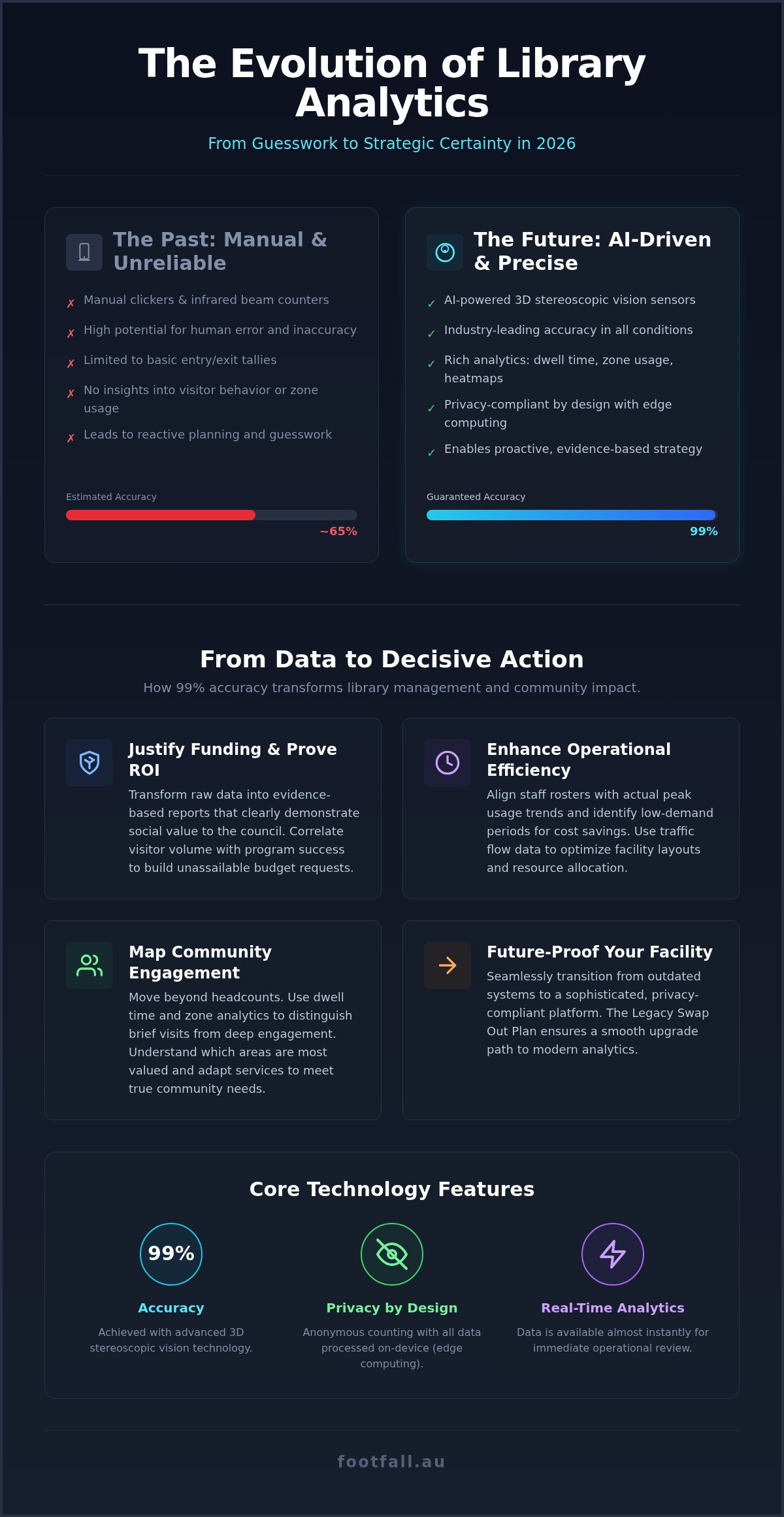
Manual clickers and infrared beam counters are relics of a previous era. While they provided a basic tally, they lacked the nuance required for modern visitor counting for libraries. The evolution toward 3D AI vision has fundamentally changed how we perceive physical space. Modern sensors don’t just count; they interpret. By using stereoscopic vision, these devices perceive depth and volume, allowing for a level of precision that was previously impossible. This technological leap ensures that your data is a reflection of reality rather than a rough estimate.
The FootfallCam Pro2 serves as the benchmark for this high-precision approach, achieving 99% accuracy even in the most challenging environments. A critical component of this performance is edge computing. Instead of sending raw video feeds to a central server, the sensor processes all data locally on the device. This allows for real-time analytics while significantly reducing bandwidth requirements. It also creates a robust foundation for turning statistics into actionable insights, as the data is available for review almost instantly.
Anonymous Counting and Data Privacy
In public service environments, maintaining community trust is paramount. Traditional CCTV systems often raise concerns about surveillance and facial recognition. AI-based sensors solve this by being anonymous by design. They don’t record identifiable features or store personal images. Instead, they convert human movement into mathematical coordinates. This approach ensures full compliance with Australian privacy standards and global data protection norms like GDPR. The technology even allows for granular reporting by distinguishing between adults and children based on height, providing deeper demographic insights without ever compromising individual identity.
Reliability in High-Traffic Public Spaces
Libraries often feature complex architectural elements like glass atriums, variable lighting, and wide entrances that confuse lesser sensors. AI-driven technology excels here by filtering out non-human objects such as book trolleys, strollers, and automatic doors. Whether it’s the glare of a summer afternoon or the dim light of a winter evening, the sensors maintain their calibration. To ensure the most accurate results, AI sensors distinguish between staff and visitors by identifying specific movement patterns or utilizing exclusion zones, ensuring the resulting data is a clean representation of community usage. If you’re looking to refine your facility’s data strategy, you might consult with a specialist to see how these sensors integrate with your specific floor plan.
- Stereoscopic Vision: Uses dual lenses to perceive depth, eliminating double-counting.
- Object Filtering: Ignores inanimate objects to keep counts focused on human visitors.
- Real-Time Processing: Edge computing ensures data is ready for analysis without delay.
- Privacy First: No personal data is captured, stored, or transmitted.
Interpreting Movement: Zone Analytics and Dwell Time
Entrance data provides the “how many,” but zone analytics explain the “why.” By utilising FootfallCam V9 Software, library managers can map the narrative of movement throughout their facility. This is a fundamental component of visitor counting for libraries that transcends simple tallies. It’s about interpreting human behavior. When we analyze movement, we see the library as a dynamic environment where every path taken reveals a story of community interest. This software allows you to visualize these stories, turning abstract movement into a structured map of facility utility.
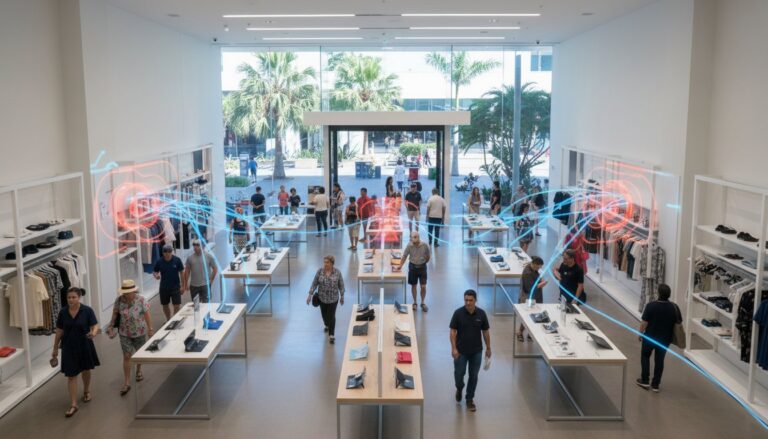
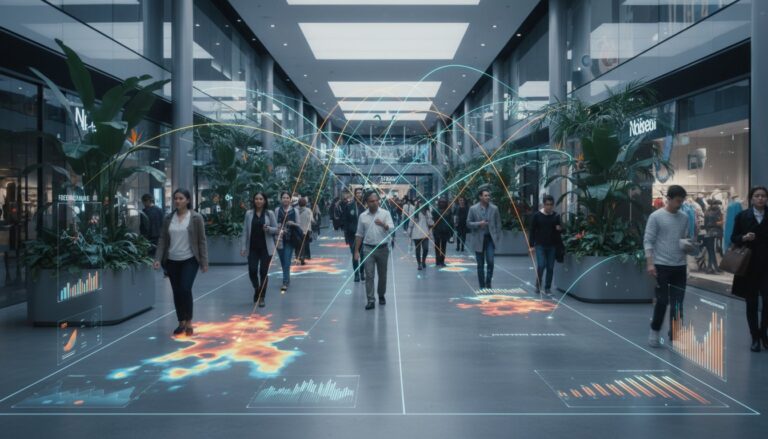
Understanding the distinction between “passing through” and “engaging” is vital for strategic management. This is measured through dwell time metrics. A visitor who walks through the lobby to return a book has a different impact than one who spends three hours in the reference section. High dwell times indicate deep engagement with your collections and services. By monitoring these metrics, you can move beyond attendance figures to measure the actual depth of your library’s community impact. Heatmapping further enhances this by visualising “hot zones,” which are areas with high traffic or long stays. These visual reports allow you to see exactly where your resources are most active at any given hour.
Optimising Library Layouts and Collections
Layout optimisation shouldn’t be based on intuition or tradition. Traffic flow analysis reveals how patrons naturally navigate your aisles and common areas. If your high-demand collections are tucked away in low-traffic corners, the data will highlight the friction points. Use these insights to relocate popular materials to more accessible areas or to redesign shelving for better flow. You can also measure the specific effectiveness of temporary displays or new technology hubs. If a new exhibition doesn’t increase dwell time in its designated zone, you’ve identified a “dead zone” that may require better signage, improved lighting, or a complete rethink of its placement.
Real-Time Occupancy Monitoring
Safety and comfort are essential for a positive visitor experience. Advanced visitor counting for libraries now includes real-time occupancy monitoring to manage capacity automatically. This is particularly useful during peak holiday periods or popular community events. This technology allows you to provide live “busyness” updates to students looking for quiet study spaces, reducing frustration and preventing overcrowding. Beyond visitor comfort, this data serves operational efficiency. You can automate HVAC and lighting systems based on real-time occupancy, ensuring that energy is only consumed in zones currently being used by patrons. This integration of movement data with building management systems represents the future of sustainable, responsive public spaces.
Strategic Implementation: Staffing, Funding, and Logistics
Operational efficiency in a library environment depends on the seamless alignment of resources with actual community demand. When you implement visitor counting for libraries, you move away from static scheduling toward a dynamic model of service delivery. This transition allows you to identify exactly when your facility is under-utilised or over-stretched. By integrating footfall data with other internal metrics, such as book loans or PC bookings, you create a holistic view of facility performance. This high-level overview is essential for identifying operational gaps and ensuring that every dollar of your budget is working as hard as possible. Automated reporting systems can then translate this data into the specific formats required by local councils and funding bodies, saving hours of manual administrative work.
Data-Driven Staff Rostering
Staffing represents one of the largest line items in any library budget. Optimising these costs requires a granular understanding of visitor-to-staff ratios throughout the day. By comparing historical traffic data with current rosters, you can identify peak periods where service quality might be compromised due to under-resourcing. Conversely, identifying consistent low-usage periods allows for strategic early closures or reduced staffing, significantly lowering operational overheads. Predictive analytics also help in preparing for high-traffic events, such as school holidays or local festivals, ensuring your help desks are fully operational when the community needs them most. To document the success of these community milestones, you can visit Festival City Photography. This objective approach reduces staff fatigue and ensures a consistent, high-quality visitor experience.
Securing Grants with Empirical Evidence
Funding bodies and state authorities now demand a high degree of accountability. Relying on the strategic use of people counting data transforms your grant applications from speculative requests into evidence-based proposals. Establishing baseline metrics allows you to measure the success of new community initiatives with mathematical precision. If you launch a new digital literacy program, you can track the specific increase in traffic to the relevant zone to prove its impact. Long-term longitudinal studies of library growth provide state authorities with the confidence that your facility is a vital and evolving community hub. This level of reporting transparency is often the deciding factor in securing large-scale capital grants.
Strategic management is built on the foundation of reliable information. To see how these analytics can be integrated into your specific reporting framework, request a consultation with Footfall Australia to explore a customised solution for your library network.
Future-Proofing Your Facility with Footfall Australia
Implementing a robust system for visitor counting for libraries requires more than just hardware installation; it demands a long-term commitment to data accuracy and system reliability. Footfall Australia provides this foundation through a national partner network that ensures seamless implementation across the country. Whether you’re managing a single metropolitan branch or a sprawling regional network, our infrastructure supports your growth. This localized expertise allows for precise sensor calibration tailored to the unique architectural nuances of Australian public buildings. By choosing a partner with a deep understanding of the local landscape, you ensure your analytics remain relevant as community behaviors evolve.
Scaling your system is a logical progression as you realize the value of high-precision data. You can expand from a pilot program in a single zone to a comprehensive, multi-library regional network without changing your core software. This scalability ensures that your initial investment remains protected while providing a unified view of community engagement across all your facilities. Consistent data across branches allows for better benchmarking and more effective resource sharing between locations.
The Legacy Swap Out Advantage
Many facilities still rely on outdated infrared beam or thermal counters that fail to capture the complexity of modern library usage. 2026 is the year to retire these legacy systems in favor of AI-powered vision. The Legacy Swap Out Plan simplifies this transition by minimizing disruption to your daily operations while upgrading your facility to enterprise-grade hardware. The swap-out plan provides an immediate ROI by replacing fragmented, unreliable tallies with a single source of 99% accurate truth. This accuracy is the baseline for all subsequent strategic decisions, from funding requests to facility redesigns.
A Partner in Library Excellence
We act as an observant and objective partner, helping you translate raw statistics into actionable strategic insights. Our expert consultants provide bespoke library analytics dashboards that focus on the metrics that matter most to your specific community. We don’t just provide numbers; we train your staff to interpret the narrative of movement within your halls. This empowers your team to identify behavioral trends and adjust services in real-time. Ensuring long-term hardware reliability with national maintenance plans means your facility stays ahead of shifting trends. Ongoing support and maintenance ensure that your visitor counting for libraries remains a trusted asset for years to come.
Transforming Library Management with Empirical Evidence
Transitioning from intuition to evidence-based management is the most significant step a library can take in 2026. You’ve seen how precise visitor counting for libraries moves beyond simple tallies to provide a deep narrative of movement and community engagement. By leveraging AI-driven insights, you can justify every budget request with 99%+ accuracy while optimizing staff rosters to meet actual demand. This objective approach ensures your facility remains relevant and highly efficient in an increasingly digital world.
Footfall Australia stands as your strategic partner in this evolution. We provide privacy-first technology that respects patron anonymity by completely avoiding facial recognition. Our national support and installation network ensures your facility has the foundation needed for long-term operational excellence. It’s time to turn your physical space into a transparent, high-performing community asset that serves as a resilient hub for the future.
Secure your library’s future with a data-driven consultation from Footfall Australia. We look forward to helping you build a more responsive and evidence-based environment for your community.
Frequently Asked Questions
How accurate are AI people counters in busy library environments?
AI-powered sensors like the FootfallCam Pro2 achieve 99%+ accuracy by utilizing stereoscopic vision to perceive depth and volume. This technology allows the system to accurately count individuals even when they enter in dense groups or follow overlapping paths through wide entrances. It’s a significant advancement over older technologies that often struggle with high-traffic volumes or complex movement patterns.
Do visitor counting systems record identifiable images of library patrons?
No, these systems are designed with a privacy-first architecture that avoids recording identifiable images of individuals. All data processing occurs at the edge on the device itself, converting human movement into anonymous mathematical coordinates. This ensures full compliance with Australian privacy standards and global GDPR norms without the use of facial recognition or storage of personal data.
Can people counters distinguish between adults, children, and staff members?
Yes, the technology identifies different demographics and roles through sophisticated AI filtering. Sensors distinguish between adults and children based on height thresholds and can exclude staff members from the final count using movement patterns or exclusion zones. This ensures your visitor counting for libraries reflects actual community usage rather than internal operational movement.
How does footfall data help in securing government funding for libraries?
Footfall data provides the empirical evidence required to prove facility utility and social value to funding bodies. By presenting automated reports that correlate visitor numbers with specific programs or service hours, you can build a transparent ROI narrative for council reviews. This objective data is often the deciding factor in securing state or local government grants for facility upgrades.
What is the difference between an AI people counter and a traditional beam counter?
Traditional beam counters rely on simple infrared breaks, which often result in double-counting or missed entries in busy spaces. AI counters use 3D vision to perceive the environment in three dimensions, allowing them to track the exact path of a visitor. This enables more than just simple counts; they provide advanced metrics like dwell time and zone engagement analytics.
Can I integrate visitor counting data with our existing library management software?
Integration is a core feature of modern visitor counting for libraries. The FootfallCam V9 Software is designed to export data via API, allowing you to correlate footfall trends with book loans or PC booking statistics. This creates a holistic view of how your resources are being utilized, helping you make more informed decisions about collection management and digital services.
Is it possible to track occupancy in real-time for specific study rooms?
Real-time occupancy tracking is entirely possible using advanced zone analytics. By placing sensors at the entrance of specific study rooms or quiet zones, you can monitor live capacity levels automatically. This data can be displayed on public screens to help students find available spaces or integrated into booking systems to manage facility usage more effectively during peak periods.
What kind of maintenance do these people counting systems require?
These systems require very little physical maintenance once they are professionally installed. Footfall Australia provides Basic and Premium Support Plans that include remote health checks, automated data validation, and software updates to ensure ongoing data integrity. A national partner network is also available to provide local technical assistance whenever a physical inspection or system expansion is required.