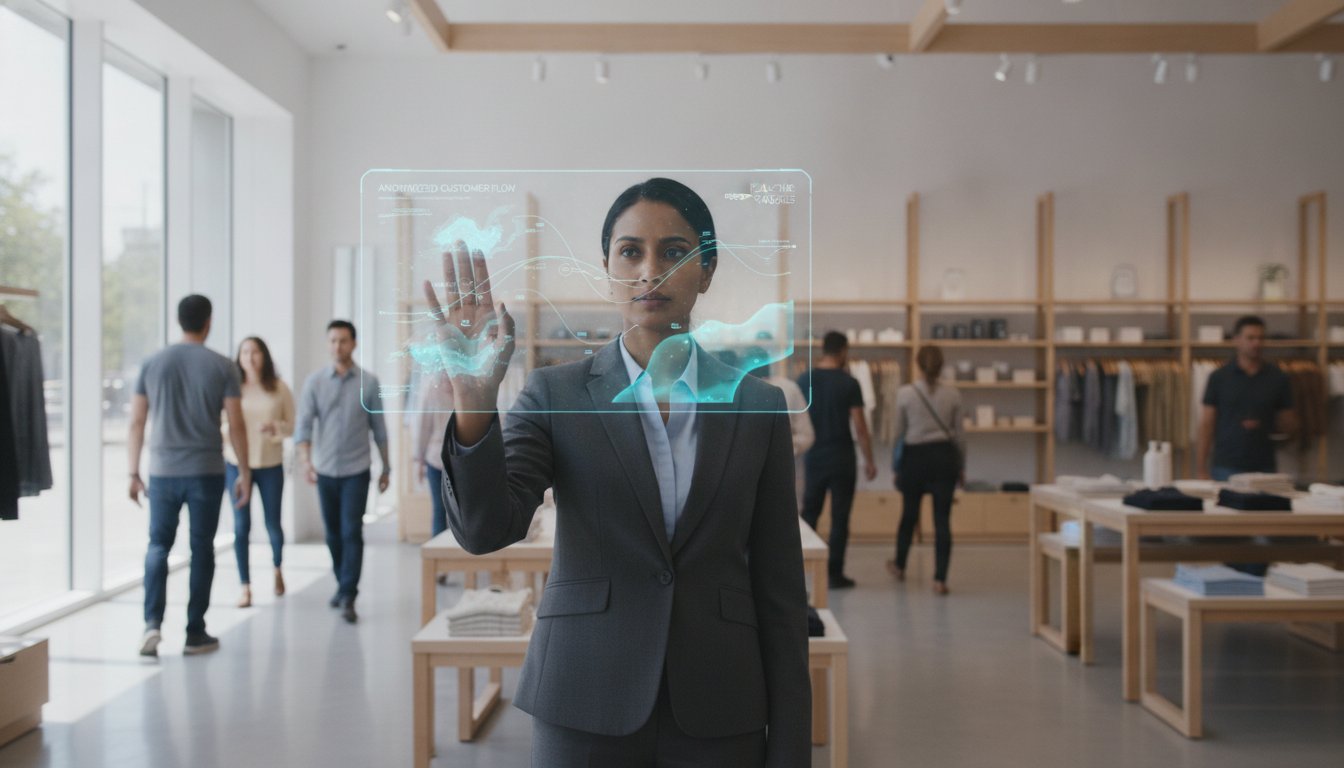
15 Critical Questions to Ask a People Counter Vendor Before Investing
A people counter that delivers only 80% accuracy isn’t just a minor technical flaw; it’s a strategic liability that leads to misallocated labor and lost revenue. While basic sensors might seem cost-effective, they often fail to distinguish between staff and customers, leaving you with skewed metrics that hinder growth. Identifying the right questions to ask a people counter vendor is the only way to move beyond intuition and secure a system built on empirical evidence. You know that data is only valuable if it leads to specific, positive change, yet the fear of inaccurate technology or a lack of local technical support is a valid concern when making such a critical investment.
This article equips you with a rigorous framework to evaluate potential partners and ensure your footfall data translates into measurable ROI. We’ll show you how to verify claims of 98% accuracy and ensure compliance with the Australian Privacy Act reforms taking effect on December 10, 2026. You’ll also learn how to vet vendors for the mandatory cybersecurity standards established in March 2026, ensuring your hardware remains secure and transparent. We’ve compiled 15 essential inquiries that cover everything from 3D stereo vision AI capabilities to long-term maintenance plans, providing the clarity you need to choose a reliable, data-driven partner.
Key Takeaways
- View people counting technology as a strategic partnership rather than a hardware purchase to optimize your staffing and marketing decisions.
- Master the specific questions to ask a people counter vendor regarding audited accuracy and the ability to filter non-customer movement.
- Evaluate how seamless software integration with existing systems turns raw footfall numbers into sophisticated business intelligence.
- Prioritize local Australian maintenance and scalable support plans to ensure your technical infrastructure remains reliable as your business grows.
- Use a structured procurement checklist to calculate the total cost of ownership and avoid hidden fees that erode your ROI.
Why Choosing the Right People Counter Vendor is a Strategic Business Decision
Selecting a vendor is not a simple procurement task; it’s a strategic investment in your organization’s operational visibility. You aren’t just buying a sensor to mount on a ceiling. You’re choosing a long-term data partner whose output will influence your most critical financial decisions. From optimizing staff schedules to negotiating lease renewals based on verified footfall, the stakes are exceptionally high. When refining your questions to ask a people counter vendor, look beyond the physical device and evaluate the long-term utility of the information provided. High-quality data can drive a 10% to 25% improvement in conversion rates within the first year, but this is only possible if the metrics are precise and actionable.
Low-quality sensors often introduce noise rather than clarity. If a system fails to distinguish between a group of shoppers and a single individual, or ignores staff movements, the resulting metrics are flawed. Bad data leads to overstaffing during quiet periods or missed sales opportunities during peak hours. A reliable vendor acts as a guardian of empirical truth, ensuring that every data point translates into a specific, positive change in your operations. Most retailers experience a return on their investment within three to six months when they prioritize data accuracy over the lowest initial hardware price.
The Evolution of Footfall Analytics in 2026
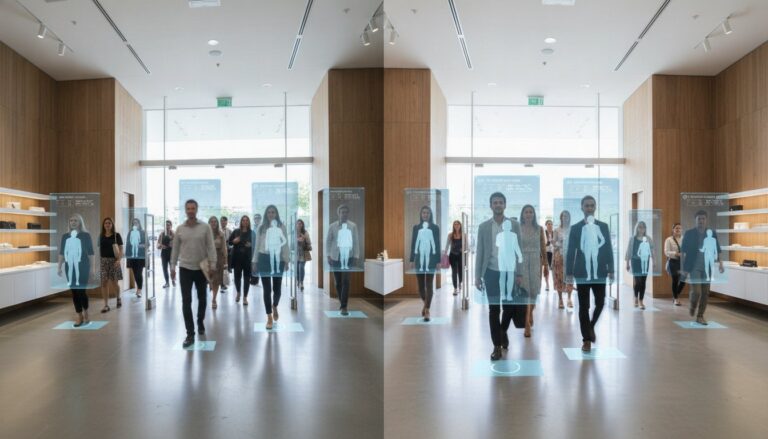
Modern People counter technology has moved far beyond the basic infrared beams of the past. In 2026, businesses have shifted away from using existing CCTV systems for analytics, instead adopting dedicated people counting technology like 3D stereo vision and AI-powered sensors. These sophisticated systems provide more than just a raw count; they offer deep insights into dwell times, heatmaps, and path tracking. This level of detail is essential for future-proofing your investment against shifting consumer behaviors. You need a vendor that understands how to process data “on-edge” to maintain privacy while delivering the granular metrics required for modern retail and public space management.
Moving Beyond Intuition to Empirical Evidence
Relying on gut feeling to manage a physical environment is a risk that modern organizations can’t afford. Accurate people counting provides a baseline for all other business metrics, turning subjective observations into data-driven strategic planning. When you have access to high-accuracy data (98% or higher), you can validate marketing effectiveness and measure the true impact of store layouts. The vendor you select serves as the gatekeeper of this empirical evidence. Their ability to provide clean, standardized business metrics ensures that your team spends less time questioning the numbers and more time executing strategies that drive growth and efficiency.
Questions Regarding Technical Accuracy and Environmental Adaptability
Accuracy isn’t a static number; it’s a performance metric that fluctuates based on the environment. When evaluating technology, one of the most vital questions to ask a people counter vendor is how their sensors perform under specific conditions like high-glare flooring or varying ceiling heights. You need a partner that offers verification services, where human auditors cross-examine video samples to confirm the AI’s count. Without this empirical proof, your business decisions rest on unverified assumptions rather than hard evidence. High-accuracy systems should consistently deliver 98% precision or higher, regardless of whether they are installed in a sun-drenched foyer or a dimly lit corridor.
AI vs. Legacy Sensors: The Accuracy Gap
The difference between legacy hardware and modern AI is stark. Older infrared beam counters often struggle to exceed 80-90% accuracy because they cannot distinguish between a single person and a group walking side-by-side. In contrast, the FootfallCam Pro2 utilizes 3D stereoscopic vision to create a depth map of the entrance. This allows the device to separate overlapping shadows and reflections from actual human movement. This level of precision is similar to the pedestrian monitoring system for safety used in large-scale public infrastructure projects. By leveraging edge computing, these sensors process data locally, ensuring high-speed analysis and 99% accuracy without compromising your network security.
Filtering and Data Refinement Capabilities
Raw data is rarely useful without refinement. You must demand proof of AI filtering capabilities that can exclude “noise” from your counts. Ask the vendor how their system handles the following scenarios:
- Staff Exclusion: Can the system remove employees from the count using wearable tags or privacy-compliant AI detection?
- Group Counting: Does the sensor identify families as a single buying unit or separate individuals?
- Object Filtering: Is the AI trained to ignore trolleys, strollers, and delivery pallets?
- Height Filtering: Can you set specific height thresholds to distinguish between adults and children for more accurate conversion rate tracking?
Height filtering is particularly essential for retailers who want to measure the effectiveness of their sales team based on adult shoppers who have purchasing power. If you’re managing a complex environment with wide entrances or heavy traffic, a professional technical consultation can help determine which filtering logic will best serve your operational goals. Choosing a vendor that prioritizes these refinements ensures that your footfall metrics remain a reliable foundation for your growth strategy.
Evaluating Software Capabilities and Data Integration
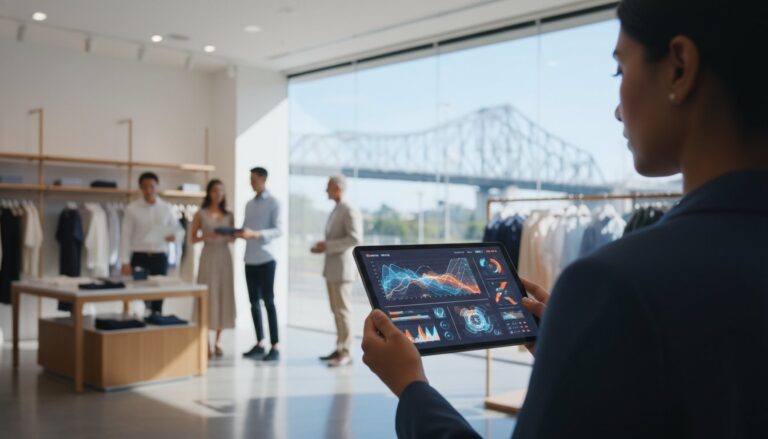
Hardware precision is only half the equation. The true value of your investment lies in the software’s ability to transform raw counts into actionable intelligence. One of the most essential questions to ask a people counter vendor is whether their platform integrates seamlessly with your existing Point-of-Sale (POS) and HR systems. Without this cross-platform synthesis, you’re looking at isolated numbers rather than a comprehensive view of your conversion rates and labor efficiency. You need a system that offers automated reporting and real-time alerts so that managers can respond to shifting floor traffic as it happens, rather than reviewing stagnant reports days later.
Data sovereignty is another non-negotiable point of inquiry. You must confirm that you own your raw data and have clear visibility into where it is stored. This transparency is vital for maintaining organizational security and ensuring long-term accessibility for your internal analytics teams. A sophisticated user interface should be designed for executives, providing intuitive visualizations that empower decision-makers without requiring a background in data science. When the reporting is simple and intuitive, it bridges the gap between technical innovation and practical daily application.
The Power of the FootfallCam V9 Software
Managing multiple sites requires a centralized dashboard that provides a unified view of national operations. The FootfallCam V9 Software excels here by offering a single source of truth for all locations. Through detailed footfall data analysis, businesses can identify peak hours with surgical precision and pinpoint low-performance zones that require immediate intervention. This software is built for integration, offering plug-and-play compatibility with third-party business intelligence tools. This ensures that your footfall metrics flow directly into the dashboards your team already uses, maximizing the utility of every data point collected.
Centroid: Leveraging Existing Infrastructure
For organizations with significant existing investments in security, the FootfallCam Centroid offers a strategic advantage. You should ask if the vendor can repurpose your current CCTV cameras to run AI-driven analytics. This approach is particularly effective for large-scale brownfield deployments where installing hundreds of new sensors isn’t feasible. The Centroid acts as a bridge, applying software-based AI overlays to existing video streams to generate accurate counts and heatmaps. This creates a balance between dedicated high-accuracy sensors at primary entrances and cost-effective AI overlays for broader area monitoring, allowing for a scalable and efficient rollout across your entire physical environment.

Deployment, Local Support, and Long-Term Scalability
Choosing a technology partner is a commitment that extends far beyond the initial installation. While hardware specifications are vital, the physical logistics of maintaining that hardware determine your long-term success. One of the most practical questions to ask a people counter vendor is how they handle on-site maintenance within Australia. If a sensor in a remote location malfunctions, relying on overseas support leads to significant data gaps and delayed ROI. You need a partner with a local presence that can provide physical intervention when remote troubleshooting reaches its limits.
Evaluating the installation process is equally critical. Ask whether the vendor provides a fully managed service or simply ships a DIY kit. A managed service ensures that sensors are mounted at the correct angles and heights for maximum accuracy, which is a detail often overlooked in self-installations. Additionally, inquire about the Legacy Swap Out Plan. As AI technology evolves, having a clear pathway to upgrade older hardware ensures your system doesn’t become a sunk cost. This forward-thinking approach protects your investment and keeps your data relevant as consumer behaviors shift.
Australian National Support Infrastructure
Accountability is best maintained through local proximity. Avoiding time-zone delays is essential for preserving data integrity; a system that stays offline for days due to slow communication is a system that fails to provide value. High-quality people counter support is the backbone of ensuring 99% system uptime across your entire network. Footfall Australia has maintained an established network of local partners since 2004, providing the physical reach necessary to support national rollouts. Whether you opt for a Basic Support Plan for essential coverage or a Premium Support Plan for proactive health monitoring, local expertise remains the differentiating factor.
Scalability for National Growth
Your chosen system must be capable of growing alongside your business. Ask potential vendors how their platform manages the addition of 50 or more new sites. A scalable solution relies on robust remote configuration and automated health monitoring to manage large fleets without overwhelming your internal IT resources. Budgeting for this growth also requires a clear understanding of the software model. While some vendors rely on recurring subscriptions, a perpetual license model often provides better long-term stability for capital expenditure planning. To ensure your infrastructure is ready for expansion, view our support plan options to see how we maintain data integrity at scale.
Navigating Your Procurement: A Checklist for Australian Decision Makers
Procurement is the final gatekeeper between a speculative investment and a high-yield operational asset. Transitioning from research to implementation requires a disciplined approach to vendor selection that prioritizes long-term data utility over short-term savings. Before signing a contract, you must consolidate your questions to ask a people counter vendor into a final shortlist that tests their local accountability and technical depth. We recommend requesting a Proof of Concept (PoC) in your highest-traffic or most architecturally challenging location. Testing a system in a controlled, high-stakes environment reveals how the AI handles real-world complexities like overlapping foot traffic and high-glare surfaces that laboratory specs often ignore.
Your final evaluation should center on the following five pillars:
- Audited Accuracy: Can the vendor provide human-verified reports of 98% precision in environments similar to yours?
- Local Infrastructure: Does the vendor have a physical support presence in Australia to handle on-site maintenance and hardware swaps?
- System Integration: Will the footfall data flow directly into your existing POS or HR software via a robust API?
- Data Sovereignty: Do you retain full ownership of the raw data, and is the storage compliant with the 2026 Australian Privacy Act reforms?
- Total Cost of Ownership: Does the quote include installation, ongoing technical support, and future firmware updates?
Prioritize vendors with a proven track record in people counting systems Australia to ensure your infrastructure is supported by experts who understand the local retail and public space landscape.
Calculating Your Potential ROI
Data accuracy is the primary driver of profit margin in physical space management. When your footfall metrics are precise, you can identify exactly where labor costs are being wasted and where sales opportunities are being missed. For example, reducing staff overages by just 5% through better schedule alignment can often pay for the entire system within a few months. Return on Investment in people counting is the measurable financial gain derived from aligning operational resources with verified human traffic patterns. This framework ensures that every dollar spent on technology is tied to a specific operational improvement.
Final Vendor Red Flags to Watch For
Quiet confidence is built on transparency, so be wary of vendors who provide vague accuracy claims or lack local case studies. A significant red flag is a proprietary data silo that makes it difficult or expensive to export your information to other platforms. Demand a live software demo using real-world Australian data rather than pre-rendered marketing clips. If a vendor cannot show you how their system handles a busy Saturday afternoon in a local shopping center, they likely aren’t prepared for the complexities of your environment. For a comprehensive review of your current or planned infrastructure, contact Footfall Australia for a professional system audit to ensure your data remains an asset rather than a liability.
Securing Your Strategic Advantage with Precise Analytics
Investing in footfall analytics is a commitment to operational clarity. It’s a move that shifts your business beyond intuition and into a realm of evidence-based decision-making. As we’ve explored, achieving high-accuracy data depends on more than just a sensor; it requires sophisticated AI filtering, seamless software integration, and a dedicated local support network. By mastering the specific questions to ask a people counter vendor, you ensure that your technology partner can meet the rigorous demands of the 2026 regulatory environment while delivering a measurable return on investment.
Footfall Australia has been serving the national market since 2004. We provide proprietary AI-driven FootfallCam technology that’s backed by a 98% audited accuracy guarantee. Our team is ready to help you navigate the complexities of deployment, from initial hardware selection to long-term maintenance. Request a tailored consultation from Footfall Australia today to discover how precise movement data can transform your physical environment. Secure the empirical foundation your organization needs to stay ahead of shifting behavioral trends and drive sustainable growth.
Frequently Asked Questions
How do I verify the accuracy of a people counting system?
You verify accuracy by requesting a human-audited validation report from your provider. This process involves a technician cross-checking a recorded video sample against the system’s automated count to confirm precision levels. It’s one of the essential questions to ask a people counter vendor during the procurement phase to ensure your data is reliable. Without this empirical proof, you’re relying on theoretical specifications rather than real-world performance.
What is the difference between a video-based counter and an infrared beam?
Video-based counters use sophisticated AI to interpret movement and depth, while infrared beams rely on a simple break in a light signal. Infrared systems often struggle with groups or people walking side-by-side, leading to significant undercounting. 3D stereoscopic vision provides the spatial awareness needed to separate individual shoppers in high-traffic zones. This technology ensures that human actions are interpreted as distinct events rather than raw, overlapping statistics.
Do people counters comply with Australian privacy laws and GDPR?
Professional systems ensure compliance by processing all visual data on the device itself, a method known as “on-edge” processing. No facial images or personally identifiable information are stored or transmitted to the cloud. This design aligns with the strict requirements of GDPR and the upcoming Australian Privacy Act reforms scheduled for December 2026. This approach treats physical presence as a sequence of actions without ever compromising individual anonymity.
Can I use my existing CCTV cameras for people counting?
You can repurpose existing CCTV infrastructure by using an AI processor like the FootfallCam Centroid. This device connects to your video streams and applies analytical overlays to generate counts and heatmaps. While dedicated 3D sensors offer the highest precision for narrow entrances, this software-driven approach is an efficient way to monitor expansive areas. It allows you to leverage existing hardware while gaining the strategic advantage of AI-driven analytics.
What is the typical lifespan of a professional people counting sensor?
A high-quality people counting sensor typically has an operational lifespan of five to seven years. While the physical hardware is built for durability, the system’s utility is maintained through regular firmware updates and software enhancements. Planning for a hardware refresh every few years ensures you’re leveraging the latest advancements in AI. This long-term thinking protects your investment and keeps your data relevant as consumer behaviors continue to shift.
Is there a difference between “visitor counting” and “people counting”?
“Visitor counting” is a legacy term often associated with raw traffic volume, whereas “people counting” encompasses a broader narrative of human behavior. Modern systems distinguish between staff and customers, track group movements, and measure dwell times. This shift from simple statistics to behavioral insights is what empowers strategic growth. It transforms a basic set of numbers into a sequence of actionable insights that can be used to optimize operations.
What happens if the internet goes down at my site?
If your internet connection fails, the system continues to count and store data locally on the device’s internal memory. Once the network is restored, the sensor automatically synchronizes the stored logs with the FootfallCam V9 software. This ensures no data gaps occur during temporary outages, maintaining the integrity of your long-term reports. Your data remains secure and accessible, allowing for continuous observation of physical environments without technical interruptions.
How much does a professional people counting system cost in Australia?
The total investment for a system depends on the complexity of your environment and the level of support required. Costs generally include the initial hardware, professional installation, and ongoing software access through a support plan. While basic sensors might seem cheaper initially, enterprise-grade AI systems provide the accuracy needed to justify the expenditure. Evaluating the total cost of ownership ensures you’re investing in a long-term data partnership rather than a one-off hardware purchase.