
The Hidden Costs of People Counting Systems: A 2026 Guide to Total Cost of Ownership
What if the most expensive people counting system you ever buy is actually the one with the lowest initial price tag? It is a common trap for many organizations. Most leadership teams focus strictly on the upfront hardware expense, only to be blindsided later by the hidden costs of people counting systems that demand constant manual data verification and suffer from unpredictable subscription fee hikes. You likely already feel the strain of high manual labor costs when your team has to double-check automated reports that simply don’t align with reality.
We’re here to provide a transparent roadmap to total cost of ownership in 2026, especially as shifting privacy regulations change the technical requirements for data collection. This guide helps you secure a high-ROI solution by breaking down the critical differences between CAPEX and OPEX models. You’ll learn how to identify systems that provide 98-99% accuracy without the need for constant human intervention. We will also examine why local technical support is the only way to prevent costly downtime. This analysis moves beyond intuition to provide the empirical evidence needed to choose a system with predictable long-term costs that empowers your organization to optimize staffing and improve conversion rates by up to 25%.
Key Takeaways
- Understand why the initial “sticker price” of a sensor typically accounts for less than 40% of the total cost of ownership over its functional lifecycle.
- Identify the hidden costs of people counting systems related to manual data cleaning and the expensive labor hours required to audit low-accuracy sensors.
- Evaluate how physical infrastructure choices, such as Power over Ethernet (PoE) versus Wi-Fi, dictate both installation budgets and long-term system reliability.
- Discover the financial impact of “ghost” peak hours, where inaccurate data leads to significant wage wastage or missed revenue from understaffing.
- Learn how to achieve a transparent cost structure by leveraging local technical expertise and high-precision hardware like the FootfallCam Pro2.
Defining Total Cost of Ownership (TCO) in People Counting
Total Cost of Ownership (TCO) represents the comprehensive financial commitment required to maintain an operational data stream. It isn’t merely the price of the hardware; it’s the sum of purchase, installation, and daily operational expenses over the system’s entire lifecycle. In the current 2026 market, the initial “sticker price” of a sensor often represents less than 40% of the true expenditure over a five-year period. Organizations that fail to account for the hidden costs of people counting systems often find themselves trapped in a cycle of reactive spending and data mistrust.
Modern People counting systems have shifted toward AI-driven efficiency, which fundamentally alters the TCO landscape. While older technologies required frequent manual recalibration, 2026 standards prioritize autonomous accuracy. This shift means that a higher initial investment in intelligent hardware often results in a lower TCO by reducing the long-term need for human oversight. By analyzing the distinction between hardware (CAPEX) and ongoing labor or subscriptions (OPEX), businesses can build a more resilient financial strategy.
The CAPEX vs. OPEX Debate
Choosing between a one-time hardware purchase and a recurring software-as-a-service (SaaS) model is a strategic financial decision. Many Australian organizations prefer the stability of perpetual licenses, as they protect against predatory subscription models where vendors increase prices annually without adding proportional value. A SaaS model might look attractive on a quarterly budget, but the cumulative cost over several years can quickly exceed the price of a high-end, owned system. Predictable pricing structures, like those found with FootfallCam V9 software, help managers maintain long-term budget integrity without worrying about sudden fee hikes.
Why “Cheap” Sensors Fail the TCO Test
There is a direct, inverse correlation between low hardware costs and the amount of manual management required. A budget sensor that offers only 85% accuracy isn’t a bargain; it’s a liability that demands hours of weekly auditing from your staff. Total Cost of Ownership is the aggregate of all direct procurement and installation costs combined with the indirect labor expenses required for data verification and ongoing system maintenance. When a manager must spend several hours every week “fixing” data to match sales records, the low-cost system has already failed the TCO test. Premium solutions, such as the FootfallCam Pro2, eliminate these hidden costs of people counting systems by delivering high-precision data that requires minimal manual intervention.
Technical Debt: The Hidden Costs of Accuracy and Data Cleaning
Technical debt in retail analytics often manifests as a reliance on sub-optimal data streams. When a sensor claims 90% accuracy, it sounds sufficient on paper. However, a 10% error rate represents a significant failure in operational logic. This discrepancy forces management to implement manual auditing processes to ensure the data is actionable. These hidden costs of people counting systems accumulate quickly, as staff spend their valuable time “fixing” figures rather than using them to drive growth.
A comprehensive view of Total Cost of Ownership (TCO) must include the indirect labor required to maintain data integrity. High-resolution video processing for AI requires substantial server resources and storage capacity. Many vendors fail to mention the invisible fees associated with hosting this data. Integration friction also arises when systems lack native compatibility with existing POS or HR software. Custom API development to bridge these gaps can cost thousands in unbudgeted developer hours.
The Manual Auditing Tax
Manual verification is the most persistent drain on a project’s ROI. If your team spends five hours a week cross-referencing low-quality video feeds against footfall reports, the annual labor cost alone can exceed the price of the hardware. Environment-specific challenges like shifting shadows, harsh lighting, or dense groups often confuse basic sensors, leading to inflated error rates. FootfallCam Pro2 technology addresses this by automating accuracy verification. It provides a transparent audit trail that eliminates the need for constant human intervention. You can explore high-precision sensors that automate this verification process to reduce your operational overhead.
Software Licensing and Hidden Tiers
Vendor transparency is critical when evaluating people counting technology. Some providers use “hidden” software tiers where essential reporting features or heatmaps are locked behind premium paywalls. You might also find that a vendor charges a fee just to access your own information via an API. This “data hostage” model makes it difficult to scale or integrate insights across multiple departments. Ensure your contract includes comprehensive analytics and data export capabilities in the base price to avoid these hidden costs of people counting systems during your second and third years of operation.
Infrastructure and Deployment: The Physical Costs of Implementation
Physical deployment is where many organizations encounter the most significant hidden costs of people counting systems. It’s easy to overlook the logistical complexity of running Cat6 cabling to every entrance, especially in heritage buildings or expansive shopping centers. While Wi-Fi solutions seem cheaper during the initial quote, they often suffer from signal interference and higher long-term maintenance needs. Power over Ethernet (PoE) provides a stable, unified connection for both power and data. This ensures that hardware like the FootfallCam Pro2 remains online without the connectivity drops that plague wireless alternatives in high-traffic environments.
Compliance represents another critical fiscal variable. With significant reforms to the Australian Privacy Act taking effect in December 2026, using non-compliant hardware can lead to expanded enforcement powers from the OAIC. Investing in privacy-preserving technology from the start avoids the catastrophic cost of forced system removals or legal penalties. Additionally, many vendors operate from overseas time zones, creating a “support penalty” where critical technical issues remain unresolved for days. Choosing a partner with a local Australian presence ensures that technical help is available during your business hours, preventing prolonged data gaps and operational downtime.
Professional Installation vs. DIY
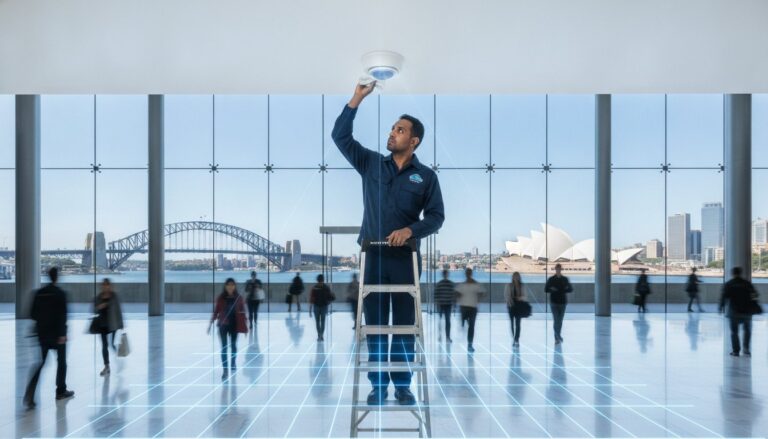
Attempting a DIY installation often results in expensive re-work costs. Sensors placed at incorrect heights or angles fail to capture accurate metrics, which leads to flawed business logic. A national partner network ensures consistent deployment standards across multiple sites, regardless of location. Proper sensor calibration during initial installation prevents long-term data drift and ensures that the system remains a reliable source of truth for years. This precision is essential for maintaining the integrity of your footfall metrics over time.
Maintenance and Legacy Systems
Hardware failures are a reality over a five-year lifecycle. If you’re dealing with international vendors, the shipping and replacement logistics can be prohibitively slow and expensive. Utilizing a Legacy Swap Out Plan allows you to modernize outdated infrastructure while minimizing the cost of a total system replacement. Remote health monitoring further optimizes your TCO by identifying potential issues before they require an on-site technician visit. These proactive measures eliminate many of the hidden costs of people counting systems by extending the functional life of your hardware and reducing the frequency of physical maintenance calls.

The Invisible Expense: How Data Inaccuracy Impacts ROI
Financial leakage in retail and facility management often stems from a lack of data integrity. When a system undercounts visitors, it creates “ghost” peak hours where high-traffic periods go unnoticed by management. This leads to chronic understaffing, resulting in long queues and missed revenue opportunities. Conversely, inflated counts cause wage wastage through overstaffing. These operational inefficiencies are among the most damaging hidden costs of people counting systems because they are often misidentified as poor staff performance rather than technical failure.
Marketing departments also suffer when data is unreliable. Allocating a significant budget to a campaign that appears successful only because of a sensor error is a direct hit to profitability. Over time, this creates a “Trust Deficit” within the organization. When the board or stakeholders stop believing the metrics, the entire investment becomes a sunk cost. High-quality data is the only foundation for strategic growth, and without it, decisions are based on intuition rather than empirical evidence. You can consult with our experts to ensure your data remains a reliable asset for your business.
Quantifying the Cost of a 5% Error
Precision is not a luxury; it is a mathematical necessity for labor optimization. Research indicates that data-driven scheduling can lead to a 5-15% reduction in labor costs when implemented correctly. For an Australian retailer, a mere 5% error in footfall data can translate to thousands of dollars in unnecessary wages or lost sales every month. Effective retail footfall analysis Australia relies on this precision to optimize conversion rates, which can improve by 10-25% in the first year of using accurate metrics. This ripple effect extends to inventory management and lease negotiations, where every percentage point of accuracy strengthens your bargaining position.
Strategic Alignment and Data Integrity
Justifying facility management budgets requires audit-ready information that stands up to board-level scrutiny. If primary data is questioned, the organization often incurs the cost of secondary audits or manual re-counting to verify the numbers. This duplication of effort is another example of the hidden costs of people counting systems that lack autonomous validation features. Ensuring your footfall data analysis is verifiable from day one protects your professional credibility. Accurate reporting empowers you to present a clear, evidence-based narrative of movement and human behavior that justifies every operational expense.
Procurement Strategy: Eliminating Hidden Costs with Footfall Australia
Strategic procurement requires moving beyond the initial purchase price to evaluate the long-term stability of your data provider. Footfall Australia addresses the hidden costs of people counting systems by offering a transparent framework rooted in local expertise and a national network of installation partners. This localized approach ensures that technical implementation aligns with Australian operational standards and specific environmental conditions. By choosing hardware like the FootfallCam Pro2 and pairing it with V9 Software, organizations gain a predictable cost structure that eliminates the financial uncertainty often found in overseas contracts.
Growth shouldn’t be penalized by exponential software fee increases. Many vendors implement a “growth tax” where the cost per sensor rises sharply as you scale your network. Our model prioritizes scalability, allowing you to add sensors without inflating your operational budget disproportionately. Comprehensive support plans further protect your investment by ensuring your hardware remains functional and your data stays accurate as technology evolves. This ensures that the utility of your information remains high without requiring constant budget re-approvals for maintenance.
Choosing a Partner, Not Just a Vendor
System downtime is a direct threat to your ROI. Reliable people counter support is essential for maintaining data integrity over a multi-year lifecycle. Footfall Australia offers both Basic and Premium Support Plans to cater to different organizational risk profiles and technical needs. For those managing aging infrastructure, the Legacy Swap Out Plan provides a cost-effective pathway to modernize your tech stack without the expense of a complete greenfield deployment. These programs ensure that technical obsolescence never becomes a silent drain on your operational resources.
Final Checklist for a Hidden-Cost-Free Procurement
Before finalizing any agreement, you must verify the “all-inclusive” nature of the provided analytics dashboards and reporting tools. Ask vendors specific questions about their 5-year TCO and whether they charge additional fees for API access to your own data. Verifying these details early prevents the hidden costs of people counting systems from surfacing during the second or third year of operation. Use this checklist to evaluate potential partners:
- Is the software license perpetual or subject to unpredictable annual hikes?
- Does the support plan include automated remote health monitoring?
- Are there additional charges for data export or integration with existing systems?
- Is there a dedicated local team available for on-site maintenance across Australia?
Your technology procurement process should be governed by the same data-driven logic you apply to your visitor metrics.
Securing Your Operational Future with Data-Driven Logic
Selecting a people counting solution is a long-term strategic commitment that extends far beyond the initial sensor purchase. We’ve explored how technical debt, infrastructure choices, and the ripple effects of data inaccuracy can silently erode your operational ROI. By prioritizing high-precision hardware and transparent licensing models, you eliminate the hidden costs of people counting systems that often blindside organizations during their second or third year of operation. It’s about shifting from intuition-based management to a foundation of empirical evidence.
Footfall Australia has served Australian businesses since 2004, providing the expertise needed to transform raw movement into actionable strategy. Our proprietary FootfallCam Pro2 AI technology and national partner network ensure you have the local support and technical reliability required to maintain a consistent source of truth. Don’t let unpredictable maintenance or manual auditing drain your resources. Request a Transparent TCO Consultation with Footfall Australia today to build a high-ROI roadmap for your facility. Empower your team with metrics that lead to specific, positive changes in your physical environment.
Frequently Asked Questions
What is the biggest hidden cost in people counting systems?
The most substantial hidden costs of people counting systems arise from manual data verification and auditing. When hardware provides sub-par accuracy, staff must spend valuable hours manually cross-referencing video feeds to clean the data. This indirect labor expense often exceeds the initial purchase price within the first year. High-precision systems like the FootfallCam Pro2 mitigate this by automating verification, ensuring your team focuses on strategic growth rather than administrative data correction.
Are subscription fees for people counters always necessary?
Recurring subscription fees aren’t always a requirement for maintaining an operational system. While many cloud-based providers enforce monthly charges, FootfallCam V9 Software offers more flexible structures. Users receive a one-year subscription with their purchase, after which they can transition to basic editions or utilize perpetual licenses. This approach provides long-term budget stability and prevents the “growth tax” associated with adding more sensors to your existing network.
How much does professional installation typically add to the total cost?
Professional installation typically accounts for a significant portion of the initial budget, often ranging between $200 and $1,000 per sensor depending on site complexity. While DIY options seem cheaper, they frequently lead to expensive re-work costs due to poor sensor positioning or incorrect calibration. Investing in a national partner network ensures your deployment meets Australian standards from day one, which prevents the data drift that compromises long-term technical reliability.
Can inaccurate people counting data actually cost my business money?
Inaccurate data directly impacts your bottom line through wage wastage and missed revenue opportunities. If your system undercounts visitors, you’ll likely face understaffing during peak hours, leading to poor customer experiences and lost sales. Conversely, overcounting results in unnecessary labor expenses. Identifying the hidden costs of people counting systems helps retailers improve conversion rates by 10-25% by aligning staff levels with actual footfall patterns.
What is the difference between CAPEX and OPEX in people counting?
CAPEX refers to the initial capital expenditure for hardware and installation, whereas OPEX covers ongoing operational expenses. In people counting, OPEX includes software subscriptions, technical support plans, and the labor required for data management. Organizations often prefer a higher CAPEX for high-quality sensors to minimize recurring OPEX. Balancing these two financial models is critical for achieving a sustainable total cost of ownership over a five-year equipment lifecycle.
How often do people counting sensors need to be replaced or maintained?
Modern AI sensors are designed for longevity, but you should budget approximately 5-10% of the hardware cost annually for maintenance and software updates. Routine remote health monitoring can identify issues before they require a physical technician visit. If your technology becomes obsolete, a Legacy Swap Out Plan allows you to modernize your infrastructure without the expense of a full greenfield deployment. This proactive approach ensures your system remains audit-ready.
Does Footfall Australia offer local technical support for their systems?
Footfall Australia provides comprehensive local technical support through a national network of partners. This local presence eliminates the “overseas support penalty” where time zone differences cause prolonged system downtime. Whether you choose a Basic or Premium Support Plan, having Australian-based experts ensures that technical help is available during your business hours. This localized service is essential for maintaining data integrity and protecting your long-term technological investment.
Is there a cost to integrate people counting data with my POS system?
Integration costs often involve API access fees or custom development hours to connect footfall metrics with other business systems. While data integration is vital for calculating conversion rates, some vendors charge high recurring fees for API usage. It’s important to verify the “all-inclusive” nature of your software contract before procurement. FootfallCam V9 Software aims for transparency, helping you avoid unexpected charges when you decide to sync movement data with your broader analytics stack.