
Retail Staff Optimisation Sydney: A Data-Driven Guide to Smarter Scheduling
The familiar cycle of a Sydney retail week: quiet Tuesday mornings with staff standing idle, followed by a frantic, under-resourced Saturday afternoon where potential sales walk out the door. For too long, rostering has been a high-stakes guessing game, driven by last year’s figures and a manager’s intuition. This approach not only inflates wage costs but also risks staff burnout and compromises the customer experience.
It’s time to replace that uncertainty with precision. The future of retail staff optimisation Sydney businesses are now embracing is not about guesswork; it’s about data. It’s about aligning your most valuable asset-your team-with the precise ebb and flow of customer foot traffic, hour by hour. This guide provides the actionable framework to move beyond intuition. You will learn how to leverage visitor analytics to build intelligent schedules that reduce wage costs, ensure every sales opportunity is captured, and create a more balanced, productive environment for your team.
Key Takeaways
- Align your staffing levels precisely with customer traffic patterns to reduce wage costs and capture every sales opportunity.
- Implement a practical, step-by-step process to convert raw visitor data into an intelligent, cost-effective staff roster.
- A successful strategy for retail staff optimisation Sydney requires moving beyond reactive sales data to proactively matching staff presence with validated customer footfall.
- Extend the power of footfall analytics beyond the roster to make strategic decisions on marketing, store layout, and peak-hour operational tasks.
The High Cost of ‘Guesswork’ Scheduling in Sydney’s Competitive Retail Market
In Sydney’s fast-paced retail environment, success is measured in margins. With some of the highest commercial rents in the world and relentless competition, every operational decision carries significant financial weight. Yet, many retailers still rely on intuition or past sales reports to build staff rosters-a practice that creates a fundamental misalignment between team presence and actual customer traffic. This guesswork is the antithesis of modern workforce optimization strategies, which are built on data-driven precision. The result is a cycle of inefficiency that directly damages your bottom line through two costly scenarios: overstaffing and understaffing.
Achieving effective retail staff optimisation in Sydney is no longer a luxury; it’s a core component of financial viability. When your scheduling is misaligned, you are either paying for unproductive time or missing out on valuable sales opportunities. Both outcomes are unsustainable in a market that demands peak efficiency.
The Financial Drain of Overstaffing
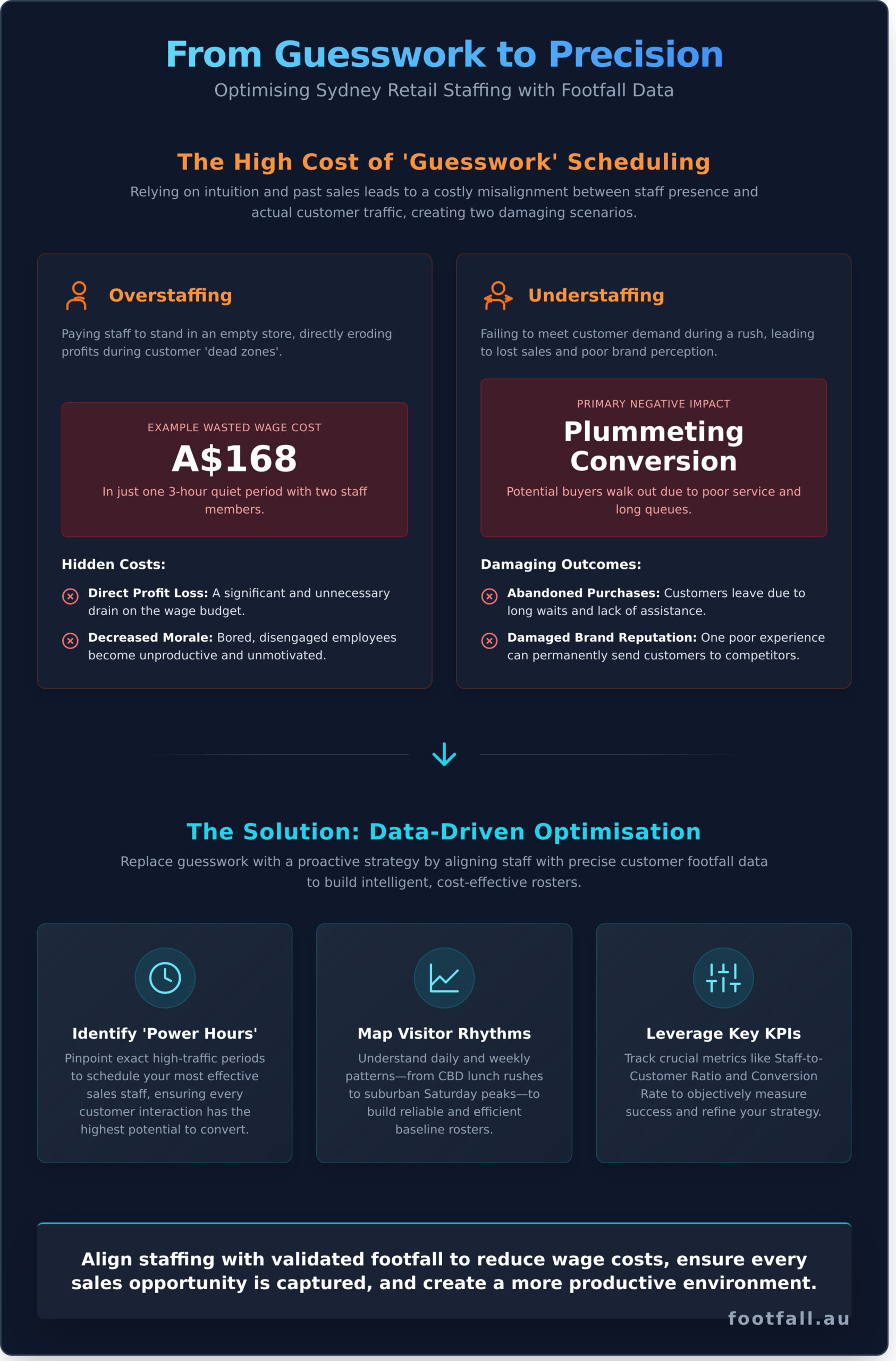
Paying staff to stand in an empty store is one of the most direct ways to erode profits. These ‘dead zones’ in customer traffic represent a significant drain on your wage budget. Beyond the obvious expense, overstaffing leads to hidden costs like decreased morale and productivity as bored employees become disengaged. The impact is immediate and measurable.
- Simple Calculation: Consider two staff members on a typical retail award rate of A$28/hour. During a three-hour quiet period, the wasted wage cost is: 2 staff x A$28/hour x 3 hours = A$168 of pure loss.
The Lost Opportunities of Understaffing
The opposite scenario is equally damaging. When your store is understaffed during an unexpected rush, the customer experience suffers immediately. Long queues, unavailable fitting rooms, and a lack of assistance lead directly to abandoned purchases and plummeting conversion rates. In the competitive Sydney landscape, a single poor experience can permanently damage your brand reputation, sending valuable customers straight to your competitors next door.
The Foundation of Optimisation: Understanding Your Sydney Store’s Traffic Patterns
Effective retail staff optimisation in Sydney begins with a single source of truth: customer footfall data. For too long, managers have relied on ‘gut feel’ or, at best, sales data to build rosters. While sales figures tell you what was purchased, they reveal nothing about the customers who walked out due to poor service or long queues. This blind spot represents a significant loss of potential revenue.
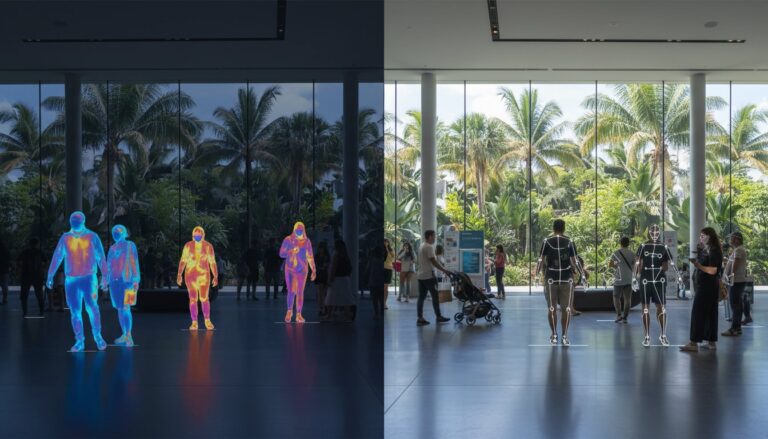
Accurate traffic analysis, powered by modern people counting technology, fills this critical information gap. It moves your scheduling from reactive guesswork to a proactive, data-driven strategy. By understanding the precise flow of people into and through your space, you gain the intelligence needed to align your most valuable asset-your staff-with your biggest opportunities.
Identifying Your Store’s ‘Power Hours’
Your ‘Power Hours’ are the specific, high-traffic periods when your store is busiest with potential buyers. Footfall data pinpoints these times with scientific precision, often revealing peaks that sales data alone might miss. This allows you to schedule your most skilled sales associates during these windows, ensuring every customer interaction has the highest potential to convert into a sale and maximising your return on staff investment.
Mapping Daily and Weekly Visitor Rhythms
Beyond hourly peaks, your store has a unique rhythm. This includes predictable patterns like weekday lunch rushes in the CBD versus the sustained traffic of a Saturday in a suburban shopping centre. It also accounts for variables like major Sydney events or even weather patterns that can disrupt the norm. By mapping these flows, you build a reliable baseline for your roster, creating a stable and predictable schedule that not only improves efficiency but has been proven to result in increased sales and reduced labor hours.
Leveraging Key Performance Metrics
Traffic data becomes truly powerful when integrated with your sales figures to create actionable Key Performance Indicators (KPIs). These metrics provide clear, objective feedback on your scheduling effectiveness.
- Staff-to-Customer Ratio: This tracks how many staff are available per customer in the store. Maintaining an optimal ratio is crucial for ensuring high service quality without overstaffing and incurring unnecessary wage costs.
- Sales Conversion Rate: Calculated by dividing the number of transactions by the number of visitors, this is the ultimate measure of performance. A drop in conversion during a busy period is a clear signal that your team was under-resourced and missed sales opportunities.
A Step-by-Step Guide to Data-Driven Staff Scheduling
Transitioning from intuitive rostering to a data-led strategy is a structured process. It replaces guesswork with precision, transforming your staffing into a dynamic asset that responds directly to customer behaviour. This four-step framework provides a clear path to achieving effective retail staff optimisation Sydney stores require, creating a continuous cycle of improvement rather than a one-time fix.
Step 1: Establish Your Baseline Traffic Data
First, gather a robust data set. We recommend collecting at least two to four weeks of continuous footfall data to form a reliable baseline. Within your analytics dashboard, identify the clear hourly, daily, and weekly trends. For a store in Pitt Street Mall, this will reveal the predictable lunchtime rush, the Thursday late-night shopping surge, and the peak weekend traffic. It’s also crucial to note and understand any anomalies, such as a dip in traffic during a public holiday like Anzac Day, to ensure they don’t distort your core patterns.
Step 2: Calculate Your Optimal Staffing Ratio
With your traffic patterns mapped, the next objective is to find your “sweet spot”-the ideal ratio of staff to customers that maximises sales conversions without overstaffing. Analyse your historical sales data against staffing levels. Did having three team members on the floor during Saturday’s peak actually improve your conversion rate compared to having two? Define a target ratio for different periods: peak, average, and quiet hours. This metric becomes the foundation of your new, efficient roster.
Step 3: Build Your New, Data-Informed Roster
Now, build your roster by mapping required staff hours directly against your traffic curve. This visual alignment ensures your coverage is strongest during your identified “Power Hours”-those crucial periods of high opportunity. Conversely, schedule non-customer-facing tasks like restocking, visual merchandising, or staff breaks during predictable lulls, such as a quiet Tuesday morning. This ensures your team’s focus is on the customer when it matters most.
Step 4: Monitor, Measure, and Refine
Implementation is not the final step. Once the new roster is active, closely monitor its impact on key performance indicators like conversion rates, average transaction value, and customer wait times. Gather qualitative feedback from your staff-are they feeling more effective or overwhelmed? True retail staff optimisation Sydney is an iterative process. Use this combined data to make small, intelligent adjustments, continuously refining your approach for peak performance. See how our analytics dashboard makes this process simple.
Beyond the Roster: Advanced Staff Optimisation Strategies
True operational excellence extends far beyond a well-planned roster. While aligning staff numbers with customer flow is foundational, advanced analytics empower Sydney managers to refine every facet of their store’s performance. By integrating footfall data into core operational decisions, you transform a simple metric into a powerful strategic asset, ensuring every action is informed by precise customer behaviour.
Optimising Task Allocation
Maximise the productivity of every paid hour by scheduling non-customer-facing tasks with intelligence. Use traffic data to pinpoint your store’s quietest periods-those predictable lulls when staff can complete essential duties without disrupting the customer journey. Schedule activities like restocking, visual merchandising, and inventory counts for these times, ensuring your team is 100% available and customer-focused during peak hours.
Informing Staff Training and Performance
Uncover hidden opportunities for growth by correlating foot traffic with sales data. Do certain zones in your store attract high visitor numbers but generate low conversion rates? This insight points directly to areas where staff may require more product knowledge or sales training. Move beyond generic feedback and set clear, data-backed performance goals that empower your team and directly impact your bottom line. This is a critical component of effective retail staff optimisation Sydney-wide.
Validating Marketing Campaign Impact in Sydney
Measure the true effectiveness of your local marketing spend with precision. Whether you’re running a promotion in a local Sydney publication or a targeted social media campaign, footfall analytics provide a clear, quantifiable measure of the increase in store visitors. This allows you to:
- Measure campaign uplift: See the exact spike in foot traffic your marketing generates.
- Prepare for success: Ensure you are adequately staffed to convert the campaign-driven rush into sales.
- Calculate true ROI: Connect your marketing investment directly to in-store engagement and sales outcomes.
By leveraging these advanced strategies, you elevate footfall data from a scheduling tool to the central nervous system of your retail operation. You gain the clarity needed to make smarter decisions, from staff development to marketing budgets. To see how these insights can be seamlessly integrated into your management toolkit, explore the solutions at footfall.au.
Elevate Your Sydney Store with Data-Driven Staffing
Moving beyond intuition-based rostering is the single most impactful change a Sydney retailer can make. As we’ve explored, understanding the unique rhythm of your store’s foot traffic allows you to align staffing levels with peak demand, directly enhancing customer service and reducing unnecessary wage costs. Effective retail staff optimisation Sydney isn’t just about creating a smarter schedule; it’s about building a more responsive and profitable business operation from the ground up.
The path to precision begins with accurate data. At Footfall Australia, we’ve been the trusted partner for Australian businesses since 2004. With local support and expertise right here in Sydney, our solutions deliver industry-leading accuracy you can rely on to make confident, evidence-based decisions. Ready to replace guesswork with certainty?
Request a free consultation to see how data can transform your Sydney store. The power to build a more efficient and customer-centric retail environment is now in your hands.
Frequently Asked Questions
How much does a people counting system cost for a small retail store?
For a small Sydney retail store with a single entrance, the initial hardware investment for a high-accuracy people counter typically ranges from A$800 to A$1,500. This is often a one-time cost for the device itself. Some solutions may include a modest annual software licence fee for access to the analytics dashboard, reporting, and support. This investment provides the precise data needed to make informed, cost-saving decisions on staffing and operations, delivering a strong return.
Can I use my existing CCTV cameras for retail staff optimisation?
While it may seem cost-effective, using standard CCTV for people counting provides inaccurate and unreliable data. Security cameras are designed for surveillance, not for precisely distinguishing individuals from objects like shopping trolleys or tracking groups. Dedicated people counters use advanced 3D stereo vision technology to ensure high accuracy. Relying on CCTV data would lead to flawed staffing decisions, undermining the entire optimisation effort and costing you more in the long run.
How quickly can I expect to see a return on investment from optimising my staff schedule?
Businesses often see a tangible return on investment within the first three to six months. By precisely aligning your staff levels with actual customer traffic patterns, you immediately reduce payroll waste during quiet periods. Simultaneously, you improve customer service and conversion rates during peak hours by preventing understaffing. For managers focused on retail staff optimisation in Sydney, this data-driven approach quickly translates to improved profitability and a more efficient operation.
Is this kind of technology difficult to install and use?
Modern people counting systems are engineered for simplicity. The physical installation is straightforward, often compared to fitting a smoke alarm, and can be handled by a local technician. More importantly, the software is designed to be highly intuitive. Data is presented in user-friendly dashboards and automated reports, transforming complex visitor analytics into clear, actionable insights without requiring any technical expertise from you or your team. The goal is seamless integration into your daily management routine.
Apart from staffing, what else can footfall data help me with?
Footfall data unlocks a wealth of strategic insights beyond staffing. You can measure the effectiveness of marketing campaigns by tracking traffic uplifts, calculate precise in-store conversion rates by integrating with POS data, and optimise your store layout by analysing customer journeys and dwell times in different zones. This intelligence helps you understand customer behaviour, justify marketing spend, and make evidence-based decisions to enhance the overall performance of your store.
How accurate are modern people counting systems like FootfallCam?
Leading people counting systems, such as FootfallCam, achieve accuracy rates of 98% or higher. This precision is made possible through advanced 3D stereo vision technology combined with AI-powered algorithms that can accurately track individuals, even in high-traffic conditions, and filter out non-human objects. This level of accuracy is essential for making confident, data-driven business decisions, ensuring that your operational changes are based on reliable and verifiable intelligence.