
People Counter vs CCTV: Why Security Cameras Aren’t Enough for Retail Analytics
Many Australian retailers operate under the assumption that their security infrastructure doubles as an effective business intelligence tool. However, attempting to extract traffic data from surveillance footage often results in a cycle of guesswork and high labor costs that are unsustainable in our local market. When assessing the merits of a people counter vs cctv, the distinction lies in the integrity of the data; while cameras are designed to monitor, they lack the specialized optics required to decode the visitor journey with precision.
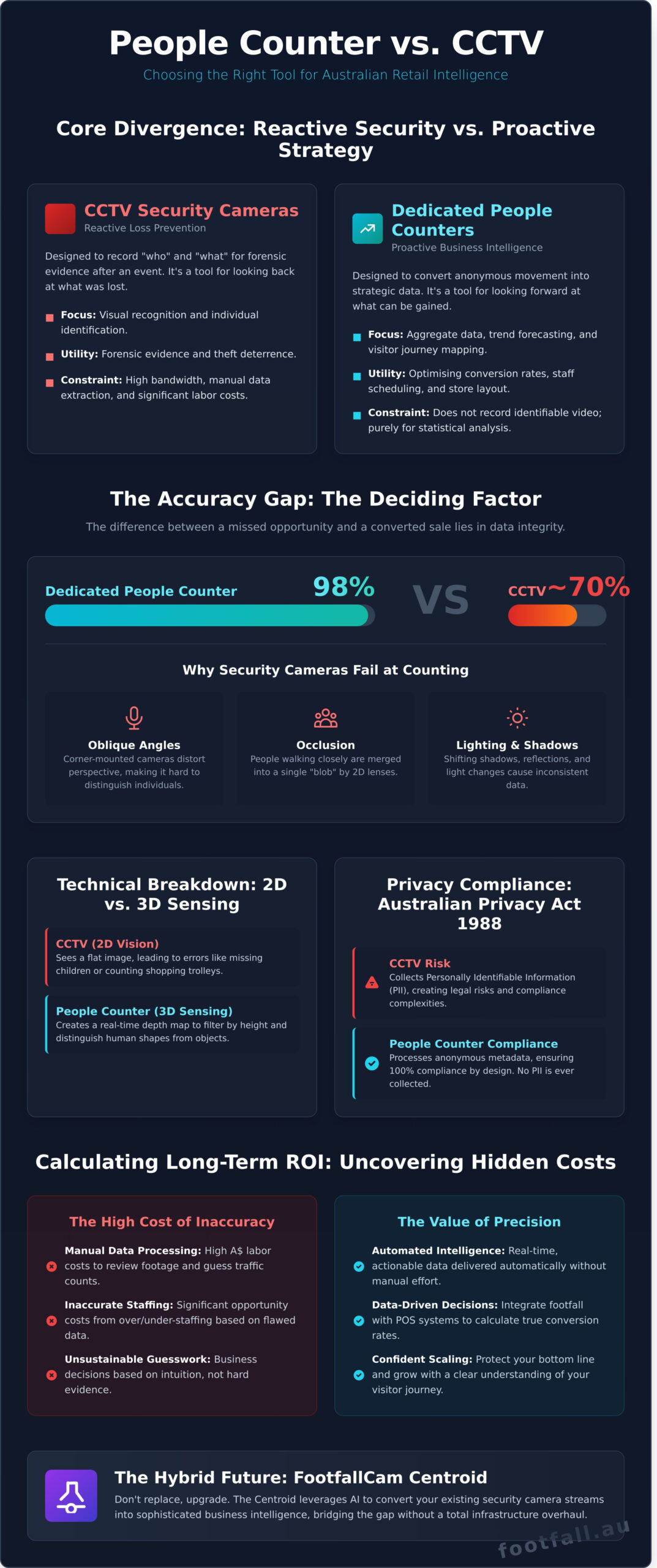
Navigating the complexities of the Privacy Act 1988 further highlights the limitations of traditional video, making a transition to dedicated sensor technology both a strategic and a compliant necessity. This guide explores why the accuracy gap-98% for dedicated hardware versus roughly 70% for standard CCTV-is the difference between a missed opportunity and a converted sale. You will discover a clear roadmap for integrating spatial analytics with your POS systems, transforming raw footfall into actionable intelligence that empowers your business to scale with quiet confidence.
Key Takeaways
- Identify the core differences between reactive loss prevention and proactive strategic intelligence to ensure your business decisions are backed by hard evidence.
- Recognise why the technical accuracy of a people counter vs cctv differs significantly in high-traffic environments due to oblique angles and lighting challenges.
- Navigate the complexities of the Australian Privacy Act 1988 by implementing anonymous sensing technology that avoids the legal risks of PII collection.
- Protect your bottom line by uncovering the hidden A$ costs of manual data processing and the significant opportunity costs of inaccurate staff scheduling.
- Discover how the FootfallCam Centroid leverages AI to convert existing security streams into sophisticated business intelligence tools without requiring a total infrastructure overhaul.
Defining the Core Divergence: Security Surveillance vs. Strategic Intelligence
To understand the people counter vs cctv debate, one must first distinguish between security and strategy. While both technologies utilize optical lenses, their objectives are fundamentally different. Closed-circuit television (CCTV) is a reactive tool designed for loss prevention and forensic evidence. It records “who” and “what” to provide a visual record of past events. In contrast, dedicated sensors provide “Spatial Analytics,” converting physical movement into the strategic intelligence required to map the visitor journey.
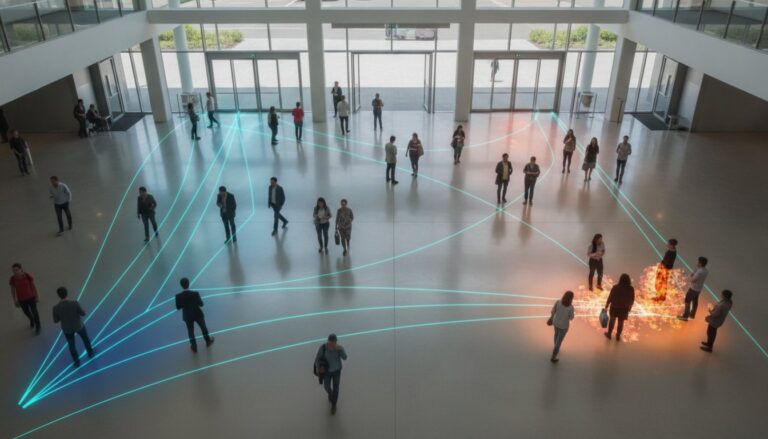
The visitor journey is the primary metric for business growth in the Australian retail landscape. It represents the narrative of human movement through a physical space-from the moment a customer crosses the threshold to the point of sale. While security systems focus on protecting assets, a sophisticated people counter focuses on optimizing the potential of every visitor through precise, anonymised data.
The Purpose of CCTV: Monitoring and Loss Prevention
The primary goal of CCTV is surveillance. These systems are engineered to capture high-resolution imagery for identifying specific individuals or incidents, which creates a storage-heavy environment. For Australian business owners, relying on security footage for foot traffic data is often a manual, resource-intensive process. Extracting actionable “count” data from standard security footage typically requires significant network bandwidth and human intervention, making it an inefficient tool for real-time business logic.
- Focus: Visual recognition and individual identification.
- Utility: Forensic evidence and deterrent against theft.
- Constraint: High bandwidth consumption and manual data extraction.
The Purpose of People Counters: Data-Driven Optimization
People counters are proactive sensors designed for statistical analysis and trend forecasting. Rather than recording video, these devices convert physical movement into digital metadata in real-time. This approach prioritises aggregate data-such as totals, averages, and peak occupancy-rather than individual identity. This ensures total privacy compliance while providing the precision needed for operational efficiency.
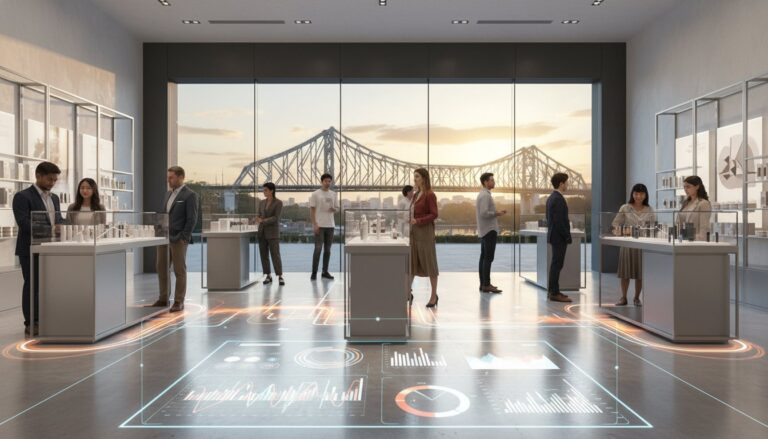
In the Australian market, the FootfallCam Pro2 has emerged as the benchmark for this technology. By focusing on “Spatial Analytics,” it allows businesses to move beyond guesswork. Instead of just seeing a crowd, managers receive actionable insights into conversion rates and dwell times, enabling them to make evidence-based decisions that drive revenue. When evaluating people counter vs cctv, the choice is between looking back at what was lost or looking forward at what can be gained.
The Accuracy Gap: Why Security Cameras Fail in High-Traffic Environments
When evaluating a people counter vs cctv for data collection, business owners must understand that security cameras are designed for surveillance, not statistical precision. The primary failure of CCTV in counting applications stems from the “oblique” angle. Most security cameras are mounted in corners to provide a wide field of view, which distorts the perspective of individuals moving through an entrance. This side-on view makes it difficult for software to distinguish between separate individuals in a crowd.
Furthermore, standard video analytics struggle with “occlusion”-a phenomenon where people walking closely together or side-by-side are merged into a single “blob” by the 2D lens. Environmental factors also play a disruptive role; software-based CCTV counting often fails when faced with shifting shadows, floor reflections, or rapid changes in lighting, leading to inconsistent and unreliable data sets.
2D vs 3D Sensing: A Technical Breakdown
The core difference lies in depth perception. Traditional 2D cameras see the world as a flat image, which prevents them from accurately filtering by height. This limitation often results in children being missed or shopping trolleys being incorrectly logged as adults. In contrast, 3D sensors create a real-time depth map of the environment, allowing the system to distinguish human shapes from inanimate objects based on volume and spatial presence.
- Height Filtering: 3D sensors precisely exclude children or strollers to maintain conversion rate integrity.
- Shape Recognition: Advanced algorithms identify the head-and-shoulder silhouette of a human, ignoring shadows.
- Stereo Vision: Stereo Vision is the use of dual-lenses to mimic human depth perception, providing the sensor with the spatial intelligence required to track movement in three dimensions.
This sophisticated approach to data capture ensures that businesses remain compliant with the Australian Privacy Act 1988, as 3D sensors process mathematical coordinates rather than recording identifiable facial features.
Environmental Interference in Australian Retail
The Australian retail environment presents unique challenges, specifically the harsh, high-contrast sunlight common in many shopping precincts. Standard CCTV-based apps are frequently triggered by “false positives,” such as swinging glass doors or intense glare reflecting off polished floors. These environmental triggers can skew data by as much as 40%.
While typical CCTV-based counting apps offer an accuracy range of 60-80%, the FootfallCam Pro2 provides a 98% accuracy guarantee. In a high-stakes retail environment, relying on a people counter vs cctv is the difference between making strategic decisions based on hard evidence or mere guesswork. Precision ensures that your labor scheduling and marketing ROI calculations are rooted in reality.
Privacy Compliance: Navigating the Australian Privacy Act 1988
Australian consumers are increasingly vigilant regarding their digital footprints, with growing concerns over the use of facial recognition and persistent tracking in retail environments. For business owners, the choice between a people counter vs cctv is no longer just about functionality; it is a matter of legal liability. CCTV systems inherently capture Personally Identifiable Information (PII) by recording high-resolution facial imagery. Under the Australian Privacy Act 1988, this places a significant administrative and financial burden on the operator to ensure data is encrypted, stored securely, and deleted according to strict schedules.
In contrast, dedicated people counting sensors are engineered with a “Privacy by Design” philosophy. Rather than recording video for later review, these sensors convert movement into anonymous data points in real-time. This distinction is critical for businesses looking to mitigate the risk of data breaches while maintaining a welcoming, non-intrusive environment for their visitors.
Understanding PII and Data Anonymisation
FootfallCam sensors utilise “edge processing,” a sophisticated architecture where all data analysis occurs locally on the device. No video stream ever leaves the sensor; only the final numerical count is transmitted to the cloud. By using 3D depth-sensing technology, the system identifies human silhouettes rather than facial features. These 3D depth maps are inherently anonymous, satisfying stringent privacy audits without the need for the expensive facial-blurring software often required to make CCTV footage compliant for analytics.
Compliance for Public Spaces and Government Tenders
For Australian libraries, galleries, and local councils, maintaining community trust is non-negotiable. In “Smart City” initiatives across Canberra and Melbourne, anonymous counters are the preferred standard because they provide actionable spatial analytics without the social friction of surveillance. To ensure your traffic monitoring is compliant with Australian regulations, consider this checklist:
- Edge Processing: Ensure data is processed on the hardware, not a central server.
- Non-Biometric: Confirm the sensor does not create or store facial templates.
- Data Minimisation: Only store the necessary count data, not the raw visual feed.
- Transparency: Provide clear signage indicating that anonymous foot traffic sensing is in use.
When comparing a people counter vs cctv for operational insights, the anonymous counter offers a seamless path to compliance, removing the legal complexities of video data management while delivering the precision required for modern business strategy.
Calculating the Long-Term ROI: Hidden Costs of Manual Data Extraction
A common misconception in retail management is that leveraging existing security infrastructure is “free.” However, when evaluating people counter vs cctv, the hidden costs of manual data extraction quickly erode any perceived initial savings. Relying on CCTV often requires managers to spend hours manually reviewing footage or cleaning fragmented data sets. This is not just a productivity drain; it is a financial one. When highly-paid store managers spend three hours a week on data entry, the annual cost to the business can exceed A$6,000 per location in labor alone.
Furthermore, inaccurate data carries a heavy “Opportunity Cost.” Standard CCTV analytics typically offer 70% accuracy, meaning 30% of your staffing and stock decisions are based on false premises. Dedicated sensors, such as those from FootfallCam, provide 99% accuracy. This precision allows for seamless integration with POS systems, transforming raw numbers into actionable conversion rate tracking without human intervention.
- Automated Reporting: FootfallCam V9 software eliminates manual spreadsheets by delivering automated daily, weekly, and monthly insights.
- Data Integrity: High-precision sensors filter out staff, children, and trolleys, ensuring the data reflects genuine buying power.
- System Integration: Direct API links to POS systems provide a real-time view of your store’s health.
Staffing Optimisation: The Biggest Lever for Australian ROI
In high-wage markets like Sydney or Brisbane, matching staff levels to visitor flow is the most effective way to protect margins. Automated footfall analytics identify your “Power Hours”-those critical windows where traffic peaks and conversion potential is highest. By reducing overstaffing by just 2 hours per week at an average Australian retail wage of A$30/hour, a business saves over A$3,100 annually. More importantly, it ensures you have enough staff to convert visitors during peak times, preventing lost sales.
Measuring Marketing Success Beyond the Register
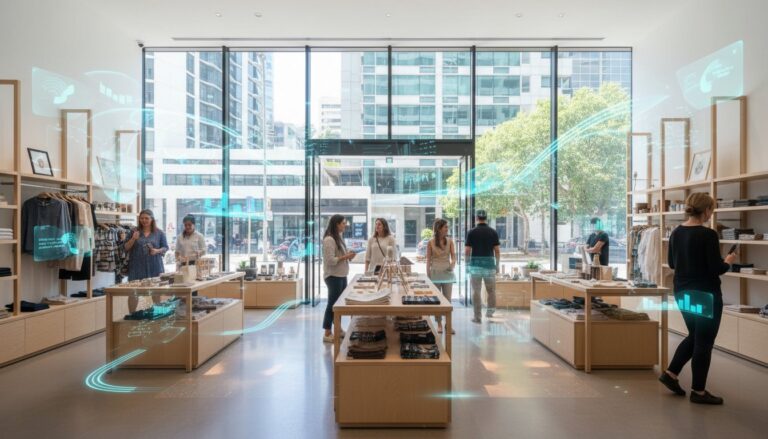
Sales data alone is a “lagging indicator”-it tells you what happened, but not what you missed. In competitive environments like Melbourne’s CBD, understanding “Storefront Conversion” is vital. This metric measures the percentage of passers-by who are successfully drawn into the store. People counters allow you to validate marketing spend by showing exactly how many people entered the store in response to a campaign, providing a clear picture of ROI that a standard register report simply cannot capture.
The Hybrid Future: Bridging the Gap with FootfallCam Centroid
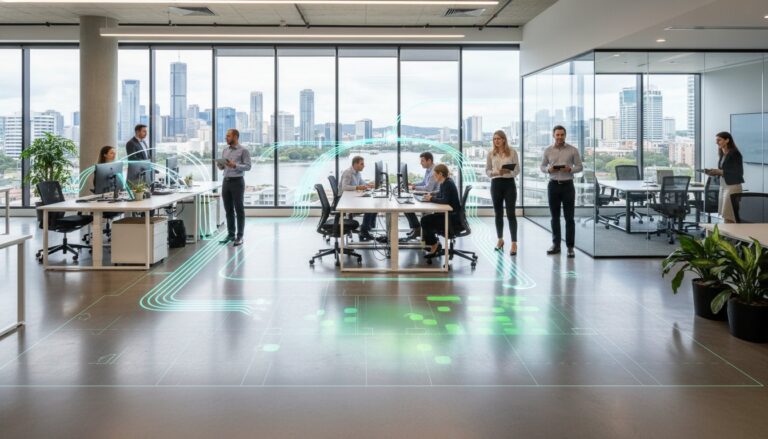
While the people counter vs cctv debate often implies a choice between two separate systems, the FootfallCam Centroid offers a sophisticated hybrid solution. This technology is designed for Australian businesses that require high-level spatial analytics but face structural or budgetary constraints preventing a total hardware overhaul. By bridging the gap between security and intelligence, Centroid allows you to leverage existing infrastructure to gain deep insights into visitor behaviour.
For large-scale venues-such as regional shopping centres in Queensland or multi-level retail hubs in Melbourne-installing new 3D sensors at every internal corridor is rarely cost-effective. The “Best of Both Worlds” approach involves deploying high-precision 3D sensors at main entry points to establish a 99.5% accurate baseline, while using Centroid to transform internal CCTV feeds into intelligent zone-tracking tools. Footfall Australia serves as your local partner, providing the technical expertise to implement this seamless integration across your Australian portfolio.
How Centroid AI Transforms Standard Video
Centroid uses advanced AI processing to filter out non-human objects-such as shopping trolleys, shadows, and cleaning equipment-that typically compromise the accuracy of standard video analytics. Through “Multi-Sensor Fusion,” it combines data from various hardware types into a single, unified dashboard. This provides a clear narrative of the visitor journey without the need for redundant hardware, offering a high-ROI solution for stadiums and large retail environments where coverage is expansive.
Getting Started: Your 2026 Implementation Roadmap
Transitioning to a data-driven model requires a strategic approach to ensure long-term scalability. To future-proof your Australian operations, we recommend following this implementation roadmap:
- Infrastructure Audit: Evaluate your current CCTV network to determine which streams are viable for AI processing.
- Strategic Site Survey: A professional survey is essential to identify optimal sensor placement and ensure your data remains consistent across different lighting conditions.
- Hybrid Deployment: Integrate 3D sensors at high-traffic thresholds and Centroid AI for internal dwell-time analysis.
Ready to eliminate the guesswork and start making evidence-based decisions? Contact Footfall Australia for a comprehensive traffic audit to discover how a hybrid people counter vs cctv strategy can transform your business insights.
Choosing Precision Over Surveillance: The Strategic Advantage
Understanding the fundamental distinction between a dedicated people counter vs CCTV is the first step toward reclaiming control over your retail performance. While security cameras serve their purpose in loss prevention, they lack the sophisticated spatial analytics and 98% accuracy guarantee offered by the FootfallCam Pro2 hardware. Transitioning to a purpose-built system allows you to capture the complete visitor journey with precision while ensuring full compliance with the Australian Privacy Act 1988.
Since 2004, Footfall Australia has maintained a strong local presence, providing national support to businesses across Australia. By replacing manual data extraction with automated, actionable insights, you eliminate the hidden costs of inefficiency and empower your management team with hard evidence rather than guesswork. It is time to move beyond simple observation and start optimizing your operations for measurable growth in the competitive Australian landscape.
Request a Quote for Your Australian Business
Invest in the intelligence your business deserves and turn every visitor into a data-driven opportunity for long-term success.
Frequently Asked Questions
Can I use my existing Hikvision or Dahua CCTV cameras for people counting?
While many Hikvision and Dahua systems offer basic line-crossing features, they often fall short of the precision required for professional spatial analytics. CCTV cameras provide a 2D perspective that struggles with shadows, lighting changes, and groups. For businesses comparing people counter vs cctv, dedicated 3D sensors are the superior choice, as they filter out non-human objects and provide the high-fidelity data needed to calculate accurate conversion rates.
Is people counting legal under the Australian Privacy Act 1988?
Yes, professional people counting is fully compliant with the Australian Privacy Act 1988. Unlike traditional CCTV, which records identifiable facial imagery, dedicated 3D sensors process movement as anonymous data points. They do not store Personal Information (PII), ensuring your business captures essential footfall trends while maintaining absolute visitor anonymity and meeting all local regulatory requirements for data privacy and security.
What is the difference in accuracy between CCTV-based software and 3D sensors?
The difference in precision is significant. CCTV-based software typically achieves 70% to 85% accuracy because it relies on 2D video patterns, which are easily confused by floor reflections or overlapping visitors. In contrast, 3D sensors use Time-of-Flight technology to create a depth map, reaching over 98% accuracy. This level of detail is vital for Australian retailers who rely on exact data to optimize staff rosters and marketing spend.
Do people counters work in the dark or in high-glare Australian sun?
Standard CCTV cameras often struggle with the high-contrast glare of the Australian sun or low-light conditions at night. Professional 3D people counters utilize infrared or Time-of-Flight technology, allowing them to function with 99% accuracy in total darkness or intense direct sunlight. This ensures your data remains consistent regardless of the time of day or the architectural design of your storefront, providing reliable insights year-round.
How much does a professional people counting system cost in Australia?
In the Australian market, a professional-grade 3D sensor typically costs between A$800 and A$1,500 per entrance. This investment usually covers the hardware and initial configuration. Ongoing cloud reporting subscriptions may range from A$20 to A$50 per month. While the upfront cost is higher than a basic people counter vs cctv software patch, the long-term ROI is driven by far superior data reliability and actionable business intelligence.
Can people counters distinguish between staff and customers?
Advanced systems utilize staff exclusion technology to ensure your conversion rates are not skewed by employee movement. This is achieved either through AI-based height filtering or specialized wearable tags that the sensor automatically ignores. By removing staff “noise” from your footfall data, you gain a transparent view of genuine customer opportunities and more accurate sales performance metrics, allowing for better-informed strategic decisions.
Does the system require a constant internet connection to count?
No, the sensors perform all counting calculations locally “at the edge.” If your internet connection drops, the device stores the data internally and syncs it to the cloud once connectivity is restored. This architecture ensures no visitor data is lost during outages, though a stable connection is required to view real-time analytics and receive automated reports via your management dashboard for immediate operational adjustments.
How do I integrate footfall data with my Shopify or Square POS?
Integration is achieved through secure API connections or native software plugins. By syncing your Shopify or Square sales data with your footfall metrics, the system automatically calculates your conversion rate in real-time. This allows Australian business owners to move beyond simple traffic counts and understand exactly how many visitors are being converted into paying customers, providing a clear, evidence-based path to operational optimization.