Maximize ROI with Visitor Analytics: The Complete AU Guide
A visitor count can tell you how many people entered, but not when demand peaks or where your operations need support. Visitor analytics becomes useful when it turns movement into evidence for decisions. A daily total is a starting point; by itself, it won’t show the patterns that can help you plan staffing or make better use of space.
Physical visitor analytics and website analytics measure different things. One measures movement through a real-world space; the other tracks activity online. This guide explains what each can reveal, which physical visitor metrics can answer common operational questions, and how to interpret the results. It also shows how FootfallCam Pro2 People Counters work with FootfallCam V9 Software to support reporting, and how to use those measurements to make practical, evidence-based decisions for your Australian business.
Key Takeaways
- Use Visitor analytics to connect physical visits with operational questions, rather than relying on visitor totals alone.
- Match measures such as visit volume, time patterns, and entries and exits to decisions about staffing and space.
- Interpret conversion only when visitor counts can be meaningfully compared with relevant business data.
- Build a consistent process: define the question, measure, review patterns, and act using FootfallCam Pro2 People Counters with FootfallCam V9 Software.
What Is Visitor Analytics? Understand Physical Visitor Data
Visitor analytics collects and interprets information about visits to physical spaces. It can show how many people enter, when arrivals rise or fall, and how movement changes over time. The goal isn’t simply to count people. It’s to identify patterns that can inform day-to-day decisions, such as how to plan staffing or assess the use of a space.
Physical visitor analytics measures activity in places such as shops, offices, and public venues. Digital analytics, by contrast, examines activity on websites or apps, such as page views and user interactions. Web analytics describes the measurement, collection, analysis, and reporting of web data. The two approaches can complement each other, but they answer different questions about behaviour in physical and digital environments.
In short: physical visitor analytics interprets patterns of movement and attendance in real-world spaces, while digital analytics measures activity across online platforms.
A visitor count is a useful starting measure, not a complete explanation. A daily total alone won’t reveal whether arrivals were concentrated in a particular period, whether demand is changing, or what visitors intended to do. For a more useful comparison, review counts over consistent time periods and consider relevant context, such as opening hours or a promotion.
Which questions can physical visitor analytics answer?
Arrival patterns and visit volumes help frame practical questions: When is demand highest? Are visitor numbers changing by day or time? Do particular entrances see more traffic? Comparing the same periods across days or weeks can help teams distinguish a recurring pattern from an unusual busy day. These insights can inform staffing levels and space planning.
Teams can use aggregate trends without identifying individual visitors. For example, review hourly entry totals to see when coverage may need to change, or compare counts by entrance to understand how traffic is distributed. Before reviewing the data, define the area and time period you want to measure. Visitor analytics is most useful when every measure is tied to a clear operational question and a decision it can inform.
Choose Visitor Analytics Metrics That Answer Business Questions
Start with the decision, not the dashboard. Choose measures that directly relate to a specific operational question, then use them consistently. Digital.gov’s introduction to analytics similarly emphasises setting goals and choosing relevant performance measures.
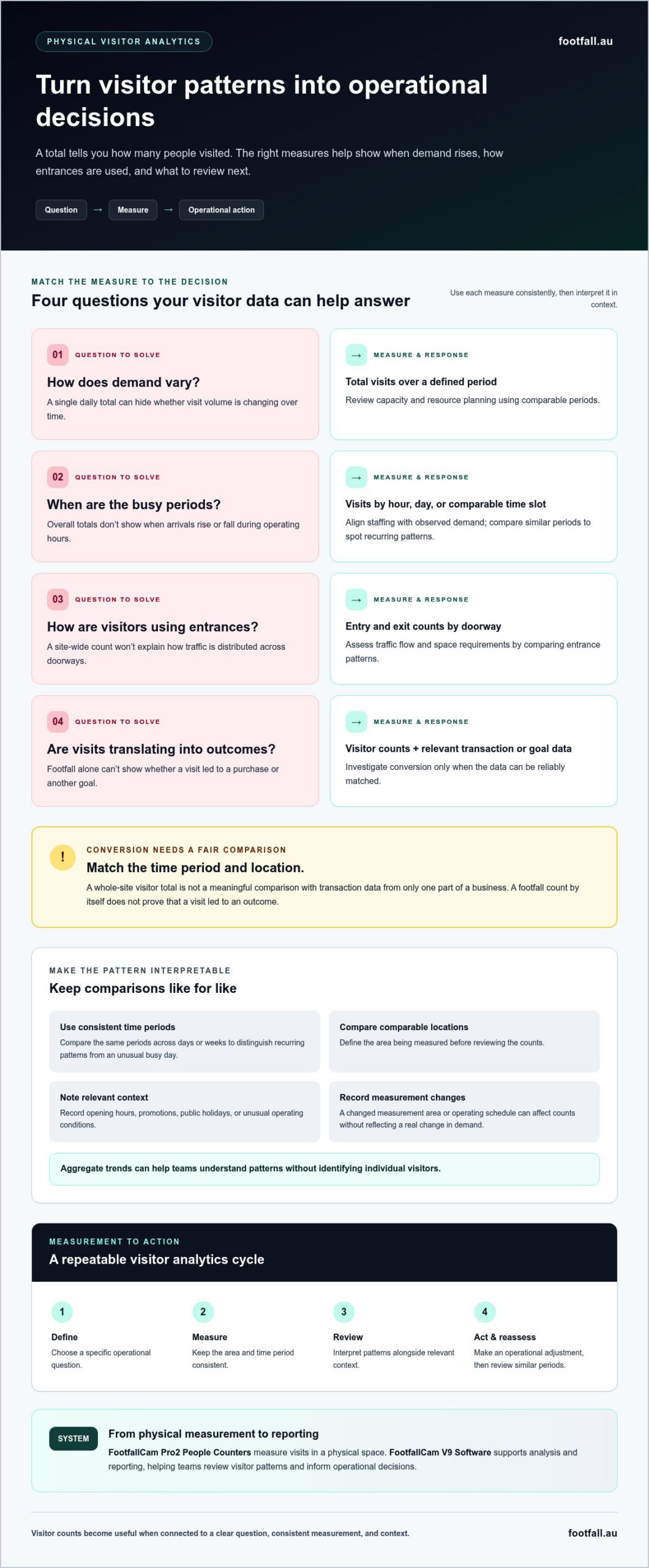
| Operational question | Useful measure | Possible action |
|---|---|---|
| How does demand vary? | Total visits over a defined period | Review capacity and resource planning. |
| When are busy periods? | Visits by hour, day, or comparable time slot | Align staffing with observed demand. |
| How are visitors using entrances? | Entry and exit counts by doorway | Assess traffic flow and space requirements. |
| Are visits translating into outcomes? | Visitor counts compared with relevant transaction or goal data | Investigate changes in conversion, if the data can be reliably matched. |
Conversion needs particular care. A footfall count alone can’t show whether a visit led to a purchase or another outcome. Compare visitor counts with relevant business data only when the time period and location align. For example, a whole-site visitor total won’t provide a meaningful comparison with transaction data from only one part of a business.
How do you turn visitor metrics into operational insight?
Choose one decision to improve, then select the measures that can inform it. Compare like with like: use consistent time periods and comparable locations, and note context such as public holidays, promotions, or unusual operating conditions. If the measurement area or operating hours change, record that too. Otherwise, a difference in counts may reflect a change in measurement rather than a real change in demand. Visitor counts need context before they can guide action.
For physical measurement, FootfallCam Pro2 People Counters work with FootfallCam V9 Software to bring people-counting data into reporting for analysis. Explore physical visitor analytics solutions to support consistent measurement and review of visitor patterns.
Build a Visitor Analytics Process from Measurement to Action
Reliable visitor analytics follows a repeatable cycle: define the question, measure consistently, review patterns, then act. Keep the question specific, such as whether staffing coverage aligns with busy periods or whether visitor use of different entrances is changing. Consistent measurement gives teams a clearer basis for assessing those patterns.
What does an integrated visitor analytics setup involve?
People-counting hardware measures visits in a physical space, while analytics reporting organises the measurements so teams can review trends. FootfallCam Pro2 People Counters work with FootfallCam V9 Software as part of this approach: the counters provide physical visitor measurements, and the software supports analysis and reporting. For a retailer, office, or public venue, useful questions might include when demand peaks or how entry patterns vary across operating days.
Use reporting to establish a baseline, then make one operational adjustment at a time. For example, a team could adjust staff coverage during a recurring busy period, then compare visitor patterns across similar periods to review whether the coverage still fits demand. Record relevant context, such as changed opening hours or a promotion, so the comparison is easier to interpret. The findings can inform the next decision, but they don’t guarantee a particular outcome.
Keep measurement connected to action: define the question, maintain consistent data collection, interpret trends in context, and review the effect of any change. Explore Footfall Australia’s visitor analytics solutions to see how people-counting hardware and reporting software fit together.
Turn Visitor Data into Your Next Operational Decision
Visitor analytics delivers value when measurements answer a clear business question. Distinguish physical visits from digital activity, choose metrics that match your operational priorities, and compare consistent periods with relevant context. Then use the patterns to test a practical change and review what follows.
Footfall Australia has operated in Australia since 2004, with a local partner network supporting its national presence. Its FootfallCam people-counting hardware and analytics software bring physical measurement and reporting together, giving teams a practical foundation for decisions informed by visitor movement, not just totals.
Build insight one question at a time. Explore Footfall Australia’s visitor analytics solutions and take the next step towards more evidence-based operations.
Frequently Asked Questions
What is visitor analytics?
Visitor analytics is the collection and interpretation of information about visits to physical spaces. It can show visit volumes, arrival patterns, and how traffic changes across measured periods. These insights help businesses examine demand and make informed operational decisions, such as how to plan staffing or use space, rather than relying on a single visitor total.
How is visitor analytics different from website analytics?
Visitor analytics measures activity in physical places, such as entries to a shop, office, or public venue. Website analytics measures online activity, such as page views and interactions on a website. The data answers different questions: physical counts describe visits to a location, while digital measures describe how people use online platforms.
Can visitor analytics help improve staffing?
Yes. Reviewing visitor numbers by hour or day can reveal recurring periods of higher or lower demand. A business can compare those patterns with its staffing coverage, trial an adjustment, then review later measurements across comparable periods. Counts provide useful operational evidence, but teams should also consider opening hours, promotions, and other factors that could affect demand.
What should a business measure with visitor analytics?
Choose measures that relate directly to a business question. Visit volume helps track overall demand; time-based patterns show when traffic rises or falls; entry and exit counts can help assess traffic by doorway. Assess conversion only when visitor counts can be meaningfully compared with relevant business outcome data for a compatible period and location.