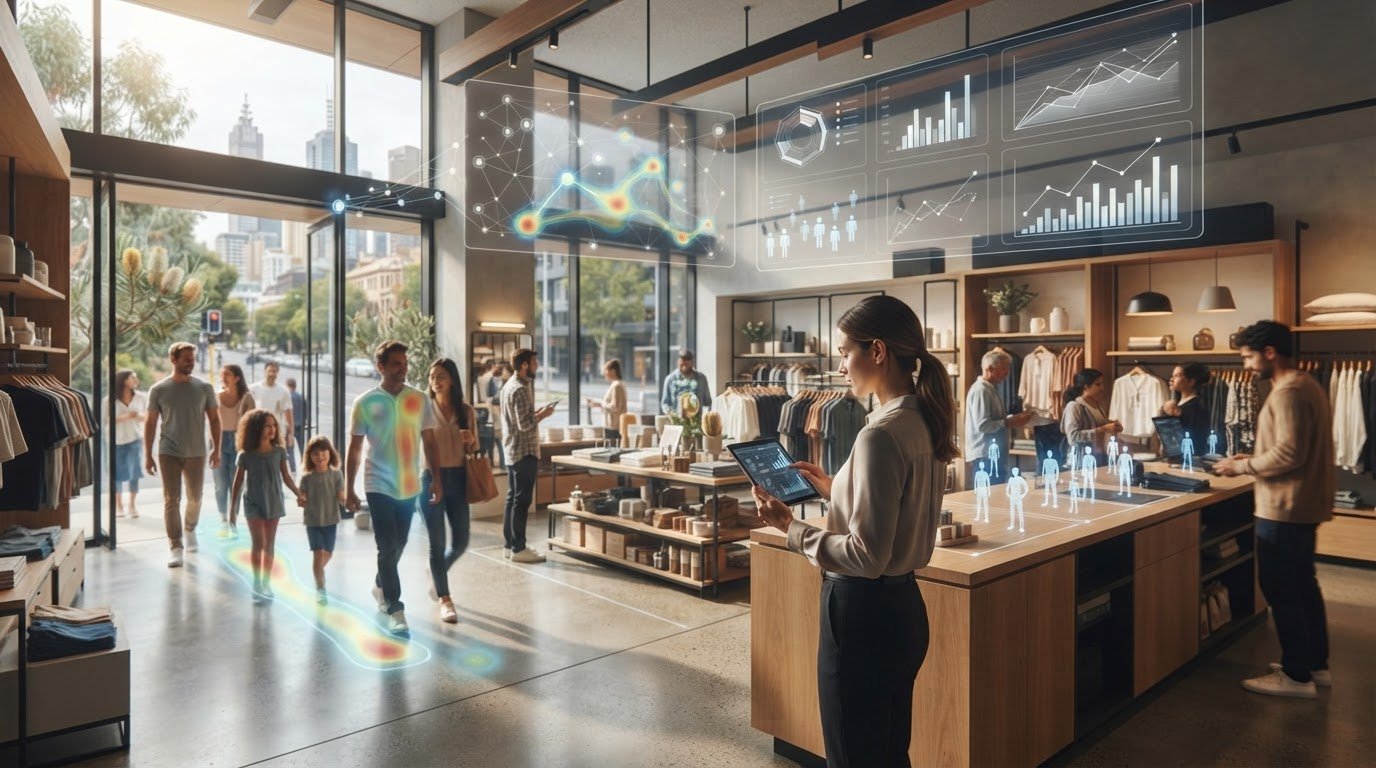
Best Retail Analytics Platform for Australian Retailers
What can your sales report tell you about shoppers who entered your store but didn’t buy? Usually, not enough. Sales records show completed transactions, while measured footfall reveals the traffic behind them. When comparing a Retail analytics platform, look beyond feature lists to the data each system captures and the decisions that data can inform.
The right fit depends on the questions you need answered, from comparing store traffic with sales to planning staff coverage and evaluating store performance. This guide explains how to assess data sources, metrics, reporting and operational fit. It also shows where in-store people counting can complement broader sales, inventory and omnichannel analysis, and how FootfallCam Pro2 people counters and FootfallCam V9 Software bring traffic measurement and analysis together.
Key Takeaways
- Choose a Retail analytics platform by starting with the store decisions you need to make, not the length of its feature list.
- Compare data sources and metrics to understand what each platform can reliably show at store level.
- Assess reporting and operational fit to see whether insights can guide practical actions such as staffing adjustments.
- Use a broad analytics suite when you need a wider business view, and dedicated people-counting analytics when store traffic is central to the question.
What a Retail Analytics Platform Reveals About In-Store Customer Traffic
A retail analytics platform turns business data into information that can support decisions. The software analyses and presents information, while sources such as transaction records and dedicated people counters supply the measurements. As part of the broader field of Business analytics, retail analytics can inform sales and operational planning. Its conclusions are only as useful as the data behind them, so start by checking which activity each source actually measures.
A retail analytics platform is useful when it connects reliable store measurements to a clear operational decision, such as adjusting staff coverage to match visitor patterns. For physical retailers, that means separating what happened at the till from how many people entered the store.
How in-store traffic data complements sales analytics
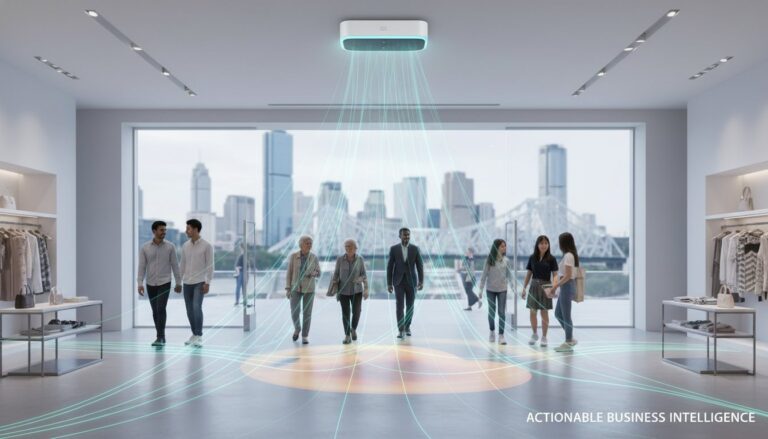
Sales and POS records capture completed transactions. They can show what sold and when, but they do not count visitors who entered without purchasing. A people counter measures store entries, offering a separate view of visitor volume and how traffic changes over time.
Consider the measures together. If transactions fall while measured entries remain steady, the change may relate to what happens during the visit rather than a drop in traffic alone. If entries rise during certain periods, retailers can review whether staff coverage matches those patterns. These comparisons offer context, not proof of cause. Compare the same time periods and store contexts, and account for other changes that may affect results. For example, a traffic increase alone does not explain whether a sales change relates to product availability, promotions or customer behaviour.
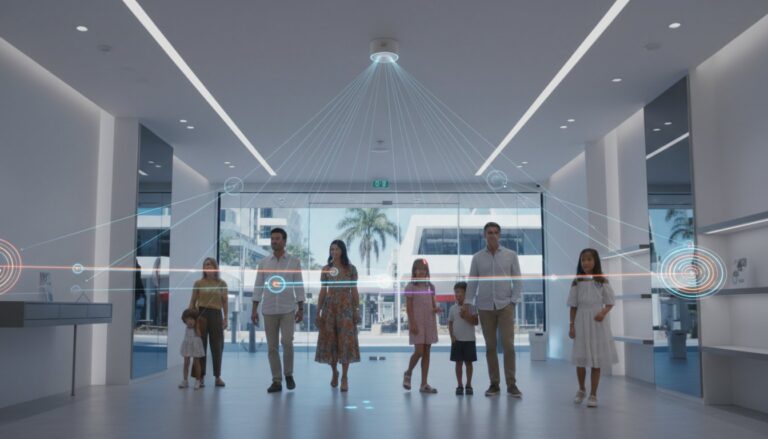
FootfallCam Pro2 people counters capture in-store traffic for analysis through FootfallCam V9 Software. This dedicated measurement can complement broader sales, inventory or omnichannel analysis. For a closer look at interpreting store visits, see this guide to retail footfall analysis in Australia.
How to Evaluate a Retail Analytics Platform for Your Stores
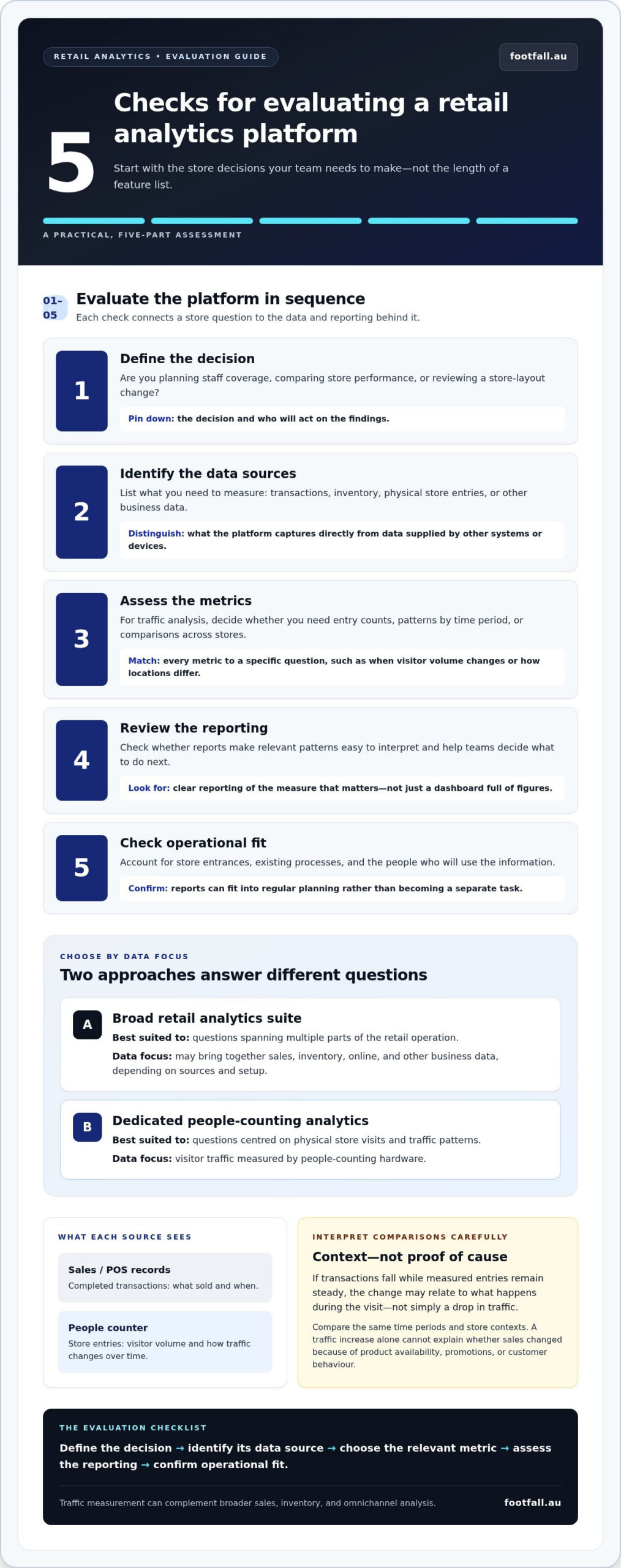
Start with the decisions your teams need to make, then test each platform against those needs. A Retail analytics platform should answer practical store-level questions, not simply display a broad set of metrics. Use the following steps to compare options consistently:
- 1. Define the decisions. Are you planning staff coverage, comparing store performance or reviewing a store layout change? Write down the decision and who will act on the findings before assessing features.
- 2. Identify the data sources. List what you need to measure, such as transactions, inventory or physical store entries. Distinguish data the platform captures directly from information supplied by other systems or devices.
- 3. Assess the metrics. For traffic analysis, decide whether you need entry counts, patterns by time period or comparisons across stores. Match each metric to a specific question, such as when visitor volume changes or how locations differ.
- 4. Review the reporting. Check whether reports make the relevant patterns easy to interpret and help teams decide what to do next. A dashboard full of figures is less useful if staff cannot identify the measure that matters to their decision.
- 5. Check operational fit. Account for store entrances, existing processes and the people who will use the information. Consider whether reports can be reviewed as part of regular planning, rather than treated as a separate task.
Checklist: define the decision, identify its data source, choose the relevant metric, assess how it will be reported, and confirm it fits store operations.
Match platform data and reporting to the decision
Separate essential requirements from optional capabilities before comparing platforms. Store teams may need information to guide local staffing or daily operations, while central teams may need consistent views to compare locations and plan wider changes. For each report, ask what decision it supports, which measures it uses and whether those measures cover the same period and store context. For an overview of the software, see the FootfallCam V9 analytics dashboard guide.
For retailers focused on measuring store visits, FootfallCam Pro2 people counters and FootfallCam V9 Software bring dedicated traffic measurement and analytics together. Explore FootfallCam people-counting solutions to assess how this approach fits your store questions.
When a People-Counting Platform Fits Retail Analytics
A dedicated people-counting platform is a strong fit when your core question concerns physical visits: how store traffic changes over time, how locations compare, or whether staffing coverage aligns with visitor patterns. Broader questions, such as how traffic relates to sales, inventory or online activity, call for those additional data sources too. A people counter measures traffic; it does not replace a wider retail analytics suite.
| Approach | Best suited to | Data focus |
|---|---|---|
| Broad retail analytics suite | Questions spanning multiple parts of the retail operation | May bring together sales, inventory, online and other business data, depending on its sources and setup |
| Dedicated people-counting analytics | Questions centred on physical store visits and traffic patterns | Measured visitor traffic captured by people-counting hardware |
If a decision depends on how many people enter a store, traffic measurement is central. If you need to understand why sales or stock outcomes change, traffic can add context when considered alongside the relevant business data. Read the FootfallCam Pro2 buying guide for more on the people counter.
How Footfall Australia connects people counting and analytics
FootfallCam Pro2 is a people counter, while FootfallCam V9 is analytics software. Together, they provide a measurement-and-analysis solution for in-store traffic. This focused approach suits retailers whose operational questions start with visitor movement. To explore wider business questions, consider what other data sources are relevant and how those measures can be compared. The right Retail analytics platform supports the decisions you need to make with relevant, dependable information.
Explore the Footfall Australia solution to learn more about its people-counting and analytics offering.
Turn Store Data Into Your Next Decision
The right Retail analytics platform starts with the questions your teams need to answer. Compare the data each system captures, the measures it provides and whether its reporting supports practical store-level decisions. Sales figures and footfall offer different perspectives, so choose an approach that reflects whether you need a broad business view, dedicated traffic measurement or both.
Footfall Australia has had a presence in Australia since 2004, providing people-counting hardware alongside analytics software. For retailers focused on understanding physical visits, FootfallCam Pro2 people counters and FootfallCam V9 Software offer a dedicated way to measure and analyse in-store traffic as part of operational planning.
Explore Footfall Australia’s people-counting and analytics solutions to see how measured store traffic can inform your retail decisions.
Frequently Asked Questions
What is a retail analytics platform?
A retail analytics platform analyses business data to help retailers understand performance and make operational decisions. Depending on the solution, its inputs may include sales, inventory, online activity or measured in-store traffic. It is most useful when its data sources answer specific business questions, such as whether store visits change by time of day or how stock levels relate to sales.
How does a retail analytics platform use footfall data?
A retail analytics platform can use footfall data to show when people enter stores and how traffic patterns change over time. Retailers can consider those measures alongside relevant business figures to add context to store performance. For example, comparing traffic and transactions over matching periods may help frame a question about conversion, but it does not by itself explain why a result changed.
What should retailers compare when choosing a retail analytics platform?
Compare the decisions each platform supports, its data sources, available metrics and reporting, and how teams can use the findings. If physical-store visits matter, assess whether the solution measures footfall directly. Transaction records show completed sales, not everyone who entered a store, so they cannot provide a complete view of visitor traffic on their own.
Can a people-counting platform replace broader retail analytics software?
Not necessarily. People-counting solutions focus on measuring physical store traffic, while broader retail analytics may cover sales, inventory, ecommerce or other business data. A dedicated footfall solution can provide a specialised view of store visits as part of a wider analytics approach. FootfallCam Pro2 people counters and FootfallCam V9 Software combine people-counting hardware with analytics software for traffic analysis.