
Retail Operations Manager Career Path in Australia: The 2026 Guide
What if your next promotion depended less on your years on the shop floor and more on how well you decode a visitor journey? With 47% of Australian retailers now integrating AI as a core business component, the retail operations manager career path Australia has shifted from a test of endurance to a test of data literacy. You likely feel the pressure of this transition while moving from managing people to managing complex spatial analytics. It’s frustrating to feel stuck in store-level management when you’re ready for national strategy, especially as new regulations like the Payday Super mandate arrive on July 1, 2026.
We know the leap from a Level 8 Senior Manager to an executive role with an average salary of $116,132 requires more than just hard work. This guide provides the evidence-based roadmap you need to navigate this evolution. You’ll discover which certifications carry weight, the skills required to combat the 23% rise in retail insolvencies seen in 2025, and how tools like FootfallCam V9 software transform raw foot traffic into actionable growth. We’ll break down the journey from local leadership to executive oversight, ensuring your career decisions are backed by precision rather than guesswork.
Key Takeaways
- Define the transition from managing single-site locations to overseeing regional strategy as the critical link between corporate vision and store execution.
- Map the retail operations manager career path Australia from the shop floor to executive leadership, identifying the specific milestones needed for promotion.
- Master the shift from “gut-feel” management to data-driven strategy by integrating retail footfall analysis and spatial analytics into your daily operations.
- Identify the most valuable VET pathways and university qualifications, such as the Diploma of Retail Leadership, that carry weight in the 2026 job market.
- Future-proof your career by learning how AI-driven software and people counting systems automate routine operational decisions to improve efficiency.
What is a Retail Operations Manager in the Australian Context?
In Australia, the Retail Operations Manager acts as the vital connective tissue between high-level corporate strategy and the ground-level reality of retail shopfronts. It’s a high-stakes role. As of May 2026, the industry has moved beyond traditional oversight. Today, an operations manager is a data strategist who ensures that executive decisions translate into measurable store-level performance. This position typically aligns with Level 8 (Senior Manager) under the General Retail Industry Award (GRIA), where the minimum base hourly rate is $35.64 as of July 1, 2025. Following the retail operations manager career path Australia means evolving from a supervisor of people into a master of systems and efficiency.
Key Responsibilities and Daily Impact
Daily impact is measured through the lens of efficiency and scale. Unlike a local manager, an Operations Manager oversees multi-site P&L and operational budgets across the continent. They ensure national brand standards aren’t just suggestions but consistent protocols followed in every postcode. This includes maintaining inventory health and overseeing supply chain logistics to prevent the stock-outs that can cripple conversion rates. With retail insolvencies rising by 23% in 2025, the ability to protect margins through precise budget control and labor optimization is now a critical survival skill.
Operations vs. Store Management: The Vital Difference
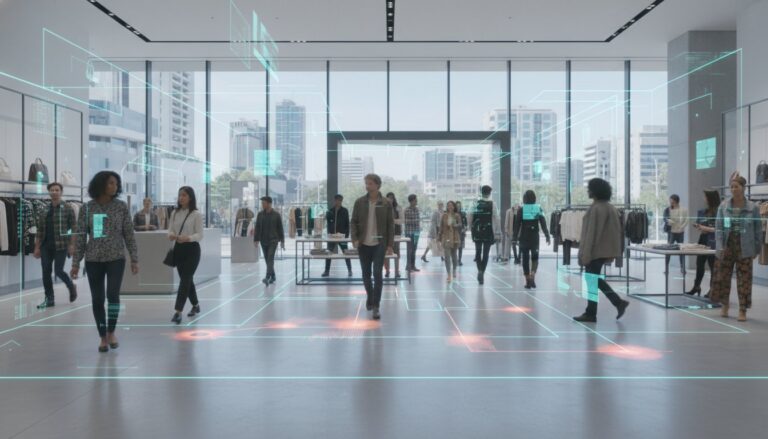
The distinction lies in the scope of authority. A Store Manager focuses on the day-to-day operations of a retail store, handling immediate staffing and local customer issues. In contrast, a Retail Operations Manager operates at a strategic level. They don’t just manage individuals; they manage regional or national KPIs. While a store manager looks at today’s roster, an operations manager analyzes labor optimization across twenty sites. They use spatial analytics to identify why one store’s dwell time outperforms another and implement those findings across the network.
The landscape is changing rapidly. With 47% of Australian retailers considering AI a core component in 2026, “Smart Operations” is the new standard. This shift requires a deep understanding of how technology impacts the bottom line. It’s no longer enough to have a gut feeling about store performance. Modern leaders use hard evidence to back every decision, from store layout changes to regional staffing levels. This ensures that every operational move is intentional, structured, and designed for long-term growth in a competitive market.
The Retail Career Roadmap: From Floor to Executive
Advancing through the retail operations manager career path Australia requires a deliberate shift from tactical execution to strategic oversight. In 2026, the timeline for this progression has compressed for those who can leverage technology. While the journey remains experience-led, the milestones have evolved to demand higher levels of data literacy at every stage. It’s no longer just about tenure; it’s about the ability to scale operational excellence across diverse geographic footprints.
- Step 1: Entry-level Sales Assistant. This is where you learn the narrative of human movement. You observe how customers interact with displays and where they hesitate, providing the foundation for understanding the visitor journey.
- Step 2: Department or Store Manager. Here, you master local store operations. You take responsibility for a single P&L, local staffing, and inventory health.
- Step 3: Area or Regional Manager. The focus shifts to scaling. You manage 10 to 15 sites, requiring you to trust systems over sight.
- Step 4: State/National Operations Manager. You direct the entire network’s strategic health. Decisions at this level impact thousands of employees and millions in revenue.
- Step 5: COO or Head of Retail. At the executive peak, you focus on company-wide innovation and long-term market positioning.
Transitioning from Store to Regional Management
Moving beyond a single storefront requires you to demonstrate scaleable management skills. Senior leadership looks for candidates who have moved from “doing” to “auditing.” You can’t be in ten stores at once; therefore, you must use data to identify performance gaps remotely. Successful managers in Australia often utilize internal networking and mentor programs to bridge this gap. Highlighting your ability to use people counting systems to optimize labor across multiple sites proves you’re ready for regional responsibility.
Reaching the Senior Leadership Level
Senior roles demand a focus on business intelligence and digital-physical integration. You’ll manage high-stakes stakeholders and external technology partners to ensure the brand remains competitive. With retail sales forecasted to increase by 2.3% in 2026, senior leaders must find growth in a value-conscious market. This involves directing national strategies that align online and in-store channels, ensuring a seamless omnichannel experience. At this level, your value is defined by your ability to turn complex spatial analytics into clear, actionable growth strategies for the board.

Mastering the Skill Set: Why Data Literacy is Non-Negotiable
Relying on intuition is a liability in 2026. With household spending reaching $38.63 billion in January 2026, the margin for error in physical retail has vanished. Success along the retail operations manager career path Australia now requires a scientific approach to store performance. You must move beyond surface-level observations to master the metrics that define the visitor journey. The ability to translate foot traffic into financial growth is what separates modern operations leaders from traditional store supervisors.
Mastering retail footfall analysis Australia is the first step toward this precision. It’s about understanding the “why” behind the “what.” Why did conversion rates drop despite high traffic? Why is dwell time increasing in one zone but not another? An operations manager interprets these patterns to drive growth. Financial acumen follows this; you aren’t just reading a P&L, you’re identifying how a 2% increase in dwell time correlates with a specific ROI on a new store layout. This level of insight ensures that every dollar spent on store improvements is backed by evidence of human behavior.
Technical Proficiency in Retail Analytics
Optimizing staff rosters is no longer a guessing game. By using people counting technology, you can align labor hours with actual visitor peaks with surgical precision. This prevents overstaffing during quiet periods and ensures you don’t lose sales during unexpected rushes. Interpreting heatmaps allows you to refine product placement based on real human movement rather than aesthetic preference. Integrating this data with POS systems reveals critical sales gaps. If footfall is high but transactions are low, you can pinpoint whether the issue is staffing levels, stock availability, or checkout friction.
Soft Skills for Strategic Leadership
Soft skills are the bridge between raw data and organizational action. You’ll need strong change management abilities to lead teams through digital transformations as 47% of retailers adopt AI as a core component. Influencing stakeholders requires presenting data-backed evidence that makes the strategic benefit of a proposal undeniable. Crisis management also demands high operational resilience. When consumer confidence dropped to 68.5 in March 2026, it became clear that operations managers must pivot strategies quickly. Using real-time intelligence to maintain stability during such shifts is what separates a tactician from a strategic leader.
Education, Qualifications, and Certifications in Australia
Experience remains the primary driver for the retail operations manager career path Australia, yet formal education provides the strategic language required for executive leadership. In 2026, the retail environment is increasingly complex. Navigating a 23% rise in retail insolvencies from 2025 requires more than just years on the floor. It demands a structured understanding of business logic. While you don’t always need a degree to start, specific qualifications act as a catalyst for promotion into regional and national roles.
VET pathways offer the most direct route for those already working in the industry. The Certificate IV in Retail Management (SIR40316) and the Diploma of Retail Leadership (SIR50116) are highly regarded for their focus on practical operational mechanics. For those aiming for senior management, a Bachelor of Business or Commerce with a major in Management provides a broader perspective on market positioning. Additionally, industry certifications like Lean Six Sigma are becoming standard for leaders who want to eliminate waste and optimize operational efficiency across large store networks.
Vocational Education and Training (VET)
TAFE and private RTOs play a critical role in developing the Australian retail workforce. Traineeships allow you to earn while you learn, often accelerating the transition to junior management roles. You should prioritize units that cover financial management and team leadership. These skills are essential for managing the Level 8 responsibilities defined by the General Retail Industry Award. Mastering these basics early ensures you’re prepared for the data-heavy demands of regional oversight.
Post-Graduate and Specialist Training
Executive roles often require the advanced strategic thinking found in an MBA. This is particularly useful when you’re managing high-stakes stakeholders or directing national growth. With 47% of retailers now viewing AI as a core component, short courses in data science and business intelligence are non-negotiable. Continuous professional development through the Australian Retailers Association (ARA) helps you stay ahead of shifting consumer trends and regulatory updates, such as the Payday Superannuation changes effective July 1, 2026. To complement your formal education with technical expertise, explore how FootfallCam V9 software provides the business intelligence needed to lead at the highest level.
The Future of Retail Operations: Tech as a Career Catalyst
The retail operations manager career path Australia is entering an era where technical fluency dictates professional value. As retail sales are forecasted to rise by 2.3% in 2026, the competitive advantage lies in “Phygital” management. This involves synchronizing online customer behavior with physical store performance to create a seamless omnichannel experience. You must lead this integration, ensuring that the digital and physical worlds aren’t just adjacent but are fully unified. In a market where the Roy Morgan consumer confidence index dropped to 68.5 in March 2026, removing friction from the visitor journey is the only way to protect margins.
Sustainable operations have also moved to the forefront of the strategic agenda. Managing the carbon footprint of national store networks now involves optimizing energy use based on real-time occupancy data. Utilizing people counting systems Australia allows you to automate HVAC and lighting systems based on actual visitor density. This reduces overheads while meeting the growing consumer expectation for ethical and sustainable business practices. These technological solutions don’t just save costs; they provide the empirical evidence needed to prove your strategic worth to executive stakeholders.
The Rise of the Data-Driven Operations Manager
Managers who master footfall data analysis are consistently outearning their peers. This earnings gap exists because data-literate leaders have moved from descriptive analytics, which simply explain what happened, to predictive analytics that forecast what will happen next. By identifying subtle patterns in human movement, you can predict peak periods with high accuracy. This shift allows you to link technology implementation directly to bottom-line growth, turning the operations department from a cost center into a primary driver of regional profitability.
Embracing Automation and AI
Automation is now handling the routine tasks that once consumed an operations manager’s week. Intelligent systems automate inventory replenishment and staff scheduling by analyzing historical traffic trends alongside live sales data. This freedom allows you to focus on identifying operational bottlenecks before they impact sales. The most successful managers in 2026 are those who bridge the gap between human leadership and technical precision. They use hard evidence to empower their teams, ensuring that every decision is intentional, transparent, and geared toward long-term resilience in a challenging economy.
Mastering Your Strategic Future
The evolution of the retail operations manager career path Australia is no longer a matter of tenure; it’s a matter of precision. We’ve explored how transitioning from store management to executive leadership requires mastering spatial analytics and navigating the 23% rise in retail insolvencies through evidence-based decision-making. You’ve seen that the road to a $116,132 average salary is built on a foundation of data literacy and the ability to turn raw visitor journeys into measurable ROI. By aligning your career with AI-driven automation and sustainable network management, you position yourself as a modern strategist rather than a traditional administrator.
To bridge the gap between human intuition and technical excellence, you need a partner with a proven track record. Empower your retail strategy with Footfall Australia’s data-driven solutions. Trusted by Australian retailers since 2004, we provide proprietary AI hardware and seamless reporting that delivers the actionable insights necessary for long-term growth. The tools for your advancement are ready. It’s time to lead with confidence.
Frequently Asked Questions
What is the average salary for a Retail Operations Manager in Australia?
The average salary for a Retail Operations Manager in Australia is AUD $116,132 per year as of May 2026. Typical pay ranges from $64,453 to $145,165 depending on the scale of the retail network and your specific experience level. In Sydney, the average is notably higher at $125,485 per year, reflecting the increased cost of living and the concentration of national headquarters.
Do I need a university degree to become a Retail Operations Manager?
A university degree isn’t strictly mandatory, but it’s becoming a standard expectation for executive-level roles. Most people on the retail operations manager career path Australia start with vocational qualifications like a Certificate IV in Retail Management or a Diploma of Retail Leadership. As you progress toward national oversight, a Bachelor of Business or an MBA provides the strategic language required to manage complex corporate budgets.
What is the difference between a Regional Manager and an Operations Manager?
Regional Managers focus primarily on the tactical performance and people management of a specific cluster of stores. Operations Managers take a broader view, directing the systems, logistics, and cross-network strategies that ensure national efficiency. While a Regional Manager might focus on store-level sales targets, the Operations Manager ensures the entire infrastructure, from supply chain to technical reporting, supports those targets.
How long does it typically take to reach a National Operations role?
Reaching a National Operations role typically requires 8 to 12 years of progressive retail experience. Most professionals spend 3 to 5 years mastering store-level management and another 3 to 5 years in regional or area management roles. You can shorten this timeline by demonstrating early mastery of data-driven strategy and successfully leading digital transformation projects within your assigned region.
Which retail industries in Australia pay the highest for operations roles?
Luxury goods, high-end electronics, and large-scale supermarket chains offer the most competitive compensation packages for operations leaders. These sectors require intense focus on inventory precision and complex logistics, justifying higher base salaries. April 2026 data indicates that Sydney remains the most lucrative market, with average base salaries for senior operations roles reaching approximately $119,335 per year.
How is AI changing the role of retail operations managers in 2026?
AI is shifting the role from reactive troubleshooting to predictive strategy. With 47% of Australian retailers now considering AI a core business component, managers use automated insights to handle routine tasks like staff scheduling and inventory replenishment. This shift allows you to focus on high-level spatial analytics and interpreting the visitor journey to drive long-term growth rather than managing daily roster gaps.
Can I move from a different industry into retail operations?
You can transition into retail operations from sectors like hospitality, logistics, or supply chain management if you have strong P&L experience. Retailers value the operational discipline found in these adjacent industries. To succeed, you must quickly adapt your analytical skills to retail-specific metrics, such as conversion rates and dwell time, to demonstrate your understanding of physical store performance.