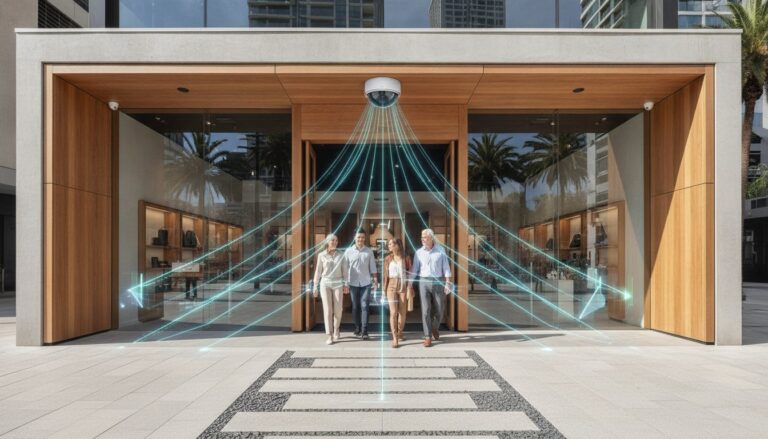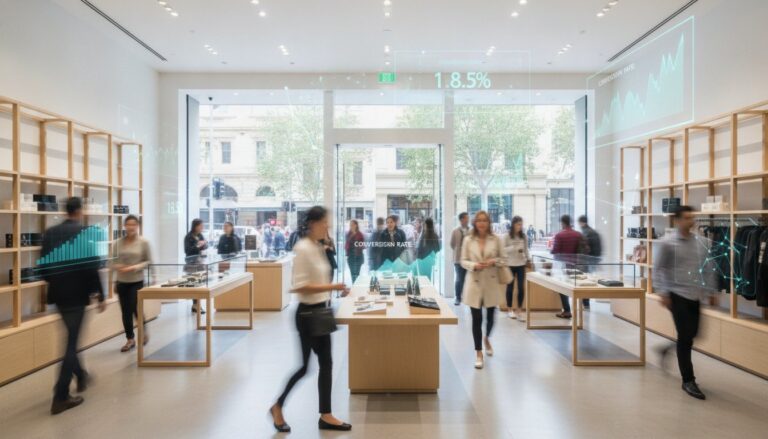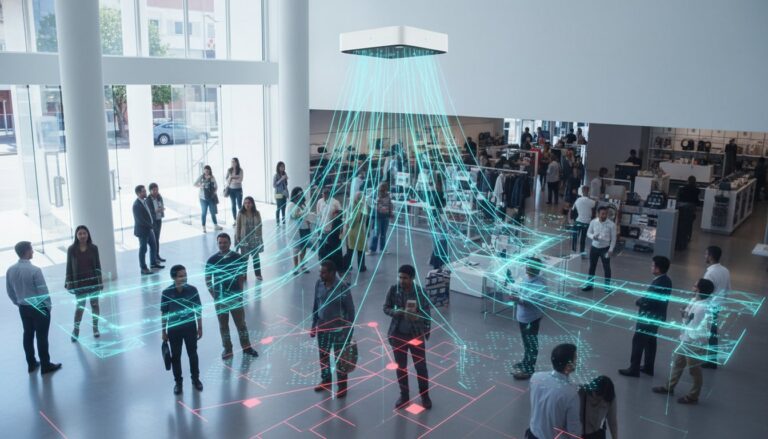

Footfall Data Integration for Australian Businesses (2026)
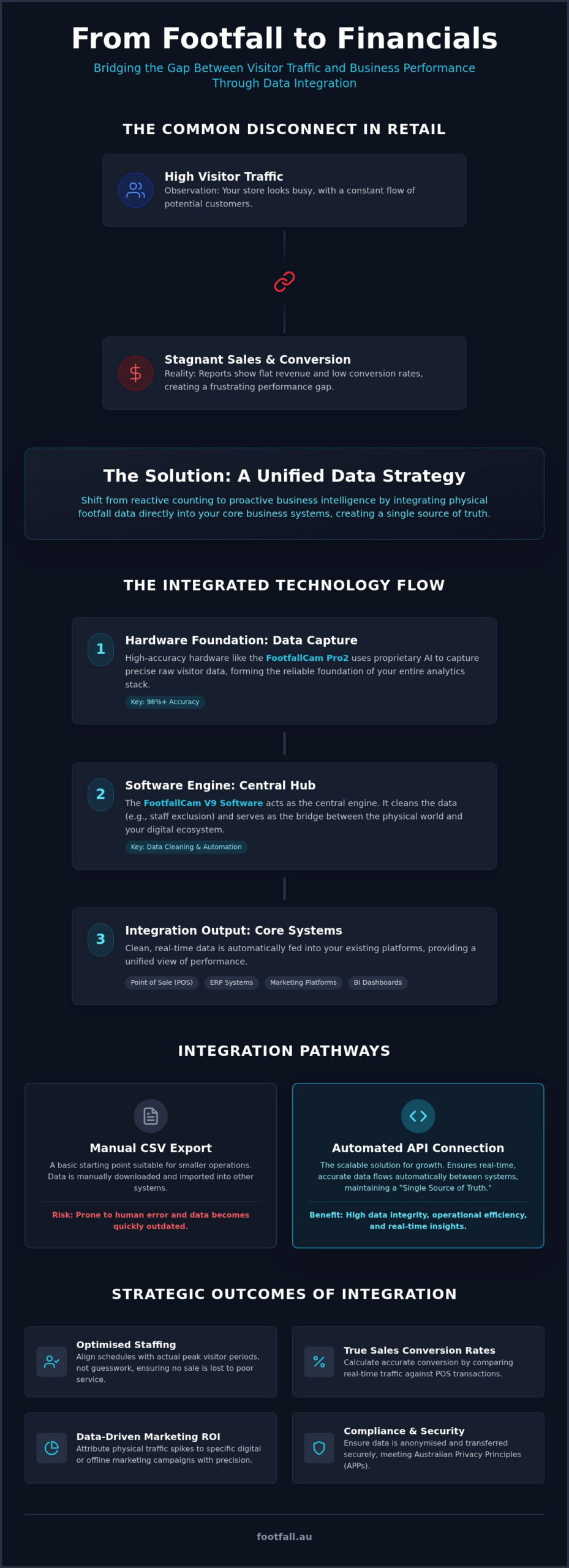
While 96% of Australian retail executives expect revenue growth in 2026, many still struggle to connect high visitor numbers with actual sales outcomes. You’ve likely felt the frustration of observing a crowded floor while your reports show stagnant conversion rates. This gap usually exists because your metrics live in isolated silos; manual data entry only adds to the confusion and risk of error.
This guide demonstrates how footfall data integration bridges that divide by merging real-time visitor traffic with your core business systems. We’ll show you how to automate reporting and develop staffing schedules based on empirical evidence rather than intuition. We will examine how the FootfallCam V9 software and Pro2 hardware turn physical movement into a strategic lever for operational efficiency and measurable growth.
Key Takeaways
- Shift from reactive counting to proactive business intelligence by aligning physical traffic with digital performance metrics.
- Identify the most efficient technical pathways for footfall data integration, ranging from basic CSV exports to sophisticated automated API connections.
- Optimise operational efficiency by creating staffing schedules and marketing strategies backed by a unified “Single Source of Truth”.
- Leverage the FootfallCam V9 software as a central hub to bridge the gap between high-accuracy hardware and your existing POS or retail management systems.
Why Footfall Data Integration is the Key to Operational ROI
Within the Australian market, footfall data integration represents the seamless merger of physical traffic metrics with your existing digital business systems. It marks a decisive shift from basic people counting to comprehensive business intelligence. Many organisations still operate with siloed information, where visitor numbers and sales figures never meet. This disconnect creates blind spots in inventory management and leads to costly staffing inefficiencies across national branch networks. When these data sets remain separate, it’s impossible to identify whether a drop in revenue stems from low traffic or a failure to convert existing visitors.
Reliable footfall data integration starts with high-accuracy hardware. The FootfallCam Pro2 provides the proprietary AI foundation required to capture precise raw data before it enters your software stack. Without this accuracy, any subsequent footfall analysis risks being based on flawed premises. By centralising these metrics, businesses transform a simple door count into a strategic lever for growth. This process removes the need for manual data entry, reducing human error and freeing up personnel for higher-value tasks.
Moving Beyond Raw Visitor Counts to Strategic Intelligence
Integrated data allows managers to calculate true sales conversion rates by comparing real-time traffic against POS transactions. This visibility helps you optimise staffing levels based on actual peak periods rather than guesswork. You can align team availability with high-intent visitor windows to ensure no sales opportunity is lost due to poor service coverage. For Australian businesses in 2026, data-driven operations are defined as the standard requirement for maintaining a competitive edge in a value-conscious economy.
Practical Frameworks for Integrating Footfall with Core Business Systems
Successful footfall data integration follows a clear technical hierarchy. While smaller operations might start with manual CSV exports, scalable growth requires automated API calls to maintain data integrity. This transition ensures your organisational tech stack maintains a “Single Source of Truth,” preventing conflicting reports between marketing and operations. Integrating these metrics is vital for the future of retail marketing, as it allows for precise attribution of physical traffic to specific digital campaigns.
Security remains paramount during footfall data integration. Under the Privacy Act 1988 (Cth) and the Australian Privacy Principles (APPs), businesses must ensure data remains anonymised during every transfer. With new mandatory disclosure obligations for automated decision-making systems taking effect on December 10, 2026, your framework must be transparent and compliant. Modern systems process this information without storing personal identifiers, satisfying both regulatory requirements and consumer expectations for privacy.
Connecting People Counters to POS, ERP, and Marketing Platforms
Establishing a robust connection involves three distinct phases. First, audit your hardware’s API capabilities to confirm compatible data formats. Second, map specific metrics like dwell time or entrance counts to your ERP’s key performance indicators. Finally, build an automated pipeline using advanced people counting technology to feed real-time dashboards. This automation eliminates reporting errors and provides immediate visibility into floor performance. If your current hardware lacks these integration capabilities, you may benefit from a Legacy Swap Out Plan to modernise your infrastructure.
Executing a Data Integration Strategy with FootfallCam V9
FootfallCam V9 Software serves as the central engine for your operational intelligence. It simplifies complex footfall data integration by acting as a robust bridge between the physical environment and your digital ecosystem. A critical feature of V9 is its ability to automate data cleaning. This ensures only “clean” metrics, filtered for staff exclusions or non-human movement, enter your business intelligence tools. This technical rigour aligns with the broader data integration strategy framework required to sustain long-term accuracy and stakeholder trust. By removing the noise from raw counts, the platform provides a reliable foundation for sophisticated footfall data analysis.
The platform features built-in connectors designed specifically for popular Australian POS and retail management systems. These pre-configured links reduce the technical burden on your internal teams and accelerate time-to-value. Large-scale deployments often involve unique legacy hurdles that require more than just software. Securing a people counter support plan provides access to the specialised expertise needed to navigate these complex integrations. It ensures your technical infrastructure remains resilient as your footfall data integration needs evolve.
Automating Insights for National Scalability
V9 allows organisations to synchronise data across hundreds of sites, providing a unified national view of performance. Managers can customise reporting dashboards to display integrated ROI at a glance, allowing stakeholders to see exactly how traffic translates into revenue. The FootfallCam Centroid can integrate legacy CCTV into this modern data ecosystem, preserving previous investments while upgrading analytical capabilities.
Driving Operational Excellence Through Unified Intelligence
Transitioning from isolated door counts to a unified business intelligence ecosystem is a strategic necessity for competitive Australian organisations. Successful footfall data integration ensures that physical traffic insights directly inform your sales, staffing, and marketing strategies. By automating these data pipelines, you eliminate manual entry errors while maintaining strict adherence to evolving privacy regulations. This structural alignment transforms raw movement into measurable growth.
We provide the technical foundation for this transition through FootfallCam V9 Software support and proven API documentation. If you’re managing outdated systems, our Legacy Swap Out Plan offers a clear path toward modernisation. Request a technical consultation for your data integration project to align your physical floor performance with your digital core. Empower your team with the empirical evidence needed to lead with confidence in 2026.
Frequently Asked Questions
How do I integrate footfall data with my existing POS system?
You connect your footfall metrics to your POS via automated API calls or pre-built software connectors. This process allows you to correlate transaction timestamps with visitor entry times to calculate real-time conversion rates. FootfallCam V9 software simplifies this by offering built-in connectors for common Australian POS platforms. It ensures that sales data and traffic flow are viewed as a single, cohesive metric.
What are the benefits of connecting people counters to my ERP software?
Connecting people counters to your ERP provides a high-level view of operational efficiency across your entire network. This footfall data integration enables automated staffing adjustments and inventory optimisations based on historical traffic patterns. It removes the need for manual data entry, which significantly reduces the risk of human error. Managers gain a reliable dataset to justify resource allocation and strategic planning decisions.
Is an API required for footfall data integration?
An API is not strictly required but it’s the most efficient method for real-time footfall data integration. While you can use manual CSV exports for periodic reviews, APIs allow for the automated, continuous flow of information between systems. This automation ensures your dashboards always reflect current floor activity. For businesses targeting national scalability in 2026, API-driven connections are the standard for maintaining data integrity and speed.
Can I integrate data from different brands of people counters into one system?
You can integrate data from multiple hardware brands by using a centralised software hub like FootfallCam V9. This platform accepts data from various sources, including legacy devices, and standardises the metrics into a single reporting interface. If your older hardware lacks direct export capabilities, the FootfallCam Centroid can bridge the gap by processing existing video streams. This approach preserves your previous investments while upgrading your analytical power.