How to Build a Data-Driven Retail Team in 2026
Transactions only reveal what happened at the cash register, leaving the rest of the shopper journey unmeasured. It is frustrating when store associates rely on gut feeling, resist complex analytical dashboards, and build shift rosters that miss actual customer foot traffic peaks. Learning how to build a data-driven retail team isn’t about turning frontline staff into mathematicians; it is about grounding daily floor habits in clear, objective visitor movement.
You can readily transform your retail staff into an agile, data-driven team by connecting foot traffic insights with proven operational KPIs and modern analytics. This guide shows you how to establish intuitive in-store metrics, deploy daily routines driven by real-world shopper patterns, and boost sales conversion rates across your entire store network.
Key Takeaways
- Broaden performance benchmarks beyond gross revenue by tracking dwell time and visitor conversion to uncover hidden floor opportunities.
- Learn how to build a data-driven retail team by replacing intimidating reports with structured weekly huddles that translate traffic trends into direct floor actions.
- Synchronize frontline staff rosters with forecasted hourly foot traffic curves to prevent understaffing during critical shopper peaks.
- Anchor daily operational decisions in high-accuracy people counting hardware and automated software platforms that store teams genuinely trust.
Defining Core In-Store Metrics Beyond Traditional Sales Figures
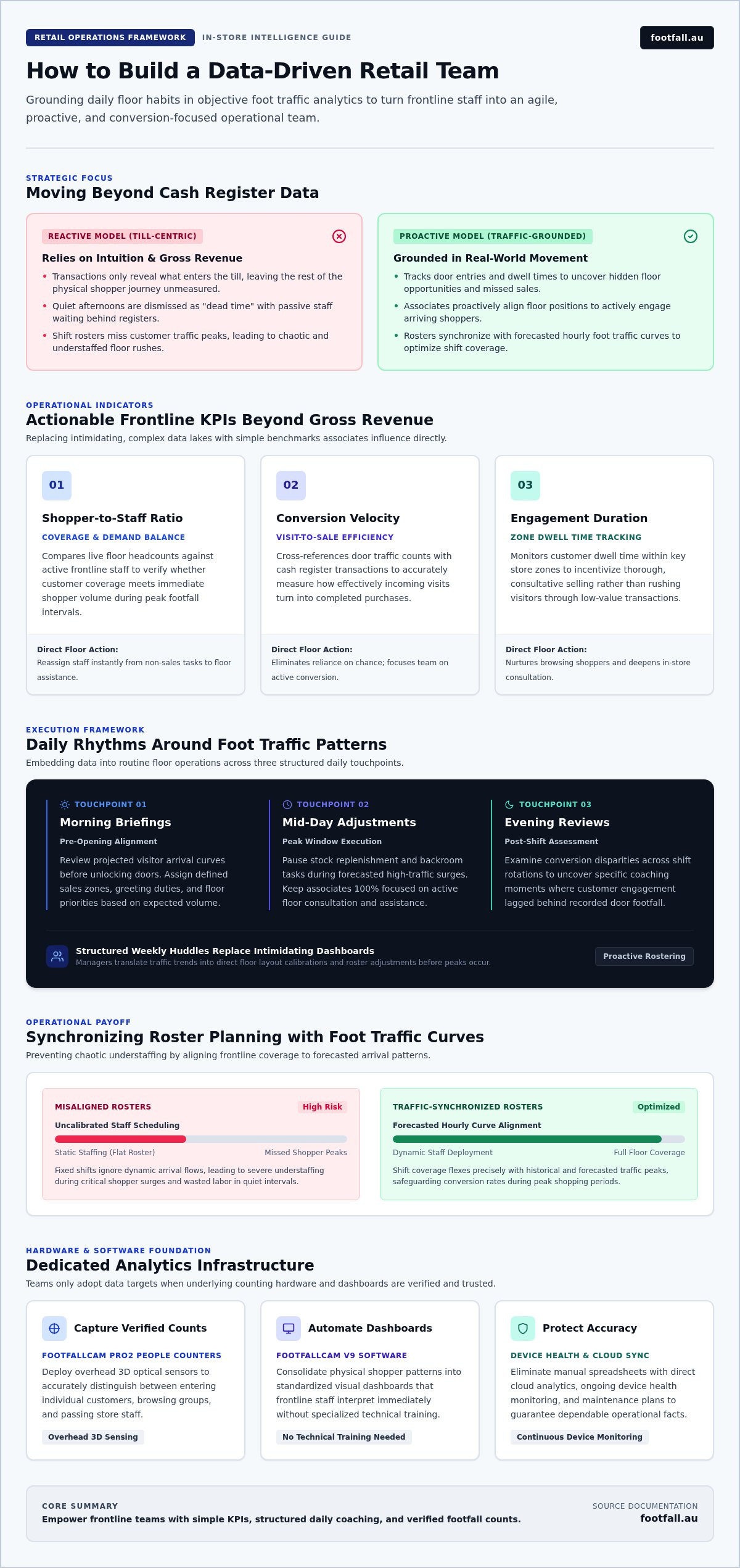
Gross revenue tells you what entered the till, not what walked out the door unsold. When establishing how to build a data-driven retail team, leadership must look past top-line takings. Tracking physical visitor traffic transforms abstract turnover into clear operational targets. Associates stop viewing quiet afternoons as dead time and recognize them as conversion opportunities instead.
This operational shift replaces reactive cashiering with proactive customer interactions. Sales associates who understand incoming traffic volumes align their floor positions to engage arriving shoppers. Aligning individual and store-wide objectives directly to real-time footfall ensures accountability remains grounded in actual floor opportunities rather than chance foot traffic.
Selecting Actionable In-Store KPIs for Frontline Staff
Frontline staff need straightforward benchmarks they can influence immediately during a shift. Complex data lakes confuse store associates; simple operational indicators drive decisive action.
- Shopper-to-staff ratios: Compare live floor headcounts against active staff to determine whether coverage meets immediate shopper demand during peak intervals.
- Conversion velocity: Cross-reference door traffic counts with register transactions to measure how efficiently visits turn into completed purchases.
- Customer engagement duration: Monitor zone dwell time to incentivize thorough consultations rather than chasing rushed, low-value transactions.
Mastering how to build a data-driven retail team requires measuring every physical visit. When staff track dwell time alongside conversion rates, they actively nurture foot traffic rather than waiting passively behind the counter.
How to Implement a Step-by-Step Data Coaching Workflow
Frontline transformation doesn’t happen through edict; it requires structured habits. Implementing a practical data-driven coaching program equips store managers to replace guesswork with consistent weekly coaching. Short weekly huddles should translate hourly visitor patterns into tangible floor adjustments, ensuring teams calibrate staffing levels and display layouts before peak periods begin.
Roster planning provides the clearest operational payoff. When store managers schedule shift rosters against forecasted foot traffic curves, they prevent chaotic understaffed rushes. Integrating reliable people counting analytics into standardized visual dashboards makes daily conversion goals obvious to every associate on the floor.
Establishing Daily Rhythms Around Foot Traffic Patterns
Successful retail coaching embeds data directly into routine store operations across three distinct touchpoints:
- Morning briefings: Review projected visitor arrivals to assign sales zones and greeting duties before the doors unlock.
- Mid-day adjustments: Pause stock replenishment during forecasted high-traffic windows so associates stay entirely focused on assisting visitors.
- Evening reviews: Examine conversion disparities across shifts to uncover specific coaching moments where floor engagement lagged behind footfall.
Establishing these predictable checkpoints is central to how to build a data-driven retail team that adapts to customer traffic rather than reacting after revenue is lost.
Equipping Your Retail Team with Dedicated Analytics Infrastructure
Frontline staff quickly abandon data initiatives when hardware delivers inconsistent numbers. If store managers suspect their traffic counters undercount during rushes or misread staff movements, they revert to intuition. Accurate counting hardware establishes the empirical foundation teams need to trust their operational targets.
Modern retail setups connect optical sensors directly to cloud analytics, eliminating manual spreadsheets. Paired with ongoing device health monitoring and professional maintenance plans, integrated infrastructure ensures store managers always work from verified traffic counts. This dependable feedback loop shows your organization how to build a data-driven retail team grounded in reliable operational facts.
Modernising Store Infrastructure with Dedicated Counting Hardware
Reliable hardware transforms raw shopper footfall into actionable operational intelligence across your physical network:
- Capture verified counts: Deploy overhead 3D sensors like FootfallCam Pro2 People Counters to accurately distinguish between entering customers, browsing groups, and passing staff.
- Automate team dashboards: Consolidate visitor patterns through FootfallCam V9 Software to generate clear visual KPIs that frontline staff interpret without technical training.
- Protect measurement accuracy: Upgrade outdated infrared beams or faulty units via structured swap-out plans to prevent performance blind spots across multiple locations.
Solid infrastructure removes ambiguity. When associates rely on verified visitor counts, understanding how to build a data-driven retail team shifts from a corporate concept into an intuitive daily reality on the sales floor.
Transform Physical Store Traffic into Frontline Success
Shifting store culture from reactive cashiering to proactive engagement requires more than top-down sales targets. Aligning shift rosters with actual visitor curves and tracking dwell velocity unlocks untapped sales opportunities across every aisle. Understanding how to build a data-driven retail team comes down to empowering frontline staff with clear, objective visibility into physical shopper movement.
Supporting retail enterprises nationwide across Australia since 2004, Footfall Australia pairs high-precision sensor hardware with intuitive FootfallCam V9 Software dashboards to make store analytics genuinely actionable. Equip your team with FootfallCam retail analytics to eliminate daily operational guesswork and give your floor associates the confidence to convert every visitor walk-in.
Frequently Asked Questions
How do you introduce data metrics to retail staff without causing resistance?
Position metrics as supportive operational tools rather than punitive surveillance mechanisms. Frame visitor counts around fair workload distribution and proper floor coverage. When associates see that accurate numbers justify additional shift assistance during exhausting rushes, they actively welcome data into daily team huddles.
What KPIs matter most when building a data-driven retail team?
Prioritize shopper conversion rate, dwell duration, and shopper-to-staff ratios over isolated register receipts. Understanding how to build a data-driven retail team requires monitoring how effectively sales associates interact with total floor traffic. These indicators directly evaluate customer service quality and proactive engagement across every trading hour.
Can store associates easily read traffic data without technical analytics training?
Yes, provided you deploy specialized retail platforms rather than raw corporate spreadsheets. Solutions like FootfallCam V9 Software automatically convert complex traffic streams into clean visual dashboards. Frontline associates can assess hourly trends, identify immediate staffing gaps, and interpret peak targets at a single glance.
Why is footfall conversion rate more effective than total sales volume for evaluating staff?
Total sales volume penalizes team members working quiet shifts and flatters those scheduled during natural holiday rushes. Footfall conversion measures how well staff convert the specific visitors who enter while they work. This levels the playing field, making it an indispensable metric when learning how to build a data-driven retail team.