

How to Run a People Counter Pilot: 2026 Guide
What if a people-counter pilot measures the technology but never shows whether it can improve day-to-day decisions? If you’re working out how to run a pilot program for people counters, that distinction matters. A short test can produce misleading results if it misses busy periods, changing conditions or the way staff will use the data.
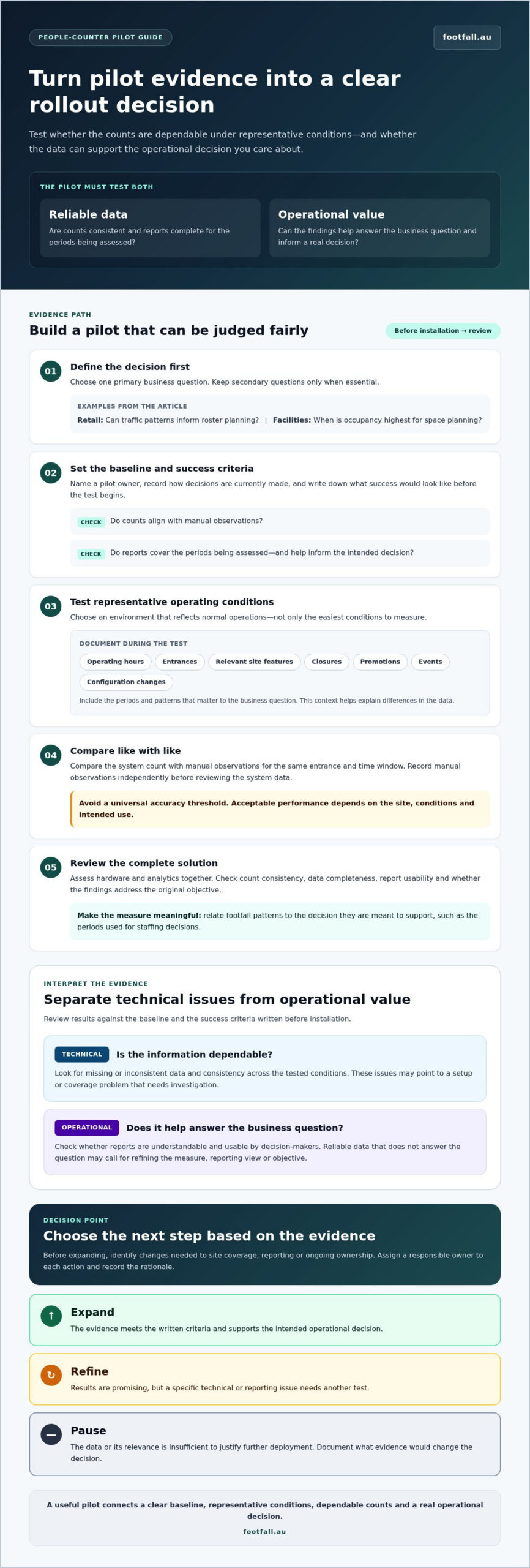
A focused pilot lets your organisation assess data quality and operational value before deciding on a wider rollout. Set a clear objective, choose conditions that reflect normal operations, compare system counts with manual observations and connect the findings to a real decision, such as staffing or space planning. Evaluate the hardware and analytics together so the evidence reflects the complete solution. With a structured approach, you can make an informed decision about what to do next.
Key Takeaways
- Learn how to run a pilot program for people counters by defining the business question the test needs to answer.
- Set a baseline, assign a pilot owner and write success criteria before installation.
- Choose a representative environment and record operating hours, entrances and disruptions that could affect results.
- Use the results to distinguish data-quality issues from operational value before deciding whether to scale.
How a people-counter pilot can reduce rollout risk and answer the right business questions
A people-counter pilot is a limited test of both the data and its usefulness in real operations. Like any pilot experiment, it helps you assess whether an approach is suitable before committing to a broader rollout. For people counting, that means checking not only whether the system produces usable counts, but whether those counts help people make better decisions.
Separate the business objective from the technical measures. A business objective might be to align staffing with busy periods or understand how people use a space. Technical measures, such as count consistency and data completeness, help establish whether the information is reliable enough to support that objective. Passing technical checks alone doesn’t prove the system will be useful. Test both.
Which business questions should a people-counter pilot answer?
Start with one primary decision, then include only secondary questions that are essential. For example, a retailer might ask whether traffic patterns can inform roster planning. A facilities team might want to understand when occupancy is highest to support space planning. A focused question keeps the test manageable and makes the findings easier to interpret.
Record the current process before the pilot begins. Note how decisions are made, what information is available and where estimates or manual observations are used. This baseline gives you a fair comparison when reviewing the new data. For broader context on system options and considerations, see our people counting systems guide.
Knowing how to run a pilot program for people counters means testing fit and decision value together. Define what evidence would support a change in practice, and what would show that the data needs further investigation. This distinction helps turn pilot results into a sound rollout decision.
How to design a people-counter pilot with clear measures and representative data
Set up the test before installation. Name a pilot owner, record the baseline process, define the measurement period and write down what success would look like. Criteria might include whether counts align with manual observations, whether reports cover the periods being assessed and whether the results can inform the intended operational decision. Compare counts for the same entrance and time window, and record the manual observations independently before reviewing the system data. Avoid relying on a universal accuracy threshold: acceptable performance depends on the site, conditions and intended use.
Choose an environment that reflects normal operations, not just the easiest conditions to measure. Document operating hours, entrances and relevant site features. Include the periods and patterns that matter to the business question, and log closures, promotions, events or configuration changes that may affect results. This context helps explain differences in the data rather than treating every variation as a system issue.
What should you measure and document during the test?
Track the agreed footfall measures alongside the decision each is meant to support. For example, compare traffic patterns with the periods used for staffing decisions, rather than collecting counts without a clear purpose. Keep notes on test conditions and review whether reports are understandable and usable for the people making decisions. Explore footfall data analysis for more on turning results into action.
Assess the hardware and analytics together: count consistency matters, but so does whether the reporting helps answer the pilot’s business question. These steps make how to run a pilot program for people counters a practical evaluation, not simply a data-collection exercise. Footfall Australia supplies people-counting hardware and analytics as an integrated solution. Learn more about Footfall Australia’s people-counting solutions.
Evaluating Pilot Results and Scaling People Counting
Review the results against the baseline and success criteria set before installation. Assess whether counts are consistent across the tested conditions, whether reports are usable by the people who need them and whether the findings address the original business objective.
Separate technical questions from operational ones. Missing or inconsistent data may point to a setup or coverage issue that needs investigation. Reliable data that doesn’t help answer the business question may indicate that the chosen measure, reporting view or objective needs refinement. Treating these as separate issues makes the next step clearer.
What evidence should support a wider rollout?
Look for evidence that the data remains useful across representative operating conditions and can inform the decision the pilot was designed to support. Before expanding, identify any changes needed to site coverage, reporting or ongoing ownership. Assign a responsible owner to each action and record the rationale for the decision.
- Expand when the evidence meets the written criteria and supports the intended operational decision.
- Refine when results are promising but a specific technical or reporting issue needs another test.
- Pause when the data or its relevance is insufficient to justify further deployment. Document what evidence would change that decision.
This evidence-led approach turns how to run a pilot program for people counters into a repeatable decision process, rather than a judgment based on isolated results. Footfall Australia brings people-counting hardware and analytics together. The FootfallCam Pro2 buying guide is a useful next step when evaluating hardware. Explore Footfall Australia’s people-counting solutions as you plan what comes after the pilot.
Turn pilot evidence into a confident next step
A useful people-counter pilot tests more than whether counts are available. It checks whether the data is dependable under representative conditions and whether it can support a real operational decision. Set a baseline, define success criteria in advance and keep a record of conditions that may affect how you interpret the results.
When reviewing results, distinguish technical issues from questions about business value. Then choose a clear next step: expand, refine the test or pause, with evidence and an accountable owner behind the decision. That’s the practical foundation of how to run a pilot program for people counters and make a measured rollout choice.
Footfall Australia supplies people-counting hardware and analytics software across Australia through a national partner network. Plan a people-counter pilot with Footfall Australia and take your next step with confidence. A focused test can help turn movement data into decisions your team can act on.
Frequently Asked Questions
How long should a people-counter pilot run?
A people-counter pilot often runs for two to four weeks, but the right duration depends on whether it captures the operating conditions relevant to your decision. Include representative busy and quiet periods, and allow time to review data quality and reporting. If unusual closures or events disrupt the test, document their impact and consider extending or repeating the affected part.
What should you measure in a people-counter pilot?
Measure count consistency, data completeness and reporting usability, alongside the business outcome the pilot is intended to inform. For example, if the goal is staffing decisions, review whether traffic patterns are clear enough to support roster planning. Record operating conditions and disruptions, then assess the hardware and analytics together rather than treating counts as the only result.
How do you know whether a people-counter pilot was successful?
A pilot is successful when its results meet the written criteria and provide evidence relevant to the original business question. Compare observed data with the baseline, review consistency across tested conditions and confirm that intended users can interpret the reports. The outcome may be to expand, refine the test or pause. Knowing how to run a pilot program for people counters means defining those decision rules before results arrive.
Can a people-counter pilot help assess a multi-site rollout?
Yes. A pilot can show whether the approach is suitable for a wider deployment, especially when the test location reflects important operating conditions. For a multi-site organisation, consider whether locations differ in entrances, traffic patterns or operating practices. Use the findings to identify what may transfer across sites and where further testing or local adjustments are needed before scaling.