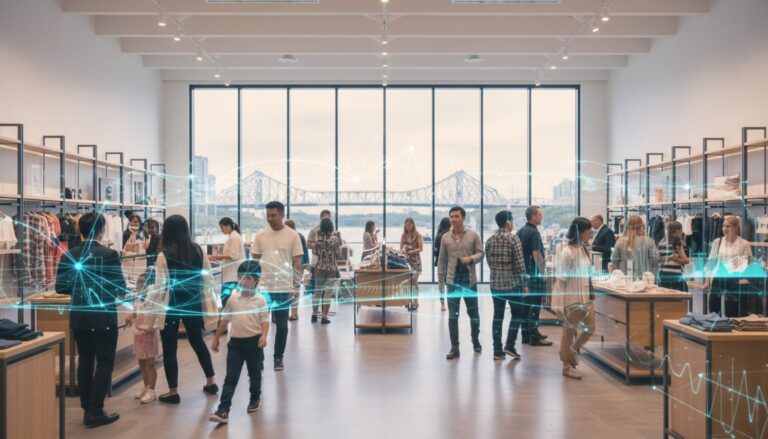

Beyond the Clicker: Superior Alternatives to Manual Customer Counting in 2026
Manual counting methods are estimated to be inaccurate by as much as 15%, creating a significant gap between reported traffic and actual visitor behavior. You likely recognize the frustration of inconsistent data when different staff members man the entrance, or the mounting labor costs of dedicated clicking roles. Relying on fragmented tallies makes it difficult to calculate true conversion rates or optimize staffing schedules with any degree of certainty. Searching for automated alternatives to manual customer counting is no longer just about convenience; it’s about securing the integrity of your operational data.
This article demonstrates how modern automated systems eliminate human error and unlock actionable business intelligence. We’ll examine the shift toward privacy-first technology under the EU AI Act, which becomes fully applicable on August 2, 2026. You’ll see how transitioning to automated sensors can lead to labor cost savings of 10-20% while providing the empirical evidence needed to back every strategic decision. We’ll outline the specific technologies that turn physical movement into a clear narrative of opportunity and operational efficiency.
Key Takeaways
- Recognize how manual counting errors of up to 15% impact your bottom line and why human observation fails in high-traffic scenarios.
- Compare the spectrum of people counting technologies, from basic infrared sensors to advanced 3D depth-sensing AI cameras.
- Evaluate the best alternatives to manual customer counting to achieve 99.5% data accuracy for high-stakes operational planning.
- Learn to apply automated footfall data to your daily management strategies, replacing intuition with empirical evidence for staffing and store layouts.
- Discover how to upgrade your existing CCTV infrastructure into a powerful AI-driven counting system using modern centroid technology.
The Hidden Inaccuracies and Operational Costs of Manual Customer Counting
Manual tallying belongs to a bygone era of retail management. While it seems straightforward, research suggests manual methods are often inaccurate by as much as 15%. This variance occurs because human observers struggle to maintain focus during extended shifts or high-volume periods. When organizations investigate people counting technology, they often discover that their existing manual logs have been providing a distorted view of actual footfall. These discrepancies lead to flawed conversion rate calculations and misinformed inventory decisions based on faulty premises.
Beyond simple counting errors, manual methods create “Ghost Data.” A staff member with a clicker rarely distinguishes between a family of four and four individual shoppers. They often fail to exclude their own entries and exits, or those of delivery personnel, which inflates the numbers. This lack of granularity makes it impossible to determine true customer-to-staff ratios. Exploring automated alternatives to manual customer counting allows businesses to filter out these non-prospect movements, providing a clean dataset that reflects genuine sales opportunities.
The Human Error Factor in High-Traffic Environments
Managing multiple entry points simultaneously is a cognitive challenge that exceeds human capacity. During peak trading hours, “tally fatigue” sets in quickly. Staff members naturally become distracted by customer inquiries or environmental changes, leading to missed counts. Automated sensors don’t blink or lose focus. They provide an objective, 24/7 observation layer that eliminates the subjective bias or accidental omissions common in manual processes. This objectivity is vital for identifying true peak hours and optimizing staff rosters accordingly.
Calculating the Real Cost of Tallying
The financial burden of manual counting is often hidden within general labor budgets. If a national retail network assigns one staff member to count visitors at each door, the cumulative hourly wage cost becomes substantial. This is a recurring operational expense that yields no return on investment. Every hour a team member spends clicking is an hour they aren’t engaging with customers or closing sales. This represents a significant opportunity cost that compounds across multiple locations.
Manual data also requires extra administrative hours to clean spreadsheets and input figures into central systems. Shifting to an automated solution transforms this ongoing drain on resources into a strategic asset. By adopting modern alternatives to manual customer counting, you remove the administrative burden and ensure that your data is ready for analysis the moment it’s captured. This transition shifts your team’s focus from the mechanical task of counting to the strategic task of serving your visitors.
Modern Alternatives: A Deep Dive into People Counting Technology
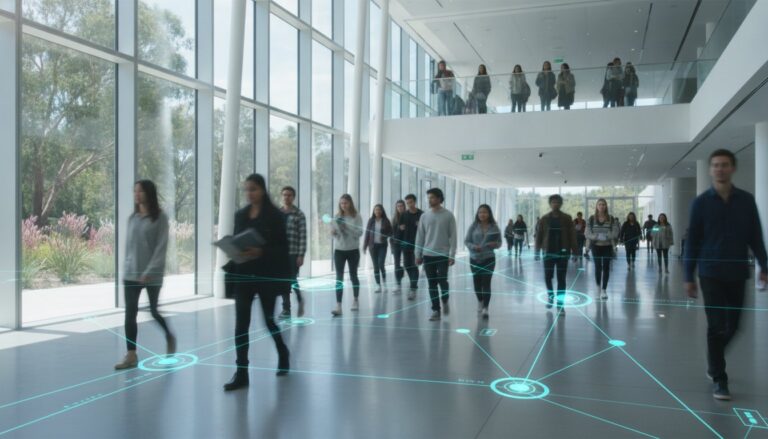
The transition from manual tallies to automated systems involves a broad technological spectrum. While early infrared beams offered a basic entry point, they lacked the precision required for sophisticated retail analytics. Today’s people counting technology leverages advanced sensors that distinguish between human shapes and environmental noise. These systems represent the most reliable alternatives to manual customer counting, moving beyond simple entrance logs to provide a comprehensive view of how people navigate a space.
A critical shift in this field is the move from 2D “shadow” tracking to 3D depth-sensing technology. Legacy 2D sensors rely on pixel changes, often mistaking shadows or floor reflections for visitors. In contrast, 3D sensors utilize the Z-axis to measure height and volume. This ensures that only individuals within a specific height range are recorded, achieving accuracy levels of 98% or higher. Modern systems also utilize edge computing, where data is processed locally on the device. This eliminates the need to stream high-bandwidth video to a central server, ensuring real-time reporting and enhanced data security.
3D Video Analytics and AI-Powered Sensors
AI-powered sensors use Time-of-Flight (ToF) or stereoscopic vision to map the environment in three dimensions. These systems are sophisticated enough to filter out staff members or ignore non-human movements like shopping trolleys and strollers. They adapt to fluctuating light levels, such as harsh shadows from storefront windows or low-light conditions during evening trade. This adaptability ensures that the data remains consistent regardless of external factors. You can explore how these systems integrate with your specific layout by reviewing our automated sensor options.
Anonymous Sensing and Privacy Compliance
A common misconception is that video-based counters “record” people in a way that compromises anonymity. Modern alternatives don’t store video footage. Instead, they use feature extraction to identify human movement patterns, converting those actions into anonymous numerical strings immediately. This “Privacy-by-Design” approach ensures full compliance with the Australian Privacy Principles (APPs). No personally identifiable information (PII) is ever stored or transmitted. This architecture provides a secure foundation for data-driven decisions while respecting the privacy of every visitor who enters your facility. By removing the risk of data breaches associated with PII, businesses can focus on the strategic utility of the footfall metrics themselves.

Comparing Data Integrity: Why Automated Systems Outperform Manual Methods
Manual clickers provide a binary “In/Out” record that lacks essential context. This data is often too shallow to support complex operational changes or high-stakes investment decisions. By contrast, automated systems provide a multi-dimensional view of visitor behavior that human observers simply cannot replicate. High-tier sensors achieve accuracy levels of 99.5%, ensuring that your strategic decisions are based on empirical truth rather than estimates. This level of precision is essential when following the ultimate guide to people counting to drive sustainable business growth.
The ROI of switching to alternatives to manual customer counting becomes clear when you analyze the cost of human error. A 15% inaccuracy rate in manual logs often leads to overstaffing during perceived peaks that don’t exist, or understaffing when real opportunities are missed. Automated systems provide 24/7 monitoring without the need for shift changes, breaks, or oversight. They capture every movement with unwavering consistency, providing a reliable baseline for every hour of the day. This transition shifts the focus from merely measuring presence to measuring operational efficiency.
Granular Metrics: Beyond Simple Headcounts
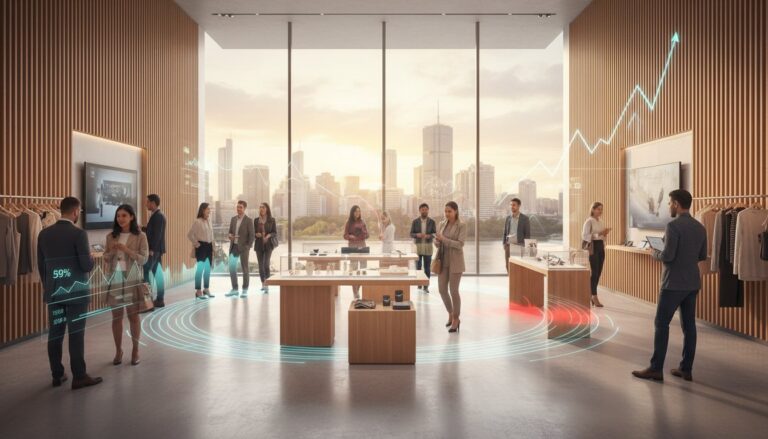
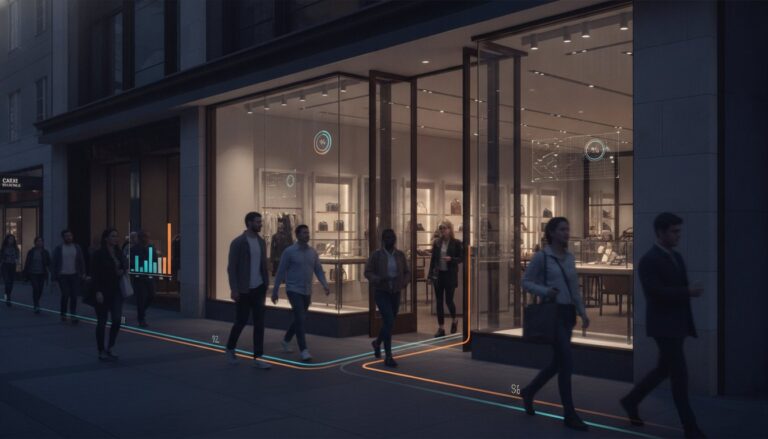
Modern sensors move beyond simple headcounts by identifying specific behavioral nuances. Dwell time metrics reveal how long customers engage with specific displays, while the turn-in rate measures the effectiveness of window marketing by comparing street traffic to store entries. Group counting technology is particularly valuable because it identifies families or couples as a single buying unit. This prevents the artificial inflation of footfall numbers and provides a more realistic conversion rate for retail environments. These metrics turn raw numbers into a narrative of customer intent.
Heatmapping and Customer Flow Analysis
Understanding the sequence of human actions within a space allows for data-driven layout optimization. Heatmapping identifies “Cold Zones” where visitor engagement is low, signaling a need for better signage or product rearrangement. By tracking the entire customer journey, management can position high-value promotions in high-traffic flow paths. This level of insight is impossible to achieve with manual methods. It makes automation an essential partner for modern organizational management, allowing you to optimize every square meter of your physical environment based on actual movement patterns.
Strategic Implementation: Integrating Footfall Data into Your Business Logic
Transitioning from manual logs to digital systems shifts the focus from simple observation to high-level operational strategy. Implementing alternatives to manual customer counting allows management to move beyond the guessing game of floor coverage and stock levels. By centralising data through cloud-based platforms like FootfallCam V9 Software, national managers gain a unified view of performance across all locations. This accessibility is a cornerstone of effective footfall data analysis, providing the framework needed to turn raw traffic numbers into actionable insights. Decisions no longer rely on the subjective reports of floor staff but on a consistent, verified stream of behavioral data.
Modern business logic requires that every data point serves a specific operational purpose. When footfall data is integrated into your broader management ecosystem, it stops being a static number and becomes a dynamic tool for growth. This integration enables a proactive approach to management, where you can anticipate needs rather than reacting to problems after they occur. The quiet confidence that comes from empirical evidence allows for bolder strategic moves, such as redesigning store layouts or adjusting operating hours with guaranteed data integrity.
Synchronising Traffic Data with POS Systems
The most critical metric for any physical space is the Sales Conversion Rate, calculated by dividing total transactions by total footfall. Manual counting methods fail here because they lack the timestamp precision required to sync accurately with Point-of-Sale (POS) records. Automated sensors provide the granular, time-stamped data necessary to identify “Power Hours.” These are specific periods where traffic is high but conversion remains low, often highlighting a need for better staff training or improved checkout efficiency. You can explore our software integration options to see how this data aligns with your existing business systems to reveal hidden revenue leaks.
Data-Driven Staffing and Labour Optimisation
Labor is typically the highest operational expense for retail and public spaces. Automated data allows you to match staff rosters to real-time customer demand curves rather than relying on intuition or legacy patterns. Identifying “Dead Zones,” which are periods of consistently low traffic, enables you to reduce labor costs without compromising service quality. Research indicates that retailers using automated systems for staff optimization have reported labor cost savings of 10-20% in the first quarter of implementation. Historical data also allows for predictive modeling, ensuring you’re prepared for seasonal surges or promotional events before they occur. This structured approach to labor management ensures that your most expensive resource is always positioned where it can generate the most value.
Future-Proofing Your Space with Footfall Australia’s Integrated Solutions
Footfall Australia provides the infrastructure required to turn physical movement into a strategic advantage. While previous sections detailed the theoretical benefits of high-accuracy data, the hardware and software ecosystem is where that value is realized. The FootfallCam Pro2 stands as the gold standard for Australian retail, offering a robust foundation for those seeking reliable alternatives to manual customer counting. This system integrates seamlessly with the FootfallCam V9 software, creating a central intelligence hub that empowers national operations with real-time, verified footfall metrics. By consolidating data from multiple sites into a single intuitive dashboard, the V9 software allows managers to compare performance across regions with total confidence.
For organizations looking to leverage existing infrastructure, the FootfallCam Centroid system provides a sophisticated path to upgrade standard CCTV cameras into AI-driven people counters. This flexibility ensures that the transition to automated analytics is both cost-effective and scalable across large portfolios. To maintain the integrity of this data, local support plans are available across Australia. These plans provide the technical assurance needed to ensure 24/7 monitoring remains uninterrupted, protecting the empirical evidence that drives your business logic. It’s a comprehensive approach that prioritizes long-term utility over short-term fixes.
The FootfallCam Pro2: Precision Meets AI
The hardware utilizes 3D stereoscopic vision combined with built-in AI processing to achieve industry-leading precision. This edge-based processing means the device interprets human behavior locally, reducing latency and enhancing security by processing data at the source. Installation is simplified through Power over Ethernet (PoE), allowing for a clean, plug-and-play setup in diverse architectural environments. The ecosystem is built for longevity, featuring 2026-ready firmware updates that ensure your investment remains compatible with evolving privacy regulations and analytical requirements. These devices are designed to withstand the demands of high-traffic environments while maintaining 99.5% accuracy.
The Legacy Swap Out Plan: Transitioning from Manual
Moving away from outdated infrared beams or manual clickers is a critical step in future-proofing your physical spaces. The Legacy Swap Out Plan is designed specifically to assist businesses in this transition, replacing inconsistent data sources with a unified AI-powered network. Footfall Australia provides professional support for national rollouts, ensuring every sensor is calibrated for maximum accuracy from day one. This structured approach removes the technical friction of upgrading your systems and ensures your team can focus on strategy rather than hardware maintenance. If you’re ready to move beyond the limitations of manual observation, request a consultation for your national network today to begin your transition to evidence-based management.
Transitioning to Evidence-Based Management
The shift from legacy tallies to automated intelligence is a fundamental requirement for modern organizational management. Relying on manual observation introduces a 15% error rate that compromises every subsequent strategic decision. By adopting sophisticated alternatives to manual customer counting, you secure a foundation of empirical truth that remains consistent across every location in your network. This transition turns raw movement into a narrative of opportunity. It allows you to optimize labor costs and maximize conversion rates with quiet confidence. You’re no longer reacting to perceived trends; you’re leading with verified facts.
Footfall Australia provides the technical innovation and local expertise needed to future-proof your physical environments. Our solutions deliver 99.5% counting accuracy while remaining fully GDPR and APP privacy compliant. Since 2004, we’ve helped Australian retailers replace intuition with data-driven logic. It’s time to reclaim your staff’s focus and empower your leadership with actionable business intelligence. We’re ready to help you navigate the future of visitor analytics with precision and reliability.
Upgrade your data strategy with Footfall Australia’s automated solutions.
Frequently Asked Questions
How accurate are automated people counters compared to manual clickers?
Automated systems provide a consistent accuracy level of up to 99.5%, far exceeding the performance of human observers. While manual counting is susceptible to tally fatigue and distractions, sensors maintain constant vigilance regardless of traffic volume or shift length. This precision ensures that your baseline data is reliable enough for high-stakes financial and operational planning.
Will an automated people counting system invade my customers’ privacy?
Modern sensors prioritize anonymity through a “Privacy-by-Design” architecture that never stores personally identifiable information. These devices use feature extraction to convert human movement into anonymous numerical strings in real time. This process ensures full compliance with the Australian Privacy Principles and the EU AI Act, providing the insights you need without recording or storing actual video footage of your visitors.
Can I integrate people counting data with my existing POS system?
Yes, integrating footfall data with your existing sales records is essential for calculating accurate conversion rates. While we don’t sell POS hardware, our systems are designed to export data seamlessly into your existing management software. This allows you to view transaction volumes alongside visitor traffic to identify specific times when your sales team is most effective.
What is the typical ROI period when switching from manual to automated counting?
Most organizations observe a return on investment within the first six months of implementation. This is primarily driven by labor cost savings, as retailers often reduce staffing expenses by 10% to 20% through optimized rostering. By removing the need for dedicated manual counters and reducing administrative data entry, the system pays for itself through increased operational efficiency.
Do I need to replace my existing CCTV to get automated footfall data?
You don’t necessarily need to install new hardware if you already have a functional CCTV network. The FootfallCam Centroid system can utilize your existing camera feeds, applying AI analytics to your current infrastructure to generate accurate traffic counts. This provides a cost-effective path for businesses looking for alternatives to manual customer counting without a total hardware overhaul.
How does an automated system handle groups or families entering together?
Advanced 3D sensors use AI models to identify and group individuals who are moving together as a single buying unit. This prevents the artificial inflation of footfall numbers that occurs when manual counters click for every child or companion. Identifying these groups ensures your conversion rates reflect genuine sales opportunities rather than just a raw headcount of every person in the building.
Is the installation of automated sensors disruptive to business operations?
Installation is typically non-disruptive and can be completed quickly using Power over Ethernet (PoE) cabling. Most sensors are mounted discreetly on the ceiling and require only a single cable for both power and data. Because the setup is often handled outside of peak trading hours, your daily operations and customer experience remain entirely unaffected during the transition.
What happens if my Wi-Fi goes down—will I lose my traffic data?
You won’t lose your data because our sensors are equipped with internal storage that records traffic even during network outages. Once your internet connection is restored, the device automatically syncs the cached data back to the cloud-based V9 software. This ensures your historical records remain complete and accurate, providing a level of reliability that manual paper logs can’t match.