Choosing the Best People Counting System in Australia: A 2026 Buyer’s Guide
If your current visitor data feels more like a guess than a metric, you’re likely working with legacy hardware that can’t keep pace with modern Australian retail. Relying on an outdated customer traffic counter for shops often results in poor staff scheduling and missed sales opportunities. You’ve likely felt the frustration of high costs that fail to deliver a clear ROI or integrate with existing management software. This guide bridges that gap by showing you how to evaluate solutions that prioritize data integrity and operational utility.
We’ll explore how the FootfallCam Pro2 sets the standard for accuracy while ensuring compliance with the Privacy Amendment (Personal Data Protection) Bill 2026. You’ll learn to identify systems offering seamless integration and discover how a Legacy Swap Out Plan modernizes your infrastructure. By the end, you’ll have a clear framework for selecting a system that transforms human movement into actionable business intelligence.
Key Takeaways
- Transition from legacy infrared sensors to AI-driven 3D video analytics to achieve the precision required for modern operational decisions.
- Define your strategic goals before choosing a customer traffic counter for shops, ensuring the hardware aligns with your needs for staffing or conversion metrics.
- Evaluate environmental factors like lighting and ceiling height to select a solution that maintains high data integrity across all entry points.
- Leverage integrated reporting to bridge the gap between footfall data and POS systems, turning visitor counts into a clear measure of profitability.
The Evolution of People Counting Systems in Australia
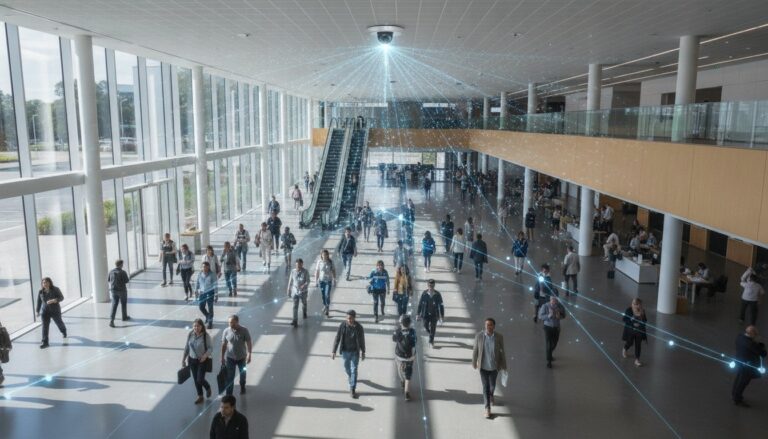
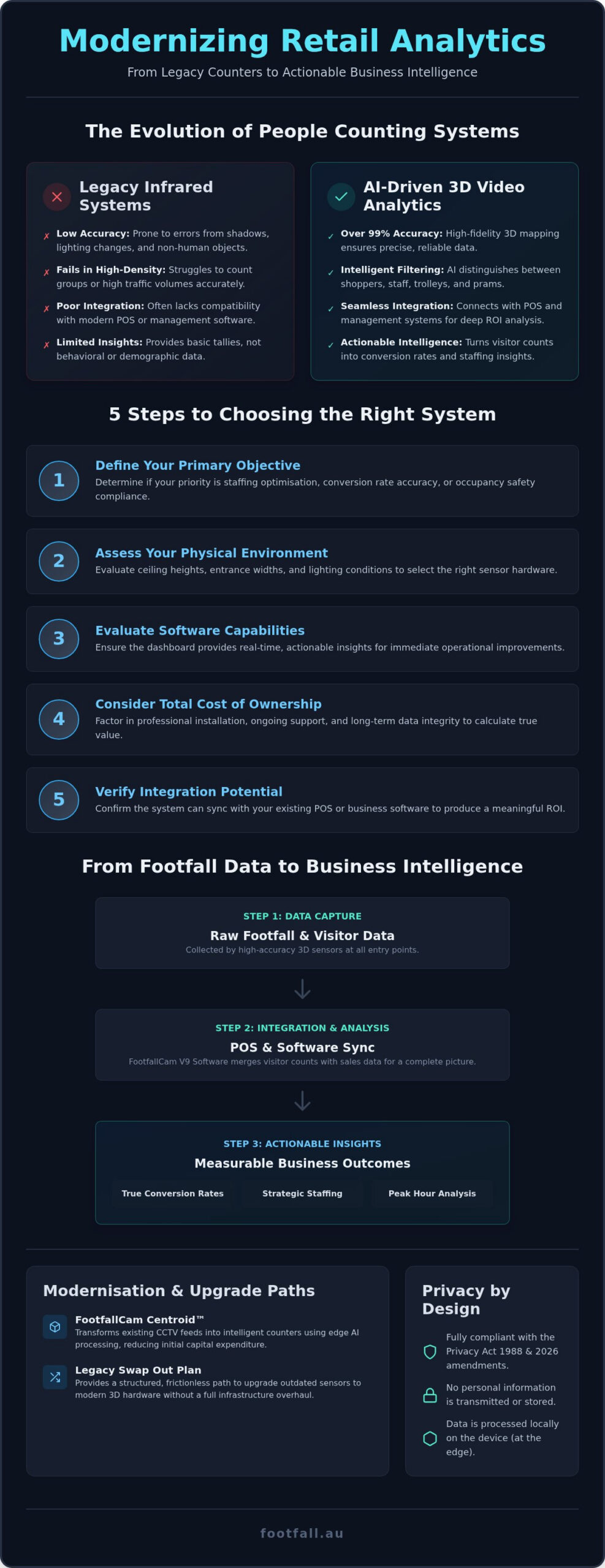
Modern people counting has shifted from basic tallies to a sophisticated fusion of AI-driven video analytics and cloud-based reporting. Australian organisations no longer settle for the limitations of infrared beams, which often fail in high-density environments or with group entries. Instead, the industry is adopting 3D video sensors that provide a granular narrative of human movement. A People counter now serves as a strategic tool, moving beyond simple occupancy tracking toward complex behavioral analysis in 2026. This evolution prioritises data integrity, as a customer traffic counter for shops is only valuable if the underlying metrics are indisputable. Decisions backed by empirical evidence require a foundation of precision that legacy hardware simply cannot provide.
Comparing Sensor Technologies: 3D Video vs. Legacy Systems
Differentiation between sensor types is critical for long-term operational efficiency. Legacy infrared systems and basic IP cameras often struggle with shadows, lighting changes, or non-human objects. In contrast, stereo vision and Time-of-Flight (ToF) technologies create three-dimensional maps to track depth and volume with high fidelity. The FootfallCam Pro2 leverages advanced AI to filter out trolleys, prams, and staff members, ensuring your data reflects actual adult shoppers. By distinguishing human movement patterns from environmental noise, AI-based counting achieves over 99% accuracy in real-world Australian retail settings. This precision allows managers to trust a customer traffic counter for shops when making high-stakes staffing decisions. It’s this shift from observation to interpretation that defines the current technological landscape.
5 Steps to Choosing the Right People Counting System
Selecting a customer traffic counter for shops requires a methodical approach to ensure the technology delivers long-term utility. Decisions should be rooted in logic rather than intuition. Follow these five steps to evaluate your options:
- Step 1: Define your primary objective. Determine if you’re prioritising staffing optimisation, conversion rate accuracy, or occupancy safety compliance.
- Step 2: Assess your physical environment. Ceiling heights and lighting conditions at entrances dictate whether you need wide-angle lenses or high-sensitivity sensors.
- Step 3: Evaluate software capabilities. Ensure the dashboard provides real-time, actionable insights that empower your team to make immediate operational changes.
- Step 4: Consider total cost of ownership. Factor in professional installation and ongoing people counter support to maintain data integrity over time.
- Step 5: Verify integration potential. A reliable customer traffic counter for shops must sync with your existing POS or management software to produce meaningful ROI.
Maximising Existing Infrastructure with AI Upgrades
Modernising your facility doesn’t always require a total refit. The FootfallCam Centroid allows organisations to transform existing CCTV feeds into intelligent counters by applying AI processing at the edge. This solution reduces initial capital expenditure while significantly enhancing data quality. For businesses struggling with failing legacy hardware, the Legacy Swap Out Plan provides a structured path to upgrade sensors without the friction of a full infrastructure overhaul. Our national partner network ensures local technical assistance is always available, maintaining system health and data consistency across all your Australian locations.
Transforming Footfall Data into Actionable Business Intelligence
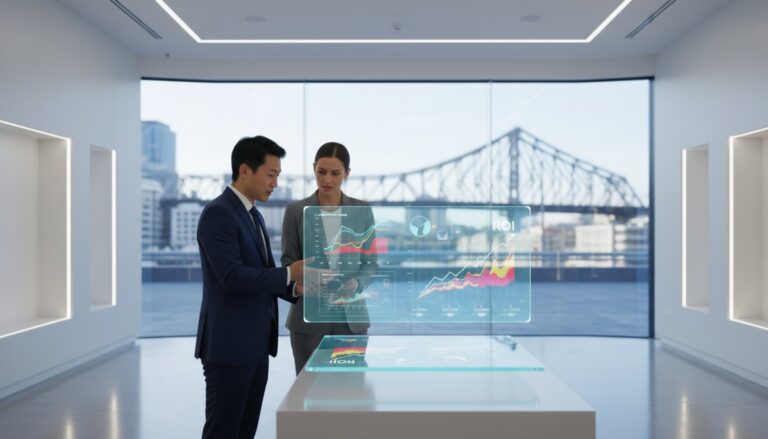
Raw numbers lack utility without a structured framework for interpretation. Advanced footfall data analysis drives measurable ROI by identifying precise peak hours, allowing managers to allocate resources where they generate the highest impact. When you integrate a customer traffic counter for shops with your POS system, the resulting data reveals your true conversion rates. This evolution from counting heads to measuring performance is essential for modern retail excellence. FootfallCam V9 Software automates this reporting across multi-site national operations, delivering consistent insights without manual intervention. To ensure compliance with the Privacy Act 1988 and the 2026 amendments, these systems process data locally at the edge. This approach ensures no personal information is transmitted or stored, providing peace of mind for both the organisation and its visitors.
Strategic Staffing and Operational Efficiency
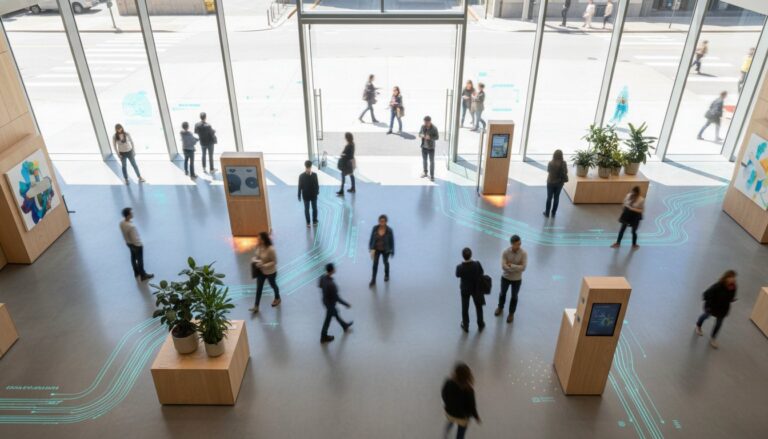
Aligning staff rosters with actual visitor traffic patterns significantly reduces unnecessary overhead while ensuring high service quality during high-density periods. Space management data further optimises store layouts by revealing which marketing displays effectively capture attention and drive dwell time. Maintaining this level of precision requires a professional support plan to guarantee that your customer traffic counter for shops remains perfectly calibrated. Reliable people counting technology provides the empirical evidence needed to transition from intuition-based scheduling to a strategy rooted in observable human behavior trends. By treating physical presence as a sequence of actions rather than a static number, organisations gain a distinct competitive advantage in the Australian market.
Securing a Data-Driven Future for Australian Retail
Implementing a high-precision customer traffic counter for shops is no longer a luxury; it’s a fundamental requirement for operational efficiency. You’ve seen how the shift toward AI-driven 3D sensors provides the empirical evidence needed to optimise staffing and prove ROI. By following a structured evaluation process and prioritising data integrity, your organisation can transition from intuitive guesses to strategic certainty. Footfall Australia supports this journey with the industry-leading FootfallCam Pro2 and a comprehensive national support network. Whether you’re starting fresh or utilising our Legacy Swap Out Plan for cost-effective upgrades, the goal remains the same: turning movement into actionable intelligence. Contact Footfall Australia for a tailored people counting strategy and begin making decisions backed by reliable metrics. Your path to optimised performance starts with accurate observation.
Frequently Asked Questions
How accurate are modern people counting systems in high-traffic Australian retail environments?
Modern AI-driven systems achieve over 99% accuracy in high-traffic environments. Devices like the FootfallCam Pro2 use 3D stereo vision to filter out non-human objects such as trolleys and prams. This technology ensures that every data point reflects a genuine customer, providing the reliable metrics necessary for high-stakes operational decisions. Accuracy remains consistent even during peak periods when visitor density increases significantly.
Can I use my existing CCTV cameras for people counting?
You can leverage your existing infrastructure by integrating the FootfallCam Centroid. This AI-powered hardware processes standard CCTV feeds to extract precise visitor metrics without requiring a full sensor refit. It’s an efficient way to modernise your facility while maintaining a high level of data integrity. This approach allows organisations to benefit from advanced analytics while minimising initial capital expenditure on new hardware.
What is the difference between a visitor counter and a conversion rate tracker?
A visitor counter records total entries, whereas a conversion tracker combines that data with sales transactions. By integrating a customer traffic counter for shops with your POS system through FootfallCam V9 Software, you can measure exactly how many visitors become paying customers. This distinction is vital for evaluating marketing effectiveness and store performance rather than just monitoring raw occupancy levels.
How does a people counting system comply with Australian privacy laws?
Compliance with the Privacy Act 1988 and the 2026 amendments is maintained through anonymous edge processing. Modern systems don’t record video or use facial recognition; they process human movement patterns locally on the device. This ensures that no personal data is stored or transmitted, making the technology inherently privacy-compliant for Australian organisations operating in public spaces and physical environments.