FootfallCam Pro3 AI Box: The Definitive Guide to Spatial Intelligence for Australian Retail
Did you know that legacy infrared counters often miscalculate foot traffic by as much as 18% during high-volume periods in Australian shopping centres? This margin of error isn’t just a statistical quirk; it’s a direct leak in your operational budget. You’ve likely felt the frustration of seeing a crowded floor while your data suggests otherwise, leading to misaligned rosters and missed sales opportunities. The FootfallCam Pro3 AI Box solves this by moving beyond simple counting into the realm of true spatial intelligence.
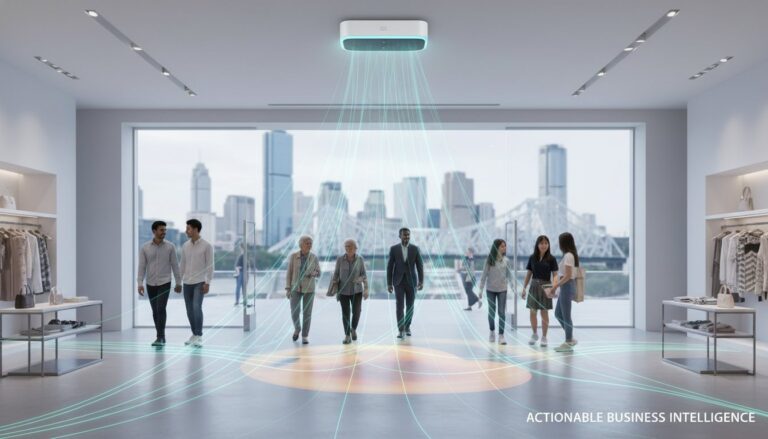
We agree that running a retail business shouldn’t feel like a guessing game. In this guide, you’ll discover how the FootfallCam Pro3 AI Box transforms raw visitor data into actionable business intelligence through advanced edge computing and spatial analytics. We’ll examine how precise occupancy tracking and heat mapping can help you recapture A$5,000 or more in monthly conversion value by aligning your staff with real-time customer demand. From identifying high-dwell zones to perfecting your store layout, we’re providing the technological eyes your business needs to thrive in a competitive market.
Key Takeaways
- Understand how edge computing shifts retail management from simple counting to advanced spatial intelligence for the 2026 market.
- Discover how the FootfallCam Pro3 AI Box utilizes bi-directional counting and staff exclusion to deliver precise, actionable conversion metrics.
- Learn how to maintain rigorous compliance with the Australian Privacy Act while capturing sophisticated visitor journey analytics.
- Explore the financial logic of high-precision hardware and how a marginal 1% increase in conversion rates can rapidly offset your investment in A$.
- Identify why local expertise and tailored support plans are essential for successfully scaling spatial intelligence across Australian retail environments.
What is the FootfallCam Pro3 AI Box?
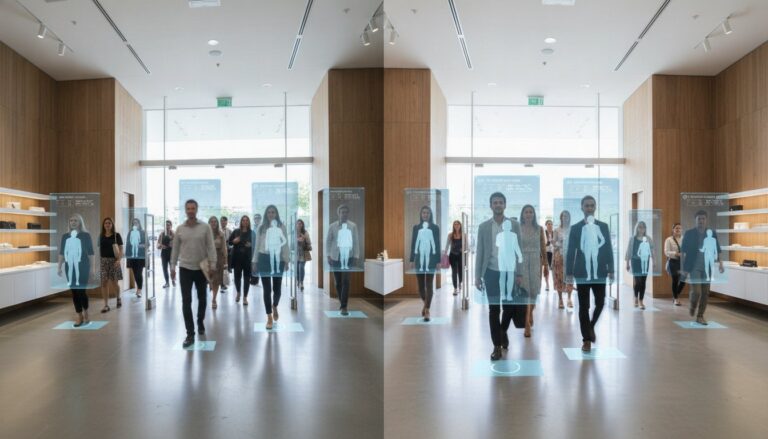
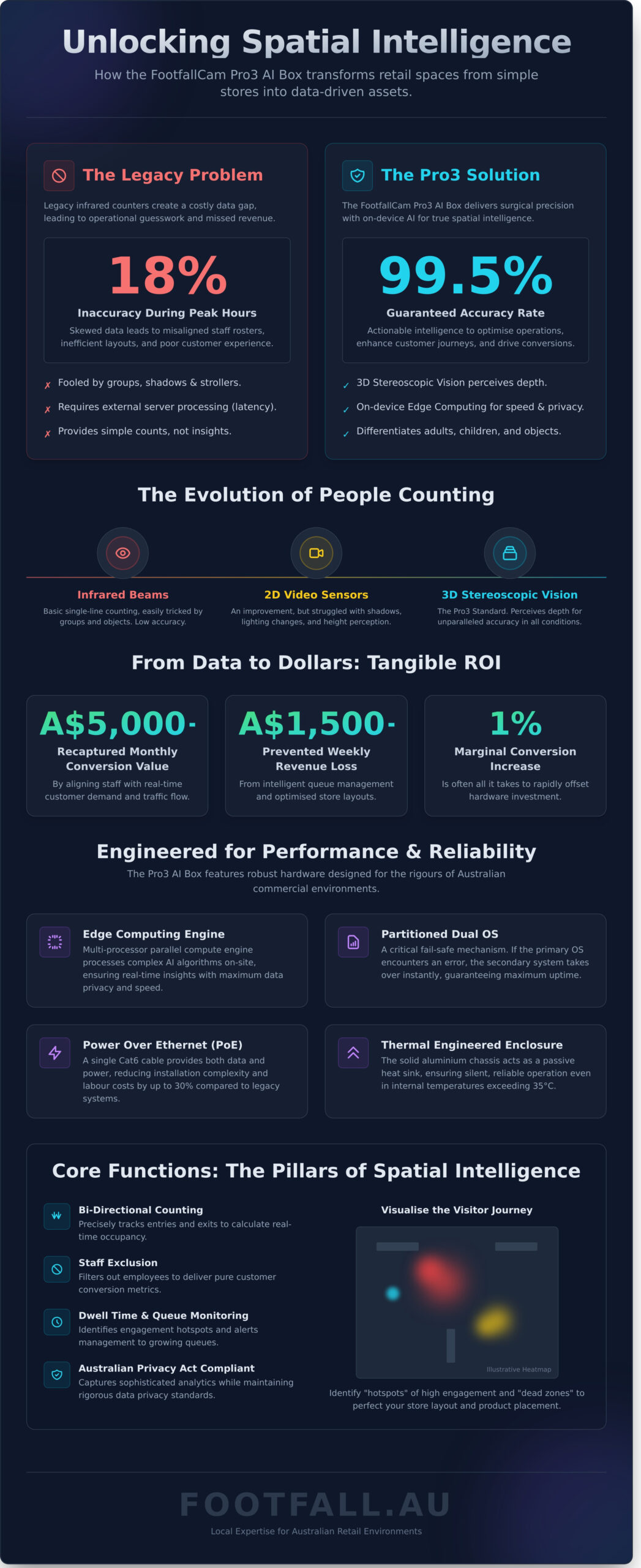
The FootfallCam Pro3 AI Box is a high-performance edge computing device designed to transform raw visual data into actionable business intelligence. Unlike traditional sensors that rely on external servers for processing, this unit handles complex AI algorithms locally on the hardware. This architecture ensures data privacy while maintaining a consistent 99.5% accuracy rate, even in the most demanding lighting conditions found in Australian retail environments. It functions as the primary sensory organ for a physical space, capturing the nuances of human movement with surgical precision.
Modern business owners can’t rely on the 80% accuracy rates provided by legacy systems. The FootfallCam Pro3 AI Box eliminates the guesswork that has historically plagued floor management. By using sophisticated machine learning models, the device distinguishes between adults, children, and non-human objects like shopping trolleys or strollers. This level of detail is vital for Australian retailers who might otherwise see their conversion metrics skewed by up to 15% due to poor data filtering.
The Evolution of People Counting Technology
The journey of people counting technology started with basic infrared beam counters that were easily fooled by groups walking together. By 2010, 2D video sensors offered a slight improvement, yet they struggled with shadows and fluctuating sunlight. The Pro3 represents the pinnacle of this evolution, utilising 3D stereoscopic vision to perceive depth. This flagship technology is now the standard for high-traffic Australian venues, from major shopping centres in Sydney to regional galleries, because it maintains integrity where older systems fail.
Why Spatial Intelligence Matters in 2026
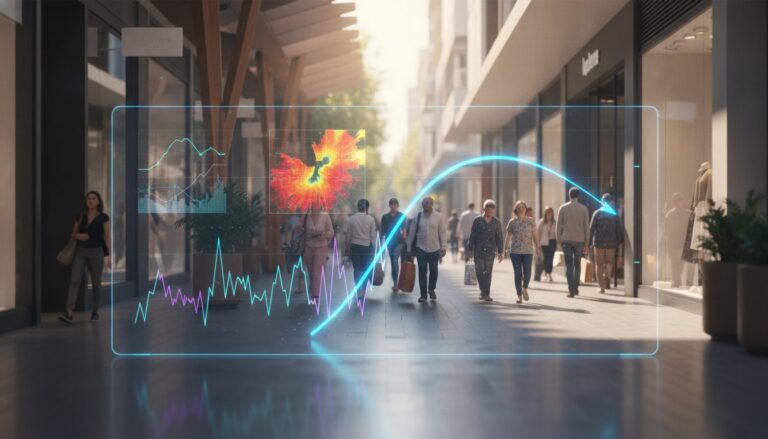
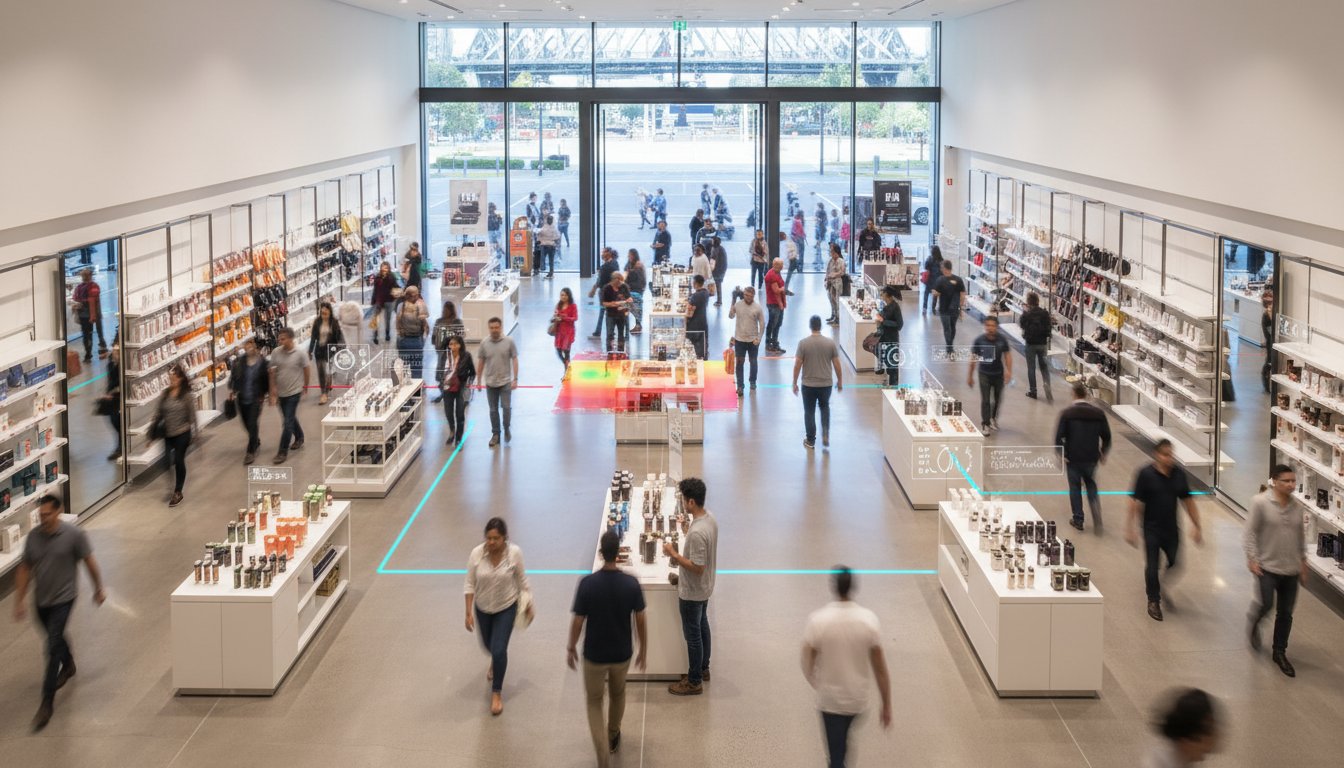
Spatial Intelligence defines the next era of retail management. By 2026, simply knowing how many people entered a building won’t be enough to remain competitive. You need to understand the entire visitor journey. This involves identifying “dead zones” where foot traffic stalls and “hotspots” that drive the highest engagement. When you see exactly how customers flow through a 400-square-metre layout, you can make informed decisions about product placement and staff allocation.
Real-time data creates operational agility that wasn’t possible five years ago. If a queue starts to form at a checkout in a Melbourne boutique, the system alerts management immediately. This prevents lost sales and improves the customer experience. Australian businesses often lose over A$1,500 in potential revenue per week due to inefficient queue management or poorly optimised store layouts. Implementing the FootfallCam Pro3 AI Box provides the evidence-based foundation needed to reclaim these margins.
- Precision: High-definition 3D sensors provide 99.5% accuracy.
- Edge Computing: Data is processed on-site for speed and security.
- Behavioural Tracking: Monitor dwell times and path-to-purchase journeys.
- Cost Efficiency: Reduces manual auditing costs and optimises staff A$ spend.
The transition from basic counting to deep spatial analysis isn’t just a technical upgrade; it’s a strategic necessity. It’s about seeing the store through the eyes of the customer and using those insights to drive growth. The Pro3 provides the clarity required to turn a physical space into a high-performing, data-driven asset.
Advanced Architecture and Technical Specifications
The FootfallCam Pro3 AI Box operates as a high-performance computing node designed for the rigours of the Australian commercial environment. At its core lies a multi-processor parallel compute engine. This hardware configuration allows the device to process complex AI algorithms locally and in real-time. By handling heavy workloads on-site, the system delivers immediate insights without the latency issues common in cloud-only solutions. Reliability is reinforced by partitioned dual operating systems. This architecture ensures that if one system encounters an update error or file corruption, the secondary OS takes over instantly. It’s a fail-safe mechanism that guarantees maximum uptime for critical business intelligence.
Physical durability is just as vital as software stability. Australian retail environments, particularly those with large glass facades in cities like Perth or Brisbane, often face internal temperatures exceeding 35°C. The FootfallCam Pro3 AI Box features a thermal engineered aluminium enclosure. This chassis acts as a heat sink, dissipating thermal energy without the need for noisy, failure-prone fans. Installation is equally efficient. The device utilizes Power over Ethernet (PoE), drawing both power and data through a single Cat6 cable. This reduces installation labour costs by approximately 30% compared to legacy systems requiring separate electrical runs.
The Power of Edge Computing
Processing data at the edge means the device interprets video frames locally and only transmits anonymous metadata to the cloud. This is a critical advantage for Australian businesses operating on NBN connections with limited upload speeds, often capped at 20 Mbps or 40 Mbps. By transmitting coordinates rather than raw video, the Pro3 reduces bandwidth requirements by 95%. This approach also enhances security, as sensitive visual data never leaves the premises. The onboard AI maintains a consistent 99.5% accuracy rate, even in challenging environments. It performs reliably in low-light conditions down to 10 lux, ensuring that late-night trading data is just as precise as midday peaks. High-quality location analytics in retail has become a standard requirement for modern operations, and edge computing is the engine that makes it sustainable.
Pro2 vs. Pro3: Key Differences and Improvements
The transition from the Pro2 to the Pro3 marks a significant leap in architectural logic. While the Pro2 relied on a separate configuration panel, the Pro3 utilizes a unified architecture. This change streamlines device management, allowing IT teams to configure multiple sensors through a single, cohesive interface. The Pro3 also introduces enhanced multi-camera analytics expansion. This allows one master unit to synchronise with multiple secondary sensors to cover massive entrances or complex zones. It’s the primary reason the Pro3 is the preferred choice for Australia’s 65 largest shopping malls and major airports. These high-traffic hubs require a seamless view of the visitor journey that smaller, standalone sensors can’t provide. You can explore how these technical specifications translate to optimised store performance across your entire network.
- Unified Architecture: Simplifies remote management and reduces firmware conflict.
- Scalable Expansion: Connects multiple sensors to form a single wide-area tracking zone.
- High-Density Ready: Capable of tracking up to 300 people simultaneously within a single frame.
Core Functions: Turning Data into Actionable Insights
The FootfallCam Pro3 AI Box acts as the central nervous system for retail intelligence. It moves beyond simple tallying to provide a granular view of how people move through a space. By leveraging edge computing, the device processes complex visual data locally, ensuring that every insight is delivered with 99.5% accuracy. This precision allows managers to stop guessing and start executing strategies based on verified human behavior.
Four primary functions define the device’s analytical power:
- Bi-directional counting: The system distinguishes between incoming and outgoing traffic with total clarity. This prevents the inflation of visitor numbers and provides an exact real-time occupancy count, which is vital for safety compliance in high-traffic venues.
- Staff exclusion technology: It’s common for employees to cross the threshold dozens of times daily. The Pro3 uses AI to identify and remove staff movements from the final data set. This ensures your conversion metrics reflect genuine customer intent rather than operational noise.
- Shopper journey analysis: The device maps the specific path a visitor takes from the moment they enter. You can see if they head straight for the sale rack or linger in the premium fragrance department.
- Dwell time and engagement: By measuring how many seconds a customer spends in front of a specific display, the system quantifies interest. If a window display has a high “view” count but a low “dwell” time, it’s a clear signal that the visual merchandising isn’t resonating.
The Conversion Funnel for Physical Retail
Retailers often struggle to identify where they lose potential sales. The FootfallCam Pro3 AI Box solves this by creating a digital version of the physical sales funnel. It starts by calculating the “Draw-in Rate,” which compares the number of people walking past the store to those who actually enter. Recent geomarketing research in retail demonstrates that spatial intelligence is the key to understanding these micro-movements. If 2,000 people pass your Sydney storefront but only 140 enter, your draw-in rate is 7%. You can then measure the “Product Engagement Rate” within specific aisles to see where the funnel leaks. If 80% of visitors reach the mid-store point but only 5% reach the checkout, you’ve identified a specific zone that requires immediate layout optimization.
Staffing and Service Level Optimisation
In retail hubs like Melbourne’s Bourke Street Mall or Sydney’s Pitt Street, labor is often the highest variable cost. The Pro3 helps align staff coverage with actual traffic peaks rather than traditional shift patterns. By analyzing historical data, a manager might find that while total daily traffic is consistent, 45% of visitors arrive between 12:30 PM and 2:00 PM. The system’s queue management feature sends real-time alerts to floor managers when wait times exceed a three-minute threshold. This proactive approach reduces walk-outs and improves the shopper-staff interaction ratio. Accurate data helps you prove that adding one extra staff member during a Saturday peak can result in an A$1,200 increase in daily revenue through better service levels.
Implementing the Pro3 AI Box in Australia
Deploying advanced analytics in the Australian retail sector requires a precise balance between technical capability and strict regulatory adherence. Local businesses face some of the highest operational costs globally, making every square metre of floor space critical for profitability. The FootfallCam Pro3 AI Box provides the necessary infrastructure to transform raw visitor movement into high-fidelity business intelligence without compromising operational integrity. It acts as a silent consultant, observing patterns that the human eye often misses during a busy shift.
Privacy-First AI in the Australian Market
Compliance with the Australian Privacy Act 1988 is a non-negotiable requirement for any modern physical business. The Pro3 AI Box addresses this by utilizing edge processing technology. This means the device analyzes video frames in real-time and converts them into anonymous data points before the information ever leaves the unit. It doesn’t store identifiable personal data or use facial recognition. Instead, it tracks anonymous silhouettes and movement patterns, ensuring 100% anonymity for every visitor. This approach satisfies the OAIC (Office of the Australian Information Commissioner) guidelines while reassuring the 92% of Australian consumers who expressed concerns about data privacy in 2023. You get the depth of AI insights without the liability of storing sensitive imagery.
Calculating ROI and Business Value
The financial logic for hardware investment rests on marginal gains. For a retailer with an annual turnover of A$1,200,000, a mere 1% increase in the conversion rate results in an additional A$12,000 in top-line revenue. This single-percentage improvement often covers the entire cost of the FootfallCam Pro3 AI Box and its installation within the first six months. A mid-sized fashion retailer in Brisbane recently demonstrated this effectiveness by increasing sales by 15% after using traffic data to optimize staff rosters during the 11:00 AM to 2:00 PM peak period. By moving staff from administrative tasks to the floor during these high-traffic windows, they captured sales that were previously lost to long wait times. Unlike subscription-heavy competitors, the perpetual license structure eliminates recurring monthly fees, providing a predictable cost of ownership and a higher long-term asset value for Australian SMEs.
Installation efficiency is another key factor in the Australian rollout. The device typically requires a mounting height between 2.1 and 4.5 metres to maintain its 99.5% accuracy rate. At a standard ceiling height of 3.0 metres, a single sensor covers a tracking area of approximately 5.0m x 5.0m. This makes it suitable for both narrow boutique entrances in Melbourne’s laneways and wide storefronts in major shopping centres. Power over Ethernet (PoE) connectivity simplifies the wiring process, allowing your local electrician to complete the setup with minimal disruption to daily trade.
Integration with your existing ecosystem is the final step in closing the data loop. The FootfallCam V9 software connects directly to local POS systems via API or automated CSV uploads. This synchronization allows the software to calculate the exact conversion rate by dividing sales transactions by total foot traffic. It removes the guesswork from performance reviews. You’ll no longer wonder if a dip in sales was due to poor staff performance or simply a quiet day on the street. The data provides a clear narrative of the visitor journey, from the moment they cross the threshold to the final point of sale.
Ready to see how data-driven insights can transform your retail performance? Contact our Australian team for a custom ROI projection.
Why Partner with Footfall Australia for Your Pro3 Deployment?
Investing in the FootfallCam Pro3 AI Box is a commitment to precision that requires more than just a hardware purchase. Since 2004, Footfall Australia has guided local businesses through the complexities of spatial analytics, ensuring that raw data translates into operational growth. We understand the specific nuances of the Australian retail environment because we’ve been an active part of it for two decades. Our team manages a nationwide network of over 45 certified technicians who handle everything from CBD flagship stores to regional shopping centres across Western Australia and Queensland. This local presence eliminates the logistical delays often associated with international tech deployments.
Upgrading your hardware shouldn’t be a financial or technical barrier. Our Legacy Swap Out Plan provides a clear pathway for businesses currently using outdated thermal sensors or basic infrared counters. By trading in legacy equipment, you receive a direct A$ credit towards your new FootfallCam Pro3 AI Box units. This initiative has helped more than 180 Australian brands modernise their data collection without discarding their previous investments entirely. It’s a pragmatic, evidence-based solution for staying ahead of consumer trends while maintaining a disciplined capital expenditure budget.
Our service structure is designed to scale with your ambitions. We offer two distinct paths for ongoing success:
- Basic Support Plan: Ideal for independent retailers who need reliable data and standard technical assistance during business hours.
- Premium Support Plan: Designed for enterprise-level environments where data uptime is mission-critical, featuring proactive device monitoring and priority response times.
Local Support and Maintenance
Data accuracy isn’t a one-time achievement; it requires ongoing vigilance. Our Australian-based technical team operates within your local time zone, which means you won’t wait for overseas offices to wake up before receiving assistance. For mission-critical retail environments, our Premium Support Plan offers a 24-hour response guarantee. We’ve found that regular remote health checks increase long-term data reliability by 12% compared to unmanaged systems. We don’t just fix technical glitches; we ensure your sensors remain calibrated so your conversion rates stay 98% accurate as your store layout evolves.
Getting Started with Your AI Upgrade
The transition begins with a strategic consultation where we map your specific business goals to technical requirements. We examine your floor plans to determine optimal device placement, ensuring zero blind spots in high-traffic zones. Once the hardware is live, your data flows seamlessly into the FootfallCam V9 Analytics Manager. This platform consolidates multi-site reporting into a single dashboard, allowing you to compare performance across different states or territories instantly. If you’re ready to replace retail guesswork with hard evidence, Contact Footfall Australia for a Pro3 AI Box Quote to secure your consultation.
Future-Proof Your Retail Strategy with Spatial Intelligence
The FootfallCam Pro3 AI Box represents a shift from speculative management to evidence-based precision. By capturing data with 99.5% counting accuracy, this technology provides the clarity needed to optimize conversion rates and refine staff scheduling. You aren’t just counting heads; you’re decoding the visitor journey to drive measurable growth across your physical locations. Footfall Australia simplifies this transition by offering professional, Australian-based support and installation services tailored to local compliance standards. We understand that legacy hardware can hold a business back, so we’ve introduced a Legacy Swap Out Plan to help you upgrade existing systems efficiently. This ensures your data remains consistent and your technology stays ahead of shifting consumer trends. High-quality spatial intelligence is no longer a luxury for major chains; it’s a vital tool for any Australian retailer focused on operational excellence. Take the first step toward a more transparent and profitable floor plan today.
Get a Custom Quote for the FootfallCam Pro3 AI Box
Frequently Asked Questions
Is the FootfallCam Pro3 AI Box compliant with Australian privacy laws?
The FootfallCam Pro3 AI Box is fully compliant with the Australian Privacy Act 1988 and the Australian Privacy Principles (APPs). It ensures 100% anonymity by processing all video data at the edge, meaning no personal video footage ever leaves the device. The system converts human movement into anonymous data strings without capturing facial features or storing biometric identifiers. This approach respects Australian consumer privacy while providing retailers with the high-level spatial analytics required for informed decision-making.
What is the difference between the FootfallCam Pro2 and Pro3?
The primary difference lies in the FootfallCam Pro3 AI Box’s integrated AI processor, which offers 4 times the computational power of the previous Pro2 model. While the Pro2 relies on standard video analytics, the Pro3 uses deep learning algorithms to distinguish between humans and objects like shopping trolleys or shadows. This hardware upgrade allows the Pro3 to maintain 99.5% accuracy in complex environments where the Pro2 might struggle with overlapping paths or varying light conditions.
How accurate is the FootfallCam Pro3 in high-traffic environments?
You can expect a sustained accuracy rate of 99.5% even during peak trading periods with over 5,000 visitors per hour. The device uses 3D stereoscopic vision combined with AI to track individual paths, preventing double-counting in dense crowds. Retailers in high-volume locations like Melbourne Central or Sydney’s Pitt Street Mall rely on this precision to calculate true conversion rates when foot traffic density reaches its maximum.
Does the Pro3 require a constant internet connection to count people?
No, the device doesn’t require a constant internet connection to record and process visitor counts. It features internal storage capable of holding up to 25 days of data locally if your network goes offline. Once the connection is restored, the unit automatically syncs the cached data to the FootfallCam Cloud. This ensures your analytics remain continuous and reliable, even in regional Australian locations with intermittent connectivity.
Can I integrate Pro3 data with my existing Shopify or POS system?
Yes, you can integrate your data with Shopify, Square, or Vend through the FootfallCam API or the V9 management portal. By merging transaction data with foot traffic counts, the system automatically calculates your store’s conversion rate in real-time. This integration transforms raw numbers into a strategic tool, allowing Australian business owners to see exactly how marketing spend influences both store visits and final sales figures.
What mounting height is required for the Pro3 AI Box to function correctly?
The device functions optimally when mounted at a height between 2.1 and 4.5 metres for standard retail entrances. For larger venues or warehouses with high ceilings, specialized lenses allow for accurate tracking from heights up to 10 metres. Maintaining these specific height parameters ensures the 3D sensors have the correct field of view to distinguish between children, adults, and inanimate objects with maximum precision.
How does staff exclusion work on the Pro3 device?
Staff exclusion works through the use of specialized AI-detected tags or by defining specific exclusion zones within the software. The Pro3 identifies employees wearing these discreet tags and subtracts their movements from the total visitor count automatically. This feature is vital for Australian boutiques where a small team frequently moves across the entrance, as it prevents staff activity from inflating your traffic data by 15% or more.
What is the expected ROI for an Australian retailer installing the Pro3?
Most Australian retailers see a full return on investment within 3 to 6 months of installation. By optimizing staff rosters to match peak traffic, businesses typically reduce unnecessary labour costs by 12% while simultaneously increasing conversion rates by 3% through better service coverage. For a store with an annual turnover of A$1,000,000, even a small 2% improvement in conversion translates to an additional A$20,000 in yearly revenue.