
How to Reduce Retail Operational Costs: A Data-Driven Strategy for 2026
With the Fair Work Commission mandating a 3.75% increase in minimum award wages in July 2024, Australian retailers are seeing their margins shrink at an unprecedented rate. You probably recognize the mounting pressure of these overheads every time you review your monthly P&L statement. It’s difficult to justify a fully staffed floor during a Tuesday morning lull or pay soaring energy bills when store occupancy is at its lowest. To effectively reduce retail operational costs in 2026, you must transition from reactive adjustments to proactive, evidence-based management.
We’ll show you how to leverage footfall analytics to eliminate operational waste and align your biggest expenses with actual customer behavior. You’ll discover a strategic framework to lower your wage-to-sales ratio and cut energy waste by synchronizing store activity with real-time visitor patterns. We’ll examine how spatial intelligence transforms raw data into a clear roadmap for higher conversion rates and leaner, more profitable operations.
Key Takeaways
- Learn how to implement the Staff-to-Traffic Ratio (STR) to build dynamic rosters that align your largest expense with actual customer arrivals.
- Discover a data-driven framework to reduce retail operational costs by shifting from reactive cost-cutting to proactive cost avoidance.
- Identify hidden inefficiencies by analyzing the gap between store traffic and transactions to uncover missed revenue opportunities in underperforming zones.
- Understand how occupancy sensors can automate HVAC and lighting systems to significantly lower energy waste, a top variable cost for Australian retailers.
- Explore how precision hardware like the FootfallCam Pro2 simplifies complex spatial analytics into actionable reports for sustained operational efficiency.
The Retail Margin Challenge: Understanding Operational Efficiency in 2026
Retail operational costs serve as the baseline for every physical storefront, representing the cumulative spend on labor, rent, energy, and inventory management. To effectively reduce retail operational costs, leadership teams must distinguish between reactive cost reduction and proactive cost avoidance. Traditional cost reduction often involves trimming existing budgets after a deficit appears. In contrast, cost avoidance utilizes Operations management principles to prevent waste before it manifests on a balance sheet.
Many retailers rely heavily on Point of Sale (POS) data, yet this remains a lagging indicator. It tells you what was sold, but it fails to capture the “Invisible Leak” of resources. This leak occurs when you’re paying for maximum energy and staffing during periods when your store is empty. It also hides the missed opportunities when potential customers leave because your floor was under-resourced during an unpredicted surge. Relying on past sales to predict future needs is no longer a viable strategy in a high-stakes economy.
The Impact of Inflation on Australian Retailers
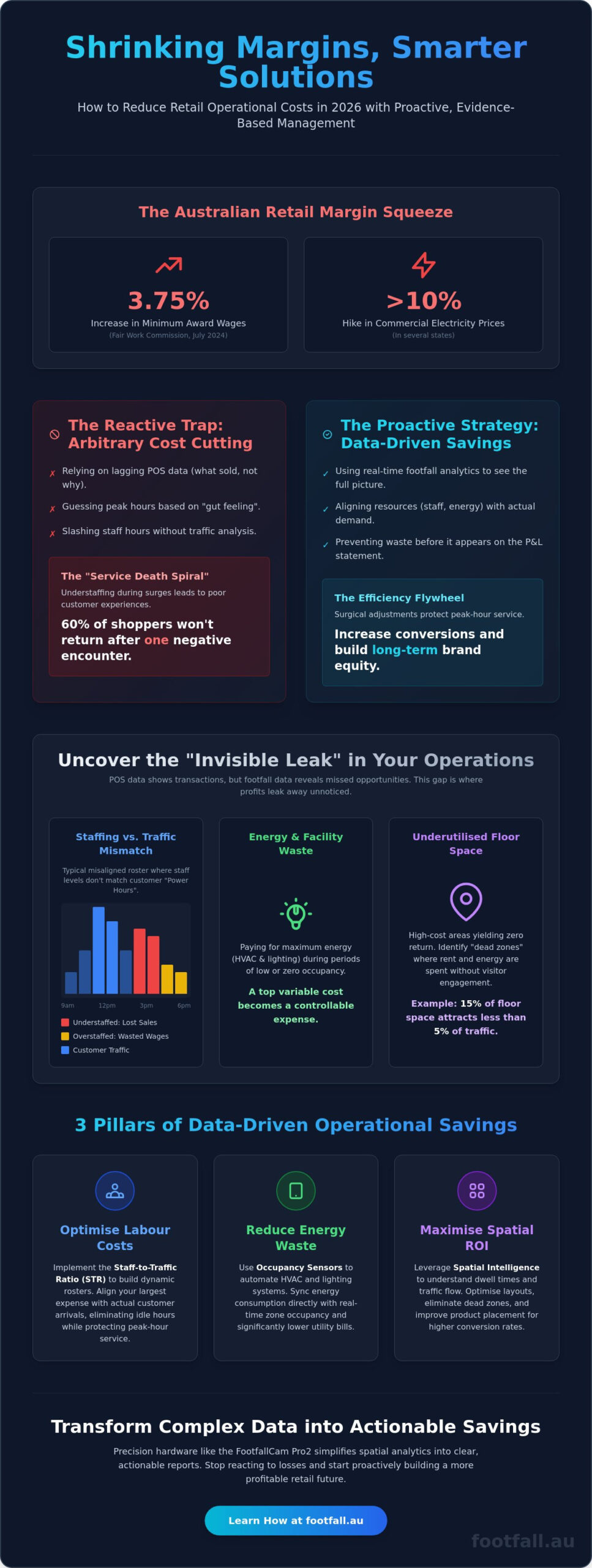
Australian businesses are navigating a complex economic environment where the Fair Work Commission’s 3.75% increase to the national minimum wage in 2024 has set a new floor for labor expenses. When combined with commercial electricity price hikes that have exceeded 10% in several states, the financial margin for error has disappeared. For Australian SMEs, “guessing” peak hours based on gut feeling leads to significant capital waste. Operational efficiency is the ratio of output to input costs. Achieving a positive ratio requires moving away from estimations and toward high-precision spatial analytics that align staff levels with actual visitor density.
Why Cost Cutting Often Backfires
Arbitrary budget cuts frequently trigger a service death spiral. If a retailer slashes staff hours without analyzing footfall patterns, they risk understaffing during unexpected traffic surges. This leads to long wait times and poor customer experiences, which directly correlate with a loss in long-term brand equity. Evidence suggests that 60% of Australian shoppers won’t return to a store after a single negative service encounter. Using data to reduce retail operational costs ensures that any adjustments are surgical. It allows you to remove the “fat” of idle hours while protecting the “muscle” of peak-hour service, ensuring that cost-saving measures don’t inadvertently cannibalize your revenue streams.
- Labor: Aligning staff rosters with real-time visitor flow.
- Energy: Optimizing HVAC and lighting based on zone occupancy.
- Inventory: Reducing holding costs by understanding dwell times in specific aisles.
Identifying Hidden Inefficiencies with Footfall Analytics
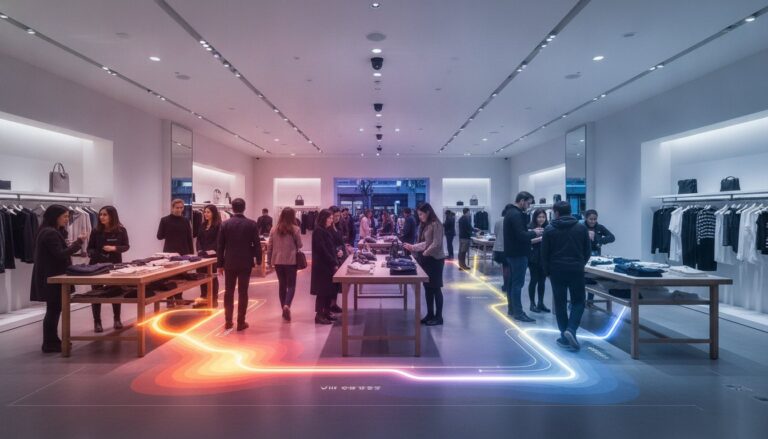
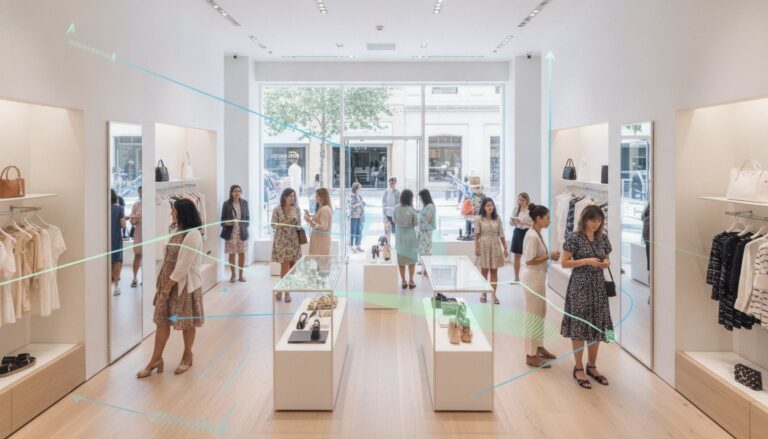
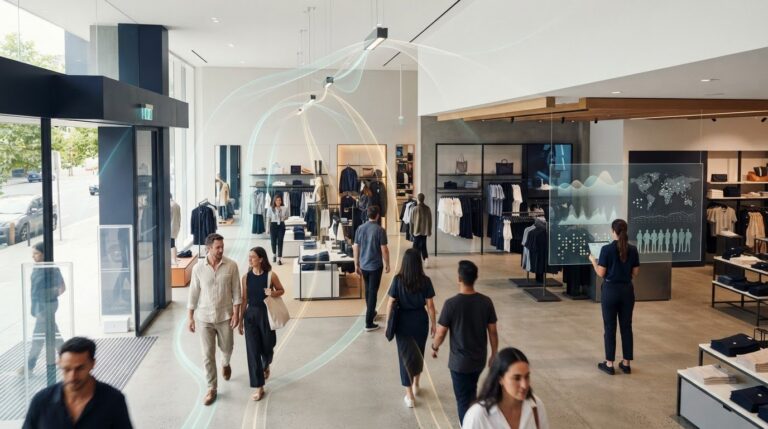
Traditional accounting often misses the nuance of the shop floor. You can’t reduce retail operational costs effectively if you only look at your POS data. While sales figures tell you what happened at the till, they don’t explain why a large percentage of visitors left without a purchase. Implementing people counting technology transforms your store from a static physical space into a living data environment. It identifies “dead zones” where rent and electricity are spent without any visitor engagement. By distinguishing between “Traffic” and “Transactions,” you see the missed opportunities that your standard financial reports hide. This distinction is vital for 2026 strategies, as it allows you to stop guessing why certain stores underperform despite high foot traffic.
Mapping Traffic Patterns to Operational Spend
Precision analytics reveal the gap between traffic and transactions. In Australia, peak hours often shift during seasonal events or local late-night shopping cycles. You might find that your “Power Hours” occur between 11:00 AM and 1:00 PM, yet your roster peaks at 3:00 PM. This mismatch is a direct drain on resources. When staff are overwhelmed during these peak times, sales are lost because customers won’t wait. Conversely, keeping a full team during trough hours is an avoidable expense. Spatial analytics also highlight underutilised floor space. If 15% of your square footage attracts less than 5% of traffic, that’s a high-cost area yielding zero return. Using historical data allows you to forecast these requirements with high precision, ensuring your A$ spend aligns with actual human movement.
The ROI of Precision Measurement
Calculating your cost-per-visitor provides a benchmark that goes beyond simple profit margins. A 2024 industry report indicated that Australian retailers using real-time data reduced unnecessary labour costs by up to 14% within the first six months. Strategic footfall data analysis pays for itself by highlighting these exact leaks. Instead of waiting for a monthly P&L review, you can make operational adjustments based on real-time trends. This shift from reactive to proactive management ensures every dollar spent on operations is backed by hard evidence. It’s about moving away from gut feel toward a system where every decision is measurable. If you want to refine your strategy, consider how integrating sensor technology can provide the clarity your business needs to stay competitive.
Visualising your store as a data-driven environment means you no longer view rent as a fixed burden. Instead, you see it as a variable cost that must be optimised through better layout and staffing. When you align your operational spend with the actual journey of your visitors, you create a leaner, more responsive business model that is ready for the challenges of the 2026 retail market.
Optimising Labour Costs: The Power of Staff-to-Traffic Ratios
Labour remains the largest controllable expense for Australian retailers. To effectively reduce retail operational costs, you must transition from traditional gut-feel scheduling to a precision-based Staff-to-Traffic Ratio (STR). This metric aligns your most expensive asset, your people, with your most volatile variable: customer volume. By integrating real-time traffic data into dynamic rosters, you ensure that staff numbers mirror actual arrival patterns rather than static historical averages. This level of transparency builds a culture of accountability where every rostered hour is backed by a strategic purpose.
Predictive analytics allow you to forecast when extra help is actually required, which helps in drastically cutting unnecessary overtime costs. Instead of reacting to a busy floor after the fact, managers can prepare schedules based on anticipated peaks. This data empowers store managers to justify their staffing levels to head office with hard evidence. It replaces the friction of budget negotiations with factual clarity, ensuring that stores are neither under-resourced during surges nor bloated during lulls.
Eliminating Overstaffing During Quiet Periods
Idle time is a silent profit killer in physical retail. When a store carries three staff members but only sees five visitors per hour, the cost per visitor interaction skyrockets. Data reveals that a 10% improvement in STR accuracy can lead to a 5% reduction in total payroll without impacting service quality. During verified low-traffic windows, smart retailers reallocate staff to inventory management, visual merchandising, or digital fulfilment tasks. This ensures every A$ spent on wages contributes to the bottom line, turning quiet periods into productive operational blocks.
Improving Conversion Rates to Maximise Staff Value
The most efficient way to reduce retail operational costs isn’t just cutting hours; it’s increasing the value of every hour worked. High-performing teams focus on conversion as a primary efficiency metric. By leveraging retail footfall analysis Australia, managers identify specific times when conversion rates dip despite high traffic. This insight pinpoints training gaps or floor coverage issues that lead to lost sales. When conversion rises from 20% to 25%, the cost per sale drops significantly. You aren’t just paying for presence; you’re investing in performance. This shift transforms labour from a fixed overhead into a scalable driver of revenue.
Reducing Energy and Facility Waste with Occupancy Insights
Energy expenses represent the second-largest variable overhead for Australian retailers, often trailing only behind labor costs. Data from the Australian Energy Regulator (AER) indicates that commercial electricity prices remain a volatile pressure point for physical storefronts across the country. Retailers often waste up to 30% of their energy budget by heating, cooling, or lighting unoccupied zones. Integrating spatial analytics allows you to reduce retail operational costs by aligning utility consumption with actual human presence rather than static schedules.
Smart HVAC and Lighting Control
Maintaining a climate-controlled environment in a 1,000-square-meter showroom when only five people are present is inefficient and costly. High-precision people counters integrate directly with your Building Management System (BMS) to automate environmental adjustments based on real-time occupancy. By utilizing 15-minute data intervals, your system can automatically trigger energy-saving modes or “drift” temperatures in low-traffic zones without manual intervention. This precision ensures you aren’t paying to cool a backroom or a quiet corner of the floor during off-peak hours. It’s a seamless way to cut waste while maintaining comfort for the customers who are actually in the building.
Data-Driven Maintenance and Cleaning
Traditional facility management relies on rigid, time-based schedules that ignore actual usage patterns. This leads to staff cleaning restrooms that haven’t been used or neglecting high-traffic areas that require immediate attention. Transitioning to usage-based cleaning models allows you to reduce retail operational costs by deploying resources only when they’re needed. This logic extends to long-term asset management and contract negotiations.
- Shift from “Daily Cleaning” to “Every 500 Visitors” to ensure hygiene levels match actual demand.
- Monitor true usage cycles to extend the lifespan of floor surfaces and mechanical assets, delaying expensive capital expenditure.
- Negotiate facility management contracts using hard foot traffic evidence to prove lower-than-expected wear in specific zones, potentially lowering monthly retainers.
This evidence-based approach transforms facility management from a fixed burden into a flexible, demand-controlled operation. It removes the guesswork from your utility bills and ensures every dollar spent on maintenance is justified by actual visitor behavior. By treating your physical space as a dynamic environment, you gain a significant edge in operational efficiency.
Implementing FootfallCam for Long-Term Operational Savings
The FootfallCam Pro2 serves as the technical foundation for any strategy designed to reduce retail operational costs in 2026. It isn’t just a sensor; it’s a precision instrument that removes the guesswork from store management. By deploying AI-powered edge computing, the Pro2 identifies staff, excludes children, and filters out non-buyer movements with 99.5% accuracy. This level of detail ensures that your operational budget is spent on real opportunities rather than statistical noise.
The FootfallCam V9 software complements this hardware by translating complex spatial analytics into streamlined, actionable reports. Instead of managers spending hours in spreadsheets, the V9 environment provides automated insights into peak hours and optimal staffing levels. For Australian retailers still tethered to outdated infrared or thermal counters, the Legacy Swap Out Plan offers a structured path to upgrade. Transitioning to modern AI systems eliminates the hidden costs of inaccurate data and frequent manual recalibrations. Data-driven retail is the only way to remain competitive as consumer habits and labor markets shift.
Seamless Integration with Existing Retail Tech
Operational efficiency reaches its peak when data silos are broken. FootfallCam integrates directly with your existing Point of Sale (POS) systems to provide a full cost-to-conversion view. This allows you to see exactly where labor costs are being wasted on low-conversion shifts. Whether you’re managing a single boutique in Sydney or a national network across 100 locations, deployment is handled through a unified cloud interface. To ensure these insights remain reliable over the long term, the people counter support plan provides proactive health checks and data integrity audits. It’s a strategic safety net that protects your ROI by keeping your sensors operational and accurate every day of the year.
Taking the First Step Toward Cost Optimisation
Success in the 2026 retail environment requires a permanent shift from “gut feeling” to evidence-based management. The initial investment in FootfallCam hardware represents a low one-time cost compared to the recurring savings generated by smarter scheduling and optimized energy use. When you stop overstaffing quiet periods and start aligning your resources with actual visitor flow, you directly protect your bottom line. It’s time to move beyond estimation and embrace the precision of a Smart Strategist approach.
Secure Your Competitive Edge Through Precision Analytics
Success in the 2026 retail environment depends on your ability to transform raw data into a leaner, more responsive business model. By leveraging spatial analytics, you move beyond guesswork to identify exactly where resources are wasted. Aligning staff-to-traffic ratios ensures you aren’t overspending during quiet periods, while occupancy insights allow you to cut energy costs in underutilised zones. These strategic shifts allow you to reduce retail operational costs while maintaining high service standards across your entire fleet.
Footfall Australia has remained a trusted partner for local retailers since 2004, offering the expertise required to navigate shifting consumer trends. Our AI-powered FootfallCam Pro2 technology provides the high-definition clarity needed to decode the visitor journey with absolute precision. With a dedicated national support and maintenance network, we ensure your systems deliver consistent, actionable intelligence every day of the year. It’s time to replace uncertainty with a strategy built on hard evidence.
Optimise your retail operations with Footfall Australia today
The future of physical retail belongs to those who measure what matters.
Frequently Asked Questions
What are the biggest operational costs for retail businesses in Australia?
Labor and commercial rent represent the most significant overheads for Australian retailers. Following the Fair Work Commission’s 3.75% increase to the national minimum wage in July 2024, staffing often accounts for 15% to 25% of total revenue. Commercial rents in premium Sydney or Melbourne CBD locations can exceed A$3,000 per square metre. Managing these two pillars is essential to reduce retail operational costs effectively.
How can people counting technology actually save my business money?
People counting technology eliminates waste by aligning your staff levels with actual visitor demand. Instead of paying for idle hours during quiet Tuesday mornings, you can redistribute those labor hours to peak Saturday afternoon windows. This precision ensures you aren’t overspending on wages when the floor is empty. It also identifies underperforming store hours where the cost of staying open exceeds the generated margin.
Is it better to cut staff or improve conversion rates to save on costs?
Improving conversion rates is a more sustainable strategy than aggressive staff cuts. A 5% increase in conversion often yields higher profitability than a 5% reduction in headcount. When you cut staff indiscriminately, you risk a death spiral where poor service drives customers away. Data helps you identify power hours where an extra staff member actually pays for themselves by capturing more sales from existing footfall.
Can footfall data help reduce energy consumption in a physical store?
Footfall data enables smart energy management by syncing HVAC and lighting systems with real-time occupancy levels. In a 500 square metre retail space, energy costs can drop by 12% when climate control is adjusted based on visitor density rather than a fixed timer. Sensors detect when zones are vacant; this allows for automated dimming. This targeted approach reduces utility bills without impacting the customer experience during busy periods.
What is the ROI on a people counting system for a small retail shop?
Small retail shops typically see a full return on investment within 6 to 12 months through labor optimization and improved sales capture. By identifying that 20% of potential customers leave during lunch hours due to long queues, a shop can adjust one shift to capture those lost transactions. If this leads to just two extra sales per day at an average value of A$85, the system pays for itself rapidly.
How does staff-to-traffic ratio (STR) differ from traditional labor cost percentages?
Staff-to-traffic ratio (STR) measures your capacity to serve every person who enters the store, whereas traditional labor percentages only look at past sales. A low labor cost percentage might look good on a spreadsheet; however, if your STR is 1:50 during a rush, you’re losing revenue to poor service. STR provides a proactive metric to reduce retail operational costs by ensuring every wage dollar spent is mapped to a sales opportunity.
Do I need a complex IT setup to start monitoring my retail costs with data?
Modern retail analytics systems require minimal IT infrastructure and often function as plug-and-play IoT devices. Most sensors only need a standard Power over Ethernet (PoE) connection and an internet hookup to stream data to a cloud-based dashboard. You don’t need on-site servers or specialized technical staff. This accessibility allows independent retailers to leverage the same spatial intelligence used by global chains without a massive capital expenditure.
What happens if I cut costs too deep and my customer service suffers?
Excessive cost-cutting creates customer friction that leads to long-term brand erosion and a 15% to 20% drop in repeat visitation. When shoppers can’t find assistance or face 10-minute wait times at checkout, they migrate to competitors or online alternatives. Data-driven strategy prevents this by showing you exactly where you can trim fat without cutting into the muscle of your customer service and brand promise.