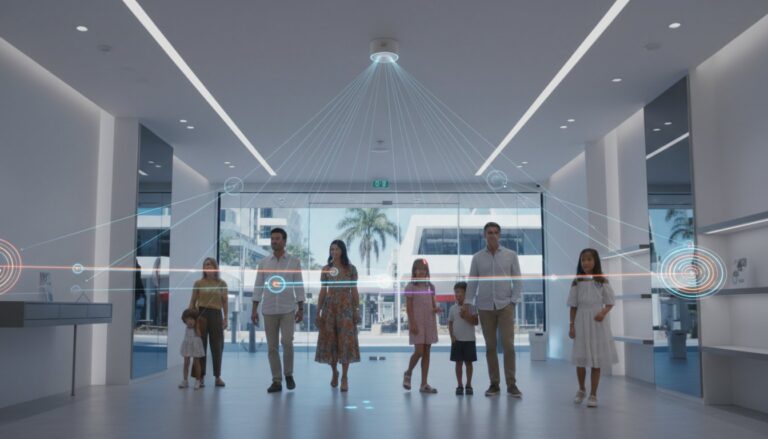

Using Footfall Data to Negotiate Commercial Leases: A 2026 Strategic Guide
For too long, Australian retailers have entered lease negotiations armed with little more than optimism and anecdotal evidence of declining precinct traffic. It’s frustrating to face rising A$ per square metre rates when you know the physical crowd outside your doors has thinned. This guide demonstrates how using footfall data to negotiate commercial leases shifts the power dynamic, allowing you to secure fairer rent based on empirical exposure rather than prestige.
We’ll explore how to leverage FootfallCam Pro2 metrics and V9 Software reporting to justify renewals, calculate accurate rent-to-sales ratios, and make data-backed relocation decisions. We provide the strategic framework needed to turn raw traffic numbers into a compelling argument for cost optimization. By treating physical presence as a sequence of human actions, you transform a subjective tug-of-war into a transparent, logical business case that ensures your physical footprint remains a viable asset.
Key Takeaways
- Identify the specific metrics, such as capture rate and dwell time, that provide the empirical evidence needed to challenge outdated prestige pricing models.
- Master the strategic framework for using footfall data to negotiate commercial leases by replacing landlord estimates with high-accuracy visitor counts.
- Leverage FootfallCam Pro2 sensors to provide the 99.5% accuracy required to produce audited, landlord-ready reports for formal rent reviews.
- Improve your long-term rent-to-sales ratio by basing lease agreements on actual store-front exposure rather than centre-wide traffic projections.
The Shift to Data-Driven Commercial Leasing in Australia
Commercial leasing in Australia is undergoing a fundamental transformation as tenants move away from intuition-based agreements. Historically, rent was dictated by the perceived prestige of a precinct or its proximity to anchor tenants. Today, using footfall data to negotiate commercial leases allows businesses to replace these subjective valuations with empirical reality. This shift ensures that lease costs reflect the actual utility of a space rather than an estimated potential.
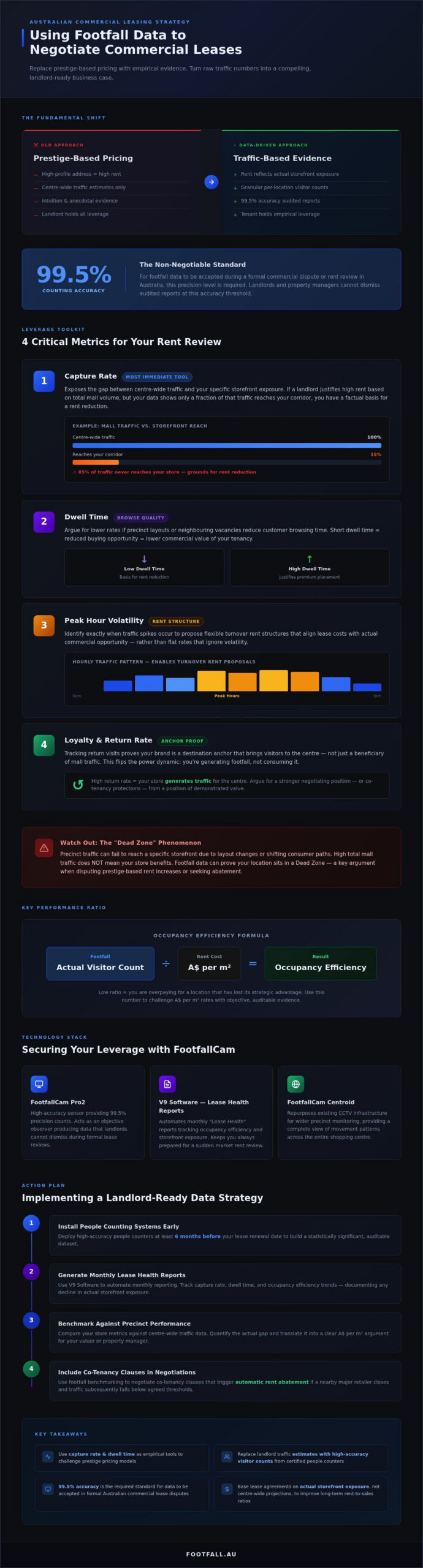
Traditional “passing traffic” estimates provided by shopping centres are no longer sufficient in 2026. These figures often lack the granularity required to distinguish between casual browsers and high-intent visitors. Occupancy Efficiency is the ratio of footfall to rent per square metre. By focusing on this metric, Australian retailers can identify if they are overpaying for locations that have lost their strategic advantage. Third-party data now holds significant commercial standing in Australian rent reviews, acting as an objective observer when disputes arise between tenant and landlord.
Moving from Prestige Pricing to Traffic Truths
Landlords have long used brand prestige to justify inflated base rents, assuming that a high-profile address automatically guarantees customer volume. However, retail footfall analysis Australia consistently identifies the “Dead Zone” phenomenon. This occurs when precinct traffic fails to reach a specific storefront due to layout changes or shifting consumer paths. By using footfall data to negotiate commercial leases, you can prove when high mall traffic doesn’t translate to store entry. This provides the leverage needed to secure a more favourable rent-to-sales ratio based on actual exposure.
4 Critical Metrics to Leverage During Your Rent Review
Successful outcomes when using footfall data to negotiate commercial leases depend on translating raw numbers into financial leverage. Capture rate is your most immediate tool. It exposes the gap between centre-wide traffic and your specific storefront exposure. If a landlord justifies high rent based on total mall volume, but your data shows only 15% of that traffic reaches your corridor, you have a factual basis for a reduction.
Dwell time metrics allow you to argue for lower rates if precinct layouts or neighbouring vacancies reduce customer browsing time. You should also analyse peak hour volatility. By identifying exactly when traffic spikes occur, you can propose flexible turnover rent structures that align costs with actual opportunity. Additionally, tracking loyalty and return rates proves your brand is a destination anchor that brings visitors to the centre. This evidence empowers you to negotiate from a position of strength rather than as a secondary beneficiary of mall traffic.
Benchmarking Your Store Against Precinct Performance
Integrating footfall data analysis into your strategy allows for the inclusion of sophisticated co-tenancy clauses. These clauses trigger rent abatement if a nearby major retailer closes and traffic subsequently falls. When using footfall data to negotiate commercial leases, presenting your findings in a clear, audited format is essential for acceptance by landlords and valuers. Utilizing highly accurate people counters ensures your evidence is objective and indisputable. This transparency facilitates a more logical discussion regarding the A$ per square metre value of your specific location.
Securing Your Leverage with FootfallCam Technology
Data integrity is the cornerstone of any successful rent review. Landlords and property managers often dismiss anecdotal evidence, but they can’t ignore audited reports with 99.5% accuracy. This level of precision is non-negotiable for data to be accepted during a formal commercial dispute in Australia. The FootfallCam Pro2 acts as an objective observer, providing high-integrity metrics that transform lease talks into a transparent business transaction.
Efficiency is key when building your case. FootfallCam V9 Software automates this process by generating monthly “Lease Health” reports. These documents track your occupancy efficiency and store-front exposure, ensuring you’re always prepared for a sudden market rent review. Additionally, the FootfallCam Centroid can repurpose existing CCTV infrastructure for wider precinct monitoring, giving you a complete view of movement patterns across the entire shopping centre.
Implementing a Landlord-Ready Data Strategy
Using footfall data to negotiate commercial leases requires a proactive approach. Follow these steps to ensure your evidence is indisputable:
- Step 1: Install high-accuracy people counting systems Australia at least six months before a review to establish a robust historical baseline.
- Step 2: Correlate your visitor metrics with internal sales data. This establishes a baseline rent-to-sales ratio that proves the actual value of your specific location.
- Step 3: Present a “Gap Analysis” during the first round of lease talks. This highlights the disconnect between the landlord’s estimated traffic and the empirical reality recorded by your sensors.
This structured methodology ensures that every A$ spent on rent is backed by a specific volume of potential customers. It moves the conversation away from emotion and toward a data-driven advantage that protects your bottom line.
Future-Proofing Your Lease Strategy with Empirical Evidence
The era of relying on opaque landlord estimates is ending. By using footfall data to negotiate commercial leases, you transition from subjective discussions to a transparent business case rooted in human movement patterns. We’ve explored how identifying the “Dead Zone” and tracking capture rates provides the leverage needed to secure a fairer rent-to-sales ratio. High-accuracy FootfallCam Pro2 sensors ensure your evidence is audited and landlord-ready, removing the friction from formal reviews.
Trusted by Australian retailers since 2004, Footfall Australia provides 99.5% accuracy and full national support to protect your financial interests. Don’t leave your next rent review to intuition. Empower your next lease negotiation with a Footfall Australia consultation and ensure your physical footprint remains a strategic asset. You now have the technical means to transform raw traffic into a permanent, data-driven advantage.
Frequently Asked Questions
Will my landlord actually accept my footfall data as evidence?
Yes, landlords accept data that is objective, audited, and highly accurate. Using footfall data to negotiate commercial leases is most effective when backed by FootfallCam Pro2 sensors, which provide 99.5% accuracy. When you present automated reports from V9 Software, you replace anecdotal claims with empirical evidence that valuers can verify, making it difficult for property managers to rely on opaque centre-wide estimates during a review.
How much data do I need to collect before starting a lease negotiation?
Collect at least six months of metrics to establish a reliable historical baseline. This duration accounts for seasonal trends and ensures your evidence isn’t skewed by short-term events. Using footfall data to negotiate commercial leases requires this level of depth to prove long-term shifts in precinct traffic, allowing you to correlate visitor counts with your sales data to justify a fairer rent structure.
Can I use footfall data to ask for a rent reduction mid-lease?
Rent reductions mid-lease are achievable if you can demonstrate a significant decline in storefront exposure. If precinct changes or neighbouring vacancies reduce the volume of potential customers reaching your door, your people counters provide the evidence needed for a market rent review. Proving a drop in occupancy efficiency allows you to argue for rent abatement or more favourable terms that reflect current traffic reality.
What is the most important metric for a retail rent review in 2026?
Capture Rate is the most influential metric for 2026 rent reviews. It defines the ratio between total passing traffic and those entering your premises. This metric exposes “Dead Zones” where high mall traffic fails to translate into store entries. By highlighting a low capture rate, you can challenge inflated prestige pricing and negotiate a rent-to-sales ratio that aligns with the actual storefront utility.