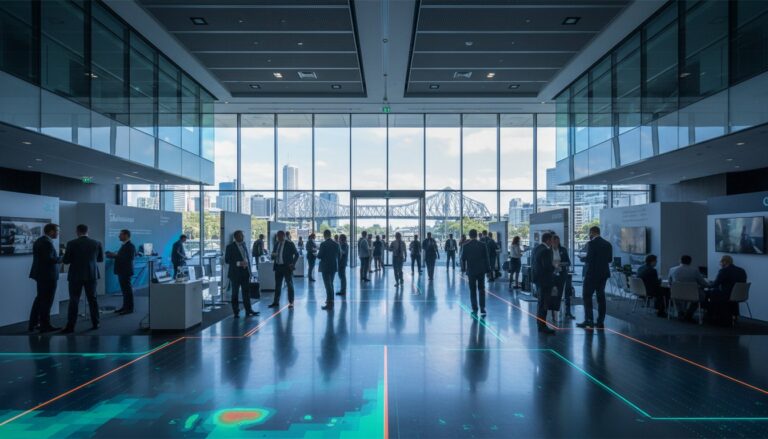

Airport Passenger Flow Management: Optimising Australian Aviation Hubs in 2026
By 2026, Australian airports are projected to handle over 170 million domestic passengers annually according to BITRE forecasts, yet 42% of travelers still cite unpredictable security queues as their primary source of stress. Relying on manual headcounts and historical averages is no longer sufficient to manage this volume. Effective airport passenger flow management requires a shift from reactive observation to predictive spatial analytics. You likely already know that manual monitoring is both expensive and prone to error, often leaving your staff to deal with bottlenecks after they’ve already formed.
This article explores how data-driven insights transform these operational blind spots into strategic advantages. You’ll discover how precision tracking enhances security protocols and identifies why specific retail zones underperform, allowing you to capture lost revenue through better layout visibility. We’ll examine the technological shift toward automated monitoring that reduces labor costs while improving the overall visitor journey. By the end, you’ll have a clear roadmap for using actionable intelligence to ensure your terminal operates with the quiet confidence of a truly smart aviation hub.
Key Takeaways
- Understand how real-time tracking addresses the unique pressures facing Australian aviation hubs as international transit volumes surge toward 2026.
- Learn how to deploy advanced 3D LiDAR and AI sensors to implement a robust airport passenger flow management strategy that eliminates terminal bottlenecks.
- Discover the dual benefits of spatial analytics for optimising security queue wait times while simultaneously identifying high-value commercial opportunities.
- Master a step-by-step framework for conducting spatial audits and selecting high-precision hardware tailored to complex airport environments.
- Leverage Footfall Australia’s two decades of expertise to future-proof your terminal with industry-leading reporting and actionable movement insights.
What is Airport Passenger Flow Management in the Australian Context?
Airport passenger flow management represents the sophisticated integration of real-time tracking and spatial analytics to monitor movement throughout a terminal. By 2026, Australian aviation hubs face unprecedented pressure as international transit volumes are forecast to exceed 2019 levels by 12 percent. This surge requires a fundamental shift in how we view airport operations. We’ve moved beyond simple crowd control. We now employ proactive, data-driven spatial intelligence to predict congestion before it impacts the traveller.
Modern management focuses on the entire visitor journey. It tracks movement through primary touchpoints including check-in kiosks, security screening, border control, and gate lounges. By decoding these human patterns, operators transform raw data into actionable insights. This methodology replaces guesswork with precision, ensuring that every square metre of the terminal serves a strategic purpose. It’s about seeing the terminal as a living ecosystem rather than a static building.
The Core Objectives of PFM
- Reducing wait times: We target a 25 percent reduction in queues at critical bottlenecks like security and immigration by aligning staff resources with real-time demand.
- Enhancing experience: Smoothing the journey from the kerbside to the gate directly correlates with higher passenger satisfaction scores and reduced traveller stress.
- Improving safety: Real-time occupancy monitoring allows for immediate incident prevention, ensuring that high-traffic zones never exceed safe density limits during peak periods.
Why Traditional Monitoring Fails Today
Manual ‘clicker’ counts and basic CCTV observation are no longer sufficient for the complexities of 2026. These legacy methods often result in 15 percent data inaccuracy, creating blind spots that lead to inefficient staffing allocations. When management can’t see where the crowd is, they can’t react until a queue has already formed. This lag is costly. Under-monitored retail zones represent missed commercial opportunities, as dwell time isn’t being converted into revenue effectively. Precision airport passenger flow management removes these gaps, providing a transparent, evidence-based view of terminal performance that empowers faster decision-making.
The Technology Stack: From AI Sensors to Spatial Analytics
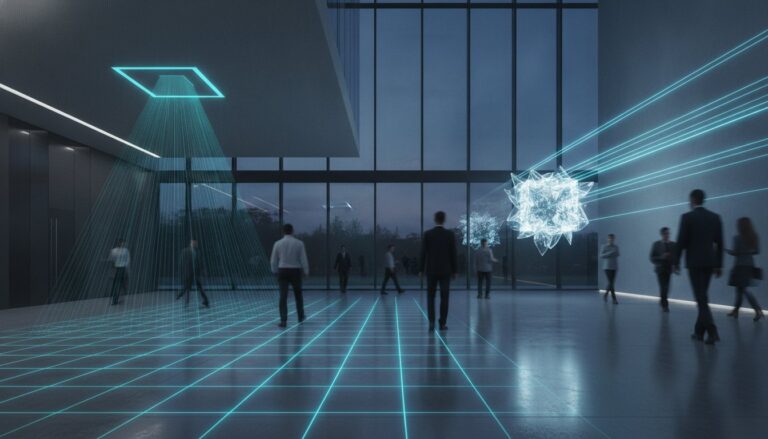
Modern airport passenger flow management relies on a sophisticated hardware layer that replaces guesswork with granular, verifiable data. High-accuracy people counting technology now forms the backbone of terminal operations, utilising 3D LiDAR and Stereo Vision sensors to map movement with up to 99.5% accuracy. While LiDAR excels in tracking individuals across expansive departure halls by using light pulses, Stereo Vision sensors provide the essential depth perception needed to distinguish between a passenger and their luggage in crowded boarding zones. For hubs with existing infrastructure, AI processors like the FootfallCam Centroid bridge the gap; they transform standard CCTV feeds into intelligent sensors without requiring a complete hardware overhaul. This approach prioritises data privacy through edge-based processing, where video is processed locally on the device and immediately truncated into anonymous numerical data, ensuring zero personal identifiers leave the site.
AI-Powered Video Analytics vs. Legacy Sensors
Traditional infrared and thermal sensors often struggle in the high-ceiling, high-glare environments typical of Australian airports, frequently failing to account for group movements or baggage trolleys. AI-driven 3D vision solves this by filtering out non-human objects, ensuring that a family of four with three suitcases is counted as four people rather than seven separate entities. It’s a level of precision that legacy systems simply can’t match. Edge computing in an airport context refers to the local processing of data on the sensor itself to ensure that raw video footage is never transmitted or stored, maintaining 100% passenger anonymity. This technical distinction ensures compliance with Australian privacy principles while maintaining real-time responsiveness.
Integrating the Data Ecosystem
Effective management requires these sensors to feed into a centralised intelligence hub. By connecting hardware to the FootfallCam V9 Software, operations teams access a unified view of terminal health. Real-time dashboards allow managers to shift staff to security checkpoints or immigration desks dynamically before queues become unmanageable. Integrating this flow data with flight schedules via API allows for predictive modelling, where the system anticipates surges based on delayed arrivals or gate changes. Airports that synchronise these data points can reduce average wait times by 15% during peak holiday periods. To see how these insights can be applied to your specific terminal layout, you might explore the spatial analytics solutions available for large-scale public environments.
- Precision: 3D sensors filter out shadows, trolleys, and children for cleaner data.
- Scalability: Centroid units allow for the rapid digitisation of existing analogue or IP camera networks.
- Anonymity: Edge-based processing means no faces are recorded, only movement patterns.
- Predictive Power: API links connect live traffic with flight manifests to forecast congestion.

Balancing Operational Efficiency with Commercial Growth
Effective airport passenger flow management requires balancing two competing priorities. Operations departments prioritize speed to move travelers through checkpoints, while commercial teams seek to extend dwell time in retail precincts. Data-driven spatial analytics resolve this tension by identifying where friction points exist and how they impact spending. When you understand the movement patterns of your passengers, you can turn a logistical challenge into a revenue opportunity.
Flow data serves these two masters through distinct, actionable applications:
- Operational use cases: Real-time data allows managers to deploy cleaning staff based on actual usage rather than rigid schedules. Sensors trigger maintenance alerts after a specific volume of passengers enter a restroom block, ensuring high standards during peak periods without wasting labor hours.
- Commercial use cases: High-resolution flow data quantifies the value of advertising screens. If 12,000 passengers pass a digital billboard daily with an average gaze time of 4.2 seconds, the hub can justify premium rates based on verified impressions rather than estimates.
The “Golden Hour” remains the most critical metric for revenue growth. This is the period after security clearance but before boarding. Every 10-minute reduction in security wait times correlates with a measurable increase in average transaction value. When passengers feel in control of their time, they’re more likely to engage with premium retail and dining offerings. It’s about creating a psychological shift from “traveler” to “consumer.”
Optimising Security and Immigration Throughput
Airports use predictive modeling to push wait-time estimates directly to Flight Information Display Systems (FIDS). This transparency reduces passenger anxiety and prevents “dwell zones” where travelers stall near screens, creating secondary bottlenecks. A 2023 industry analysis indicated that a 5% improvement in throughput efficiency through better airport passenger flow management can boost overall passenger satisfaction scores by up to 12 points. By identifying these stall points, hubs can redesign queue layouts to maintain a steady, predictable pace that keeps the terminal moving.
Maximising Non-Aeronautical Revenue
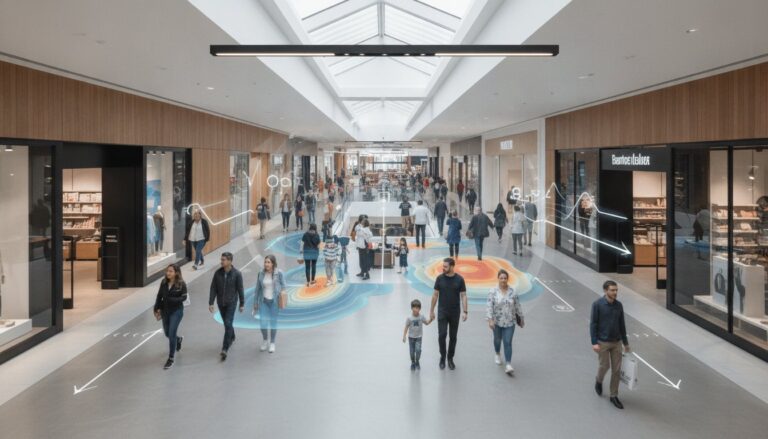
Leveraging retail footfall analysis Australia helps hubs identify high-value terminal locations with precision. By measuring the “capture rate,” which is the percentage of passing traffic that enters a duty-free or F&B outlet, managers can optimize the tenant mix to suit specific terminal demographics. Heatmaps reveal exactly where passengers congregate, allowing airports to set rental rates based on empirical density data. This evidence-based approach ensures that prime real estate is occupied by high-performing brands that maximize the return on every square metre of floor space.
Implementing a Data-Driven Flow Strategy
Transitioning from manual observations to automated systems requires a structured roadmap. Precision is the priority here. Effective airport passenger flow management starts with a clear understanding of the physical environment and the specific data gaps that hinder operational efficiency. Follow these four steps to build a robust framework.
- Step 1: Conduct a terminal-wide spatial audit. Identify blind spots in high-congestion zones such as check-in kiosks, security queues, and baggage reclaim. Mapping these areas ensures sensors are placed where they provide the most utility.
- Step 2: Select hardware based on environment. Use the FootfallCam Pro2 for areas with varying ceiling heights and lighting conditions. This hardware maintains high accuracy in the vast, glass-fronted halls common in Australian architecture.
- Step 3: Establish a baseline of current flow metrics. Collect 30 days of data before implementing major operational changes. This baseline allows management to measure the impact of future interventions with statistical certainty.
- Step 4: Train staff to interpret data. Ensuring your team can perform footfall data analysis is essential. This expertise turns raw numbers into actionable decisions, such as opening additional security lanes 20 minutes before a predicted surge.
Scaling from Regional Hubs to Major Terminals
Regional hubs like Townsville or Hobart often face different constraints than Sydney Kingsford Smith. A modular deployment strategy works best. Start with a single security pier or a specific retail zone to prove the return on investment. This phased approach is particularly useful for older Australian terminal buildings where retrofitting cabling can be complex. Maintaining 98% data accuracy across these varied sites requires consistent people counter support to ensure hardware remains calibrated against shifting passenger volumes.
Privacy and Compliance Standards
Data collection must align with the Australian Privacy Principles (APPs). Modern airport passenger flow management relies on “Privacy by Design.” This means sensors process movement patterns locally and never record personally identifiable information or facial features. Transparency builds passenger trust. Clear signage explaining that data is used solely for queue reduction and safety helps satisfy the 72% of travellers who prioritize efficiency but value their digital privacy. By treating data as a tool for service improvement rather than surveillance, airports can maintain high levels of public cooperation.
Ready to eliminate bottlenecks in your terminal? Connect with our spatial analytics experts to design your custom deployment plan.
Future-Proofing Australian Airports with Footfall Australia
Footfall Australia brings a 20-year legacy of delivering national analytics solutions across the continent. Since 2004, the team has focused on replacing guesswork with hard evidence through sophisticated spatial intelligence. The FootfallCam Pro2 has emerged as the industry standard for high-traffic environments, specifically engineered to handle the complex densities of a 24-hour terminal. It delivers 99.5% accuracy in counting, which is essential for effective airport passenger flow management in major hubs like Sydney or Melbourne.
Many operators currently struggle with fragmented data from aging sensors that provide inconsistent results. Footfall Australia’s Legacy Swap Out Plan allows these hubs to modernise outdated counting infrastructure without the friction of a total system overhaul. This strategic migration ensures that legacy hardware doesn’t bottleneck modern AI capabilities. By upgrading to a unified platform, airports can maintain 99% uptime for mission-critical data streams, ensuring that operations teams always have a clear view of terminal activity.
Why Local Expertise Matters
Having Australian-based technical support eliminates the delays often found with international providers. Footfall Australia understands the specific operational nuances of the national aviation market, from the seasonal surges at Gold Coast Airport to the business-heavy transit patterns in Canberra. In similar high-traffic public spaces, their spatial analytics have helped managers reduce queue wait times by 15% during peak periods. This local presence ensures that maintenance plans are responsive and tailored to Australian safety and data privacy standards.
Next Steps for Airport Operators
Preparing for the next generation of AI-driven airport management requires a clear baseline of current performance. Operators can begin this transition by requesting a comprehensive terminal audit and technology demonstration. This process identifies specific blind spots in current airport passenger flow management strategies and provides a roadmap for improvement. It’s about integrating real-time spatial intelligence into existing security and retail frameworks to create a seamless traveller journey.
The transition to a data-driven terminal doesn’t have to be a leap into the unknown. It’s a calculated move toward greater efficiency and better passenger experiences. By partnering with a proven local leader, Australian airports can ensure they’re ready for the traffic demands of 2026 and beyond.
Contact Footfall Australia to optimise your passenger flow today.
Navigating the Future of Australian Aviation Infrastructure
As Australian aviation hubs prepare for the operational demands of 2026, the shift from reactive monitoring to predictive spatial analytics is essential. Precision defines success in this environment. Deploying high-precision FootfallCam Pro2 sensors across terminals allows operators to decode the complex visitor journey, turning raw movement into actionable intelligence. This strategy bridges the gap between seamless security processing and maximizing commercial dwell time within retail precincts. It’s about ensuring that every square metre of the terminal contributes to both passenger satisfaction and the bottom line.
Effective airport passenger flow management requires a partner who understands the unique pressures of the Australian market. With over 20 years of local expertise, Footfall Australia provides the technical foundation needed to upgrade aging infrastructure through our Comprehensive Legacy Swap Out Plan. We help you replace outdated systems with intelligent, data-led solutions that empower your team to make evidence-based decisions. Transforming your terminal into a high-performance hub starts with seeing the numbers clearly. Request a Terminal Audit from Footfall Australia today to secure your facility’s competitive edge. Your path to a smarter, more efficient terminal is ready for takeoff.
Frequently Asked Questions
How accurate is AI-based passenger flow management compared to manual counting?
Modern AI-driven airport passenger flow management systems achieve accuracy rates of 98% or higher, significantly outperforming manual methods. Human counters typically experience a 15% error rate during peak periods at Sydney or Melbourne hubs due to fatigue and high density. Automated sensors maintain consistent precision 24 hours a day. This data reliability allows terminal managers to allocate resources based on verified numbers rather than estimates.
Can we use our existing CCTV cameras for passenger flow management?
You can integrate existing CCTV infrastructure with AI analytics software, though dedicated 3D LiDAR or Time-of-Flight sensors provide superior results. While standard security cameras offer a 2D view, they often struggle with depth perception in crowded gate areas. Upgrading to specialized hardware ensures 99.5% accuracy in high-traffic zones. Most Australian hubs use a hybrid approach to maximize existing investments while ensuring data integrity.
Is passenger flow data compliant with Australian privacy laws?
Our systems comply fully with the Australian Privacy Act 1988 and the Australian Privacy Principles. The technology uses edge processing to convert visual feeds into anonymous vector data immediately. No personally identifiable information is stored or transmitted to the cloud. This approach ensures passenger anonymity while providing the spatial analytics required to optimize terminal efficiency and reduce wait times at security checkpoints without risking data breaches.
What is the typical ROI period for an airport people counting system?
Most Australian aviation hubs see a full return on investment within 12 to 18 months of deployment. This timeline is driven by a 20% reduction in unnecessary staff overtime and a 5% to 10% increase in retail conversion rates within the departures lounge. By identifying exactly where bottlenecks occur, airports can optimize commercial footprints and improve the passenger experience, leading to higher non-aeronautical revenue per traveler.
How does flow management help during flight delays or terminal disruptions?
Real-time airport passenger flow management identifies sudden crowd clusters within 30 seconds of a flight delay announcement. The system triggers automated alerts for floor managers to reassign staff to specific zones, such as extra seating or food courts. This proactive response prevents dangerous overcrowding and maintains a steady flow through the terminal. Data-driven insights help balance the load across multiple gates during unscheduled maintenance or weather events.
What hardware is best for high-ceiling airport terminal environments?
3D LiDAR sensors are the gold standard for airport terminals with ceilings exceeding 10 metres. These devices maintain 98% accuracy at heights up to 20 metres, which is essential for the expansive architecture found in Brisbane or Perth international terminals. Unlike standard sensors, LiDAR isn’t affected by shadows or changing light conditions from large glass facades. It provides a precise 360-degree view of the floor plane to track movement patterns accurately.
Can the system distinguish between passengers, staff, and airport trolleys?
Advanced AI algorithms distinguish between passengers, airport staff, and luggage trolleys by analysing height, shape, and movement velocity. Staff can be excluded from counts using wearable tags or specific behavioural filtering to ensure data reflects actual passenger volumes. This level of granularity prevents trolleys from skewing dwell time statistics. It allows operations teams to see exactly how many unique visitors are interacting with retail displays versus service personnel.
How does real-time flow data integrate with our existing airport management software?
The system integrates with existing Airport Operational Databases (AODB) via secure RESTful APIs. This connection allows for a seamless flow of data between passenger counting sensors and flight information display systems. By syncing real-time occupancy levels with scheduled flight data, managers can predict future bottlenecks 60 minutes before they occur. This unified view empowers teams to make informed decisions that improve overall terminal performance and passenger satisfaction.