Retail Analytics Change Management: 2026 Strategic Guide
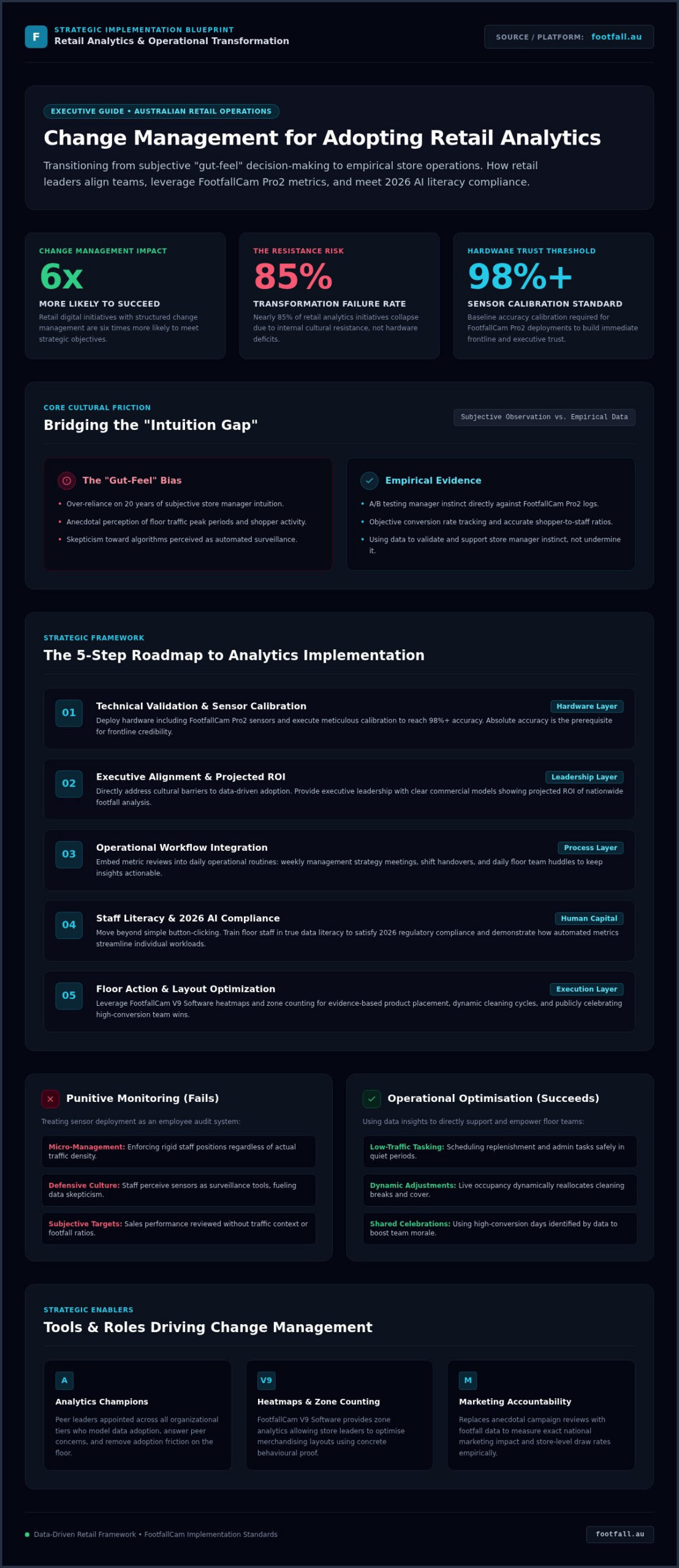
Research indicates that retail digital initiatives with excellent change management are six times more likely to meet their strategic objectives, yet nearly 85% of analytics transformations fail due to cultural resistance. Establishing effective change management for adopting retail analytics is the only way to move beyond “gut-feel” decision-making. You’ve probably noticed that installing a sensor is the easy part; the real challenge lies in convincing a veteran store manager to trust an algorithm over twenty years of intuition.
This guide provides a strategic framework to ensure your transition to data-driven operations is both seamless and profitable. You’ll learn how to master 2026 compliance requirements like AI literacy while building a culture where staff feel empowered by insights. We will outline the roadmap for turning FootfallCam Pro2 metrics into high-performance store strategies that boost conversion rates across your Australian locations.
Key Takeaways
- Bridge the “Intuition Gap” by replacing anecdotal observations with empirical evidence from people counting technology, ensuring every operational decision is backed by objective facts.
- Follow a structured 5-step implementation roadmap that prioritises technical validation and hardware accuracy to build the necessary trust for executive and frontline buy-in.
- Empower your store teams by shifting the focus from surveillance to operational optimisation, using data to reduce workloads and refine shift patterns during quiet periods.
- Master the strategic change management for adopting retail analytics to turn raw footfall data into a high-performance strategy that accurately measures the success of national marketing campaigns.
Building the Foundation: Preparing Your Organisation for Data-Driven Retail
Successful retail transformation starts with a cultural pivot. We define data-driven retail as an environment where empirical evidence from people counting technology informs every operational decision. You’ve likely noticed an “Intuition Gap” in your stores, which is the disparity between what staff perceive is happening on the floor and the actual visitor behaviour captured by high-precision sensors. Closing this gap requires more than just hardware; it demands a fundamental shift in how teams interpret success.
Effective change management for adopting retail analytics involves establishing a common language through clear KPIs. Metrics such as conversion rates and shopper-to-staff ratios provide objective benchmarks that move internal conversations away from subjective opinions. To facilitate this transition, identify “Analytics Champions” across different levels of your organisation. These individuals act as peer leaders who lead by example and troubleshoot concerns. Using established organizational change management frameworks ensures that the human element remains central to your change management for adopting retail analytics strategy.
Overcoming the “Gut-Feel” Bias in Store Management
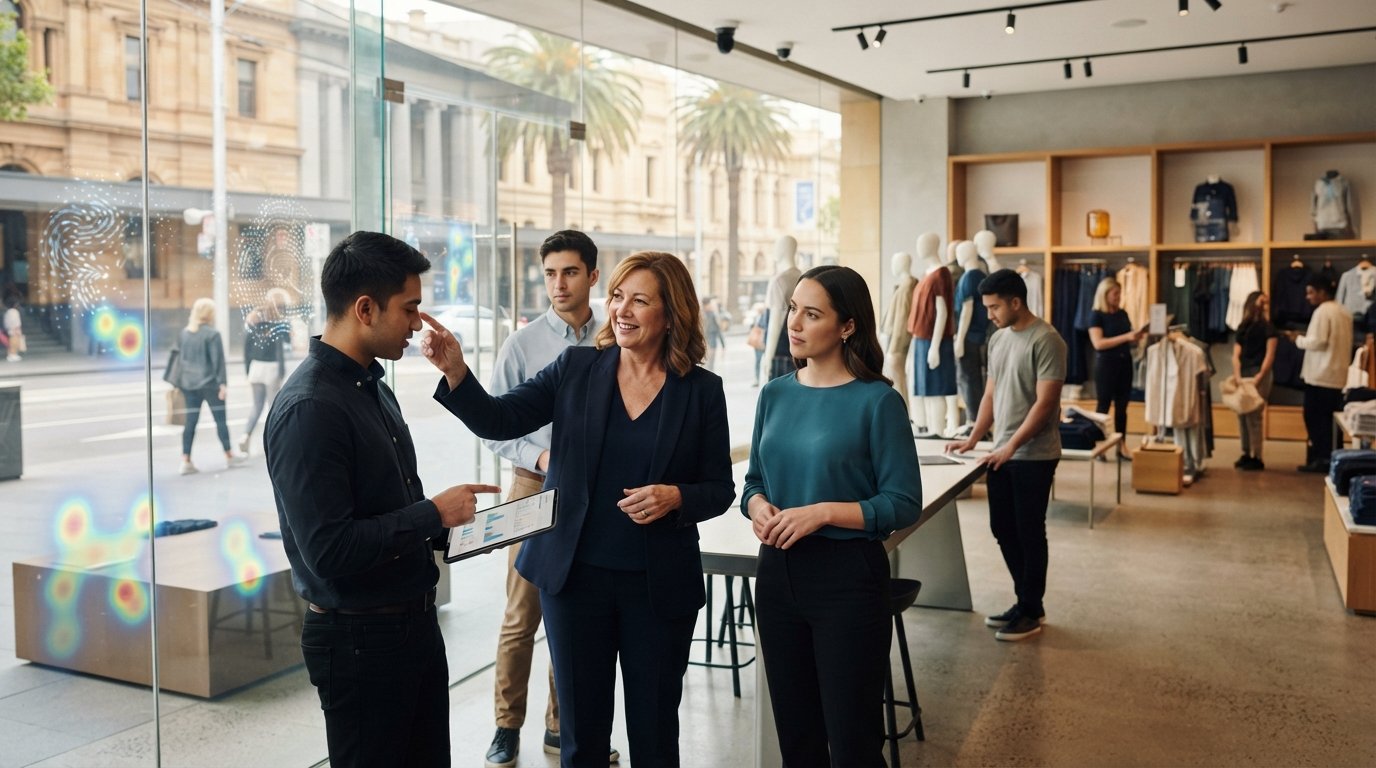
Veteran managers often resist automated insights because they feel data contradicts years of hard-earned experience. Frame technology as a supporting tool rather than a replacement so they don’t feel undermined. We suggest implementing a framework for A/B testing intuition against the FootfallCam Pro2 system. When a manager predicts a traffic peak based on “feel,” compare it against the sensor data to prove accuracy. This builds trust through evidence. “In 2026, the most successful retailers will be those who use data to validate their instincts, not just to replace them.”
The 5-Step Roadmap to Successful Analytics Implementation
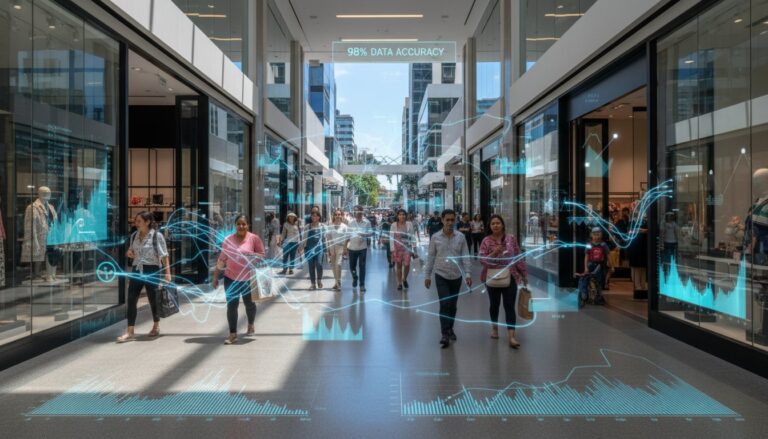
Implementing technology is a multi-layered process. Phase 1 focuses on technical validation; deploying hardware like the FootfallCam Pro2 requires calibration for 98% plus accuracy to build immediate trust. Phase 2 involves executive alignment. Leaders must see the projected ROI of footfall data analysis to support the initiative. Research often cites cultural barriers to data-driven adoption as the main reason for project failure, making this alignment critical.
Phase 3 shifts to operational integration. Embed data reviews into weekly management meetings and daily shift huddles to ensure the information stays relevant. Phase 4 prioritises staff training. You aren’t just teaching button-clicking; you’re building data literacy. Effective change management for adopting retail analytics ensures floor staff understand how metrics improve their daily workflow. For a tailored implementation plan, you can consult with experts at Footfall Australia.
Translating FootfallCam V9 Insights into Floor Action
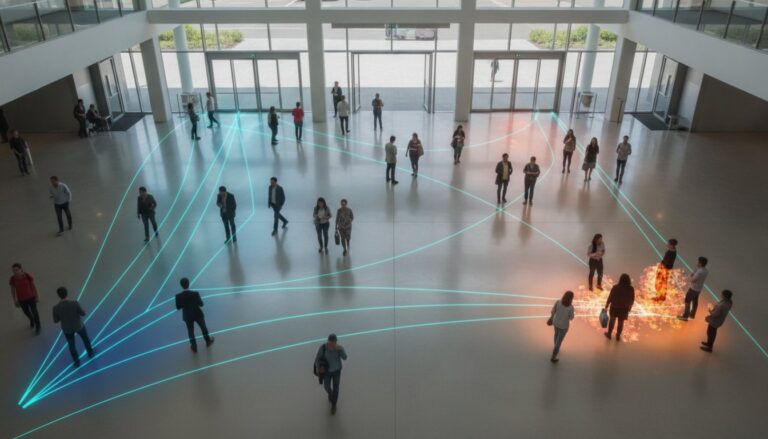
Managers can use heatmaps and zone counting within the FootfallCam V9 Software to optimise store layouts. This allows for evidence-based product placement without micromanaging the team. Live occupancy data helps adjust cleaning schedules and staff breaks dynamically as traffic fluctuates. Use the dashboard to celebrate “wins,” like identifying a high conversion day, to boost morale. This approach turns change management for adopting retail analytics into a positive, team-wide success story.
Maximising ROI: Integrating Analytics into Daily Store Operations
Transitioning to a data-centric model requires moving from punitive “monitoring” to collaborative “optimisation.” Staff are more likely to support change management for adopting retail analytics when they see how it reduces their workload. For instance, using footfall data to identify low-traffic periods allows for smarter scheduling of stock replenishment or administrative tasks without impacting the customer experience. This shift reflects a high level of organizational maturity in retail analytics, where insights are embedded into daily routines rather than treated as external audits.
Data also provides the empirical evidence needed to justify marketing spend. Instead of relying on anecdotal feedback, retailers can evaluate national campaigns by measuring the actual lift in store visits compared to historical baselines. Implementing a “Continuous Improvement Loop” ensures these data-driven changes are reviewed monthly. This systematic approach allows you to refine store strategies based on documented results rather than speculation. To maintain this momentum, robust people counter support is essential for ensuring long-term data integrity and continued ROI.
Sustaining Success with Long-Term Maintenance and Support
Data drift is a common challenge where environmental changes or network shifts affect sensor accuracy over time. Regular system health checks are necessary to ensure the organisation continues to trust the metrics for high-stakes decisions. Our “Legacy Swap Out Plan” provides a strategic pathway for maintaining modern, AI-ready infrastructure as technology evolves. Use this monthly checklist to maintain alignment:
- Verify all sensors are reporting correctly in the FootfallCam V9 dashboard.
- Cross-reference footfall peaks against POS transaction timestamps to validate conversion trends.
- Check for physical obstructions or lighting changes near sensor lenses that might impact AI detection.
Future-Proofing Your Retail Strategy Through Precision
Mastering the transition to an evidence-based culture is no longer optional for Australian retailers. By bridging the intuition gap and implementing a structured roadmap, you turn raw footfall data into a significant competitive advantage. Effective change management for adopting retail analytics ensures that your technology remains a tool for empowerment rather than just another surveillance metric. Success is found in the balance between sophisticated AI-driven hardware and a workforce that trusts the insights provided.
With over 20 years of expertise in the Australian market, Footfall Australia provides the comprehensive support and seamless V9 Software integration needed to maintain data integrity across your national network. Optimise your retail operations with Footfall Australia’s expert implementation support. We’re here to help you navigate every step of your digital transformation, ensuring your team is prepared for the shifting behavioural trends of 2026 and beyond.
Frequently Asked Questions
How do I get my retail staff to trust footfall analytics data?
Build trust through transparency and technical validation. Start by demonstrating that the FootfallCam Pro2 hardware is calibrated for 98% plus accuracy across your stores. When staff see the data aligns with their own observations, skepticism fades. Frame the analytics as an operational partner that justifies staff requests and optimises workloads rather than a punitive surveillance tool used for monitoring performance.
What are the most common mistakes during retail analytics adoption?
The most frequent error is treating the rollout as a technology installation rather than a cultural shift. Many retailers fail to invest in change management for adopting retail analytics, leading to staff resistance and data neglect. Other mistakes include failing to define clear KPIs early or ignoring system maintenance, which eventually causes data drift and a loss of organisational trust.
How long does it take to see a measurable ROI from people counting systems?
Most retailers begin seeing a measurable ROI within three to six months of full operational integration. This timeline depends on how quickly your team acts on the insights provided by the V9 software. Immediate gains often come from refining staff rosters to match peak traffic periods or identifying underperforming zones within a store layout to improve overall conversion rates across your national network.
Do we need a dedicated data analyst to manage retail footfall reports?
You don’t need a specialist analyst to interpret your data. The FootfallCam V9 Software is engineered to provide intuitive, actionable reporting that store managers can use immediately. Automated dashboards translate complex movement patterns into simple metrics. This empowers your existing team to make evidence-based decisions without requiring advanced technical training or additional headcount to manage the reporting process.