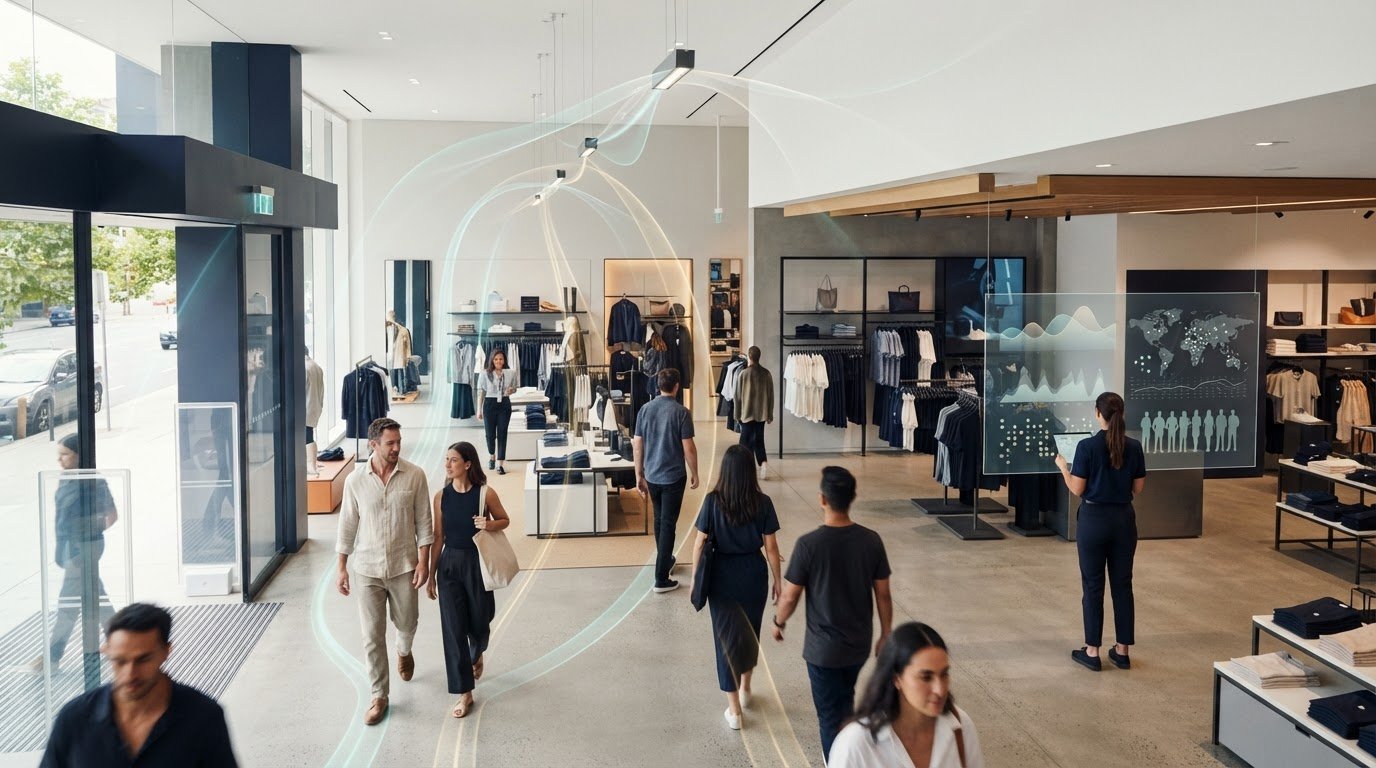
Retail People Counting: Drive Growth with Data Insights
What if a quiet sales day reflects fewer visitors, rather than a missed opportunity at the counter? Retail people counting shows store teams how many people enter and when, adding context that sales figures alone can’t provide. Without consistent traffic data, it’s harder to compare performance or decide where to focus.
This guide explains what a people-counting system measures and how to read its results alongside sales, staffing and store operations. You’ll learn how traffic patterns can inform roster planning and day-to-day decisions, and what to check about measurement methods, privacy, integration and ongoing requirements when evaluating a solution. The goal isn’t to collect numbers for their own sake. It’s to use observed movement as evidence for better-informed store decisions.
Key Takeaways
- Retail people counting measures visits, not transactions, unique customers or sales. Keep these metrics distinct when interpreting store performance.
- Use a consistent process to review traffic patterns, compare like-for-like periods and investigate context before changing store operations.
- Compare staffing plans with observed busy periods, then review whether any changes suit what’s happening in the store.
- Before evaluating a solution, define the questions, areas and decisions it needs to support. Then clarify how its hardware, software, reporting and support fit those needs.
What Retail People Counting Measures, and What Store Traffic Reveals
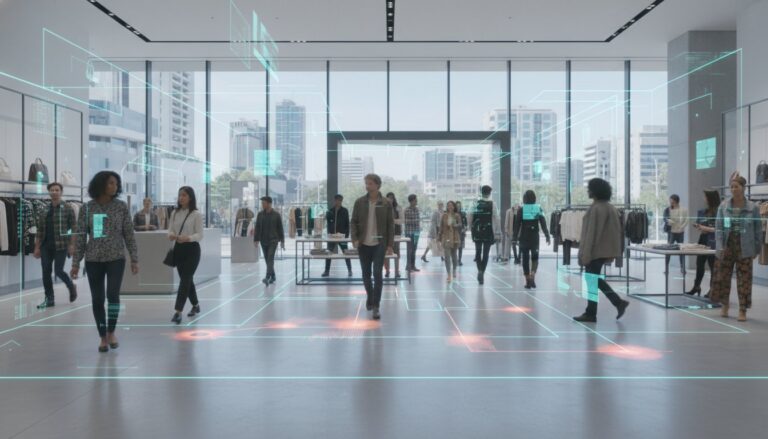
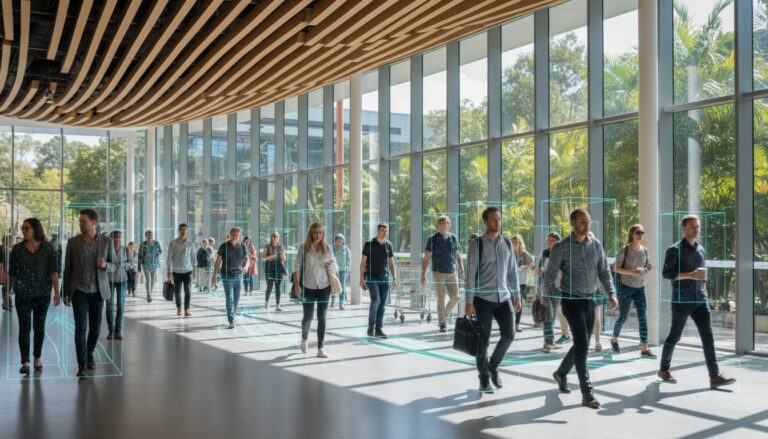
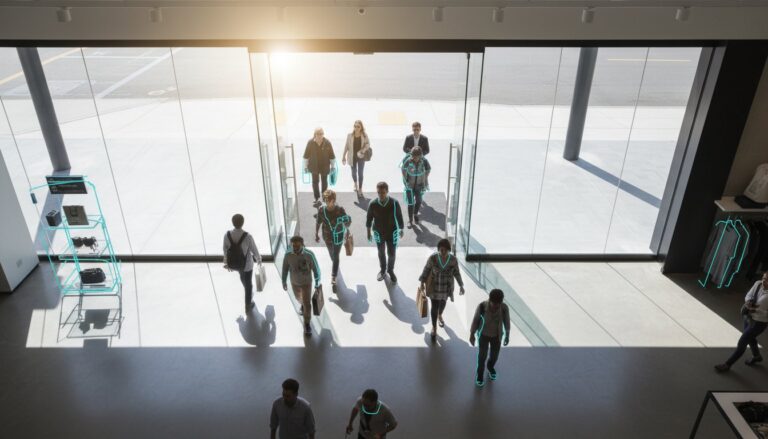
Retail people counting measures visits as people enter or move through a defined part of a store. A People counter uses a counting technology to record this movement, producing a view of traffic across a chosen period, such as entries by hour or day. A visit count does not necessarily represent distinct individuals: one person who leaves and returns may create more than one visit, depending on the measurement setup.
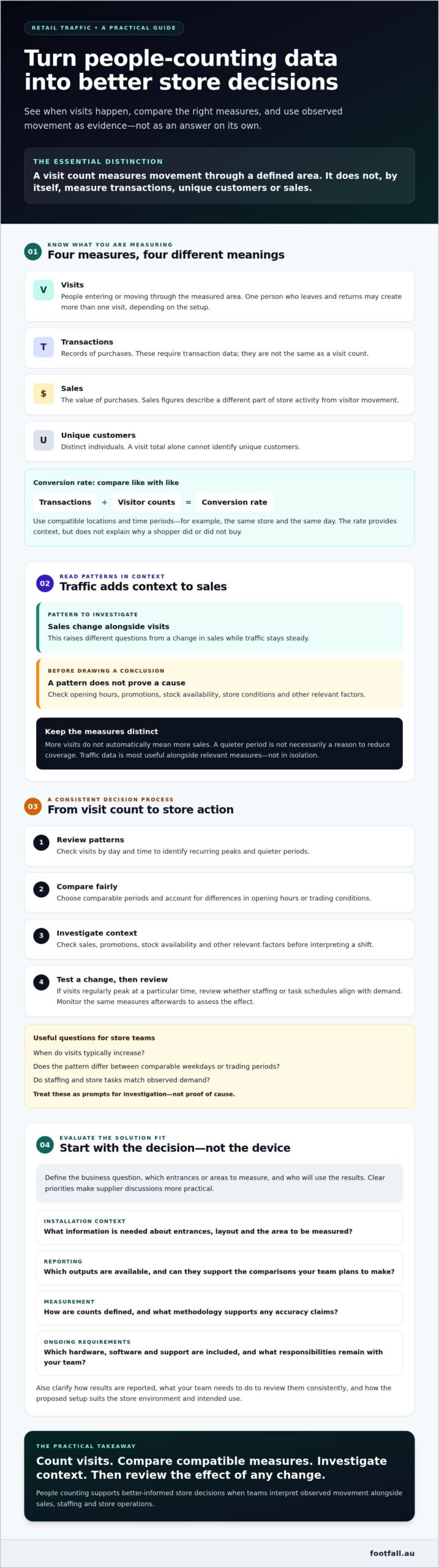
Keep traffic separate from other measures. A visitor count records movement through the measured area. A transaction records a purchase, while sales figures show the value of purchases. Unique customers are a different measure and can’t be identified from a visit total alone. Each metric describes a different part of store activity, so don’t use one as a substitute for another.
How are retail visits different from sales and conversion rate?
A visit is a traffic measure; sales require transaction data. Conversion rate is calculated by comparing transactions with visitor counts for compatible locations and time periods. For example, compare a store’s transactions and visits for the same day, not a daily sales figure with a traffic count from a different period. The resulting rate provides context, but it doesn’t explain why a shopper did or didn’t buy.
Traffic patterns can help put sales results in context. A change in sales alongside a change in visits raises different questions from steady traffic alongside changing sales. Neither pattern proves a cause. Check factors such as opening hours, promotions and store conditions before drawing conclusions. For a broader approach to interpreting retail traffic, see this retail footfall analysis guide. Retail people counting is most useful when read alongside relevant measures, not in isolation.
How to Turn Retail People-Counting Data into Store Decisions
A visit count becomes useful when it helps answer a specific operational question. Retail people counting can show when entries rise or fall, but the count alone doesn’t explain why. Use a consistent process before changing how the store runs:
- Review patterns: Check visits by day and time to identify recurring peaks and quieter periods.
- Compare fairly: Choose comparable periods, and account for differences in opening hours or trading conditions.
- Investigate context: Check sales, promotions, stock availability and other relevant factors before interpreting a shift.
- Test a change: If visits regularly peak at a particular time, review whether staffing or task schedules align with that demand. Monitor the same measures afterwards to assess the effect.
This process keeps traffic data in context. More visits don’t automatically mean more sales, and a quieter period isn’t necessarily a reason to reduce coverage. As retail analytics illustrates, data can inform decisions, but teams still need to interpret it in light of business priorities and store conditions.
Which retail questions can traffic patterns help answer?
Ask when visits typically increase, whether the pattern differs between comparable weekdays or trading periods, and whether staffing and store tasks match observed demand. Treat these as prompts for investigation, not proof of cause. For a deeper framework for interpreting patterns, read the footfall data analysis guide.
Retailers deciding what to measure can also explore Footfall Australia’s people-counting solutions while defining their requirements.
What to Clarify Before Choosing a Retail People-Counting Solution
Start with the decision, not the device. Define the business question the traffic data should help answer, which entrances or areas to measure, and who will use the results. A system for reviewing visits by trading period may have different requirements from one used across multiple locations. Clear priorities make supplier discussions more practical.
How can retailers assess whether a system fits their needs?
Ask suppliers to explain how the proposed setup suits your store environment and intended use. Clarify what the system measures, how results are reported and what your team will need to do to review them consistently. Ask for specific explanations rather than relying on broad claims.
- Installation context: What information is needed about entrances, layout and the area to be measured?
- Reporting: Which outputs are available, and can they support the comparisons your team plans to make?
- Measurement: How are counts defined, and what methodology supports any accuracy claims?
- Ongoing requirements: Which hardware, software and support are included, and what responsibilities remain with your team?
Consider how staff will use the reports, too. A technically suitable system may still fall short if its outputs don’t answer managers’ questions or support decisions they can act on. For details specific to one option, consult the FootfallCam Pro2 buying guide.
Footfall Australia supplies people-counting hardware and analytics software nationally through a local partner network, and has operated in Australia since 2004. Its offering includes FootfallCam Pro2 People Counters and FootfallCam V9 Software, allowing retailers to assess hardware and analytics together against their measurement needs. Contact Footfall Australia about retail people counting to discuss your requirements.
Make Store Decisions with Clearer Evidence
Retail people counting gives teams a clearer view of visits, but its value depends on how the information is used. Keep visitor counts distinct from transactions and sales, compare traffic across relevant periods, and consider factors such as opening hours and trading conditions. This helps turn patterns into informed questions about staffing and store operations, rather than assumptions about performance.
Before choosing a solution, define what you need to measure and which decisions the data should support. Check that the hardware, software, reporting and ongoing support suit those requirements. Footfall Australia supplies people-counting hardware and analytics software nationally through local partners.
Discuss your retail people-counting requirements with Footfall Australia to explore an approach suited to your measurement needs. Start with clear questions and use relevant traffic data to inform your next store decision.
Frequently Asked Questions
What does retail people counting measure?
Retail people counting measures visits entering or moving through a defined area of a store. It provides traffic totals across selected periods, such as visits by hour or day. These counts aren’t the same as transactions, sales or unique customers. A person who leaves and returns may be counted as more than one visit, depending on how the system and measurement area are configured.
How can retailers use footfall data to improve staffing?
Retailers can compare visit patterns by day and time, then review whether staffing and scheduled tasks align with periods of observed demand. For example, recurring peaks may prompt managers to assess whether enough team members are available for customer service and store routines. Compare like-for-like periods and consider opening hours and trading conditions before adjusting rosters, then review the data to assess the change.
Can a people counter measure a retail conversion rate?
A people counter measures visits, not transactions, so it can’t calculate conversion rate on its own. To estimate conversion, compare a compatible visitor count with transaction data for the same store and time period. Keep metric definitions and time windows consistent. The result can help frame questions about store performance, but it won’t explain by itself why visitors did or didn’t purchase.
How accurate are retail people counters?
Accuracy varies by technology, installation conditions and the way a vendor tests and defines a count. Ask for the methodology behind any accuracy claim, including how the system handles the conditions in your store. Consider testing the proposed setup in the intended environment and checking results against a suitable reference count. A published figure alone may not predict performance in every retail space.